
Plant-Based Eating Didn't Start With a Trend
When plant-based eating surged in Western media over the last decade, it was framed as something new - a break from the norm. But for billions of people across history, eating mostly plants was simply the norm, shaped by geography, religion, economics, and agricultural tradition rather than any wellness movement.
From the lentil-rich kitchens of South Asia to the fasting tables of Ethiopian Orthodox Christianity, cultures around the world developed rich, plant-forward food systems long before the word "vegan" existed. Understanding these traditions helps put modern plant-based discourse in perspective - and reveals just how sophisticated and varied this way of eating can be. For a deeper look at how overall dietary patterns matter more than individual food choices, see why eating patterns matter more than individual foods.
Plant-Based Doesn't Mean Identical
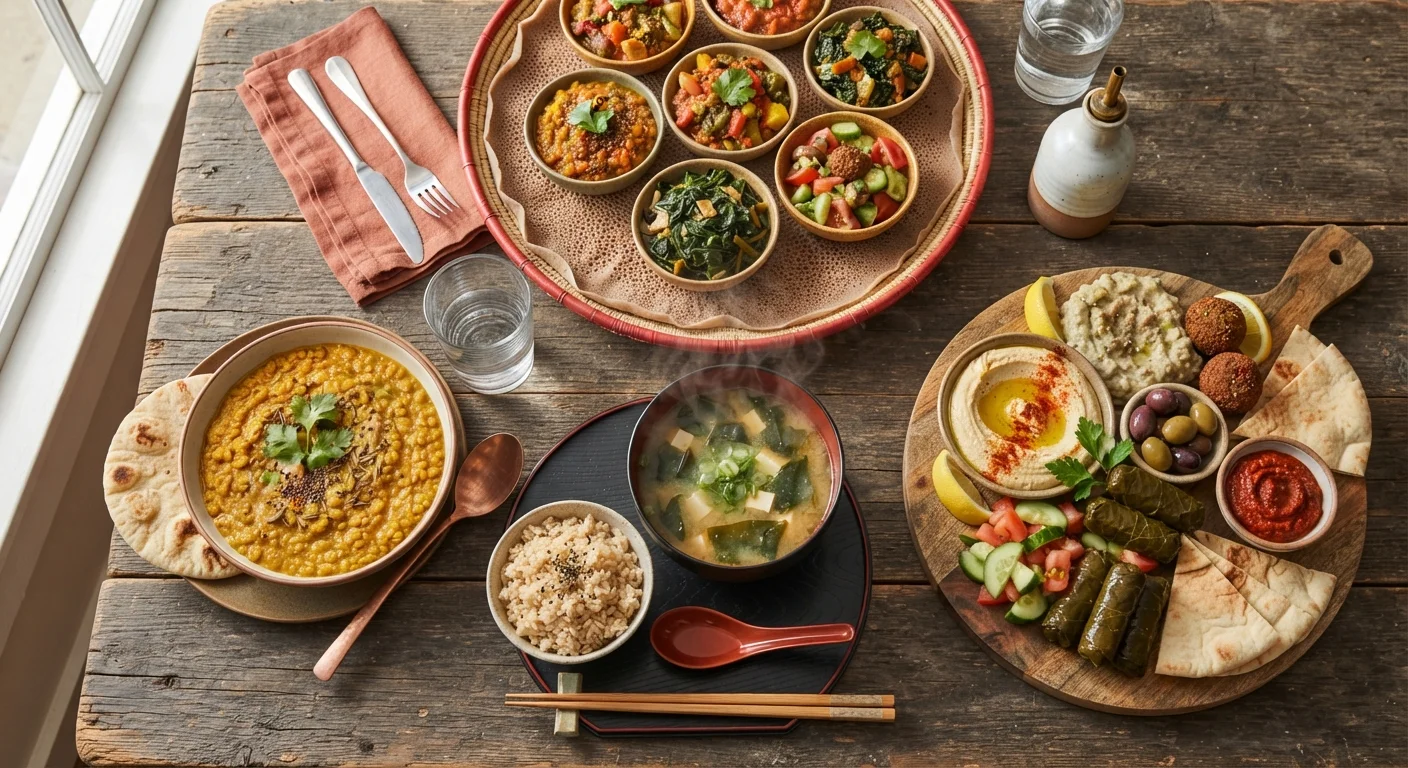
Traditional plant-based diets vary enormously in their ingredients, techniques, and nutritional profiles. A Japanese temple meal, an Ethiopian fasting plate, and an Indian dal thali have very little in common beyond the absence of meat. Treating 'plant-based' as a single category risks flattening the cultural complexity that makes each of these traditions meaningful. For anyone considering significant dietary changes, consulting a qualified nutrition professional is always advisable.
Traditional Cultures That Built Plant-Based Cuisines
India: Millennia of Vegetarian Tradition
India is home to one of the world's oldest and most developed vegetarian food cultures. Rooted in Hindu, Jain, and Buddhist philosophical principles of ahimsa (non-harm), plant-based eating in India isn't a modern health choice - it's a deeply ethical and religious practice with roots stretching back thousands of years.
The Indian vegetarian tradition is built on a sophisticated pairing of legumes and grains: dal (lentils or split peas) eaten with rice or flatbreads provides complementary amino acid profiles that together approximate complete protein intake. Spices like turmeric, cumin, and mustard seeds add flavor while contributing to the sensory richness that makes this cuisine so enduring. Regional variations across states like Gujarat, Tamil Nadu, and Rajasthan show just how much diversity a plant-focused diet can contain. See how plant and animal proteins compare nutritionally for broader context.
India's vegetarian tradition is built on ethics and philosophy, not health trends.
Ethiopia: Fasting Cuisine as Culinary Art
Ethiopian Orthodox Christians observe fasting periods - known as tsom - that can collectively span more than 200 days per year, during which animal products are avoided. This religious requirement gave rise to an elaborate plant-based culinary tradition centered on injera (a fermented teff flatbread) served with a variety of vegetable stews called tibs or alicha.
Dishes like misir (spiced red lentils), gomen (collard greens cooked with garlic and ginger), and shiro (a spiced chickpea or broad bean flour stew) are not simple substitutes for meat - they are fully developed recipes refined over centuries. The fermentation of teff in injera also improves digestibility and nutrient absorption, demonstrating that traditional plant-based food systems often incorporate techniques that enhance nutritional value without any formal scientific framing.
Ethiopian fasting cuisine spans over 200 days a year and has produced a rich plant-based culinary tradition.
Japan: Buddhist Shojin Ryori and Everyday Restraint
Japan's Buddhist monastic tradition produced shojin ryori - a form of temple cuisine developed by Zen Buddhist monks that is entirely plant-based and guided by principles of mindfulness, balance, and seasonal eating. Dating back to the 6th century CE, this cuisine emphasizes tofu, mountain vegetables, pickles, miso, and rice, prepared simply to honor the ingredients themselves.
Beyond the monastery, Japanese food culture has historically featured far less meat than Western diets, not out of ideological commitment but due to geography, Buddhism's broader cultural influence, and the abundance of plant and sea-based foods. Fermented ingredients like miso, soy sauce, and pickled vegetables are cornerstones of everyday Japanese eating - providing umami depth and supporting gut-friendly fermentation traditions that modern nutrition research now looks at with significant interest.
Japan's shojin ryori tradition dates back to the 6th century and remains a model of mindful plant-based cooking.
The Mediterranean: Legumes, Olives, and Seasonal Abundance
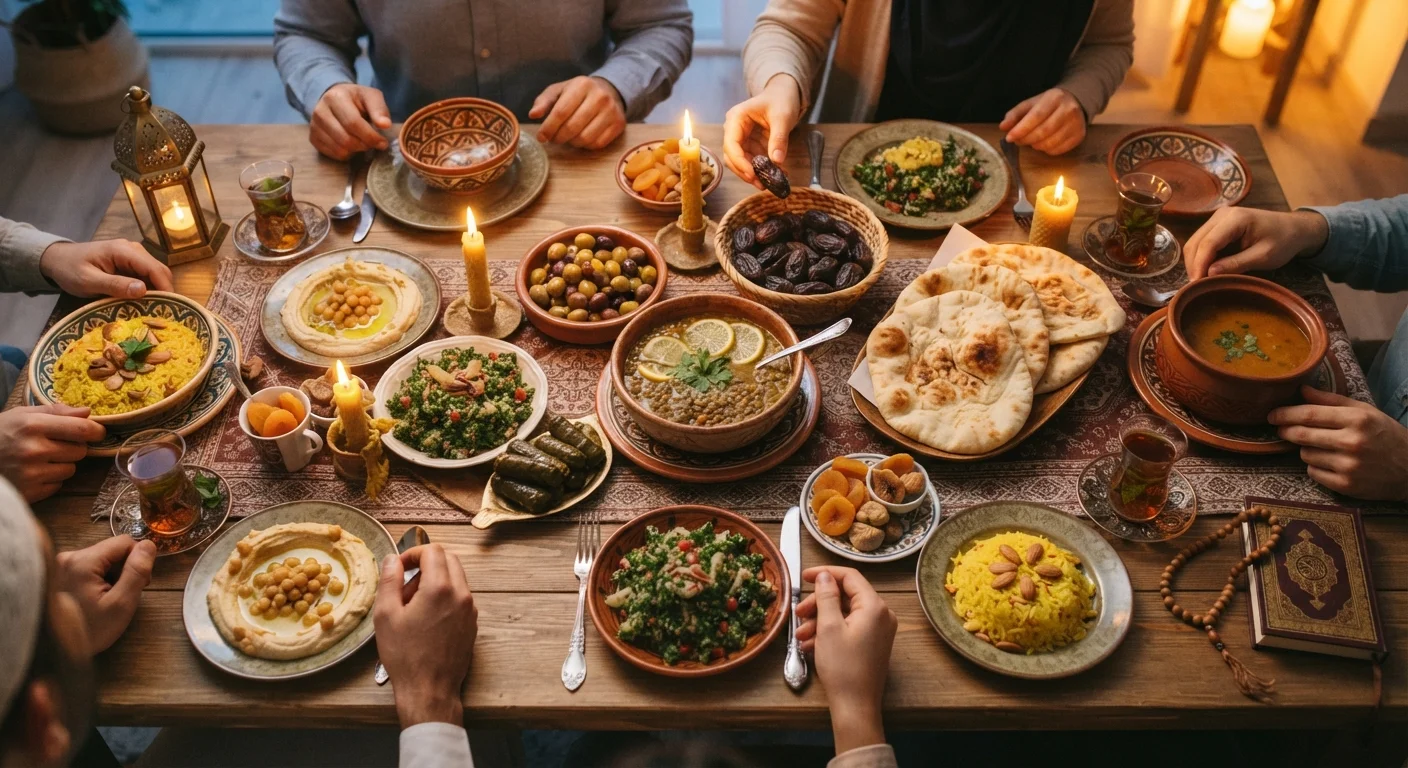
The Mediterranean diet is often framed as a modern health recommendation, but its plant-forward character is actually the result of centuries of agricultural tradition across Greece, southern Italy, North Africa, and the Levant. Historically, meat was eaten sparingly - reserved for festivals or wealthy households - while beans, lentils, chickpeas, olives, olive oil, whole grains, and seasonal vegetables formed the everyday diet.
Greek Orthodox fasting practices (which prohibit meat and dairy on multiple days each week and during Lent) helped institutionalize plant-based eating within Christian communities across the Eastern Mediterranean, parallel to what we see in Ethiopia. Dishes like fasolada (white bean soup), revithia (braised chickpeas), and spanakopita (spinach pastry) carry this heritage. The cultural meaning embedded in these foods is explored further in food taboos and cultural food rules.
Meat was historically a luxury across the Mediterranean - everyday eating was already plant-forward.
West Africa: Groundnuts, Greens, and Grain-Based Foundations
Across much of West Africa, traditional cooking has long centered on plant staples: groundnuts (peanuts), black-eyed peas, yams, millet, sorghum, okra, and leafy greens like moringa and cassava leaves. While small amounts of dried fish or meat have traditionally been used as seasoning rather than the main ingredient, the bulk of calories and nutrition came from plant sources.
This structure emerged not from ideology but from agricultural ecology - the crops that thrived in West African climates became the foundation of the cuisine. Dishes like Senegalese thieboudienne (rice and vegetable stew), Ghanaian groundnut soup, and Nigerian moi moi (steamed bean pudding) reflect sophisticated use of plant ingredients developed across generations. Understanding these food systems underscores how the cultural context of food practices shapes everything from flavor to nutrition.
In West Africa, plants have always been the foundation - meat was a seasoning, not the centerpiece.
Mexico and Central America: The Three Sisters Tradition
Long before European colonization, Indigenous civilizations across Mesoamerica built their diets around what agricultural tradition calls the "Three Sisters": corn (maize), beans, and squash. These three crops were grown together using intercropping techniques that improved soil fertility, and when eaten together they form a nutritionally complementary combination - beans supply protein and amino acids that corn alone lacks, while squash provides vitamins and fiber.
Tortillas and beans remain a daily dietary staple for millions of people across Mexico and Central America today, not because of any wellness trend, but because this pairing has sustained communities for thousands of years. This is an example of how traditional food knowledge often reflects practical nutritional wisdom accumulated without formal scientific study - a theme explored in nutritional patterns that consistently appear across healthy diets worldwide.
The Three Sisters - corn, beans, and squash - sustained Mesoamerican civilizations for thousands of years.
Learn From Traditional Food Pairings
Many traditional plant-based cuisines instinctively combine foods that together provide more complete nutrition - like rice and lentils in India, or corn and beans in Mexico. If you're exploring more plant-forward eating, looking to these long-established pairings can be a practical starting point. For a broader look at nutritional trade-offs, see plant-based eating: nutritional trade-offs worth understanding.
Culture First, Trend Second
What unites these traditions is that plant-based eating was never a lifestyle choice in the modern sense - it was woven into daily life through religious observance, economic necessity, and agricultural reality. The result, in each case, was a cuisine that learned to extract maximum flavor, nutrition, and variety from plant ingredients over many generations.
This depth of culinary knowledge stands apart from much of what gets labeled "plant-based" today. If you're curious about what these traditional diets share nutritionally, nutritional patterns that consistently appear in healthy diets worldwide offers a useful comparison. And for anyone interested in how religious fasting - a key driver in several of these cultures - produces its own distinct culinary traditions, see fasting as a food tradition.