
The Colour Code: What Each Light Colour Signals
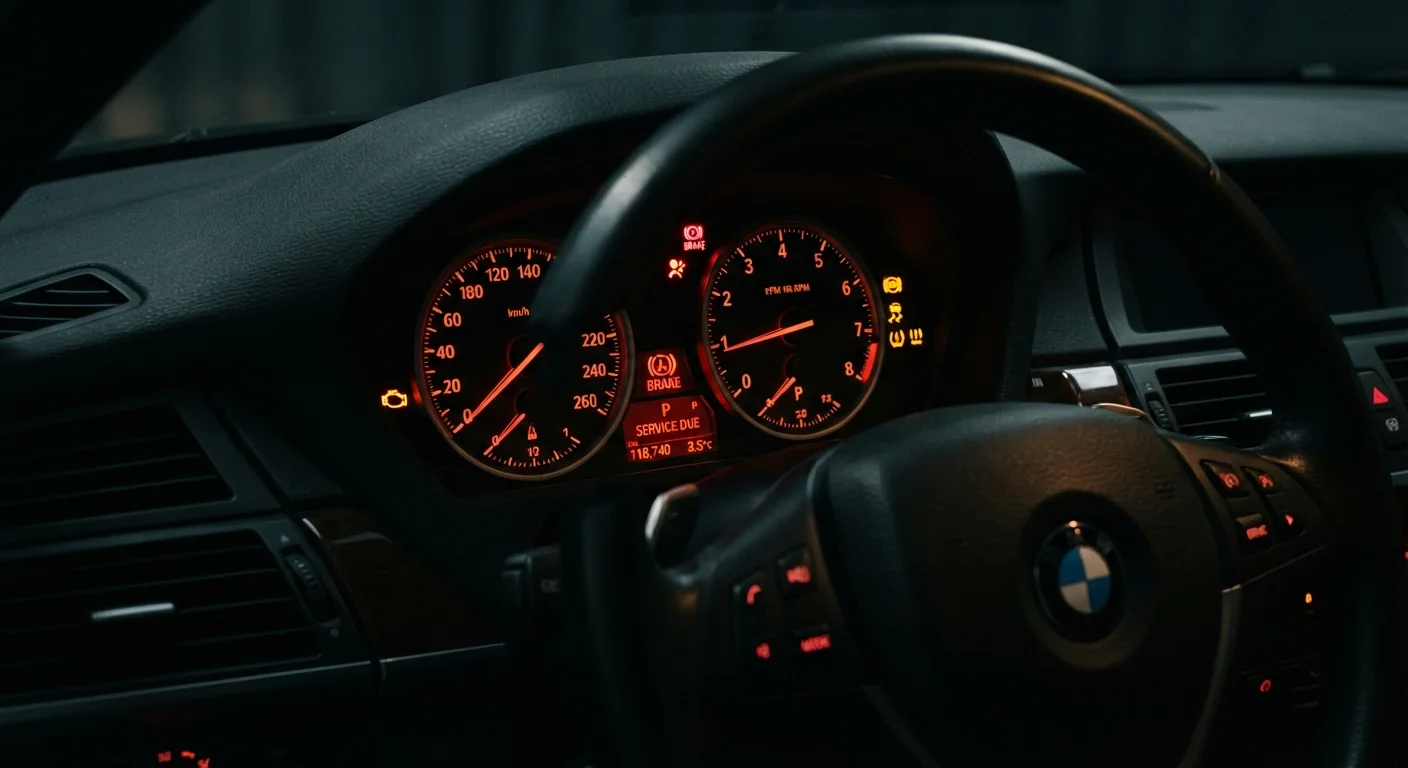
Dashboard warning lights follow a near-universal traffic-light logic. Understanding the colour system is the fastest way to triage any unfamiliar symbol before consulting your owner's manual.
| Red light | Stop as soon as safely possible |
| Amber / orange light | Schedule a workshop visit within days |
| Green / blue light | System active - no action needed |
| TPMS requirement (EU) | Mandatory on new vehicles since November 2014 (EU Regulation 661/2009) |
| Fault code reader | OBD-II scanner reads EML fault codes |
| Owner's manual | First reference for any unfamiliar symbol |
Red lights indicate a serious or potentially dangerous condition - low oil pressure, overheating, or a brake system fault. Stop driving as soon as it is safe to do so and investigate before continuing. Ignoring a red warning can result in severe engine or brake damage, or create a safety hazard for you and other road users.
Amber or orange lights signal that something requires attention but is not immediately critical. Common examples include the engine management light (EML), low tyre pressure, and service-due reminders. You can generally continue to your destination, but schedule a workshop visit promptly - within days, not weeks.
Green and blue lights are status indicators, not warnings. They confirm that a system is active: full-beam headlights (blue), cruise control engaged (green), or turn signals. No action is required.
The Most Important Warning Lights Decoded
The following are the symbols drivers most commonly misidentify or underestimate. Always cross-reference with your vehicle's handbook, as icon design can vary slightly between manufacturers.
Engine Management Light (EML)
An amber warning light - usually shaped like an engine outline - that activates when the vehicle's on-board diagnostics detect a fault in the engine or emissions system. The fault can range from a loose fuel filler cap to a sensor failure and must be confirmed by diagnostic scanning.
OBD-II
On-Board Diagnostics second generation - a standardised interface used by mechanics and diagnostic tools to read electronic fault codes stored by a vehicle's engine control unit. Mandatory on petrol cars sold in the EU from 2001 and diesels from 2004.
TPMS
Tyre Pressure Monitoring System - a sensor-based system that alerts the driver when one or more tyres drops significantly below the manufacturer's recommended inflation pressure. Required on new passenger cars sold in the EU under Regulation 661/2009.
Coolant / Antifreeze
The liquid circulated through the engine to regulate operating temperature. When coolant level drops or the system fails, the engine overheats rapidly, which can cause irreversible damage if driving continues.
Alternator
The component driven by the engine that recharges the vehicle's battery while the car is running. A faulty alternator will drain the battery, potentially causing total electrical failure while driving.
Fault Code
A standardised alphanumeric code (e.g. P0300) stored by a vehicle's control unit when a sensor reading falls outside expected parameters. Mechanics use a scanner to retrieve these codes and identify the source of a warning light.
Stop Immediately
- Oil pressure warning (oil can icon, red): Engine oil pressure has dropped critically. Switch off the engine at the earliest safe opportunity. Continuing to drive can destroy the engine within minutes.
- Engine temperature (thermometer in water, red): The coolant is overheating. Pull over, switch off, and allow the engine to cool for at least 30 minutes before opening the bonnet. Never remove the coolant cap while hot.
- Brake system warning (exclamation mark in circle, red): If this appears while moving and your handbrake is fully released, it may indicate low brake fluid or a hydraulic fault. Reduce speed cautiously and seek immediate professional inspection.
Attend Within Days
- Engine management light / EML (engine outline, amber): The on-board diagnostics system has detected a fault - ranging from a loose fuel cap to a failing catalytic converter. A workshop can read the stored fault code with a diagnostic scanner.
- Tyre pressure monitoring system / TPMS (flat tyre icon, amber): One or more tyres is significantly under-inflated. Check pressures at the nearest petrol station. Vehicles sold in the EU since November 2014 are required to carry TPMS under EU Regulation 661/2009.
- Battery / charging system (battery icon, red or amber): The alternator may not be charging the battery. Minimise electrical loads and head directly to a garage - the vehicle could lose power without warning.
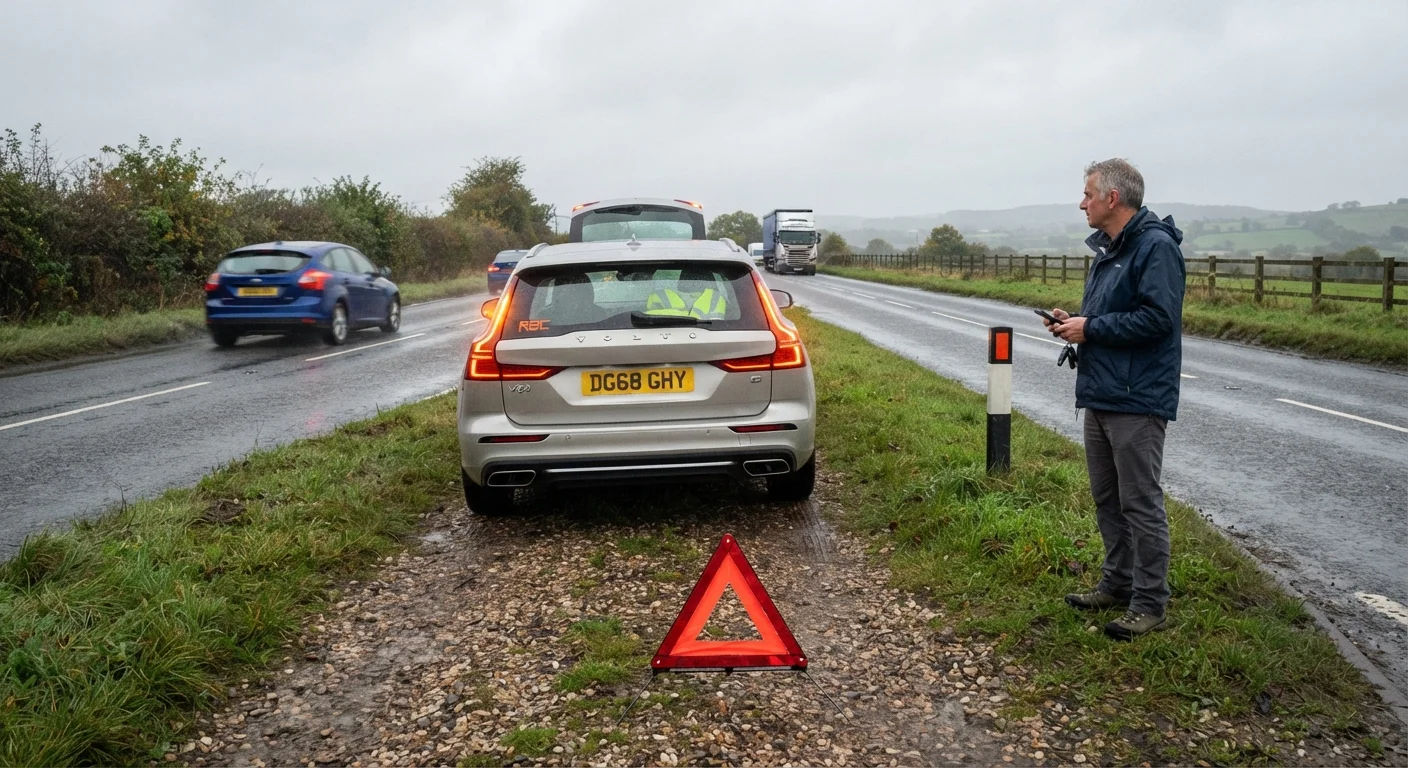
If a warning light illuminates while you're already on the road and you're unsure how to respond safely, our guide on managing a roadside breakdown walks through the safest course of action step by step.
When to Seek Help - and What to Tell the Mechanic
Not every amber light is an emergency, but none should be dismissed indefinitely. A useful rule of thumb: if the same light reappears within a few days of being reset, a fault is genuinely present rather than a transient sensor glitch.
Take a Photo Before the Light Disappears
Warning lights sometimes extinguish on their own after a cold start or a brief sensor anomaly, but the underlying fault code typically remains stored in the vehicle's control unit for days or weeks. If a light appears and then goes out, take a quick photo of the dashboard for reference and mention it at your next service. A mechanic with a diagnostic scanner can retrieve the stored code even after the light has cleared.
When booking a workshop appointment, note the exact conditions under which the light appeared - cold start, motorway speeds, after refuelling - along with any accompanying symptoms such as unusual noise, vibration, or changed fuel consumption. This context helps a technician narrow down the fault code quickly and reduces diagnostic time.
For vehicles with a known history of warning-light issues - particularly used cars - a pre-purchase inspection and a thorough vehicle history report review can reveal whether recurring faults have been properly repaired or simply cleared from the system.
New car owners who are still learning what to monitor should also review the broader responsibilities of ownership - insurance, servicing intervals, and running costs - covered in what nobody tells you before you drive your first car home.
This article provides general educational information about vehicle warning systems. Always consult a qualified mechanic for diagnosis and repair of any fault on your vehicle.