
When Abstinence Becomes a Culinary Art
It might seem paradoxical: periods defined by not eating are among the most food-focused times of year for millions of people worldwide. Yet anyone who has sat down to an iftar table during Ramadan, eaten fish on Good Friday, or shared the break-fast meal after Yom Kippur understands that restriction doesn't shrink food culture - it reshapes it.
Religious fasting traditions set constraints, and constraints drive creativity. Over centuries, communities developed specific dishes, preparation techniques, and flavor profiles that exist precisely because of what couldn't be eaten. These foods often outlive their ritual origins and become cultural touchstones, recognizable long after their theological context has faded for many who enjoy them.
Understanding fasting through a culinary lens helps explain why food traditions are never just about sustenance. As explored in food taboos and cultural meaning, the rules around what people don't eat carry as much cultural weight as the foods they do.
1.8 billion
Muslims who observe Ramadan globally
Estimated by the Pew Research Center as the approximate global Muslim population, the majority of whom observe Ramadan fasting to some degree.
180+ days
Annual fasting days in Ethiopian Orthodox tradition
Ethiopian Orthodox Christians observe among the most extensive fasting calendars of any Christian denomination, abstaining from animal products on up to 180 days per year.
25 hours
Duration of the Yom Kippur fast
The Yom Kippur fast begins before sunset and ends after nightfall the following day, making it a complete 25-hour abstention from food and water.
Ramadan: Structure, Community, and the Art of Suhoor and Iftar
During Ramadan, the ninth month of the Islamic lunar calendar, observant Muslims fast from before dawn until sunset each day for approximately 29 to 30 days. The fast is total during daylight - no food, drink, or smoking. But what surrounds that daily window of fasting is anything but empty.
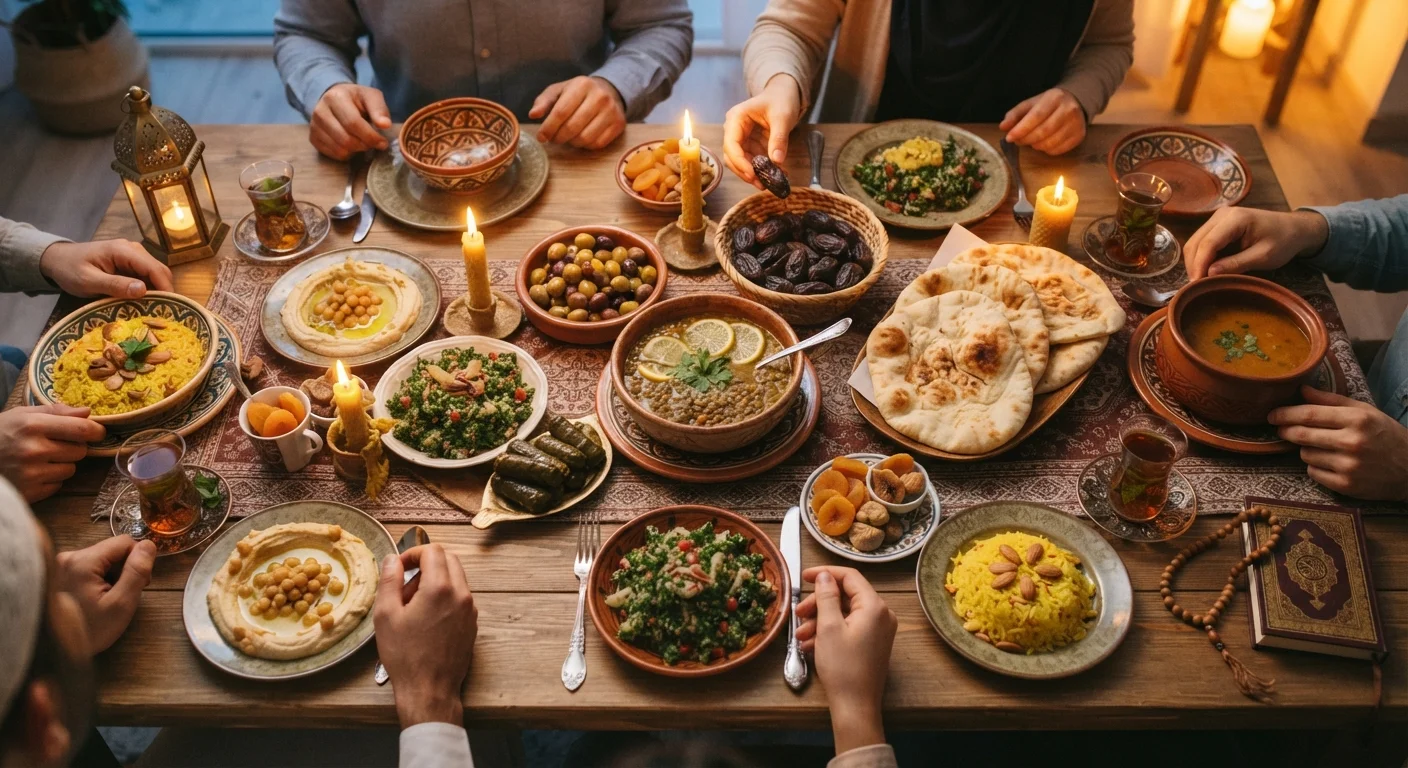
Suhoor is the pre-dawn meal eaten before fasting begins. It tends toward the hearty and sustaining: slow-digesting carbohydrates, proteins, and foods that hold energy across the long daylight hours. Oats, eggs, dates, yogurt, and flatbreads are common across many Muslim-majority cultures, though specific dishes vary widely from Morocco to Indonesia.
Iftar, the meal that breaks the fast at sunset, begins with the same ritual across most traditions: a date and water, echoing the practice of the Prophet Muhammad. What follows is a culturally specific feast. In Egypt, lentil soup and fattah are staples. In Turkey, pide bread appears throughout Ramadan exclusively. In the Gulf states, harees - a wheat and meat porridge - marks the season. The communal nature of iftar is central; it is rarely eaten alone. This mirrors what shared meals across cultures have always represented: identity, belonging, and trust built around a table.
“Fasting is not merely the absence of food - it is an opportunity to re-examine our relationship with nourishment, community, and gratitude. The meals that surround a fast often carry more meaning than any ordinary dinner.”
— Anisa Kamara, Food anthropologist and researcher on Islamic culinary traditions
Lent: Fish, Legumes, and the Roots of European Food Innovation
Lent in Christian tradition lasts approximately 40 days before Easter, commemorating Jesus's 40 days of fasting in the desert. Catholic, Orthodox, and many Protestant communities observe some form of dietary restriction during this period, though the specifics differ significantly across denominations and cultures.
In Catholic tradition, abstaining from meat - particularly on Fridays - became the defining rule. This restriction had an enormous historical effect on European foodways. The demand for acceptable Lenten proteins drove the expansion of fishing industries across the continent. Bacalhau (salted and dried cod) became a staple across Portugal and its former colonies not merely because of taste, but because preserved fish was affordable, storable, and Lent-compliant. Portugal is said to have over 365 bacalhau recipes - one for each day of the year.
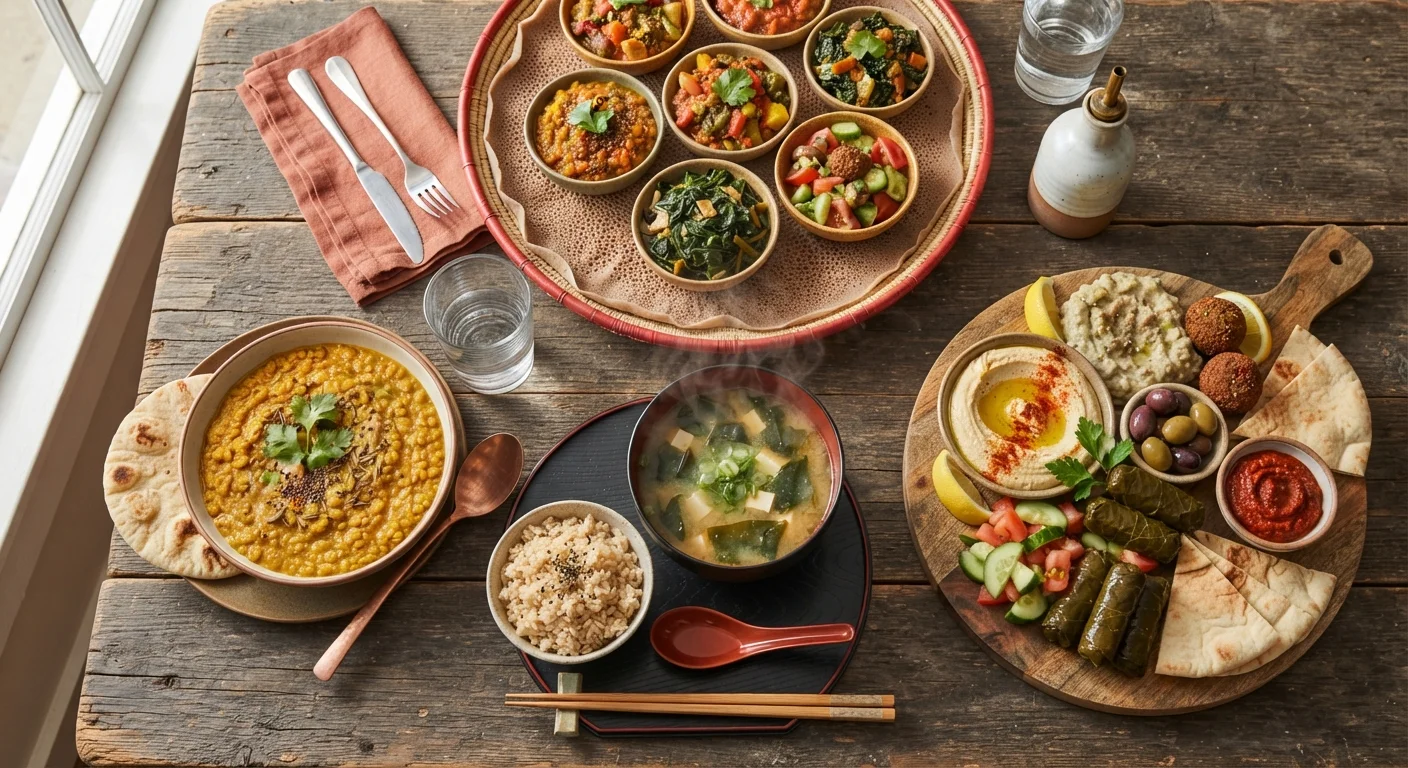
In Orthodox Christian traditions, particularly in Greece and Ethiopia, Lenten restrictions are considerably stricter: no meat, no dairy, no eggs, and sometimes no olive oil on certain days. Ethiopian Orthodox fasting cuisine - featuring lentils, chickpea dishes, and vegetable stews served on injera - is one of the world's most developed plant-forward culinary traditions rooted in religious observance. Plant-based eating in traditional cultures predates modern dietary trends by centuries, and religious fasting is a key reason why.
Lenten Cooking as Plant-Based Inspiration
Many traditional Lenten recipes - from Greek fasolia (bean soup) to Italian pasta e fagioli - are naturally nutritious and satisfying without animal products. These dishes offer a practical starting point for anyone curious about reducing meat in their diet, drawing on centuries of tested home cooking rather than modern dietary trends.
Yom Kippur: The Two Meals That Frame a Sacred Fast
Yom Kippur, the Jewish Day of Atonement, involves a 25-hour complete fast - no food or water - observed by many Jewish communities worldwide. Unlike the daily rhythms of Ramadan or the seasonal adjustments of Lent, Yom Kippur's culinary tradition is concentrated into just two meals: the one before the fast and the one that breaks it.
The pre-fast meal, the seudah hamafseket, is typically eaten in the early evening before sundown. Tradition discourages heavily salted, spiced, or alcoholic foods that might cause thirst during the fast. Many Ashkenazi families serve chicken soup, poultry, and mild side dishes. Sephardic traditions vary considerably by region.
The break-fast meal after Yom Kippur ends has developed its own distinctive character, especially in Ashkenazi Jewish communities in North America and Europe. Smoked and cured fish, bagels, cream cheese, kugel (a baked noodle or potato dish), and honey cake are deeply associated with this moment. These foods are chosen for ease of preparation - since cooking during the fast is not done - and for their comfort-food qualities after a full day without eating.
Food choices in diaspora communities often carry this kind of layered meaning: ritual necessity, historical migration, and adapted tradition all blended into a single meal. The diaspora kitchen is where many of these break-fast traditions found their current form.
Fasting Traditions Vary Within Faiths
It's important to recognize that fasting practices differ significantly within each religion based on denomination, cultural background, geographic origin, and individual observance. The traditions described here represent common or widespread practices, not universal rules. Always be mindful that individual families and communities may observe these periods quite differently.
What Fasting Cuisines Reveal About Food Culture at Large
Across Ramadan, Lent, and Yom Kippur, a consistent pattern emerges: the act of restriction creates cultural specificity. Communities facing the same constraint - no meat, no food until sundown, no animal products - arrived at radically different solutions shaped by geography, available ingredients, history, and local taste.
This shows that food culture is never just about abundance. The rules around absence matter just as much, and often produce the most enduring culinary traditions. Many of these dishes share an underlying nutritional logic as well - legumes, whole grains, fermented foods, and seasonal vegetables appear repeatedly across fasting cuisines. These same patterns show up in nutritional patterns found in healthy diets worldwide, suggesting that constraint-driven cooking often arrives at nutritionally sound choices organically.
Religious fasting is ultimately a lens through which to understand how deeply food is embedded in meaning, memory, and community. The dishes it produces are not consolation prizes for the absence of something better - they are cultural achievements in their own right.
This article is for informational and cultural education purposes only and does not constitute medical, nutritional, or religious advice. Individuals with specific health concerns about fasting should consult a qualified healthcare professional.