
The Great Biological Shuffle
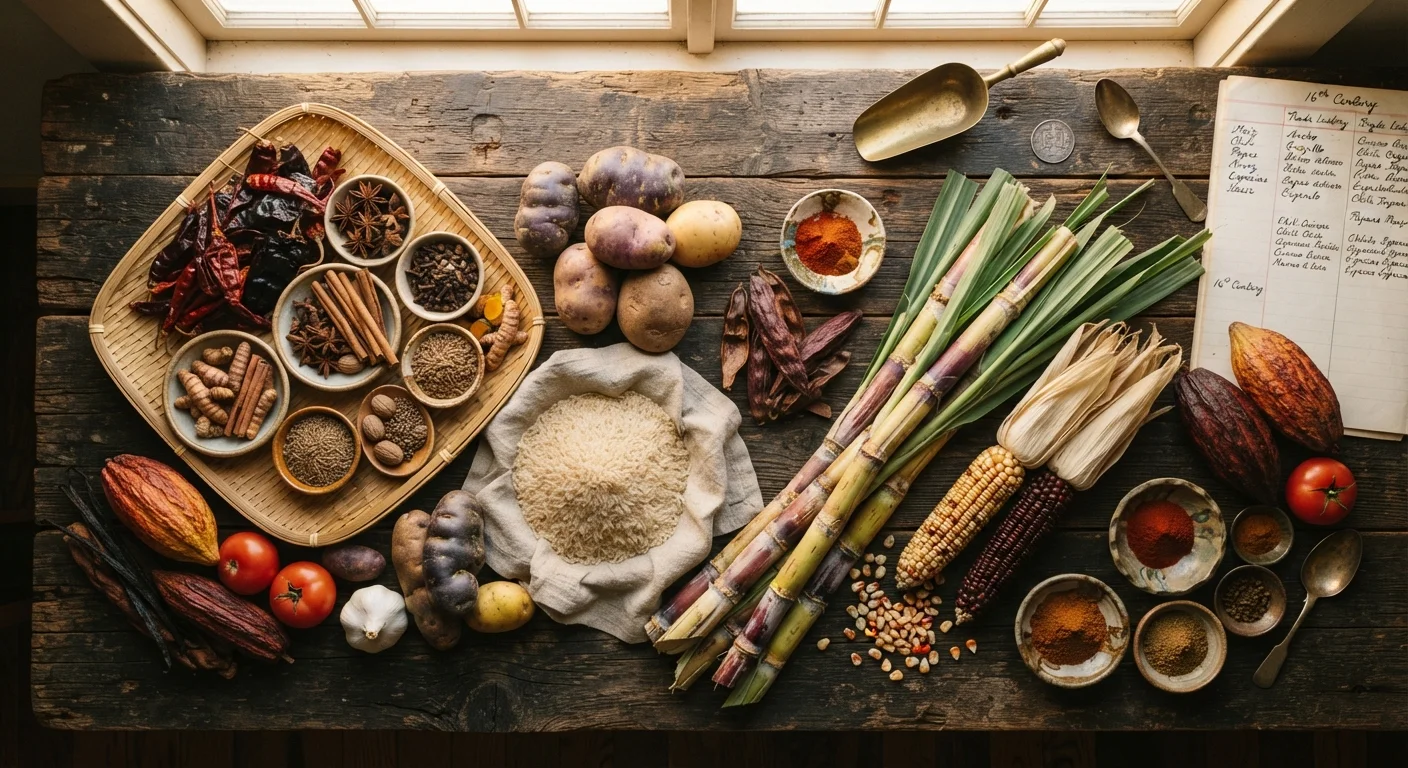
Before European ships began crossing the Atlantic, the Old and New Worlds had entirely separate agricultural traditions. Wheat, rice, cattle, and sugar cane belonged to Europe, Asia, and Africa. Maize, potatoes, tomatoes, cacao, and chillies were entirely unknown outside the Americas. Colonialism broke this separation open.
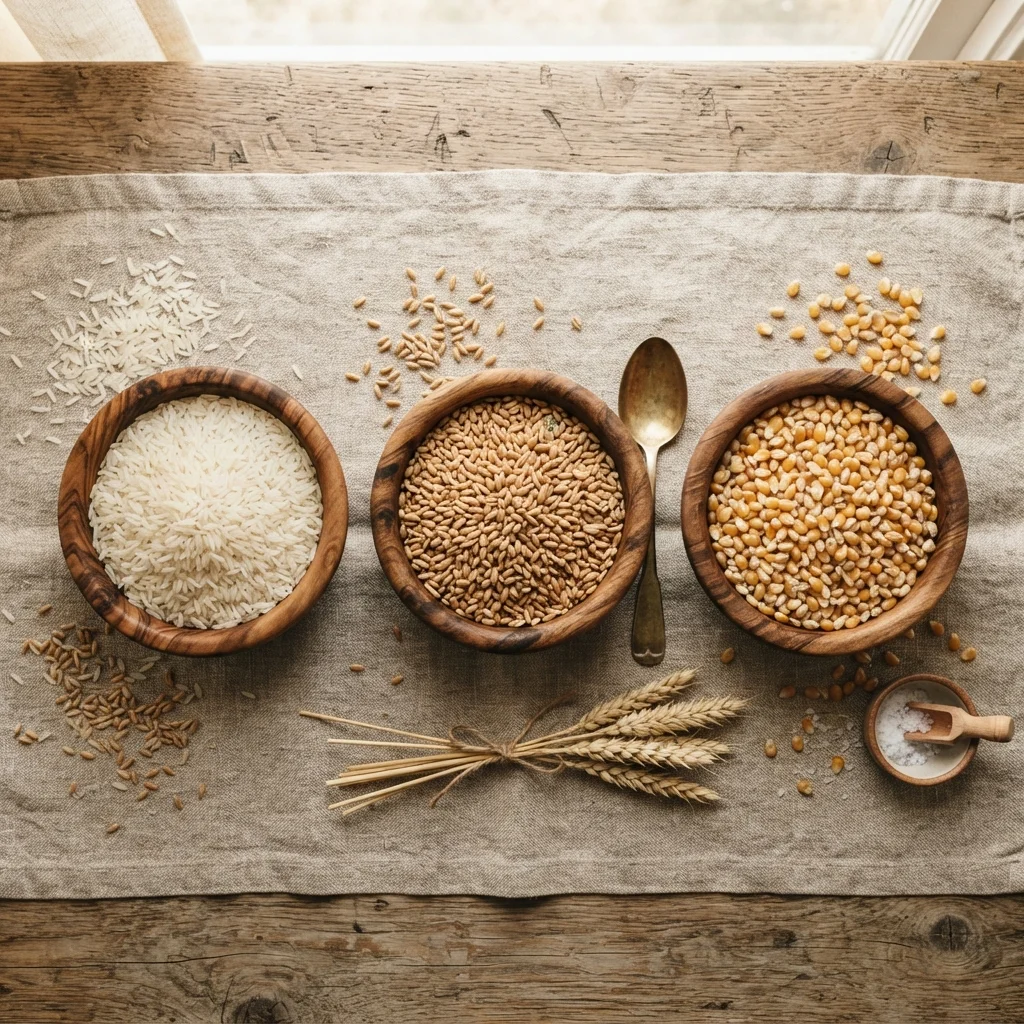
The movement of crops was staggering in scale. The potato, originating in the Andes, became a dietary cornerstone in Ireland, Germany, and Russia within two centuries of contact. Maize spread through Africa and southern Europe. Tomatoes transformed Italian cooking. Meanwhile, sugar cane - introduced to the Caribbean by European colonizers - reshaped land use across an entire region. Staple grains like maize moved far beyond their origins to become foundational foods in regions that had never seen them before.
This wasn't simply neutral exchange. The movement of plants happened within a framework of conquest, and the benefits were distributed extremely unevenly.
~50%
Share of world's calories from American-origin crops
Historians estimate that crops originating in the Americas - including maize, potatoes, and cassava - now account for roughly half of global caloric intake, per food history scholarship.
1500s-1800s
Peak era of colonial plantation agriculture
The plantation system expanded across the Caribbean, Americas, and Asia over three centuries, restructuring land use and labor in dozens of regions.
Over 100
Crop species transferred via the Columbian Exchange
Botanical historians have documented more than 100 species of plants moving between the Old and New Worlds following European contact in 1492.
Plantation Systems and the Destruction of Food Sovereignty
One of colonialism's most lasting food-related legacies was the plantation model. Colonial powers reorganized vast tracts of agricultural land - in the Caribbean, West Africa, South Asia, and Southeast Asia - to produce single export crops. Sugar, coffee, rubber, and later cotton took priority over food grown for local populations.
This monoculture approach had severe consequences. Land that once supported diverse, locally adapted food systems was cleared and consolidated. Enslaved people and indentured laborers worked these estates, often lacking reliable access to sufficient food themselves. When export crops failed or markets shifted, communities had little agricultural resilience to fall back on.
The disruption extended to knowledge. Many indigenous communities maintained sophisticated understanding of local plants - what was edible, medicinal, and when to harvest. Displacement and forced labor fractured the transmission of this knowledge across generations. Communal food practices, deeply tied to cultural identity, were often suppressed alongside indigenous languages and customs.
“The history of food is inseparable from the history of power. What people eat has always reflected who controls the land, the labor, and the trade routes.”
— Sidney Mintz, Cultural anthropologist and author of 'Sweetness and Power' (1985)
Ingredients Disguised as Tradition
Perhaps the most surprising dimension of colonial food history is how thoroughly it hides in plain sight. Many foods people regard as the heart of their national cuisine arrived through colonial-era exchange - often relatively recently.
The chilli pepper, central to Indian, Thai, and Korean cooking, reached Asia only after European contact with the Americas in the late 15th century. Before that, spice heat in Asian cuisine came from sources like black pepper and ginger. The tomato - now inseparable from Italian and Spanish cooking - was viewed with suspicion in Europe for over a century after its arrival and only became a culinary staple in the 18th and 19th centuries. How heat and spice spread across the world is itself a story shaped by colonial trade routes.
This doesn't make these culinary traditions any less genuine - cultural adaptation is how food cultures have always worked, as explored in the broader discussion of food authenticity. It does, however, complicate simple narratives about what is 'original.'
How to Read a Recipe's History
Next time you cook a dish considered 'traditional' in any culture, look up when its key ingredients arrived in that region. Many will have crossed oceans within the last 500 years. This simple exercise can reveal how fluid and interconnected food history really is, and it makes cooking a more thoughtful experience.
Nutritional Legacies That Outlasted Empires
The food system changes imposed during the colonial period did not end with independence movements of the 20th century. Many postcolonial nations inherited agricultural economies still oriented around export crops, with limited infrastructure for domestic food production. Dependence on imported staples - including refined wheat flour and processed sugar - became structurally embedded in food supplies.
Public health researchers have noted higher rates of diet-related illness, including type 2 diabetes and nutrient deficiencies, in certain postcolonial populations. While the causes are complex and involve many factors, the disruption of traditional, locally adapted diets is considered a contributing element by a number of nutrition scholars. This is a field of ongoing academic discussion, and general information here should not be taken as health advice - readers with specific health concerns should consult a qualified healthcare professional.
Understanding the historical roots of what a society eats - including who controlled those food systems and why - offers essential context for foundational nutrition concepts that shape everyday choices today. It also connects to the older history of ingredient exchange described in the context of ancient trade routes like the Silk Road, which moved food across continents long before European empires did.
This article is for informational and educational purposes only. It does not constitute medical, nutritional, or professional advice. Readers with individual health concerns should consult a qualified healthcare professional.