
What Depreciation Actually Means for Car Owners
When you buy a car - new or used - you are purchasing a depreciating asset. Unlike property, which can appreciate over time, vehicles almost universally lose value as they age. Depreciation is not an abstract accounting concept; it translates directly into real money lost when you eventually sell or trade in your vehicle.
The process begins the moment a new car is registered. At that point, it is no longer a 'new' car in the market's eyes, and its value adjusts accordingly. Industry data consistently shows that new vehicles lose a substantial portion of their value within the first twelve months - figures in the range of 15-25% are widely cited by automotive valuation services across European markets.
Understanding depreciation is essential for evaluating the true cost of owning a car, beyond the purchase price and monthly running costs.
15-25%
Typical first-year depreciation for a new car
Widely cited range across European automotive valuation services including Schwacke and Eurotax.
~50%
Value retained after approximately three years
General industry benchmark; actual figures vary significantly by brand, model, and market conditions.
#1
Depreciation's rank among annual car ownership costs
Automotive cost analyses consistently identify depreciation as the largest single expense for new vehicle owners.
The Factors That Accelerate or Slow Value Loss
Depreciation is not uniform. Several measurable factors determine how quickly or slowly a specific vehicle loses value:
- Age and mileage: Both independently reduce value. A three-year-old car with 90,000 km will typically be worth significantly less than an equivalent example with 40,000 km, even if both are the same model year.
- Brand and model reputation: Vehicles from manufacturers with strong reliability records and robust dealer networks tend to hold value better. Market perception matters as much as mechanical reality.
- Fuel type and emissions classification: In European markets, evolving urban access restrictions and shifting buyer sentiment have affected the residual values of certain diesel vehicles. Electric vehicles present a more complex picture, with battery condition becoming an additional valuation variable.
- Colour and specification: Neutral, popular colours depreciate more slowly than unusual shades. Factory-standard specifications with commonly requested options tend to appeal to a broader pool of used buyers.
- Condition and service history: A documented, complete service history from authorised dealers provides strong evidence of vehicle care and directly supports higher valuations at resale.
Preserve Resale Value From Day One
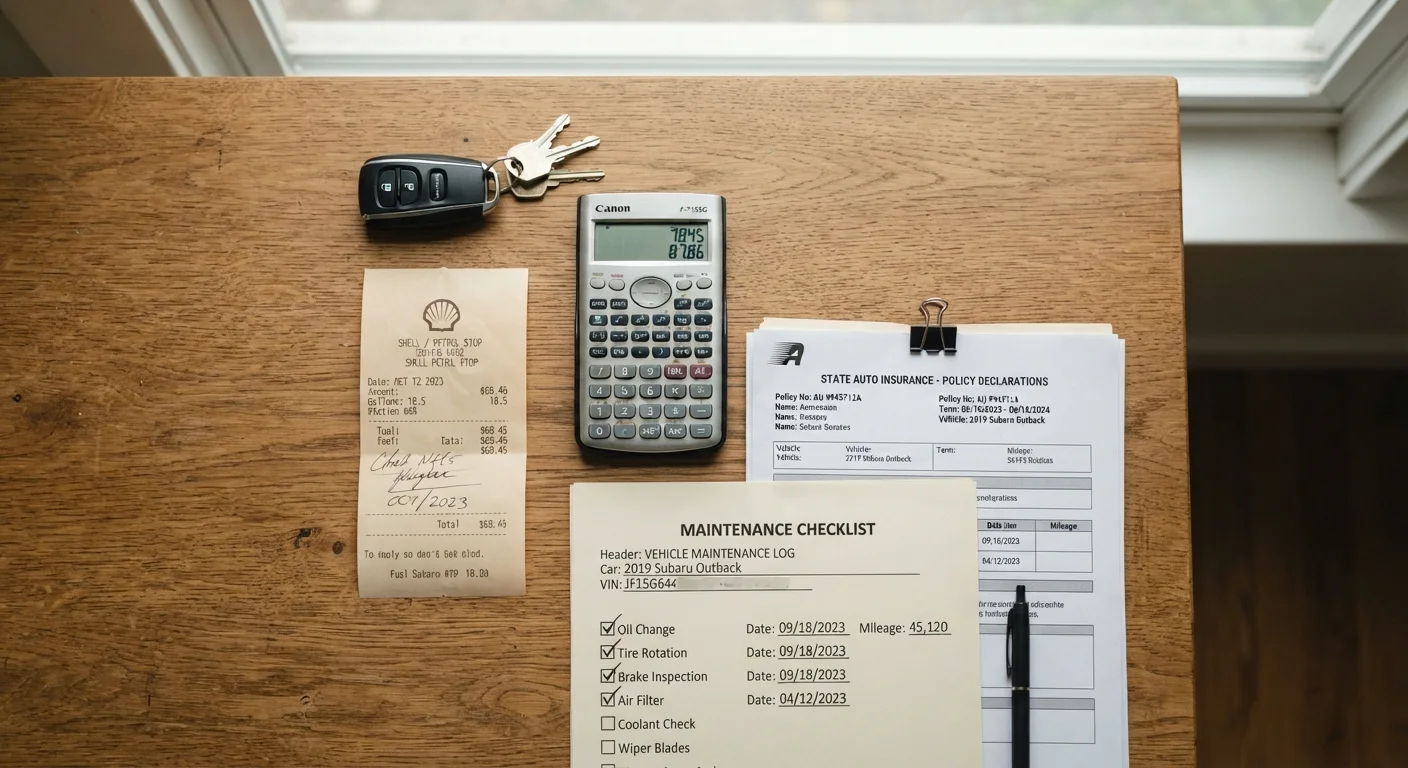
Keep every service invoice and inspection record in a dedicated folder - physical or digital. A complete, verifiable service history is one of the most reliable ways to support a higher asking price when you eventually sell. Small investments in paintwork protection and interior care also pay dividends at resale time.
The Depreciation Curve: When Value Falls Fastest
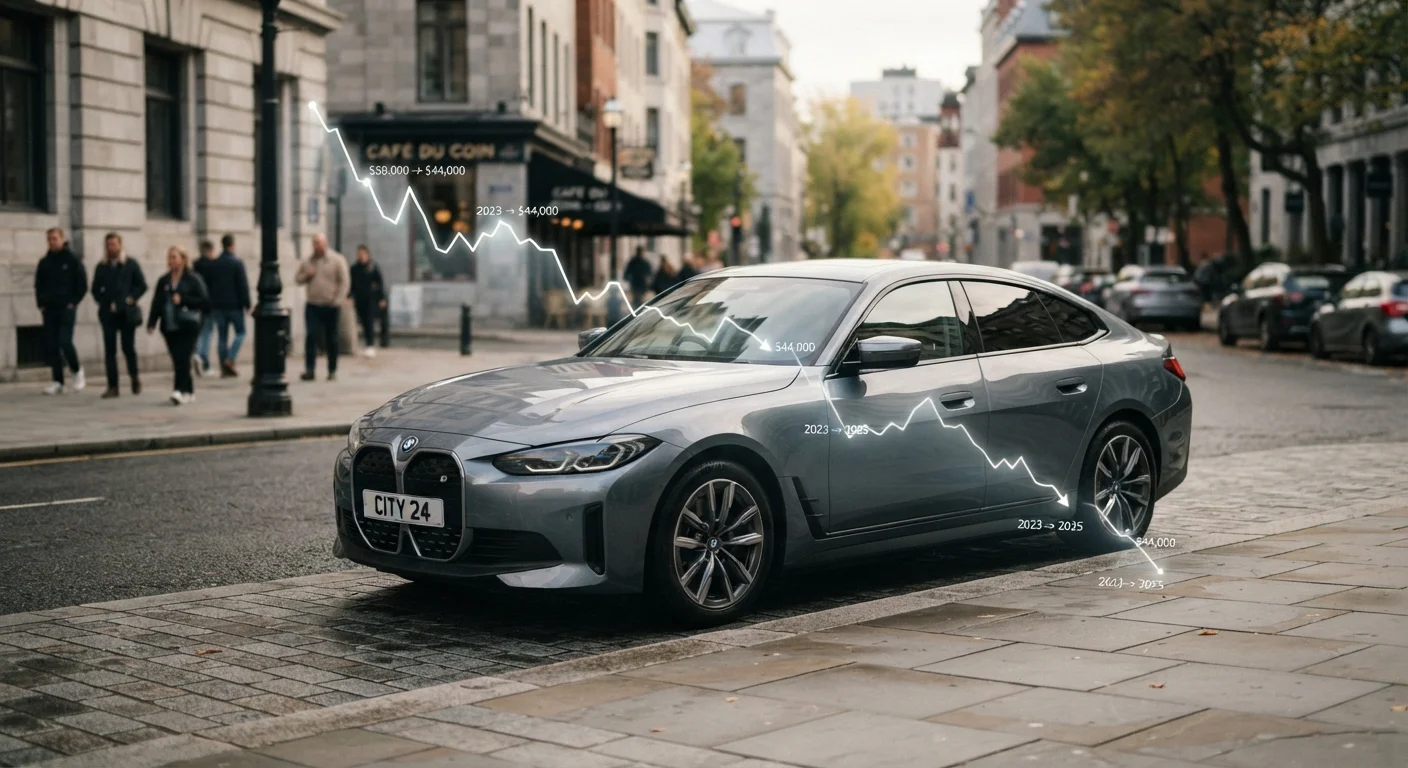
Depreciation does not occur at a steady rate throughout a vehicle's life. The curve is steepest in the early years and flattens progressively as the car ages. This non-linear pattern has direct practical implications for buyers and sellers.
A car that cost €30,000 new might be worth €22,000 after one year, €17,000 after three years, and €12,000 after five years - though these figures vary considerably by vehicle type. The gap between years one and three often represents the zone of maximum value destruction.
This is precisely why purchasing a one- to three-year-old used vehicle can be financially advantageous - the previous owner has absorbed the worst of the drop. For a detailed comparison of how this plays out financially, see our analysis of new versus used car trade-offs.
“Depreciation is the cost that most car buyers never see on an invoice - but it is almost always the largest cost they pay.”
— Ferdinand Dudenhöffer, Automotive economist and director of the Center Automotive Research (CAR), University of Duisburg-Essen
Depreciation in the Context of Total Ownership Cost
Many drivers focus on fuel costs, insurance premiums, and service bills - costs that arrive as regular, visible invoices. Depreciation is different: it is a silent cost that accumulates without generating a bill, making it easy to overlook.
When economists and automotive analysts calculate the full annual cost of car ownership, depreciation consistently emerges as the largest single line item for new and nearly-new vehicles. It is worth incorporating this into decisions about whether to buy or lease a vehicle, since leasing structures pricing partly around projected depreciation.
Equally, drivers who evaluate deals purely on monthly payment terms risk underestimating their total expenditure. Our guide to why monthly payments can mislead explains the broader picture. For a comprehensive view of every expense involved in running a vehicle, the true annual cost of running a car is essential reading.
This article provides general automotive and financial information for educational purposes. It does not constitute personalised financial advice. For decisions specific to your circumstances, consult a qualified financial adviser.