

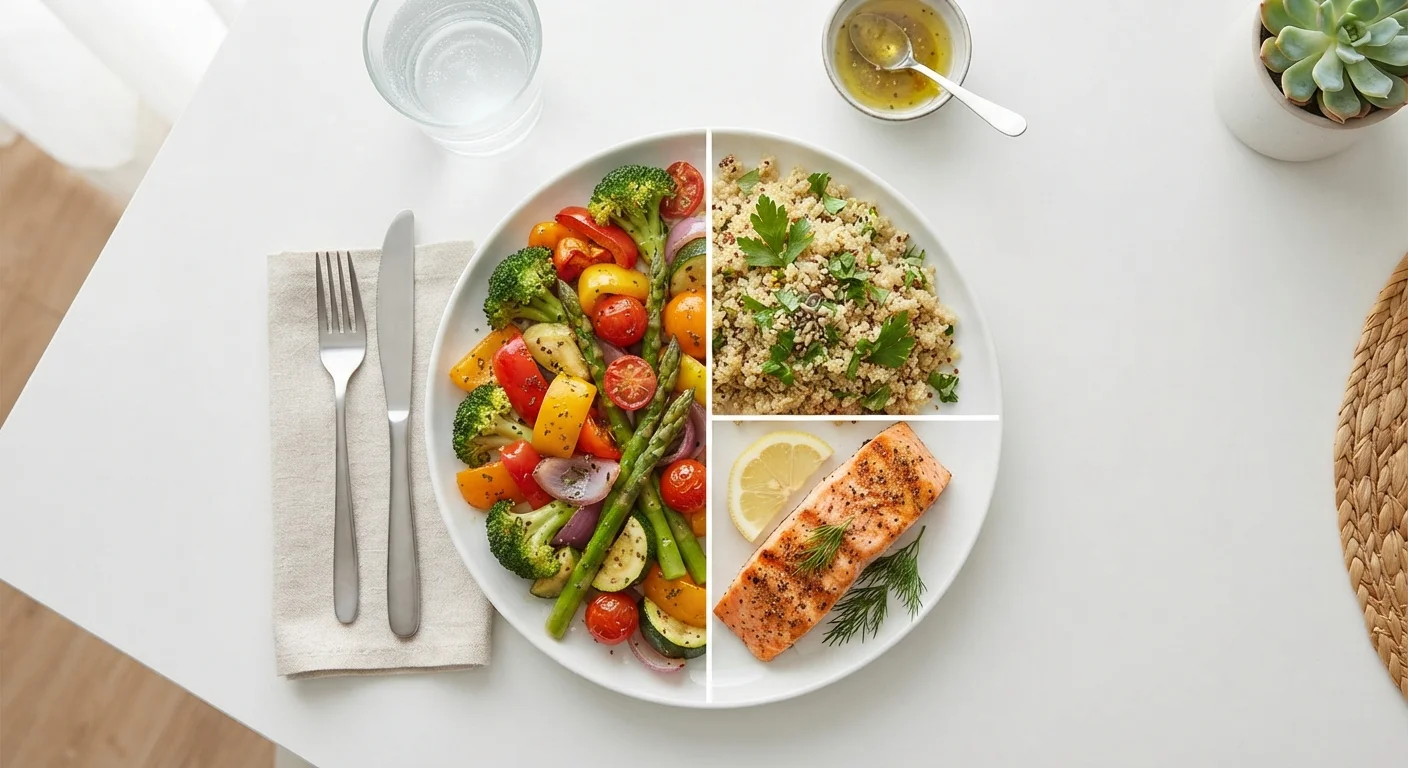
What a Balanced Plate Actually Means
A balanced plate is not about eating less or eliminating food groups. It is a practical visual tool that helps you portion a meal so that multiple nutritional needs are met at once - without calorie counting or complex rules.
The concept is supported by dietary guidelines from public health bodies across Europe and North America. The core idea: use the surface area of your plate as a rough guide for how much space each food group should occupy. It is a starting point, not a law - and what you eat across the whole day consistently matters far more than any single meal.
Macronutrients
The three main energy-providing nutrients in food: carbohydrates, protein, and fat. All three are needed daily in varying amounts.
Dietary fibre
A type of carbohydrate found in plant foods that the body cannot fully digest. It supports digestive health and helps you feel full for longer.
Whole grains
Grains that retain their outer bran and germ layers, such as oats, brown rice, and wholemeal bread. They contain more fibre and nutrients than refined grain products.
Unsaturated fats
A category of dietary fat found in foods like olive oil, nuts, seeds, and oily fish. They are generally considered heart-supportive when consumed in place of high amounts of saturated fat.
Micronutrients
Vitamins and minerals required in small amounts for the body to function properly - for example, iron, calcium, and vitamin C. A varied diet typically covers most needs.
The Four Food Groups on Your Plate
Most plate-based frameworks organise food into four broad groups. Here is what each contributes and roughly how much space each deserves:
- Vegetables and salad (about half the plate): These provide fibre, vitamins, minerals, and water. Variety matters more than specific choices - leafy greens, root vegetables, legumes, and cruciferous vegetables all contribute differently. Aim for colour variety as a simple proxy for nutrient diversity.
- Whole grains and starchy vegetables (about one quarter): Foods like brown rice, wholemeal bread, oats, quinoa, and potatoes with skin provide sustained energy via complex carbohydrates and additional fibre. Choosing less-refined versions where possible is generally recommended by nutritional guidelines.
- Protein (about one quarter): Protein supports muscle maintenance, immune function, and satiety. Sources include fish, poultry, eggs, legumes, tofu, tempeh, and dairy. Varying your sources across the week provides a broader nutrient profile.
- Healthy fats (a smaller addition): Rather than occupying their own section, fats appear as cooking oils, dressings, or additions like avocado or a small handful of nuts. Unsaturated fats from plant and fish sources are generally preferred over high intakes of saturated fat, according to established nutritional science.
Water or unsweetened drinks complete the picture. Explore the Nutrition Basics hub for deeper context on each food group.
A Quick Plate-Check Habit
Before sitting down to eat, take a brief look at your plate and ask: is at least half of it vegetables or salad? If not, adding a side salad or some extra steamed vegetables is a simple correction. This two-second check, done consistently, builds a useful habit without requiring any formal meal planning.
Making It Work in Real Life
Applying the plate method does not require special equipment or meal-prep marathons. A few practical habits make it easier to maintain consistently:
- Build the vegetable half first. Plating vegetables before protein or grains makes it easier to honour the proportions - rather than squeezing greens in as an afterthought.
- Use what you have. Frozen vegetables, tinned legumes, and pre-cooked grains all count. Cost and convenience are real barriers, and using affordable staples is entirely compatible with a balanced plate.
- Batch where it helps. Cooking a large portion of whole grains or roasting a tray of vegetables on a weekend reduces weekday friction. Just be realistic - see common meal planning pitfalls to avoid over-ambitious systems that quickly collapse.
Not every meal will look textbook-balanced, and that is fine. The goal is a reasonable average across your day and week.
Common Beginner Mistakes to Avoid
Starting out with a new eating framework comes with predictable stumbling blocks. These are the most common ones worth knowing:
Avoid Applying This as a Strict Diet
The plate method is a general educational framework, not a medically prescribed eating plan. It does not account for individual health conditions, allergies, medications, or specific nutritional needs. People managing chronic conditions, those who are pregnant, and children or older adults should seek guidance from a qualified healthcare professional or registered dietitian before making significant dietary changes.
- Treating the plate method as a diet: It is a flexible guide, not a weight-loss programme. Using it rigidly or attaching guilt to any deviation undermines its purpose.
- Underestimating protein variety: Relying on one protein source (such as chicken breast every day) limits your nutrient range. Mixing animal and plant proteins across the week is generally beneficial.
- Ignoring drinks: Juice, sweetened drinks, and alcohol contribute energy and affect overall nutrition in ways that the plate itself does not capture. Water remains the most straightforward default.
- Skipping fats entirely: Low-fat approaches that eliminate healthy fats can reduce absorption of fat-soluble vitamins (A, D, E, K). Moderate inclusion of unsaturated fats is supported by nutritional science.
This article provides general nutritional information and education only. It is not a substitute for personalised advice from a qualified healthcare professional or registered dietitian. If you have a health condition, allergy, or specific dietary concern, please consult a professional before making significant changes to your eating habits.