

Why Battery Advice Has Not Kept Up With Technology
Much of the battery advice circulating online dates back to older nickel-cadmium or nickel-metal hydride batteries, which genuinely did require full charge cycles to perform well. Today's smartphones use lithium-ion (Li-ion) batteries, which work very differently. Applying the old rules to modern phones can actually cause more wear than it prevents.
Misconceptions spread partly because the advice once had a real basis, and partly because phone behavior can seem mysterious. Understanding what lithium-ion batteries actually respond to helps you make genuinely useful choices - without unnecessary fuss. Just as persistent misconceptions exist around diet and sleep, technology myths tend to stick around long after the evidence has moved on. See how similar patterns appear in our look at sleep myths many people still believe.
The Most Common Battery Myths - Corrected
Below are the battery habits most people treat as gospel, alongside what current evidence actually shows.
Myth
You should drain your battery to 0% before charging it to maintain accuracy and health.
Fact
Fully discharging a lithium-ion battery regularly accelerates wear. Partial top-ups are healthier.
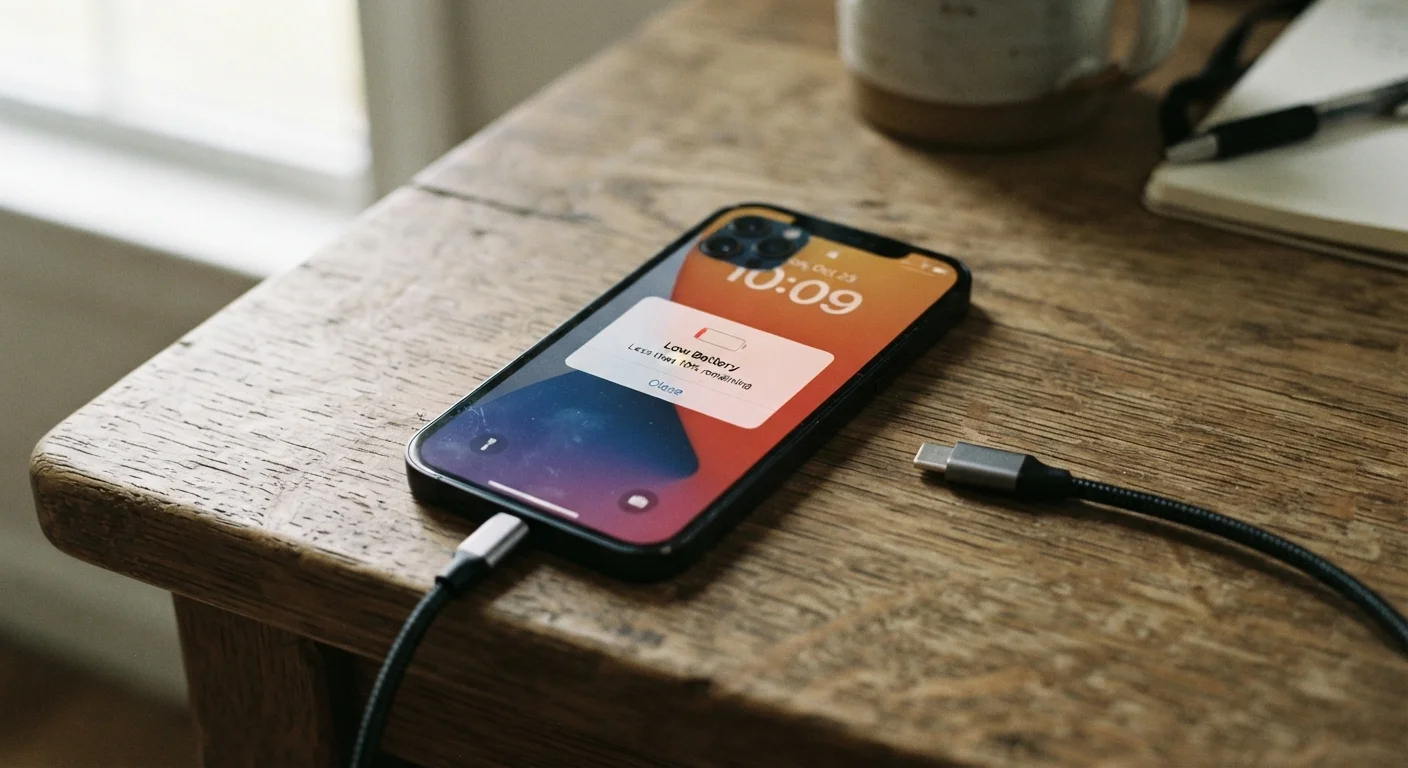
Deep discharges put lithium-ion cells under chemical stress. Battery management software in modern phones can lose calibration if cells are regularly run flat. Most manufacturers recommend keeping charge above 20% where possible. Occasional full discharges (a few times a year) can help recalibrate the battery indicator, but routine deep draining shortens overall lifespan.
Myth
Leaving your phone charging overnight will overcharge the battery and damage it.
Fact
Modern smartphones stop drawing current once they reach 100%, so true overcharging is not a practical risk.
Phones include charging management chips that cut off power when the battery is full. That said, some phones trickle-charge to maintain 100%, which generates a small amount of heat over several hours. Features like "optimized charging" (available on many current Android and iOS devices) address this by learning your routine and pausing the final charge percentage until just before you wake up - a useful option if available on your device.
Myth
Force-closing apps saves battery because they stop running in the background.
Fact
Frequently force-closing and reopening apps often uses more battery than leaving them in standby.
When you swipe an app away, the operating system suspends it. Reopening a fully closed app requires the phone to reload it from scratch, which demands a burst of processor and memory activity. Suspended apps, by contrast, use minimal resources. Repeatedly force-closing apps you use regularly creates a cycle of high-energy restarts. The exception is apps with background permissions (location, audio streaming) that genuinely keep running - those are worth managing, but through permission settings rather than the multitasking screen.
Myth
Using a fast charger will ruin your battery faster than a standard charger.
Fact
Fast charging is safe for normal use, though it does generate more heat than slower charging.
Fast chargers certified for your phone model are designed to work within the battery's tolerances. They deliver higher power at lower charge levels, then reduce speed as the battery fills - this is called "stepped" or "adaptive" fast charging. The extra heat produced is the real consideration, not the speed itself. Avoiding fast charging in already-warm environments (e.g. a hot car) is sensible. Using uncertified third-party chargers is a greater risk than using your phone's own fast-charging standard.
Myth
Keeping your phone at 100% all day (always plugged in) is fine because it stops charging when full.
Fact
Prolonged time at 100% charge can accelerate capacity degradation slightly, even with overcharge protection.
Lithium-ion cells experience a state of mild chemical stress when held at maximum charge for extended periods. While the effect is gradual, users who leave phones docked at a desk all day may notice faster long-term capacity loss compared to those who unplug at full charge. The practical middle ground is to charge to around 80-90% for daily use if your device offers charge-limiting settings, or simply unplug once charged rather than keeping it connected indefinitely.
For a broader look at everyday habits that quietly reduce battery life, the article on common ways people accidentally drain their phone battery faster covers screen brightness, location services, and more.
What Actually Damages Your Battery
The single biggest threat to lithium-ion battery longevity is heat. Charging your phone in direct sunlight, using it heavily while it charges, or leaving it on a hot car dashboard all stress the battery far more than overnight charging ever will.
Avoid Charging in High-Heat Environments
Charging generates heat even under normal conditions. Doing so under a pillow, inside a case that traps heat, or in direct sunlight significantly raises battery temperature. Sustained heat above approximately 35°C (95°F) is widely cited by battery researchers as a threshold where lithium-ion degradation accelerates. If your phone feels hot while charging, remove the case and move it to a cooler surface.
Charge cycles also matter over time. Each full 0-100% cycle contributes to gradual capacity loss. Partial charging - say, topping up from 40% to 75% - uses only a fraction of a cycle, which is why frequent small top-ups are generally gentler than deep discharge-and-recharge cycles.
Background app activity is another factor worth understanding. Apps that appear closed may still be running processes that consume power. Our guide to apps running in the background on your phone explains what is actually happening and when closing apps genuinely helps.
~500
Typical full charge cycles before notable capacity loss
Battery manufacturers commonly rate lithium-ion cells for around 500 full charge cycles before capacity drops to roughly 80% of original - partial cycles count proportionally less.
20-80%
Recommended daily charge range for longevity
Battery researchers and several phone manufacturers suggest keeping lithium-ion batteries in this range during normal use to reduce chemical stress on cells.