
The Legal Baseline: What Third-Party Insurance Actually Covers
In Germany, third-party liability insurance - known as Kfz-Haftpflichtversicherung - is legally mandated under the Pflichtversicherungsgesetz (Compulsory Insurance Act). Without it, a vehicle cannot be registered and must not be operated on public roads. The same baseline obligation applies across EU member states, though the minimum coverage limits vary by country.
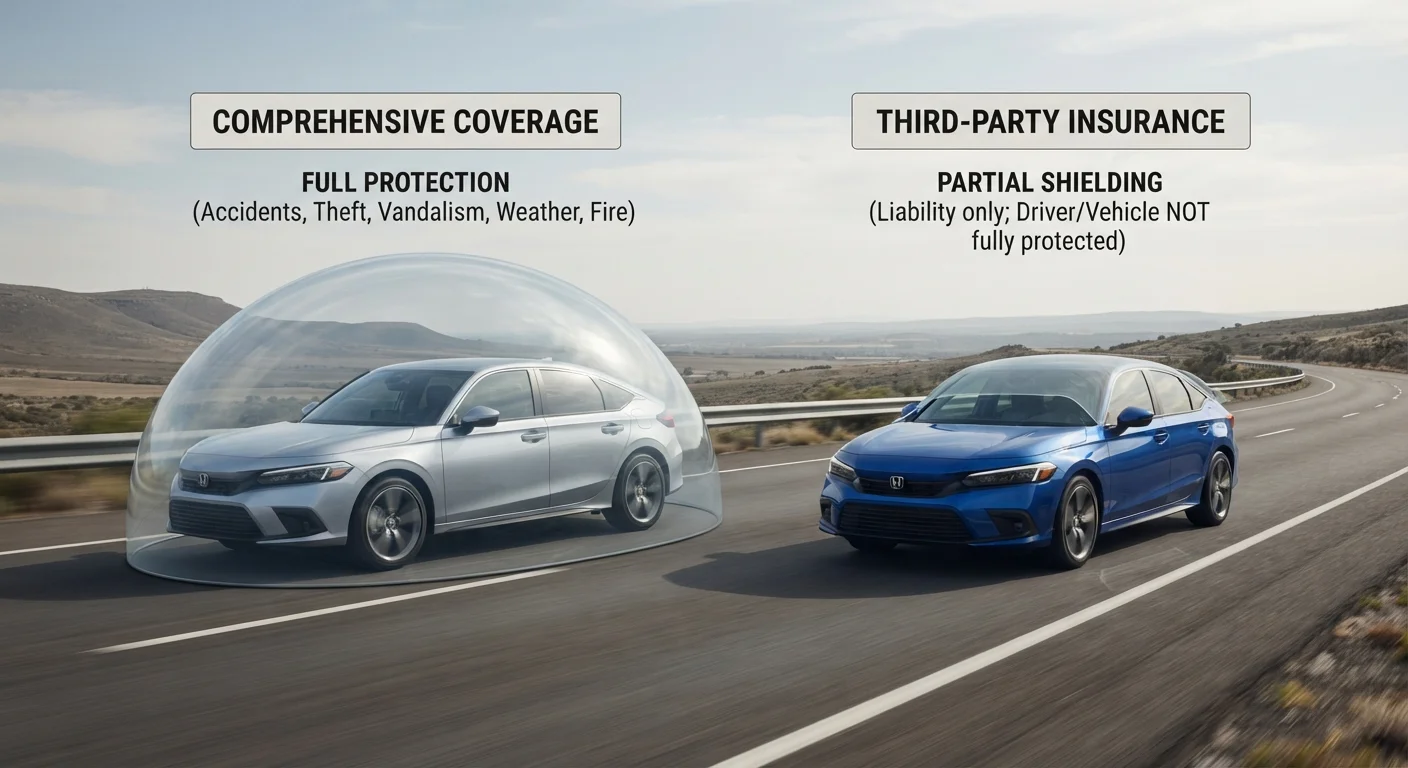
What third-party insurance does is straightforward: it pays for damage or injury you cause to other people, their vehicles, and their property. If you run a red light and damage another driver's car, your third-party insurer covers their repair costs and any medical expenses arising from injury. It does not pay a single euro toward repairing your own vehicle.
German policies are generally structured around three minimum coverage limits covering personal injury, property damage, and financial loss. In practice, most insurers offer substantially higher limits than the legal minimums, and drivers should review those figures carefully - particularly the personal injury cap - since real-world accident costs can be considerable. As part of a broader look at running costs, see our overview of annual car ownership expenses for context on where insurance fits into the full picture.
What Comprehensive Cover Adds to the Picture
Comprehensive insurance - Vollkasko in German - builds on third-party liability and extends protection to your own vehicle. A Vollkasko policy typically covers:
- Damage to your own car in an accident, even when you are at fault
- Theft of the entire vehicle
- Fire and explosion damage
- Weather-related damage including hail, flooding, and falling objects
- Vandalism by third parties
There is also a mid-tier option worth understanding: Teilkasko (partial comprehensive). This covers theft, weather, fire, and certain natural events but excludes at-fault collision damage to your own car. It sits between basic third-party and full Vollkasko in both scope and cost.
| Criterion | Comprehensive (Vollkasko) | Third-Party (Haftpflicht) |
|---|---|---|
| Legal requirement | Not required, but often contractually obligated | Legally mandatory in Germany and across the EU |
| Covers damage to other parties | Yes | Yes |
| Covers your own vehicle (at-fault accident) | Yes | No |
| Covers theft | Yes | No |
| Covers weather and fire damage | Yes | No |
| Covers mechanical breakdown | No | No |
| Typical premium level | Higher | Lower |
| Best suited to | Newer or higher-value vehicles | Older or lower-value vehicles |
One critical point: all policy types exclude mechanical breakdown, engine wear, and damage caused by driving under the influence of alcohol or drugs. Comprehensive is not a maintenance contract - it covers sudden, unforeseen events, not gradual deterioration. This is an important distinction for first-time owners to understand; see what new drivers need to know before taking the wheel.
How to Decide Which Level of Cover Suits Your Situation
No single coverage level is objectively correct for every driver. The decision is practical and depends on several intersecting factors.
Vehicle market value is the most important consideration. A widely cited rule of thumb suggests that if a vehicle's current market value is less than roughly eight to ten times the annual Vollkasko premium, comprehensive cover may not deliver good value - though this is a guide, not a guarantee. A qualified insurance adviser can help apply this to your specific situation.
Financing arrangements also matter. If you are still paying off a vehicle through a loan or lease, the lender will almost always require comprehensive cover as a contractual condition. Understanding this before signing is part of the broader financial picture covered in our comparison of buying versus leasing long-term costs.
Deductibles (Selbstbeteiligung) can significantly reduce Vollkasko premiums. Choosing a higher deductible transfers more risk to you in the event of a claim, but lowers your regular outgoings - a trade-off worth modelling against your emergency savings. Insurance forms just one line in a vehicle's true annual budget; the full cost of ownership extends well beyond the sticker price.
~80%
German passenger cars with Vollkasko or Teilkasko cover
According to the German Insurance Association (GDV), the majority of insured private cars in Germany carry some form of comprehensive cover beyond the minimum liability.
3 tiers
Standard insurance coverage levels in Germany
Haftpflicht (third-party), Teilkasko (partial comprehensive), and Vollkasko (full comprehensive) form the three distinct tiers available to German drivers.
This article provides general information about car insurance policy types for educational purposes only. It is not personalised financial or insurance advice. Consult a licensed insurance professional for guidance tailored to your individual circumstances.