

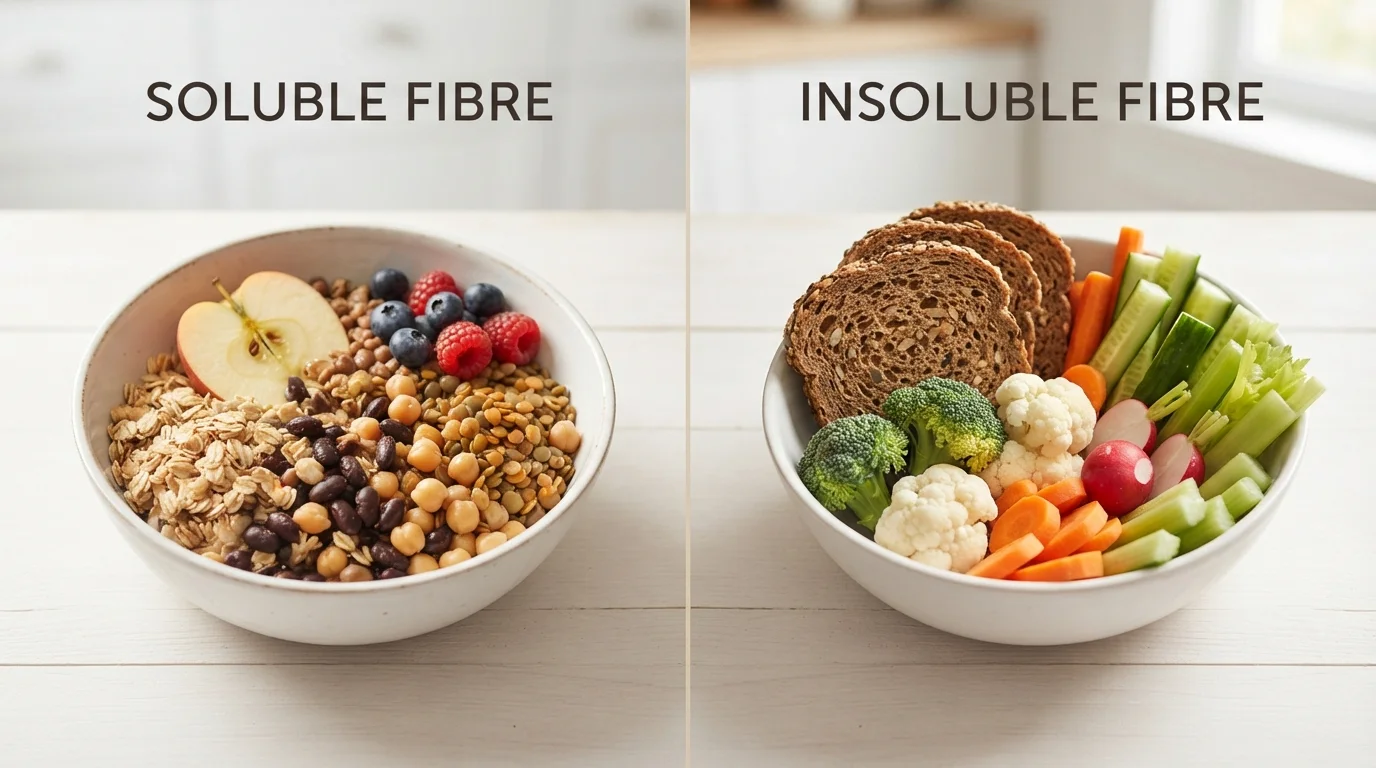
Why Fibre Isn't Just One Thing
When nutrition labels list dietary fibre, they are actually counting two structurally and functionally distinct compounds: soluble fibre and insoluble fibre. Both are forms of carbohydrate that the human body cannot digest, but what happens to each of them inside the digestive system is quite different. Understanding this distinction helps explain why fibre has such wide-ranging effects - from blood sugar regulation to bowel health - and why food variety matters more than chasing a single number on a label.
As explored in our overview of dietary fibre, most adults fall well short of recommended daily intake. Part of the challenge is that people often think of fibre as a single thing, when in practice getting adequate amounts of both types requires eating a genuinely varied diet.
How Each Type Behaves in the Body
Soluble fibre dissolves in water to form a thick, viscous gel inside the digestive tract. This gel slows the passage of food through the stomach and small intestine, which moderates how quickly glucose enters the bloodstream. It also binds to bile acids in the gut - a mechanism associated with supporting healthy cholesterol levels over time. Additionally, soluble fibre is fermented by beneficial bacteria in the large intestine, which is why it is often described as prebiotic. Common food sources include oats, barley, legumes (lentils, beans, chickpeas), apples, and psyllium husk.
Insoluble fibre, by contrast, does not dissolve. It absorbs water and adds physical bulk to digested material as it moves through the colon, helping to keep stools soft and promoting regular bowel movements. Rather than being fermented, it largely passes through intact, acting almost mechanically to stimulate the intestinal wall and speed transit time. Whole grain products, wheat bran, the skins of fruits and vegetables, and most leafy greens are reliable sources.
| Criterion | Soluble Fibre | Insoluble Fibre |
|---|---|---|
| Dissolves in water | Yes - forms a gel | No - remains intact |
| Primary digestive effect | Slows digestion, moderates glucose absorption | Adds bulk, speeds intestinal transit |
| Effect on gut bacteria | Fermented - prebiotic effect | Largely not fermented |
| Associated health benefits | Blood sugar moderation, cholesterol support | Regular bowel movements, digestive health |
| Key food sources | Oats, legumes, apples, barley | Wheat bran, whole grains, vegetable skins |
Getting Both Types Through Everyday Eating
Most whole plant foods contain a mixture of both fibre types, though the proportions differ considerably. Oats, for example, are notably high in a soluble fibre called beta-glucan, while wheat bran skews heavily toward the insoluble side. This is why eating a range of plant foods - rather than relying on one "high-fibre" product - is the most practical approach for covering both types.
~17g
Average daily fibre intake in the US
US dietary surveys consistently show average adult fibre consumption is roughly 17 grams per day - well below the recommended 25-38 grams.
6g
Beta-glucan in a 100g serving of oats
Oats are one of the richest natural sources of beta-glucan, a well-studied soluble fibre linked to cholesterol and blood sugar management in research literature.
A useful everyday strategy is to think in food groups rather than fibre chemistry. Legumes at lunch, a piece of whole grain bread, raw vegetables as a snack, and fruit at breakfast will naturally deliver a useful mix. For those with specific digestive concerns or health conditions, talking to a registered dietitian is worthwhile before making significant dietary changes.
This article is for informational purposes only and does not constitute medical or dietary advice. Consult a qualified healthcare professional for guidance tailored to your individual health needs.