
What Sociologists Mean by 'Community'
The word community gets applied loosely - to neighborhoods, online forums, professional networks, and faith groups alike. Sociologists typically define it around three overlapping elements: shared identity, mutual interdependence, and regular interaction. When all three are present, a group tends to generate what researchers call social cohesion - the binding force that makes collective life functional and personally meaningful.
This matters because community isn't merely pleasant; it has measurable effects on health, economic resilience, and civic participation. Studies consistently show that people embedded in strong social networks recover faster from hardship and report higher subjective well-being. The question of what sustains or destroys that fabric is, therefore, not purely academic. For a broader look at the many structures through which people organize belonging, see the many forms human communities take around the world.
The Forces That Hold Communities Together
Research across sociology and social psychology points to a consistent set of conditions that sustain community bonds over time.
Shared purpose aligns individual effort with collective benefit
When members have a clear common goal, free-riding decreases and voluntary contribution rises. This dynamic is well-documented in studies of cooperative housing, neighborhood associations, and volunteer-run organizations.
Repeated informal contact builds durable trust
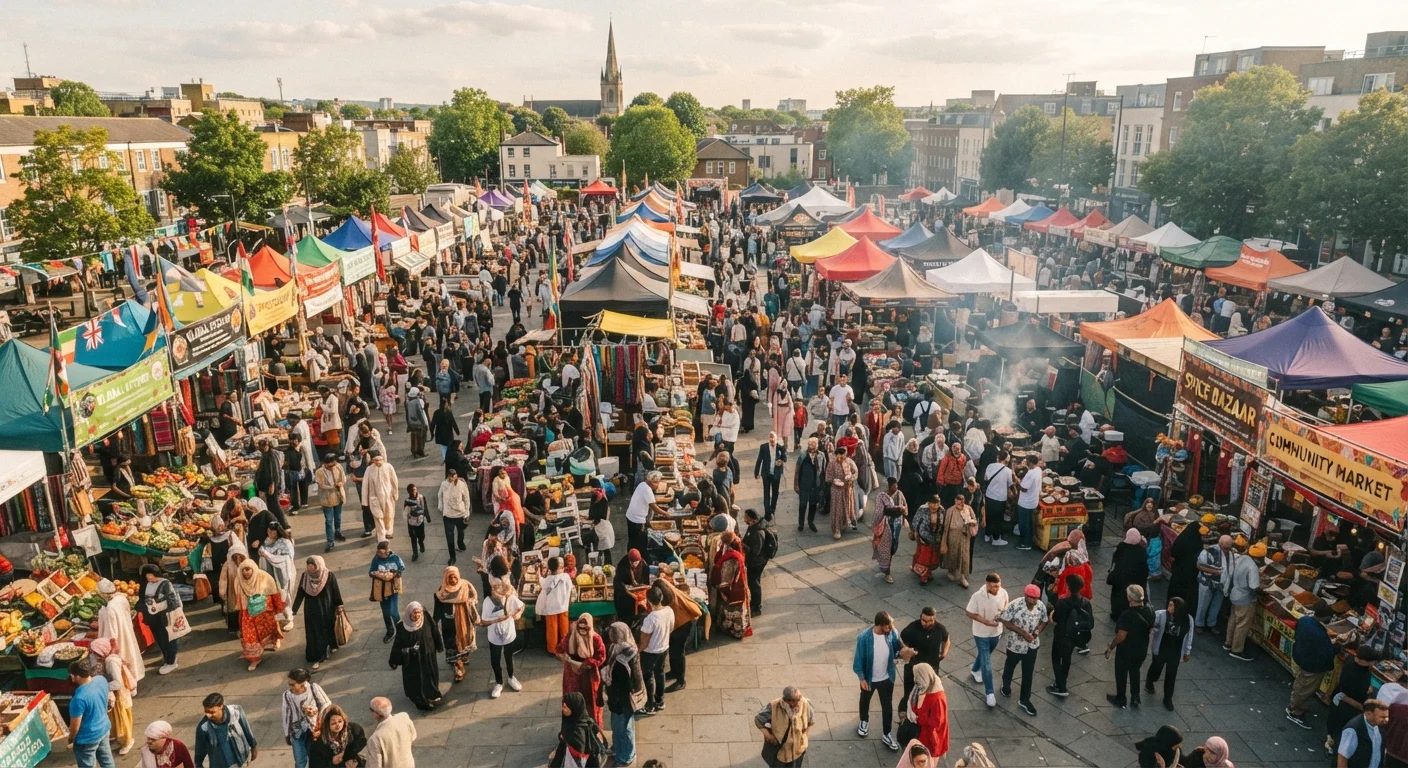
Low-stakes, face-to-face interaction - in parks, markets, or community centers - gradually accumulates into social trust that can withstand disagreement. Research on 'third places' shows these settings are disproportionately important to community resilience.
Perceived fairness sustains long-term membership
Communities where members believe resources and responsibilities are distributed equitably tend to retain members through difficulty. Perceived unfairness, by contrast, is one of the strongest predictors of exit or disengagement.
Bridging ties connect diverse sub-groups
Connections across different social groups - not just within them - give communities the adaptive capacity to handle change and prevent insularity. Sociologists distinguish this 'bridging capital' from tighter 'bonding capital' within groups.
Shared physical spaces enable spontaneous connection
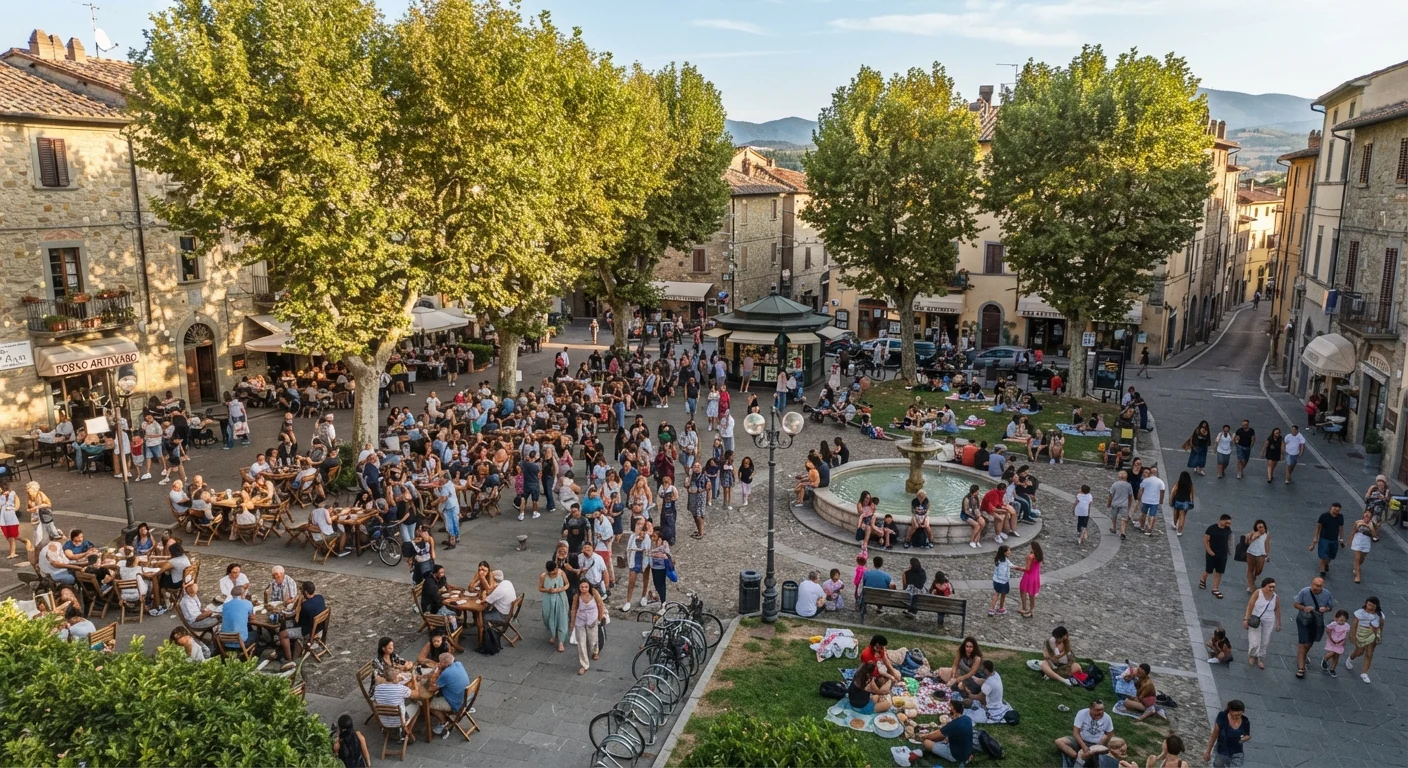
Well-designed public space - plazas, libraries, community gardens - creates the conditions for unplanned interaction that builds weak ties. Weak ties, research shows, are often the connective tissue holding a broader community together.
Shared purpose is perhaps the most powerful cohesive force. When members have a common goal - raising children safely, preserving a cultural tradition, improving a neighborhood - individual investment rises. Repeated low-stakes interaction matters just as much: the sociologist Ray Oldenburg's concept of "third places" (neither home nor work) captures how cafes, parks, and community centers create the informal contact that slowly builds trust. Finally, perceived fairness - the sense that rules and resources are distributed equitably - is essential. Communities where members feel the system is rigged against some tend to fracture along those fault lines.
Weak Ties Are Not Weak Bonds
In sociology, 'weak ties' refers to acquaintances and casual contacts rather than close friends. Counterintuitively, these relationships are often critical to community health - they bridge social clusters and circulate information, opportunities, and norms across a wider group. The concept was developed by sociologist Mark Granovetter in research on how people find jobs, but it applies broadly to how communities sustain themselves over time.
The Pressures That Pull Communities Apart
Fragmentation rarely arrives as a single event. It accumulates through structural and behavioral pressures that are well-documented in the sociological literature.
Economic inequality erodes shared identity and trust
When material conditions diverge sharply within a community, members increasingly inhabit separate social worlds. Research by Robert Putnam and others has linked growing income inequality to measurable declines in social trust and civic participation.
Loss of shared physical space reduces informal contact
Car-dependent design, the privatization of public space, and the closure of community institutions reduce the incidental encounters that sustain weak ties. Without these contacts, communities become collections of private households rather than functioning social units.
Digital fragmentation accelerates exit over voice
Online environments make it easier to leave or disengage than to work through conflict. This lowers the threshold for exit and can rapidly shrink active membership in ways that are difficult to reverse.
Rapid demographic or economic change strains bridging institutions
Communities undergoing fast change often lack the institutions - schools, faith groups, civic organizations - that help diverse residents build cross-group relationships. Without these bridges, change can temporarily suppress social cohesion even when residents are open to connection.
Lack of accountable leadership fosters resentment
Communities without credible, fair governance structures are vulnerable to capture by narrow interests or to paralysis through unresolved conflict. Resentment over perceived favoritism is a common precursor to broader disengagement.
Isolation and time scarcity limit participation
Economic pressure - long working hours, multiple jobs, housing instability - reduces the time and energy available for community involvement. Even people who value community life may be structurally unable to participate consistently.
The American sociologist Robert Putnam's longitudinal research found that both economic inequality and rapid demographic change can temporarily suppress social trust - not because diversity itself is damaging, but because communities often lack the bridging institutions needed to navigate difference constructively. Physical design plays a role too: car-dependent suburbs and the loss of shared public space reduce the incidental contact that maintains weak ties, and weak ties are, paradoxically, often what connect disparate parts of a community. Digital platforms have introduced new fragmentation dynamics as well - for a closer look, see where online community-building tends to go wrong.
Online vs. In-Person: Different Risks, Different Strengths
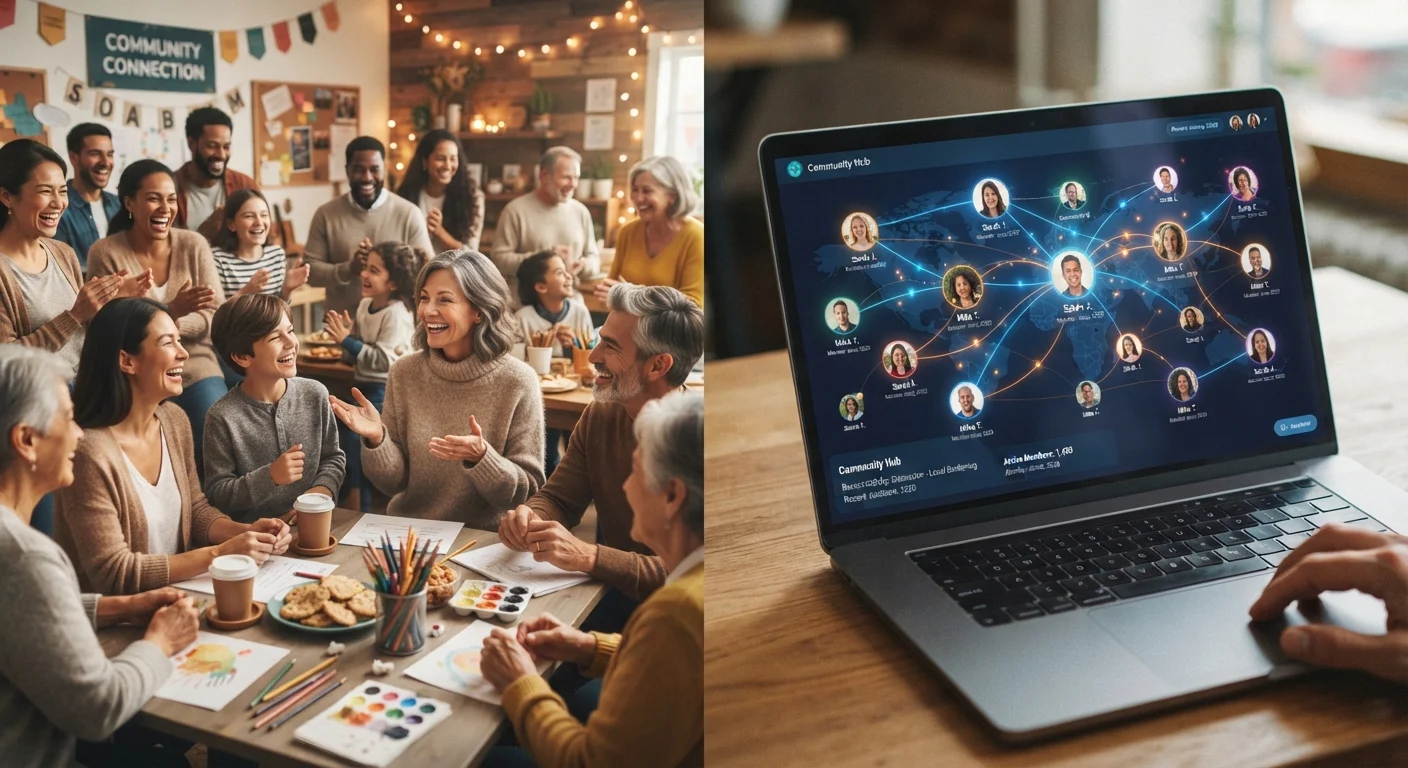
It would be a mistake to treat digital and physical communities as interchangeable. Each sustains and strains connection through distinct mechanisms. Online groups can scale rapidly, connect people across geography, and maintain bonds across time zones - but they are also more vulnerable to sudden exit, anonymity-fueled conflict, and the algorithmic amplification of divisive content.
~25%
Americans reporting no close social confidants
General Social Survey data over several decades has tracked a notable rise in reported social isolation in the United States, with a growing share of adults reporting no one to confide in.
3x
Higher civic participation in high-trust communities
Research across multiple countries has found that communities with higher measured social trust tend to show significantly greater rates of volunteering, voter turnout, and cooperative behavior.
In-person communities face different constraints: geography limits who can participate, and physical absence - caused by illness, economic pressure, or life transitions - can quietly sever ties. Neither format is inherently superior. The evidence suggests that the most resilient communities tend to layer both: digital tools extend reach and continuity, while in-person contact deepens trust in ways that screens rarely replicate. Online and in-person communities are more different than you think - a side-by-side look unpacks those distinctions further.
What the Evidence Suggests About Rebuilding
Communities that have frayed are not necessarily beyond recovery, though rebuilding is slower than erosion. The social trends research points to several recurring patterns in successful renewal: the presence of a credible, trusted convener (not always a formal leader); the creation of small, achievable shared projects that produce visible results; and deliberate efforts to include rather than simply tolerate marginal members.
Importantly, top-down investment - whether from government or philanthropic organizations - tends to work best when it supports locally identified needs rather than imposing external agendas. Communities that survive prolonged stress usually have what researchers call bridging capital: connections across social groups, not just within them. Bonding capital - tight in-group cohesion - can sustain a community in crisis, but it is bridging capital that prevents insularity and gives communities the flexibility to adapt.