
Why Trends Get Written Off Too Soon
Every few years, a wave of commentary arrives declaring some cultural development a fleeting fad - a product of pandemic conditions, generational novelty, or media hype. Sometimes that assessment is correct. But a surprising number of trends prove stickier than expected, quietly embedding themselves in how people work, eat, connect, and spend.
What separates a durable shift from a passing moment? Researchers who study social change often point to whether a trend addresses a genuine structural need or merely reflects a temporary mood. Trends anchored in economics, demographics, or technological infrastructure tend to persist; those driven by aesthetics or novelty tend not to. The list below examines several that were confidently forecast to fade - and didn't.
Before diving in, it's worth noting that trend data varies widely in quality. For a useful guide on reading such evidence critically, see how to read a social trend report without being misled.
Remote and Hybrid Work
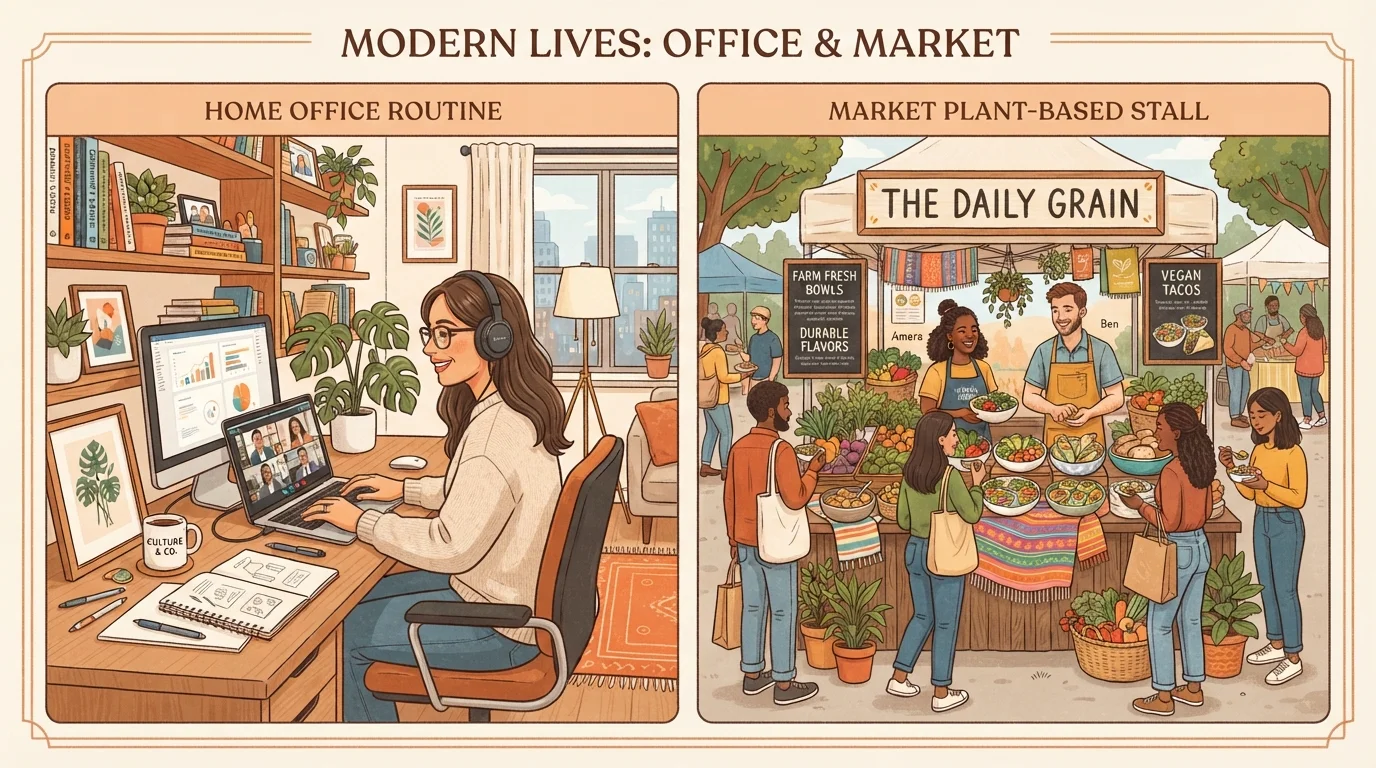
When pandemic-era remote work began, many employers and economists predicted a swift return to office-centric norms once restrictions lifted. That prediction has held up only partially. While some sectors have indeed recalled workers full-time, data from labor market surveys across Europe and North America consistently show that hybrid arrangements - some days at home, some in the office - have become a lasting feature of knowledge-economy employment.
The reasons are structural. Employees restructured their lives: longer commutes were eliminated, childcare arrangements were rebuilt, and housing decisions were made based on new flexibility. Reversing those choices carries real costs. Employers, meanwhile, found that productivity did not collapse as feared. The result is a negotiated middle ground that looks increasingly permanent rather than transitional.
Hybrid work persists because employees restructured their lives around it - reversal now carries real cost.
Plant-Based Eating
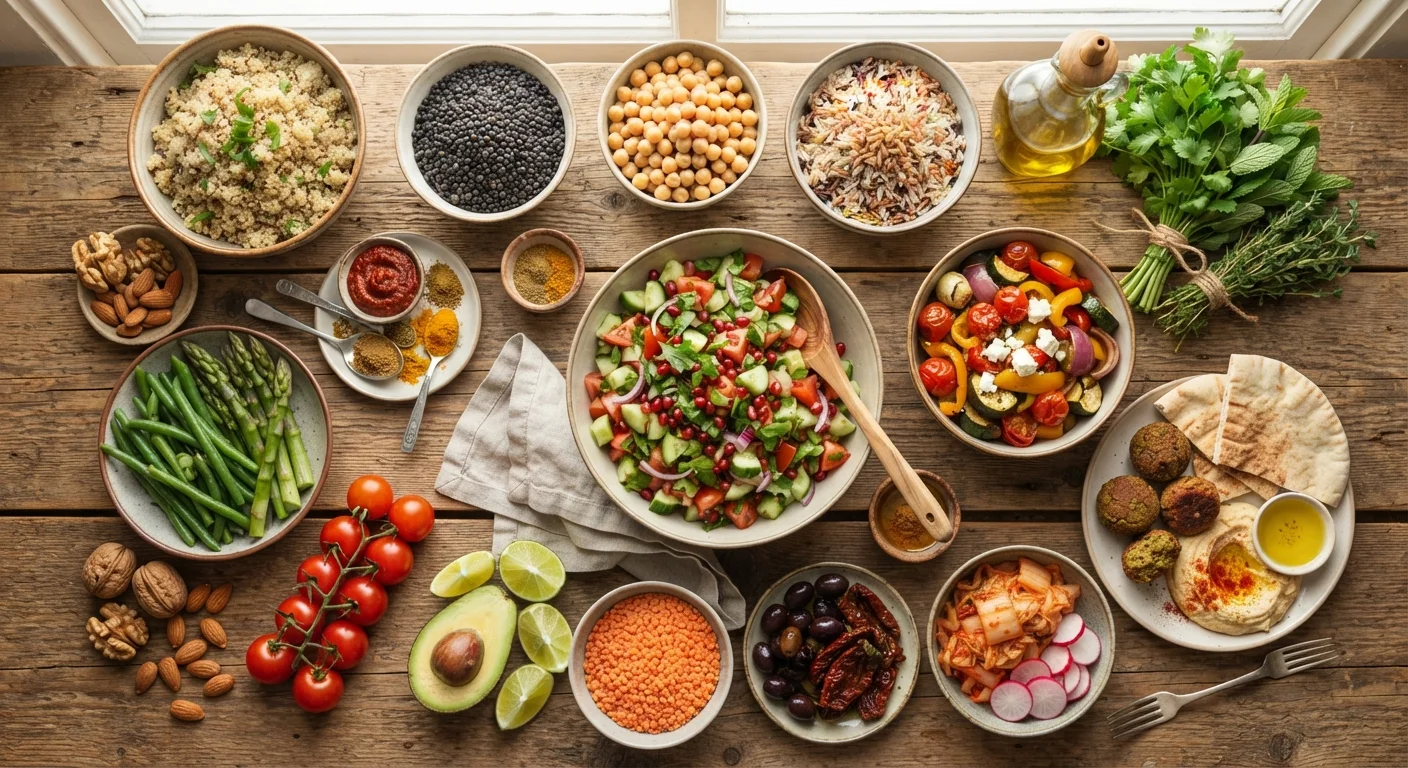
Plant-based diets were widely framed as a millennial lifestyle trend that would lose steam once novelty wore off. Instead, market research from multiple independent analysts has tracked sustained growth in plant-based food sales across Western markets, even as some high-profile product launches underperformed. The underlying demand remained.
Part of the explanation is that plant-forward eating has deep cultural roots that predate any trend cycle - a point worth exploring further in this piece on plant-based eating in traditional cultures. The trend also intersects with broader nutritional patterns that appear across healthy diets worldwide, as documented in research referenced in nutritional patterns in healthy diets worldwide. When a trend aligns with both cultural heritage and nutritional evidence, it tends to endure.
Plant-based eating is sustained by cultural heritage and nutritional research, not just consumer novelty.
The Side-Hustle Economy
Freelancing, gig work, and supplementary income streams were expected by some analysts to contract once labor markets tightened and traditional employment rebounded. Instead, participation in secondary income activities has remained elevated across multiple age groups and income brackets. For many people this isn't about desperation - surveys suggest a meaningful portion cite autonomy, skill development, or income diversification as motivators.
The infrastructure enabling this behavior - digital payment platforms, remote marketplaces, on-demand service apps - did not disappear with the post-pandemic economy. It deepened. That infrastructure makes a return to single-income dependence less likely for people who have already diversified. Those interested in how this connects to savings behavior can explore approachable ways to build savings habits.
Side-hustle participation stayed high because the infrastructure enabling it expanded, not contracted.
Digital-First Social Connection
Critics of digital socializing - group chats, online communities, voice-based spaces - have long argued these formats would prove hollow substitutes for in-person connection, destined to be abandoned once people remembered what real sociality felt like. The evidence is more nuanced. Research on younger generations shows that digital and in-person connection often function as complements rather than substitutes, with online ties frequently converting to offline relationships and vice versa.
The narrative that young people are uniquely isolated by screens also turns out to be complicated by data. See the evidence behind claims that young generations are less social for a fuller picture. Digital-first connection has proven durable because it solves real coordination problems - geography, scheduling, social anxiety - rather than simply mimicking in-person interaction poorly.
Digital and in-person socializing function as complements, not substitutes - which is why both have persisted.
Consumer Skepticism Toward Influencer Culture
Several years ago, the so-called "deinfluencing" movement - creators publicly advising audiences what not to buy - was treated as a micro-trend unlikely to outlast a single news cycle. Yet the underlying skepticism it expressed has remained a visible current in online culture. Audiences have grown more attuned to sponsored content disclosures, and platforms have responded with stricter labeling requirements in many jurisdictions.
This doesn't mean influencer marketing has collapsed - it hasn't. But the relationship between audiences and promotional content has genuinely shifted toward greater critical awareness. How deinfluencing became a cultural countermovement traces how this skepticism developed and what it reveals about consumer culture more broadly. Skepticism, once normalized, tends to become a durable audience expectation rather than a passing mood.
Consumer skepticism toward influencer content has normalized into a durable audience expectation, not a passing mood.
What These Trends Have in Common
Looking across these examples, a pattern emerges: each trend gained initial traction through a combination of cultural moment and structural opportunity, but what kept it alive was a feedback loop - new infrastructure, new norms, and new identities formed around it. Once that happens, reversal becomes genuinely costly, not just inconvenient.
This doesn't mean every current trend will follow the same path. Many will fade. But the ones worth watching are those already changing the underlying systems around them - workplace policy, food supply chains, urban design, financial infrastructure. That's where durability lives.
Spotting the Next Durable Trend
When evaluating whether a trend will last, look for signs that it has changed infrastructure, not just behavior. Ask whether reversing it would require people to give up real economic or logistical gains - not just change a preference. Trends that have quietly reshaped supply chains, workplace policies, or regulatory frameworks are the ones most likely to still be here a decade from now. For vocabulary to help navigate trend discourse, the language of modern social trends offers a useful plain-language reference.