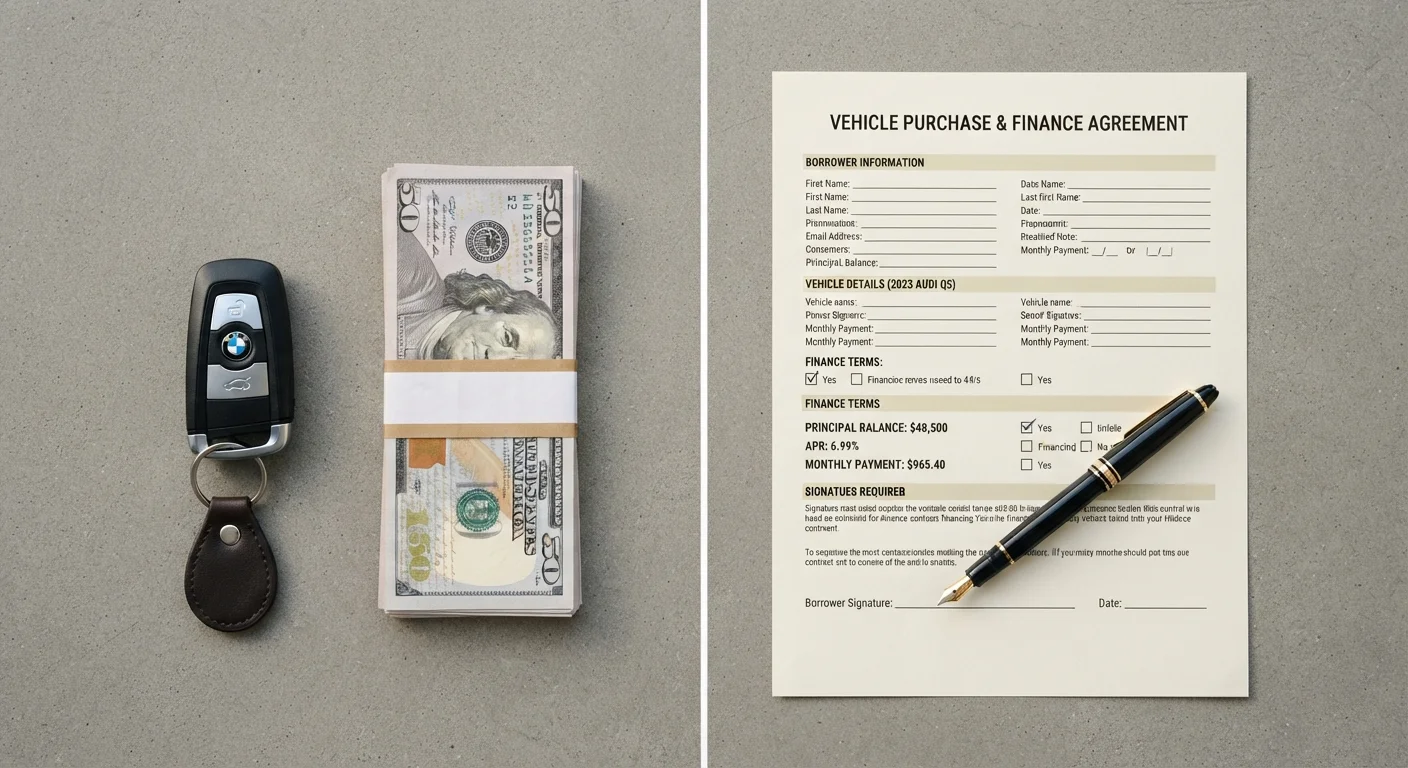


Set Your Budget Before You Browse
The single most effective thing you can do before visiting a single dealership or scrolling through listings is to establish a firm, honest budget. This means looking beyond the purchase price to what the vehicle will actually cost to own. Factor in insurance premiums, annual road tax, fuel or charging costs, scheduled servicing, and tyre replacement cycles.
A useful rule of thumb is that total monthly motoring costs - including any finance repayment - should not exceed 15-20% of your net monthly income, though your own circumstances will vary. If you are considering a finance arrangement rather than an outright purchase, see our detailed comparison of buying outright versus financing for a balanced breakdown of both routes.
Build Your Total Cost Picture First
Use a simple spreadsheet to calculate estimated annual costs for each shortlisted vehicle - purchase price amortised over your planned ownership period, insurance quote, fuel, servicing, and tax. Comparing these totals, rather than sticker prices alone, gives a far more accurate picture of what each option will actually cost you.
First-time buyers in particular benefit from reading our introduction to the car-buying process before committing to any figures.
Define What You Actually Need
Once your budget is fixed, list your genuine requirements separately from your preferences. Genuine needs include seating capacity, boot space for regular loads, a specific fuel type due to your commute, or towing capability. Preferences might include a sunroof, premium audio, or a particular colour.
Conflating the two is one of the most common ways buyers end up with a vehicle that stretches their budget without meaningfully improving their daily life. Be honest about how you will actually use the car - urban commuter, school run, long motorway hauls, or a mix - because this shapes which drivetrain, body style, and size genuinely serve you.
~€500
Average annual tyre replacement cost per vehicle
Industry estimates suggest passenger car owners spend approximately €400-€600 per year on tyres depending on vehicle class and driving intensity.
30-40%
Typical depreciation in first three years
Many new passenger vehicles lose between 30% and 40% of their purchase value within three years, according to broadly cited automotive valuation data.
Research, Compare, and Shortlist
With a budget and a clear needs profile, research which vehicles fit both. Consult independent road-test publications, owner forums, and reliability surveys to understand how different models perform over time. Pay attention to common fault patterns, parts availability, and the cost of routine servicing - factors that rarely feature in a brochure but significantly affect long-term satisfaction.
Narrow your list to two or three realistic candidates. At this stage, the right questions to ask before committing can reveal critical information about total cost of ownership that a test drive alone cannot surface. Also be aware that popular assumptions about car buying are not always accurate - common car-buying myths are worth reviewing before you enter any negotiation.
When comparing two similarly priced vehicles, request a full-year servicing cost estimate from a franchised dealer for each model - the gap is often larger than buyers expect.
Servicing costs vary considerably by brand and model and can easily offset a lower purchase price within two to three years of ownership.
Check whether a used vehicle still carries a manufacturer warranty and, if so, whether it is transferable to a new owner - this detail is frequently overlooked during negotiations.
A transferable manufacturer warranty can meaningfully reduce ownership risk, yet buyers rarely think to ask about it before agreeing a price.
The Test Drive and Vehicle Inspection
A test drive should replicate your real-world usage as closely as possible. Request routes that include the kind of roads you use daily - not just a slow lap around a quiet car park. For used vehicles, an independent pre-purchase inspection by a qualified mechanic is strongly advisable. This typically costs between €100-€200 and can identify structural, mechanical, or electronic issues that are invisible to an untrained eye.
For private sales, also verify the vehicle's history through a recognised data check service to confirm it has no outstanding finance, has not been written off, and that the recorded mileage is consistent. If a seller resists either an independent inspection or a history check, treat this as a significant warning sign.
Never Skip an Independent Inspection on a Used Vehicle
Even a vehicle that looks immaculate can conceal accident damage, corrosion, or mechanical wear that becomes expensive quickly. A qualified independent mechanic's inspection is not an insult to the seller - it is standard due diligence. Budget for this cost as part of the purchase process, not as an optional extra.
Financing, Paperwork, and Handover
Once you have selected a vehicle, you will be presented with a purchase agreement and, if applicable, a finance contract. Read every document before signing. Key items to verify include the total amount payable (not just the monthly figure), the annual percentage rate (APR), any early repayment clauses, and what warranty - statutory or extended - applies to the vehicle.
Before you drive away, confirm the vehicle is insured in your name from the moment of handover. In Germany, compulsory third-party liability insurance (Haftpflichtversicherung) must be in place before the vehicle can be registered - registration without it is not legally possible. The broader world of car ownership responsibilities begins immediately, so plan accordingly.
If you are leasing rather than buying, note that the obligations differ substantially - our plain-language guide to car leasing covers mileage caps, residual values, and end-of-term fees in detail.
Insurance Must Be in Place at Handover
In Germany, a vehicle cannot be registered - and therefore cannot legally be driven - without valid third-party liability insurance. Arrange your cover before collection day, not after. Your insurer will provide a confirmation code (eVB-Nummer) that the registration authority requires. Driving uninsured carries serious legal and financial consequences.
This article provides general educational information about the car-buying process and does not constitute financial, legal, or professional advice. Consult a qualified professional for guidance specific to your situation.