
Running Costs: Fuelling and Energy
Energy cost per kilometre is where electric vehicles hold a clear structural advantage. Charging a typical EV at home - using an overnight off-peak rate - generally costs a fraction of what an equivalent petrol journey requires at current pump prices. Public rapid charging narrows that gap considerably, and in some cases eliminates it, so drivers who rely primarily on public networks should model their actual charging mix before assuming savings.
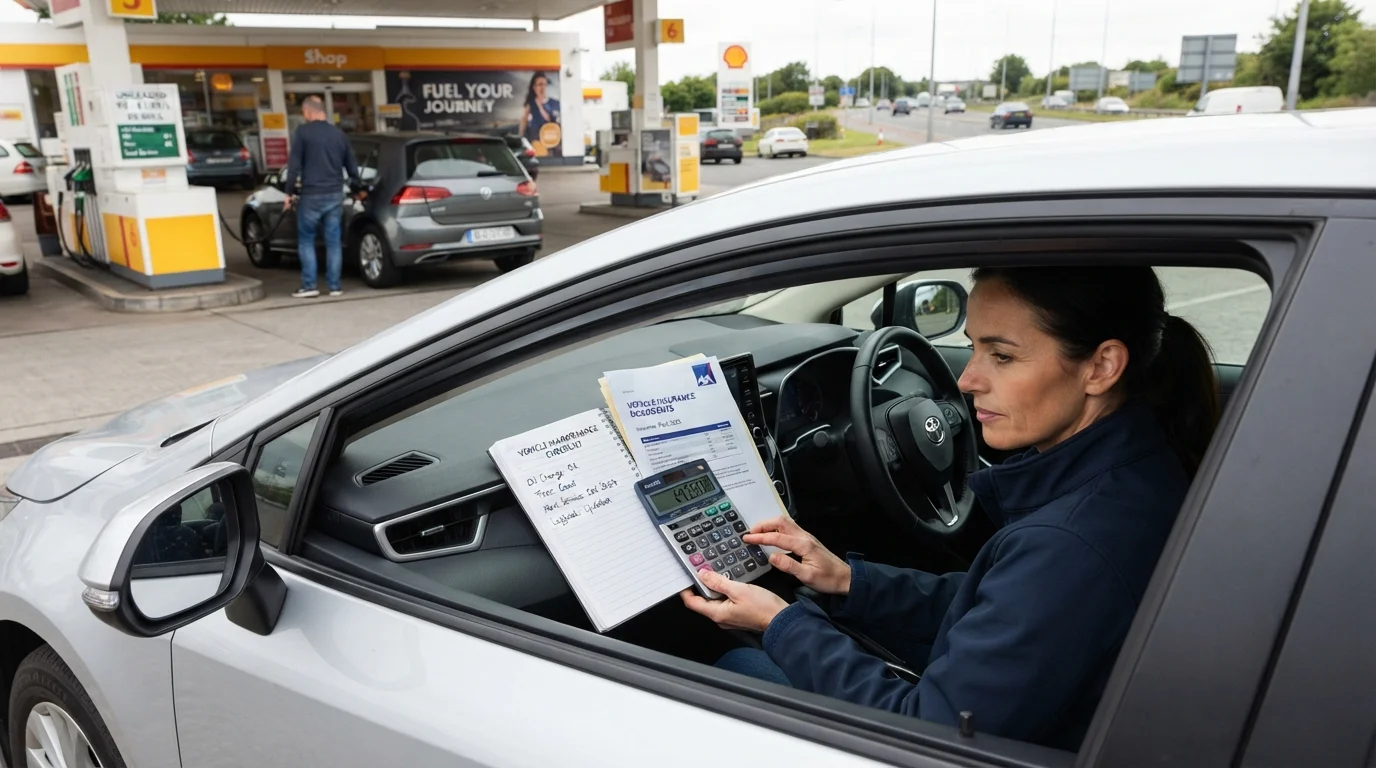
Petrol prices are visible and predictable at the pump, while electricity pricing varies by tariff, time of day, and whether you're charging at home or using a public rapid charger. For a full picture of annual running costs across both powertrains, see everything that goes into the true annual cost of running a car.
~70%
EV charging done at home
European data consistently shows the majority of EV charging takes place overnight at home, where per-kWh costs are typically lowest.
15-25%
Real-world range below WLTP
Independent testing by organisations such as ADAC indicates real-world EV range in cold or motorway conditions can fall 15-25% below official WLTP figures.
Servicing and Maintenance Differences
Electric drivetrains have significantly fewer moving parts than internal combustion engines. There is no engine oil, no cambelt, no exhaust system, and no conventional gearbox to service. Scheduled maintenance for an EV typically covers tyres, brake fluid, cabin air filters, and software updates - a shorter and generally cheaper list than a petrol car's service schedule.
That said, EV-specific costs exist. Tyre wear can be higher due to the extra vehicle weight and immediate torque delivery. Battery health is a long-term consideration: degradation is gradual and typically well-managed by modern battery management systems, but it is a factor to understand before purchase. Brake components on EVs often last longer because regenerative braking - where the motor slows the car and recovers energy - reduces reliance on friction brakes.
Check Service Intervals Before You Switch
Ask for the manufacturer's full service schedule for any EV you're considering, not just the headline cost. Some models require less frequent servicing than petrol equivalents, but fluid checks, tyre rotations, and software updates still apply. A qualified mechanic familiar with EVs should carry out any non-routine work, particularly anything involving high-voltage systems.
Charging Logistics and Range Realities
Range anxiety - the concern that the battery will run flat before reaching a charger - is less of a practical issue for most daily driving than media coverage implies. The majority of commutes in Europe fall well within the real-world range of a modern EV. However, "real-world range" deserves scrutiny: official WLTP figures are measured under controlled conditions and can be 15-25% higher than what drivers experience in cold weather, at motorway speeds, or with climate control running.
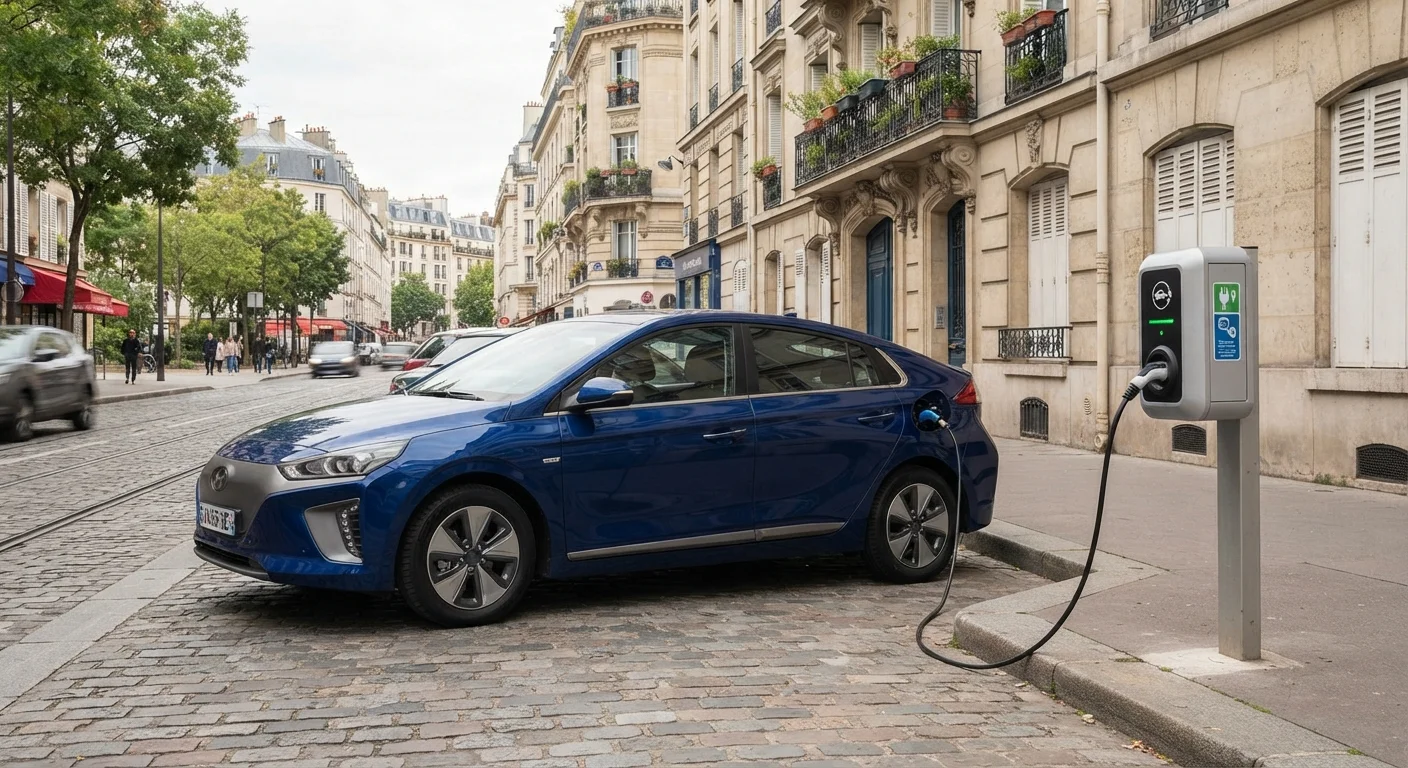
Home charging remains the most convenient and cost-efficient method. A standard domestic socket provides a slow overnight charge adequate for daily use; a dedicated wallbox unit charges faster and is the setup most EV owners prefer. Those living in flats or without off-street parking face a genuine access barrier that should not be underestimated. For more on how charging infrastructure factors into the purchase decision, first-time EV buyers should consider these key factors.
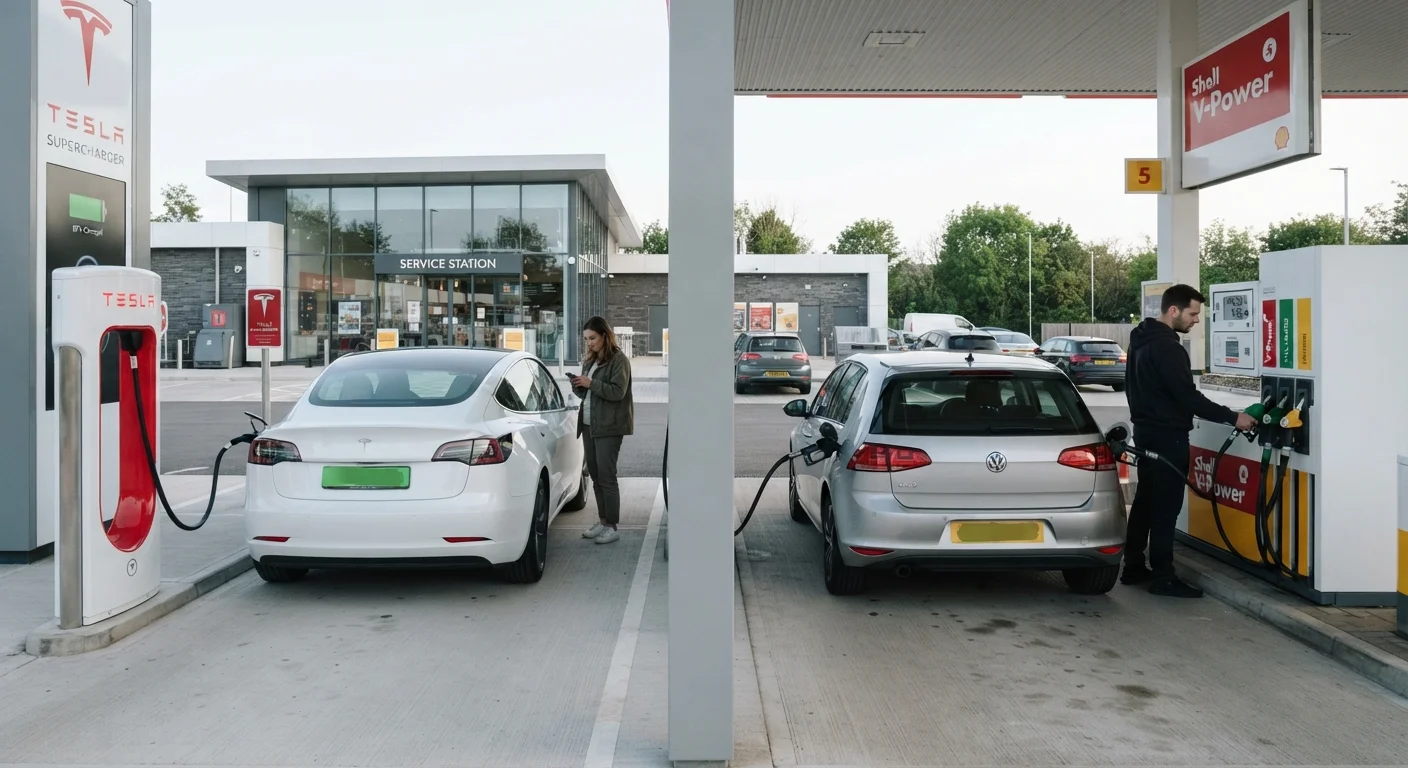
Petrol cars retain a practical edge for spontaneous long-distance travel: refuelling takes under five minutes at any of Germany's extensive filling station network. EV rapid-charging stops on motorways typically take 20-40 minutes to add meaningful range, which requires factoring into journey planning.
| Electric Vehicle | Petrol Car | |
|---|---|---|
| Energy cost per km | Lower (home charging) | Higher at current pump prices |
| Purchase price | Generally higher | Generally lower |
| Routine servicing complexity | Simpler, fewer items | More components, more frequent |
| Refuelling / recharging time | 20-40 min rapid charge | Under 5 minutes |
| Real-world range reliability | Affected by temp and speed | Consistent in most conditions |
| Long-distance flexibility | Requires planning | Highly flexible |
| Suitability without home charging | Challenging | No issue |
Purchase Price and Long-Term Ownership Value
Electric vehicles carry higher purchase prices on average than equivalent petrol models, though the gap has been narrowing. German buyers may benefit from federal incentives - the Umweltbonus programme historically subsidised EV purchases, though eligibility rules and funding availability have changed over time, so current conditions should be verified directly with the Bundesamt für Wirtschaft und Ausfuhrkontrolle (BAFA).
Over a multi-year ownership period, the lower running and servicing costs of an EV can offset the higher initial outlay for higher-mileage drivers. Lower-mileage drivers may find the breakeven point extends beyond their planned ownership period. When evaluating total cost of ownership, consider depreciation carefully: the EV market is still maturing, and residual values are less predictable than for established petrol models.
For drivers weighing how to structure the purchase itself, owning outright versus financing carries its own trade-offs worth understanding before committing. And before making any final decision on powertrain, the questions worth asking before committing to any vehicle are worth working through carefully.