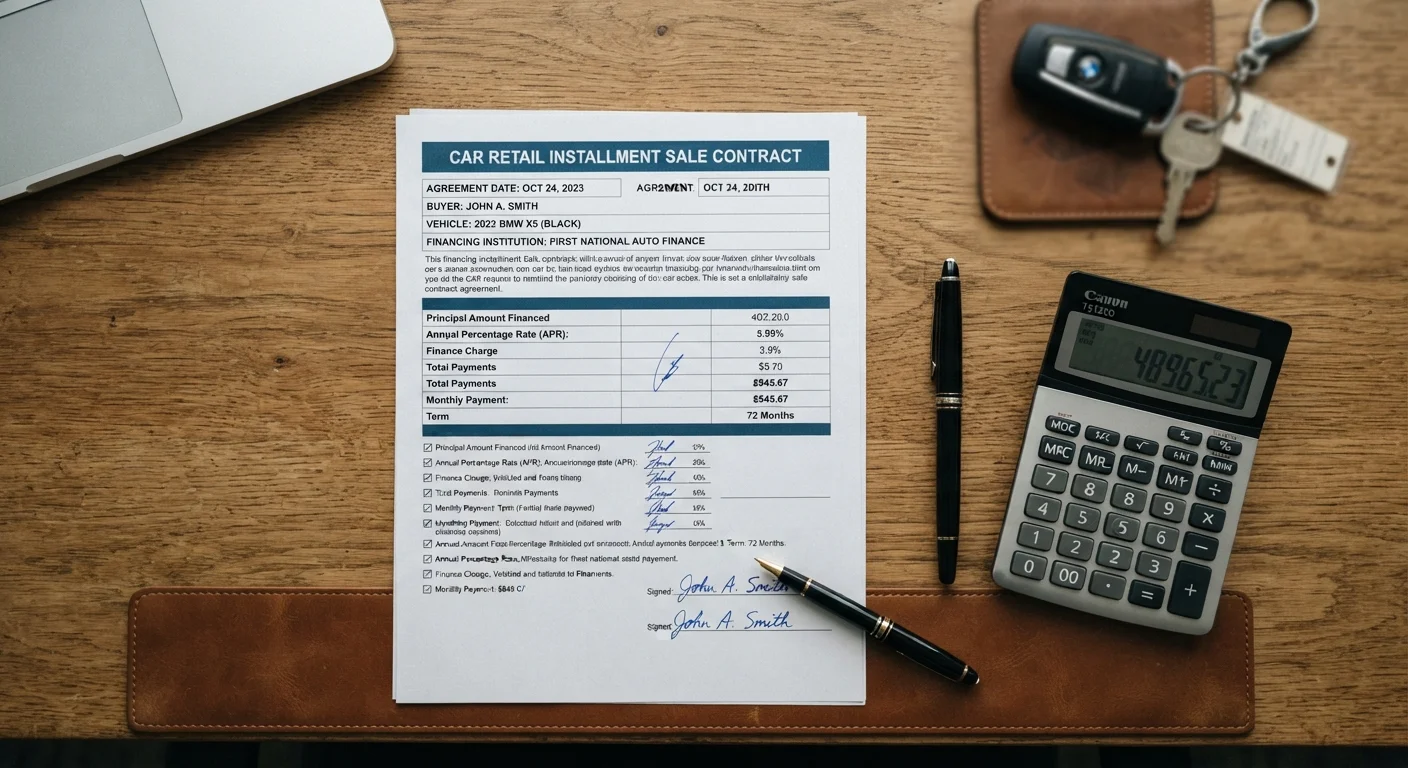


How a Car Lease Is Structured
When you lease a car, a finance company purchases the vehicle and grants you the right to use it for a fixed term - typically 24, 36, or 48 months. Your monthly payment covers the portion of the car's value expected to depreciate during that term, plus a finance charge and any applicable fees. You are not paying off the full vehicle price.
Three figures drive the economics of a lease:
- Capitalized cost: The agreed starting value of the vehicle (similar to a negotiated purchase price). A lower cap cost means smaller payments.
- Residual value: The leasing company's estimate of what the car will be worth at the end of the term. A higher residual value reduces the depreciation you pay for.
- Money factor: The finance charge, expressed as a small decimal. Multiply it by 2,400 to get an approximate equivalent annual interest rate.
Understanding these three levers helps you evaluate whether a lease offer is genuinely competitive - something that monthly payment alone can obscure.
Negotiate the Capitalized Cost, Not Just the Payment
The monthly payment is an output, not a starting point. A lower agreed vehicle price (cap cost) reduces your payment more reliably than other adjustments. Treat the cap cost negotiation the same way you would approach buying the car outright - it is the most direct lever available to you.
Mileage Caps, Wear Standards, and End-of-Term Fees
Leases include an annual mileage allowance - often between 10,000 and 20,000 kilometres per year in Germany and across Europe. Exceeding the cap triggers per-kilometre excess charges written into the contract. If you regularly underestimate your mileage, these charges can erode any payment savings the lease appeared to offer.
Return condition also matters. Leasing companies apply a fair wear and tear standard when inspecting returned vehicles. Normal surface scuffs within defined limits are typically accepted; deeper scratches, kerbed alloys, or interior damage beyond those limits attract charges. Some providers offer an independent pre-return inspection service - using it a few weeks before the end date gives time to arrange repairs cost-effectively.
Finally, leases may include a disposition fee - a charge for processing the vehicle's return - unless you take out a new lease with the same provider. Reading the small print on these fees before signing is prudent.
Fair Wear and Tear Standards Vary by Provider
There is no single industry-wide definition of acceptable return condition. The British Institute of the Motor Industry (BIMI) publishes widely referenced guidelines, and many European leasing companies use comparable frameworks, but your specific contract's standards govern what you are liable for. Request the wear and tear guide from your provider before the lease begins - not at the end.
Who Leasing Tends to Suit - and Who It Doesn't
Leasing works well for a specific type of driver. If you want to be in a current-model vehicle every two to three years, dislike large upfront capital outlays, and drive a consistent and predictable number of kilometres annually, the structure aligns with those habits. For businesses, lease payments may also be treated differently under tax accounting rules - an area to explore with a qualified adviser rather than generalise.
Leasing is a poor fit if you drive high annual mileage, use your vehicle for activities that cause above-average wear, or value the freedom to modify, sell, or keep a car indefinitely. It also carries no equity buildup: at the end of the term you have no asset and must lease, buy, or arrange another vehicle. For a fuller comparison of ownership paths, our side-by-side cost analysis examines the long-term financial picture.
Drivers who prefer outright ownership - or are weighing that against finance - may find our guide to owning outright versus financing useful context. And if you are exploring a conventional purchase instead of a lease, the full car-buying walkthrough covers each stage from budget-setting to paperwork.
~30%
Share of new cars in Germany registered via leasing
Industry data from the German Leasing Association (Bundesverband Deutscher Leasing-Unternehmen) has consistently shown leasing accounts for a significant share of new vehicle registrations, particularly in the fleet and business segment.
2-4 years
Typical lease contract duration
Most consumer leases in Germany and across the EU run for 24 to 48 months, with 36-month terms being among the most common in private leasing contracts.
15,000 km
Common annual mileage allowance
A 15,000 km per year limit is a frequently offered baseline in German private lease contracts; higher caps are negotiable but typically increase the monthly payment.
What to Check Before Signing a Lease
Before committing to any lease agreement, verify the following:
- Total contract cost: Add up all monthly payments, the initial payment, and any end-of-term fees. This gives a truer picture than the headline monthly figure. See total cost of ownership considerations for a broader framing.
- Annual mileage allowance: Match it realistically to your driving. If unsure, choose a higher cap - it is cheaper to buy extra kilometres upfront than to pay excess charges at the end.
- Early termination conditions: Understand exactly what you would owe if circumstances change and you need to exit early.
- Maintenance obligations: Know what servicing the contract requires, which workshops are approved, and whether a maintenance package is included or separate.
- Insurance requirements: Leasing companies typically mandate comprehensive cover. Factor the insurance cost into your total monthly outlay.
A lease can be a sensible, well-structured way to access a vehicle - provided the terms match your actual driving life rather than an optimistic version of it.