
Why the Sticker Price Is Just the Beginning
When most people budget for a car, they focus on the purchase price or monthly finance payment. Those figures, however, represent only a fraction of what a vehicle actually costs to own each year. Research by organisations such as ADAC consistently shows that running costs - depreciation, fuel, insurance, tax, and maintenance - can easily double or triple the headline purchase figure over a typical ownership period.
Understanding every cost category before you commit gives you the clearest possible picture of affordability. This guide walks through each one systematically. For broader context on the purchase decision itself, see the Buying a Car hub.
~€400-€500/month
Estimated average total running cost for a mid-size car in Germany
According to ADAC (Allgemeiner Deutscher Automobil-Club) cost analyses covering depreciation, fuel, insurance, and maintenance.
15-25%
Typical first-year depreciation rate for a new vehicle
Industry estimates suggest most new cars lose between 15% and 25% of their purchase value within the first twelve months.
Up to €844/year
Maximum annual road tax (Kraftfahrzeugsteuer) for a 2.0L petrol engine
German road tax is calculated per 100cc of engine displacement and CO₂ emissions; higher-emission vehicles pay significantly more.
Depreciation: The Silent Largest Cost
Depreciation - the loss in a vehicle's market value over time - is the single largest ownership cost for most drivers, yet it appears on no invoice. A new mid-range car can lose 15-25% of its value in year one alone, and roughly 50-60% over three years, depending on make, model, and mileage.
To calculate your annual depreciation cost, subtract the expected resale value from the purchase price and divide by the number of years you plan to own the vehicle. This figure belongs in your monthly budget. Drivers considering whether to buy outright or finance should read our outright vs. financing comparison for how depreciation interacts with each approach.
Before purchasing, request the vehicle's full service history and calculate projected maintenance costs using ADAC's online running-cost tool for your specific model.
Documented service history reduces the risk of inheriting costly deferred maintenance, and model-specific data gives a far more accurate budget baseline than general averages.
Treat depreciation as a real annual expense by dividing the expected resale value loss over your planned ownership period - it belongs in your monthly budget just like insurance.
Most drivers mentally exclude depreciation because it is not a direct invoice, yet it consistently represents the largest single cost of ownership for vehicles under five years old.
Fuel, Insurance, and Road Tax
Fuel costs depend on your annual mileage, the vehicle's official and real-world consumption, and prevailing pump prices. A driver covering 15,000 km per year in a petrol car averaging 7 litres per 100 km pays for roughly 1,050 litres annually - a figure that fluctuates significantly with fuel prices.
Insurance in Germany comprises three layers: mandatory third-party liability (Haftpflicht), partial cover (Teilkasko), and comprehensive cover (Vollkasko). Premiums are shaped by your regional risk class (Regionalklasse), the vehicle's type class (Typklasse), your no-claims bonus (Schadensfreiheitsrabatt), and annual mileage.
Compare Insurance Classes Before You Buy
Every vehicle in Germany is assigned a Typklasse (type class) for liability, partial, and comprehensive cover. Checking a model's type class before purchase can reveal significant insurance cost differences between otherwise similar vehicles. The GDV (Gesamtverband der deutschen Versicherungswirtschaft) publishes these classifications publicly.
Road tax (Kraftfahrzeugsteuer) is levied annually by the Bundeszentralamt für Steuern and calculated on engine displacement and CO₂ emissions. Vehicles registered after 2021 use an updated formula that weights higher-emission cars more heavily. Zero-emission vehicles registered before a certain cut-off date may qualify for temporary tax exemption.
Servicing, Maintenance, and Tyres
Scheduled servicing - oil changes, filter replacements, fluid checks - forms the predictable core of maintenance spending. Many manufacturers specify service intervals of 15,000-30,000 km or annually, whichever comes first. Labour rates vary considerably between main dealerships and independent garages.
Beyond scheduled work, wear items add irregular costs: brake pads and discs, wiper blades, belts, and battery replacements. Tyres represent a significant line item; a set of four mid-range tyres for a compact car costs roughly €300-€600 fitted, with lifespan dependent on driving style and road conditions. In Germany, drivers are also effectively required to fit winter or all-season tyres during adverse conditions under §2 StVO - effectively making seasonal tyre costs unavoidable for many.
Mandatory German Inspections Cannot Be Skipped
Under the StVZO (Straßenverkehrs-Zulassungs-Ordnung), most passenger cars in Germany must pass a Hauptuntersuchung (HU) every two years, conducted by approved bodies such as TÜV or DEKRA. Operating a vehicle with an expired HU sticker is a legal offence and can invalidate your insurance cover in the event of an accident. Budget approximately €100-€170 per inspection cycle, plus any remedial work identified.
Financing Costs and Opportunity Cost
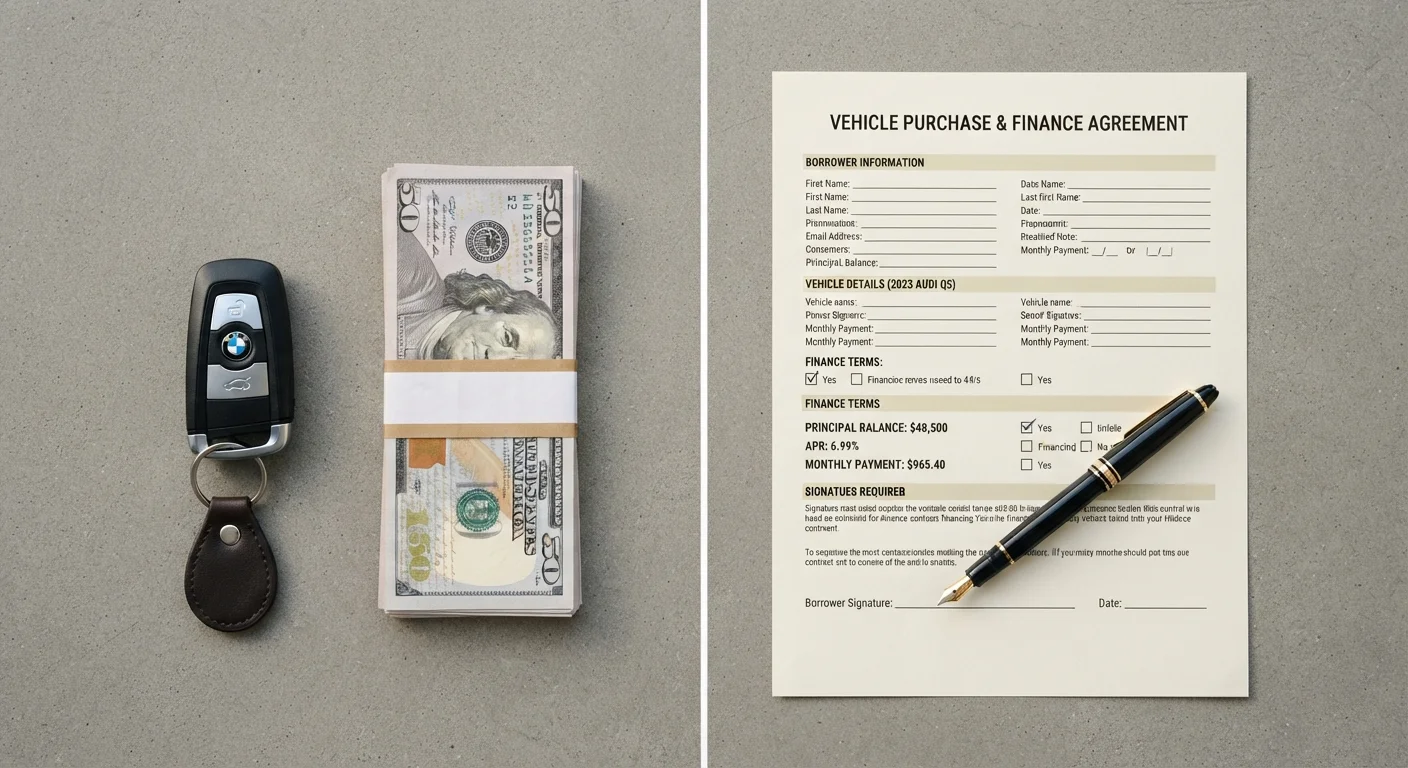
Drivers who finance a vehicle through a loan or Autokredit pay interest on top of every other running cost. The total interest paid over a typical 48-month loan can add thousands of euros to the vehicle's effective price. Always calculate the total repayment amount - not just the monthly instalment - when assessing affordability.
Even drivers who pay cash face an opportunity cost: capital tied up in a depreciating asset could otherwise be invested or held in savings. This is not a reason to avoid outright purchase, but it is a genuine economic consideration. Our buying vs. leasing long-term cost guide explores these trade-offs in depth.
This article provides general financial information for educational purposes only and does not constitute personalised financial advice. Consult a qualified financial adviser for guidance specific to your situation.
Parking, Tolls, and Incidental Costs
Routine incidentals accumulate quickly. Urban parking fees, motorway vignettes in neighbouring countries during travel, car washes, and roadside assistance membership (such as ADAC Mitgliedschaft) all form part of the true annual picture. Parking alone can cost a city-based driver several hundred euros per year if relying on paid street or garage spaces.
Additionally, fines for minor infractions - incorrect parking, overlooked speed camera readings - are a real if unpredictable cost. While not budgetable in the traditional sense, drivers in high-enforcement urban areas should be aware they are statistically likely to encounter at least one per year.
“The purchase price of a car is just the entry fee. It is the cumulative running costs - depreciation, fuel, insurance, tyres, and repairs - that determine whether ownership was truly affordable.”
— ADAC Motorwelt, Germany's largest motoring club, annual vehicle cost analysis publication
Building Your Personal Cost Estimate
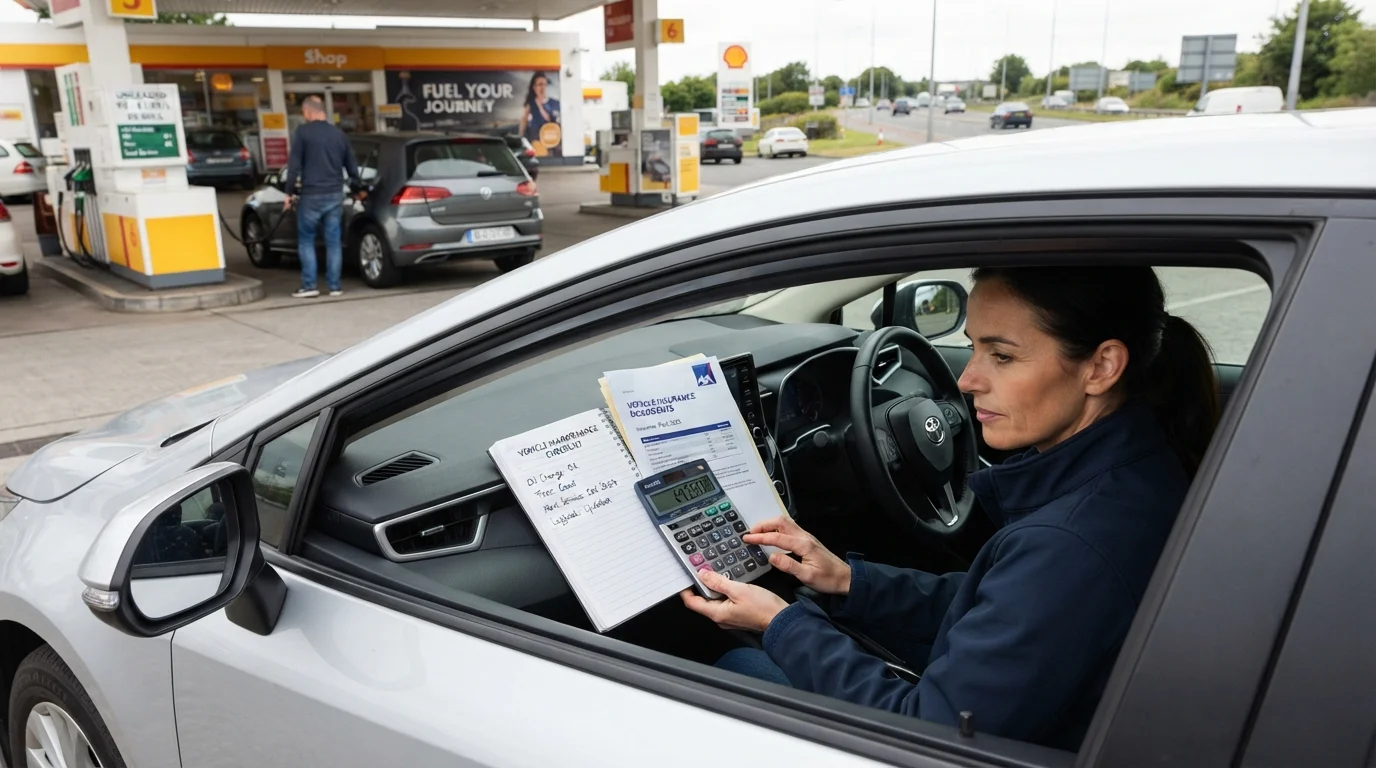
The most practical step any driver can take is to map all cost categories into a simple annual table before purchasing - or to audit their current vehicle's costs honestly. The categories to include are: depreciation, fuel, insurance (all layers), road tax, scheduled servicing, unscheduled repairs and wear parts, tyres, inspection fees (HU/AU), financing interest, and incidentals.
Tools such as ADAC's running cost calculator provide model-specific estimates as a starting point. Adjust them using your actual mileage and local fuel and insurance quotes. For a structured look at expenses beyond the purchase price, see our total cost of ownership guide. Integrating your vehicle costs into household budgeting is covered in the Budgeting Basics hub.
Underestimating Maintenance Leads to Debt
Drivers who budget only for scheduled servicing often face large unexpected bills for tyres, brakes, or wear items. Setting aside a small monthly reserve - even €30-€50 - prevents a single repair from forcing unplanned borrowing. Older vehicles generally require larger reserves than newer ones.
Armed with a full cost picture, you can make an ownership decision grounded in reality - not just the number on the forecourt window.