
What 'Owning Outright' and 'Financing' Actually Mean
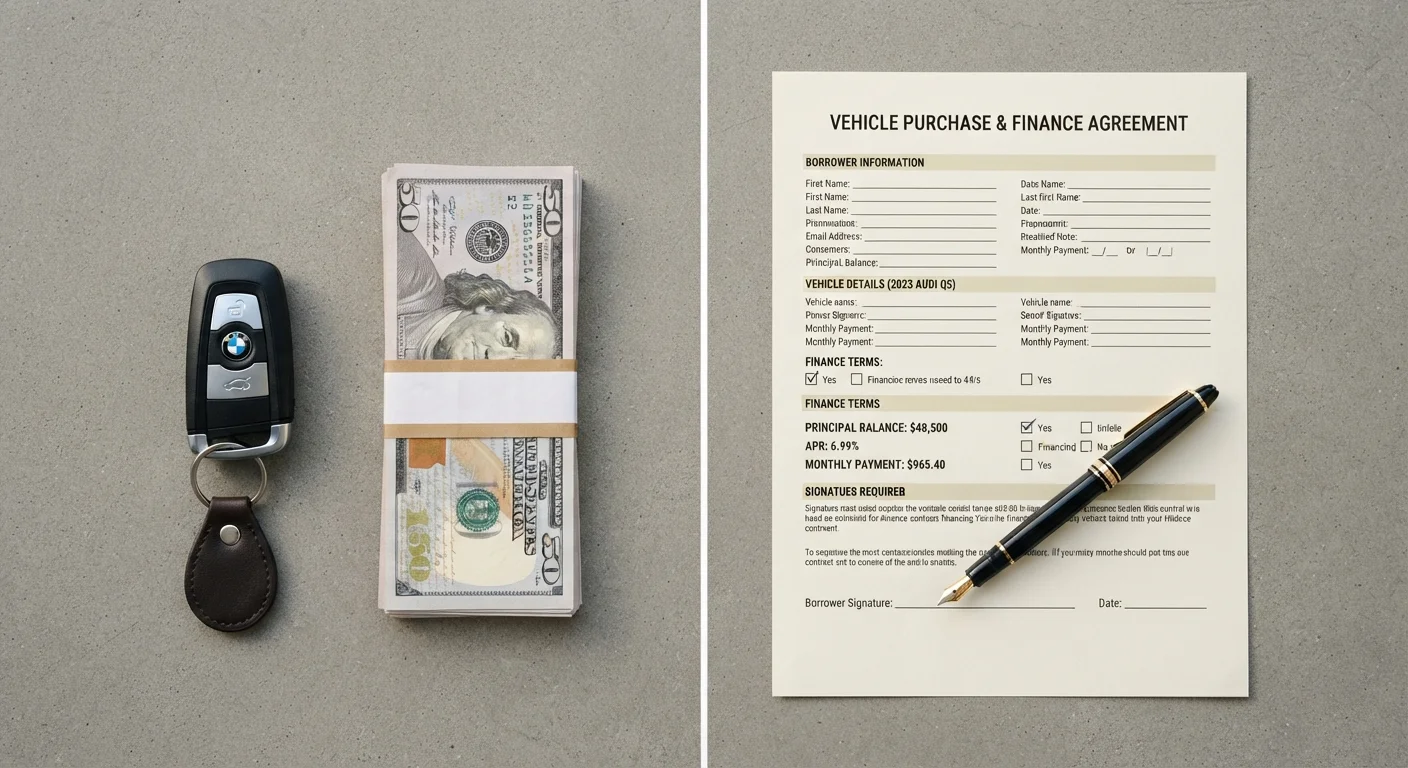
When you buy a car outright, you transfer the full purchase price to the seller at the point of sale and receive unencumbered legal title. No lender has a claim over the vehicle. When you finance, a bank, credit union, or dealership-arranged lender pays the seller on your behalf; you then repay that lender in monthly instalments, typically over 24 to 72 months, with interest. Legal ownership arrangements vary by product - under a hire-purchase agreement common in Europe, you do not technically own the car until the final payment is made.
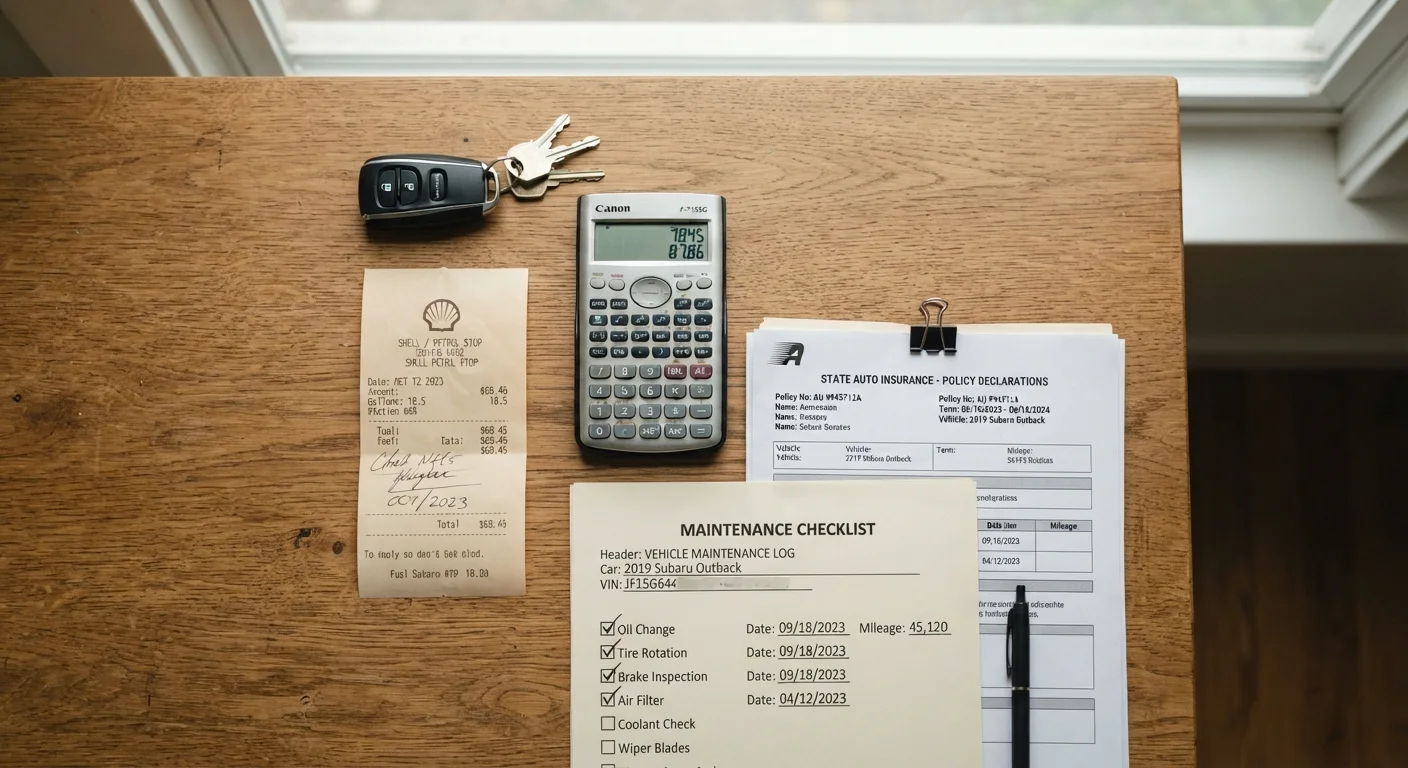
Understanding this distinction matters beyond semantics. A financed vehicle can be repossessed if payments stop. An outright-owned car cannot. That difference has direct implications for financial risk and day-to-day flexibility. For a broader view of what a vehicle actually costs once you factor in fuel, insurance, and depreciation, see our guide to total cost of ownership.
The Case for Paying Cash
No interest charges - lower total cost
Eliminating a loan means you pay exactly the purchase price, nothing more. Over a typical loan term, interest can add 10-20% to the vehicle's cost depending on the rate.
Immediate, unencumbered legal ownership
You hold full title from day one with no lender claims. This simplifies selling, modifying, or insuring the car on your own terms.
No mandatory comprehensive insurance requirement
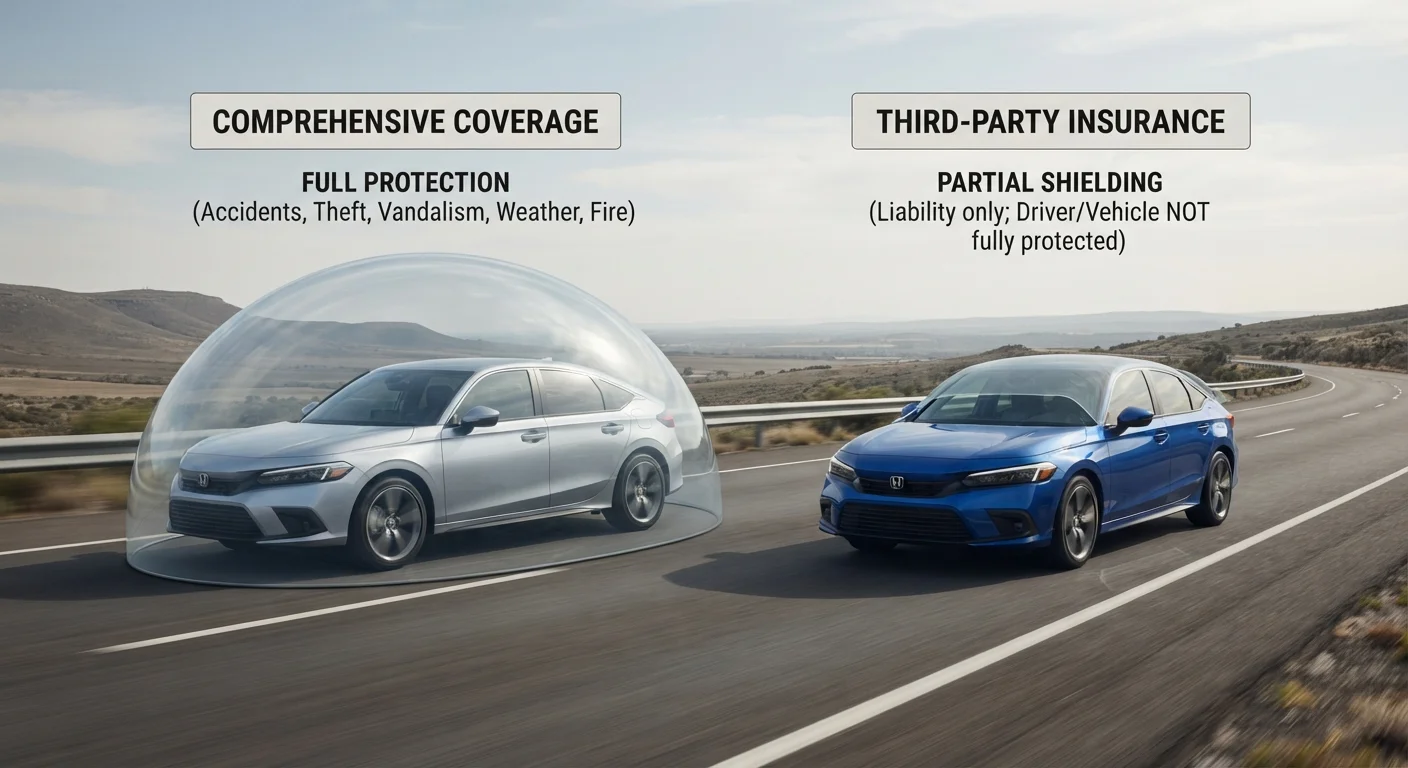
Lenders commonly require fully comprehensive cover on financed vehicles. Cash owners can make their own coverage decisions within legal minimums.
Stronger negotiating position with sellers
A buyer who can settle immediately reduces transaction complexity for the seller, which can translate into a more favourable purchase price.
No repossession risk if finances change
An outright-owned vehicle cannot be reclaimed by a lender, providing greater security during periods of income disruption.
The most direct financial argument for cash purchase is the elimination of interest. Across a four-year loan at even a moderate annual percentage rate, interest charges on a mid-range vehicle can add several thousand euros to the total cost. Paying upfront removes that overhead entirely.
Cash buyers also have a simpler ownership experience: no monthly obligation, no lender restrictions on how the car is used or modified, and no requirement to carry a specific insurance level beyond legal minimums. That said, lenders often require comprehensive cover on financed vehicles - a cost that our breakdown of comprehensive vs. third-party insurance explores in detail.
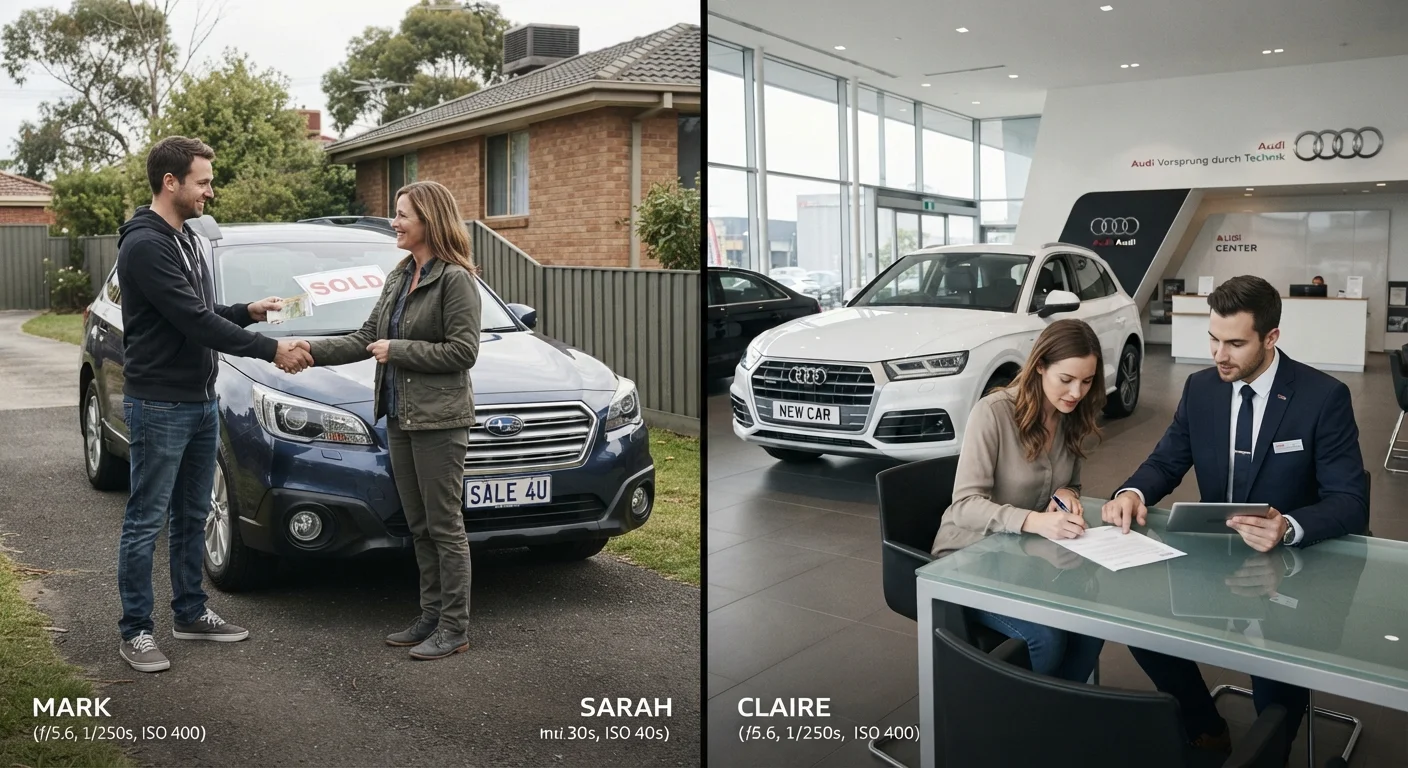
There is also a negotiating dimension. Private sellers and some dealerships may offer a more favourable price to a buyer who can settle immediately, because the transaction is simpler and certain. Buying from a private seller versus a dealership involves different dynamics worth understanding before you negotiate.
The Case for Financing
Depletes liquid savings in a single transaction
A large lump-sum outlay reduces the financial buffer available for emergencies or other needs, which carries its own risk if circumstances change unexpectedly.
Interest charges increase total cost of vehicle
Depending on the loan term and annual percentage rate, total interest paid can add thousands of euros to the purchase price over the life of the agreement.
Lender restrictions on the vehicle while debt is outstanding
Under many finance agreements - particularly hire-purchase - you cannot sell or substantially modify the vehicle without the lender's consent until the final payment is made.
Typically requires comprehensive insurance
Most lenders mandate fully comprehensive cover to protect their financial interest in the asset, increasing the ongoing monthly running cost.
Risk of negative equity if values fall sharply
If a vehicle depreciates faster than the loan is repaid, the outstanding balance can exceed the car's market value - leaving you financially exposed if you need to sell.
Financing's primary practical advantage is liquidity preservation. Spending a large lump sum on a depreciating asset means those funds are no longer available for emergencies, opportunities, or other financial goals. Spreading payments over time keeps a buffer intact.
For some buyers, a well-structured loan at a low interest rate may cost less in opportunity terms than depleting savings - particularly if those savings are generating a meaningful return. This is a general financial concept, not personal advice; individual circumstances vary considerably, and a qualified financial adviser can help assess what applies to your situation.
Finance Agreements Vary Significantly
Hire-purchase, personal contract purchase (PCP), and personal loans each work differently in terms of ownership rights, balloon payments, and end-of-term options. Before signing any finance agreement, read the full terms carefully and ask the lender to explain the total amount payable, not just the monthly instalment. If you are comparing leasing as a third option, our overview of how car leasing works covers the key mechanics.
Financing also allows access to a newer or more reliable vehicle than current savings would otherwise permit. A more dependable car can reduce unplanned repair costs, which matter when reviewing the true annual cost of running a vehicle. Those considering newer technology should also weigh electric vehicles against petrol cars as part of the broader purchase decision.
Key Numbers to Compare Before Deciding
48-72 months
Typical new-car loan term in Europe
European Central Bank data indicates that the average consumer auto loan runs between four and six years, during which interest accumulates on the outstanding balance.
15-25%
First-year depreciation on a new car
Industry analyses commonly cite new vehicles losing 15-25% of their value in the first year, a figure that applies regardless of whether the car was purchased with cash or on finance.
The most important calculation is straightforward: multiply the monthly payment by the number of months, then compare that total to the cash price. The difference is the real cost of financing. A loan advertised with a low monthly figure over 72 months may carry a higher total cost than a shorter loan with a higher monthly payment.
Interest rate and loan term interact significantly. A lower rate on a longer term does not always produce a lower total cost. Use any reputable loan-cost calculator to run both scenarios before committing. If you are weighing dealer-arranged finance against a bank loan, comparing dealer financing to independent lending outlines the key differences in how rates are set.
Depreciation is the other variable that affects both routes equally - the vehicle loses value regardless of how it was purchased. New versus used vehicles differ substantially in depreciation curves, which changes how the financing maths plays out over time.