
The Pooled Risk Model: Why You Pay for Others
Car insurance doesn't work like a savings account - your premiums don't sit in a pot waiting for your personal claim. Instead, insurers pool the risk of thousands of policyholders who share similar characteristics: age bracket, vehicle type, postcode, and driving history. When the collective claims within your risk pool increase, every member of that group tends to pay more at renewal.
This means a spike in accident rates on roads near you, a surge in vehicle theft in your region, or a rise in the cost of replacement parts can all influence what you're charged - regardless of how carefully you drive. The insurer is pricing the statistical likelihood of a future claim, not rewarding or penalising your past behavior in isolation.
No-Claims Discounts Aren't a Price Freeze
A no-claims bonus (NCB) reduces your premium by a set percentage based on consecutive claim-free years. However, it's applied after the base premium has already been calculated using current market data. If the base price rises by 20% and your NCB provides a 15% discount, your overall cost can still increase. Building your NCB is valuable, but it's not a guarantee against higher renewal costs.
Market Forces That Push Premiums Higher
Several economy-wide pressures have driven insurance costs upward across Europe and beyond in recent years:
- Repair cost inflation: Modern vehicles contain complex driver-assistance systems, cameras, and sensors. Replacing a front bumper that houses parking sensors or a windscreen fitted with a heads-up display costs significantly more than it did a decade ago.
- Supply chain disruptions: Shortages of electronic components have extended repair timescales and increased the use of hired courtesy vehicles, adding to total claim costs.
- Legal award inflation: In some jurisdictions, courts have increased the size of personal injury payouts, raising the average cost of third-party claims across all insurers.
- Increased road use: Higher traffic volumes following behavioural shifts have contributed to more collision incidents overall.
When these systemic costs rise, they feed directly into actuarial models - and ultimately into your renewal price.
29%
Average UK premium rise in one year
According to the Association of British Insurers, the average comprehensive car insurance premium rose by approximately 29% in a single year, driven by repair cost inflation and claims frequency increases.
40%+
Rise in average repair costs over five years
Industry analysis from several European repair cost benchmarking bodies indicates that average vehicle repair costs have risen by over 40% in five years, largely due to the complexity of modern driver-assistance technology.
1 in 3
Drivers who don't shop around at renewal
Consumer research across several EU markets consistently finds that around one-third of drivers accept their renewal quote without comparing alternatives, often resulting in higher costs than necessary.
Personal Risk Factors That Change Without You Noticing
Your own risk profile isn't static, even if you haven't moved house or changed jobs. Several personal factors are reassessed each renewal cycle:
- Vehicle age and value
- As your car ages, parts may become harder to source. Alternatively, if its market value drops significantly, insurers recalculate the balance between comprehensive and write-off thresholds.
- Occupation changes
- Certain jobs are statistically associated with higher risk - whether because of mileage, driving times, or location patterns. A change in your declared occupation can shift your risk band.
- Annual mileage
- If you're driving more than in previous years - even without a claim - the statistical probability of an incident increases. Conversely, reporting lower accurate mileage can help reduce your cost.
Update Your Policy Details Every Year
Before accepting any renewal quote, review your declared annual mileage, occupation, and any security upgrades you've made to your vehicle. Inaccurate or outdated information can mean you're priced into a higher risk band than your current circumstances warrant. Even small corrections can make a measurable difference to your premium.
What You Can Do at Renewal
Understanding why premiums rise is useful, but acting on that knowledge is what matters. When you receive a renewal quote, treat it as a starting point, not a fixed price.
- Review every detail on your policy: Errors in declared mileage, incorrect occupation categories, or outdated vehicle security information can inflate your quote unnecessarily.
- Request competing quotes: Use comparison platforms or contact insurers directly. Share any lower quotes with your current insurer - many will reduce their price rather than lose you as a customer.
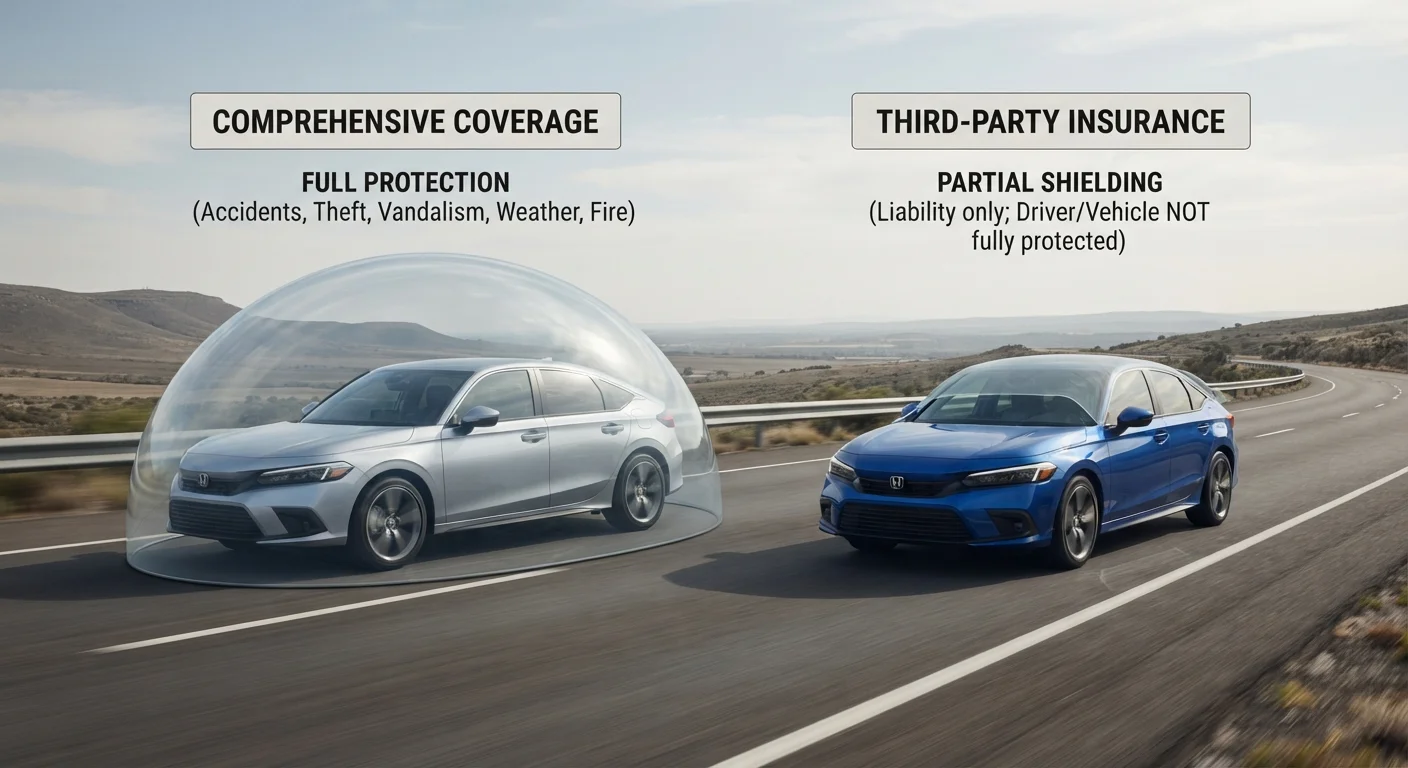
- Consider your cover level: Assess whether your current excess, add-ons, and cover type still match your needs. Adjusting optional extras can reduce cost without compromising core protection.
- Check telematics options: Some insurers offer usage-based or black-box policies that price premiums on your actual driving patterns - potentially beneficial for low-mileage or consistently safe drivers.
This article provides general information about how car insurance premiums are calculated. It is not financial or insurance advice. For guidance specific to your policy or circumstances, consult a qualified, authorised insurance professional.