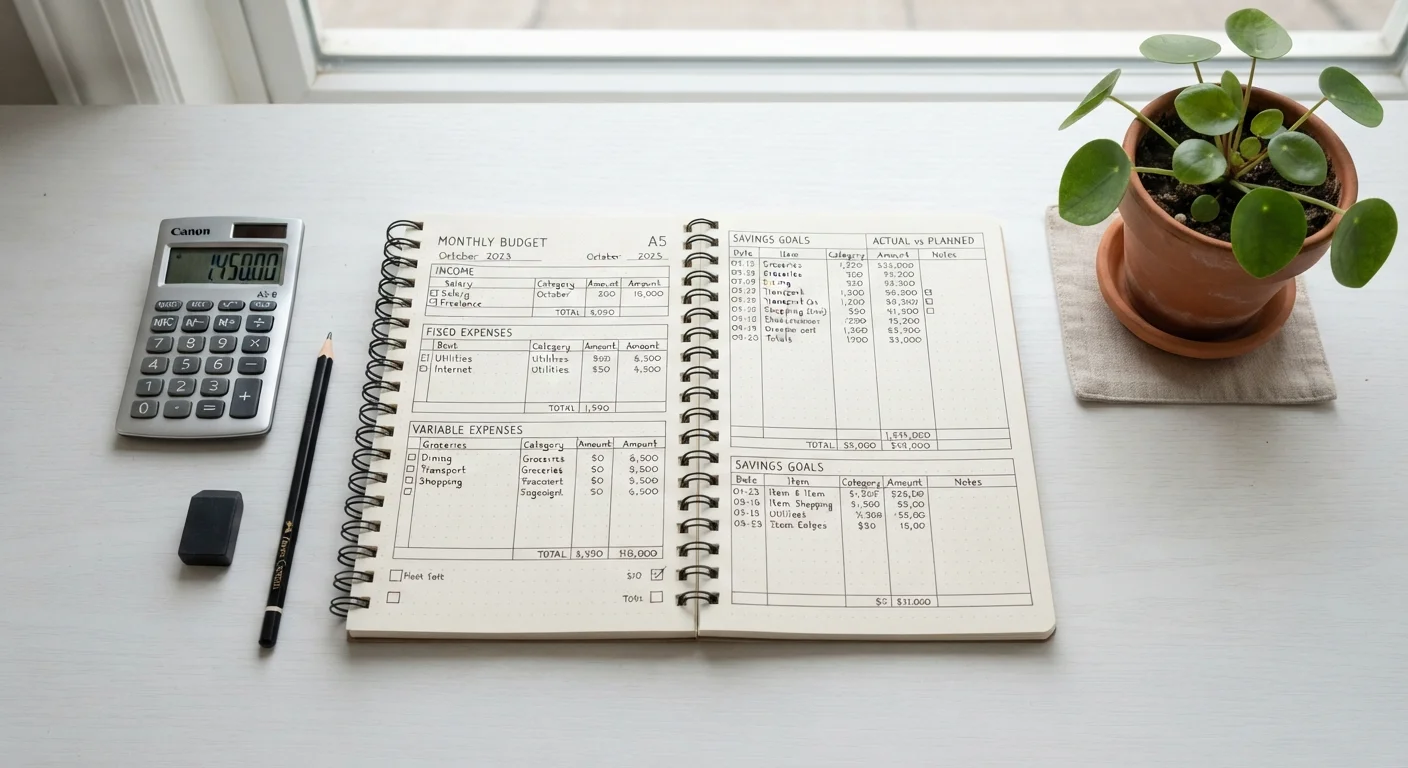

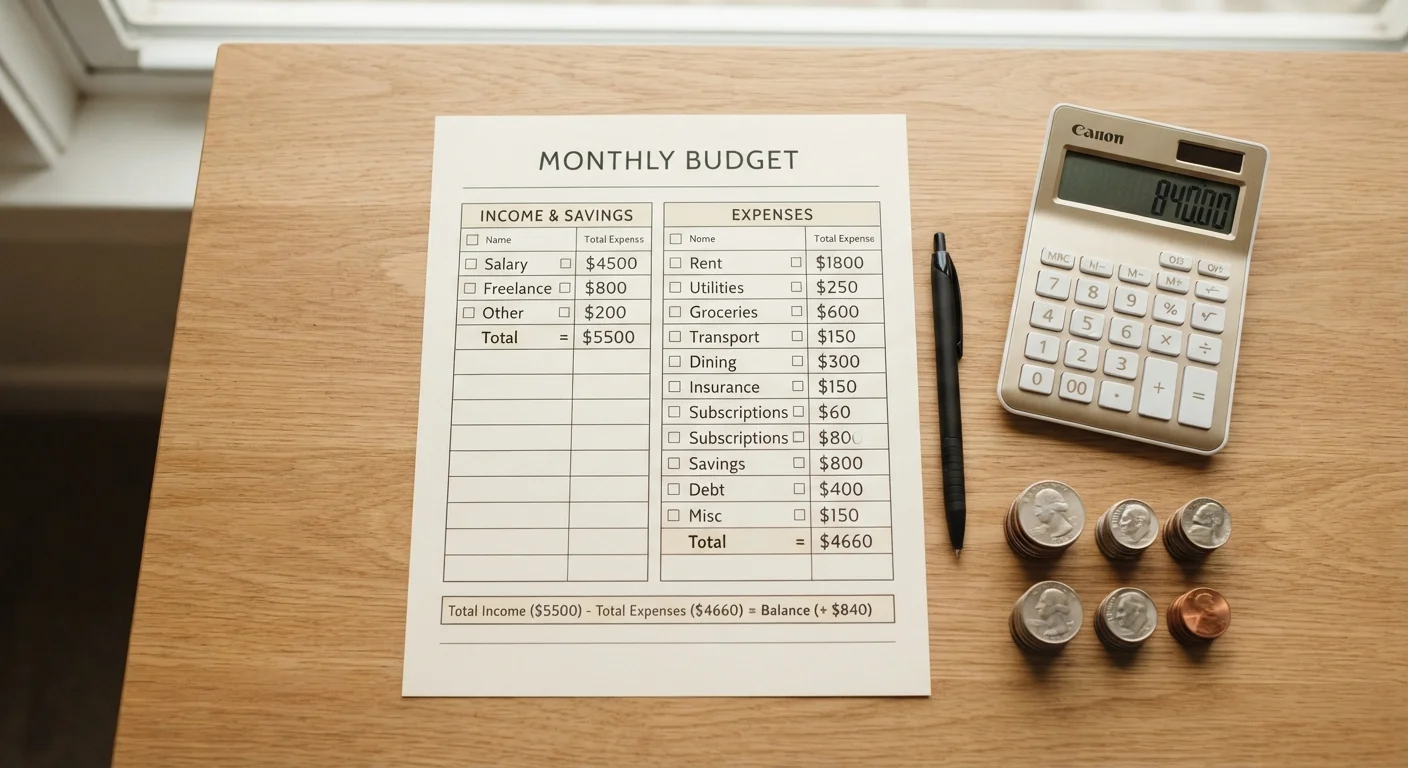
What Makes an Expense "Fixed"?
A fixed expense is any cost that remains the same amount on the same schedule - typically monthly - regardless of how much you use a service or how your circumstances change in the short term. You owe the same amount whether times are lean or comfortable.
Common examples include:
- Rent or mortgage payments
- Car loan installments
- Insurance premiums (health, auto, renters)
- Loan repayments with fixed interest rates
- Subscription fees at a set monthly rate
The defining feature is predictability. Because you know exactly what these costs will be, they are the first figures you should enter when building a spending plan. For a deeper look at the terminology behind these categories, see our plain-language glossary of budgeting terms.
What Makes an Expense "Variable"?
A variable expense is one whose amount changes from month to month, either because the quantity you consume shifts or because the cost itself fluctuates. Unlike fixed costs, you have meaningful influence over these figures through everyday decisions.
Typical variable expenses include:
- Groceries and household supplies
- Fuel and transportation costs
- Dining out and entertainment
- Clothing and personal care
- Medical co-pays and out-of-pocket costs
Variable expenses are where most people have the greatest opportunity - and the greatest temptation. Because there is no fixed bill to arrive, it is easy to underestimate how much these costs accumulate. Tracking them consistently, even for just one month, typically reveals patterns that are difficult to see otherwise.
| Criterion | Fixed Expenses | Variable Expenses |
|---|---|---|
| Amount each month | Stays the same | Changes month to month |
| Predictability | High - easy to forecast | Low - requires tracking |
| Your control over amount | Low in the short term | High - driven by daily choices |
| Examples | Rent, loan payments, insurance | Groceries, fuel, dining out |
| Best budgeting approach | Enter as exact figures first | Average past spending; allow a buffer |
| Primary role in budget | Sets the minimum income needed | Reveals room to cut or save |
The Semi-Variable Middle Ground
Not every expense fits neatly into one category. Semi-variable expenses - sometimes called mixed costs - have both a predictable component and a usage-based component. Utilities are the classic example: your electricity bill has a fixed service charge each month, but the total rises or falls with how much power you consume.
Other semi-variable examples include:
- Mobile phone plans with data overage charges
- Internet plans with equipment rental fees
- Water and gas bills tied to seasonal usage
When budgeting for these, a practical approach is to use a conservative average based on past bills - allowing a small buffer above that average for higher-consumption months. This prevents both underbudgeting in winter and wasteful over-allocation in mild months.
Watch Out for "Fixed" Costs That Can Change
Some expenses feel fixed but can actually be renegotiated or cancelled - such as insurance premiums at renewal, streaming subscriptions, or gym memberships. Reviewing these annually is worthwhile. On the other hand, costs like minimum debt repayments are fixed obligations that carry real consequences if missed, so treat them as non-negotiable in your planning.
How to Apply This Distinction When Building Your Budget
Understanding these categories is only useful if it changes how you plan. Here is a straightforward sequence:
- List all fixed expenses first. Sum them up - this is the floor your income must exceed every month.
- Estimate variable expenses using past spending. Review two to three months of bank or card statements to find realistic averages, not idealized targets.
- Identify semi-variable costs and set conservative estimates. Round up slightly to build in a natural buffer.
- Subtract total estimated expenses from your monthly net income. What remains is your true discretionary margin.
- Target variable categories when you need to cut. Fixed costs generally require renegotiating contracts or making larger lifestyle changes; variable costs can often be trimmed immediately.
If your income is irregular - such as freelance or seasonal work - the distinction becomes even more critical. Our article on budgeting with variable income covers approaches suited to that situation.
Once you are comfortable separating your expenses this way, you will be better positioned to choose a budgeting method that suits your lifestyle. Our overview of popular budgeting approaches can help you explore the options. For those weighing more structured frameworks, the comparison of zero-based versus percentage-based budgeting is a natural next step.
~30%
Of household spending is often discretionary
Research from household expenditure surveys consistently finds that roughly a quarter to a third of typical spending falls into flexible, variable categories - meaning there is meaningful room for most households to adjust.
1 in 3
Adults who do not track variable spending
Surveys on financial behaviour regularly find that a significant share of adults have no system for monitoring variable costs, making it easy for small purchases to collectively exceed estimates.
This article is for general informational and educational purposes only and does not constitute personalised financial advice. Please consult a qualified financial professional for guidance specific to your situation.