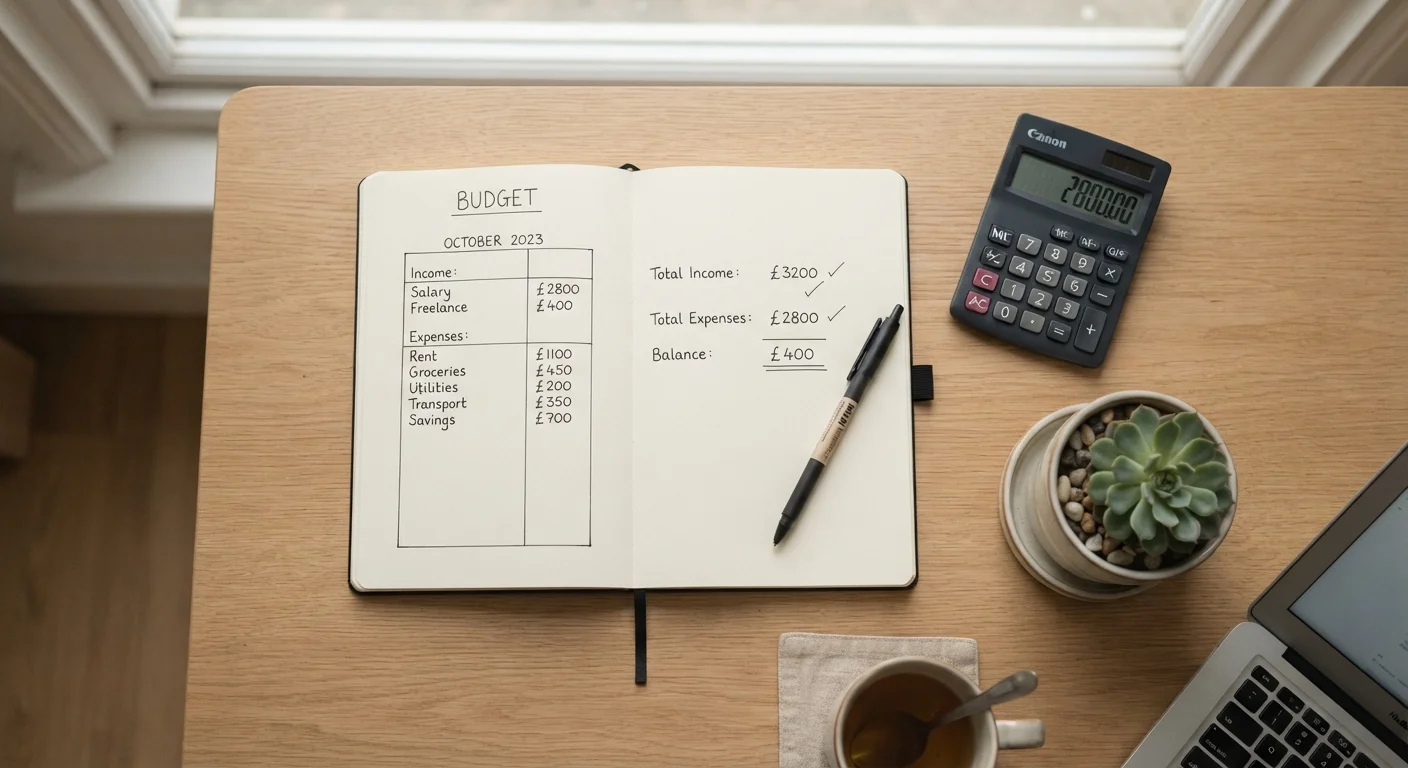


Why a Monthly Review Makes the Difference
A budget written once and never revisited is little more than a snapshot of good intentions. Life changes - an unexpected bill, a salary increase, a subscription you forgot about - and a static budget cannot adapt on its own. The monthly review is the mechanism that keeps your budget alive and useful.
Research into personal finance behaviour consistently points to follow-through, not initial setup, as the hardest part of budgeting. Our article on why budgets fail in the second month explains this pattern in detail. A short, structured review routine addresses it directly by building a feedback loop into your financial habits.
The goal is not perfection - it is awareness. When you know where your money went, you can make deliberate choices about where it goes next. This sits at the heart of the complete guide to personal budgeting approach.
Keep Your First Review Simple
If you have never done a budget review before, aim only to compare planned versus actual spending in your three largest categories. A partial review completed consistently is far more valuable than a comprehensive review that never happens. You can expand the process once the habit feels natural.
Tools and What You Will Need
You do not need specialist software to complete a monthly review. The tools below cover the most common setups - choose whichever matches how you already manage your budget.
Bank and credit card statements
Provides a complete, accurate record of all transactions during the review period.
Budget spreadsheet or notebook
Holds your planned income and spending figures to compare against actuals.
Calculator or spreadsheet software
Speeds up the arithmetic when totalling spending by category.
Budgeting app with transaction export
Automates transaction categorisation, reducing manual data entry during the review.
What you will need
Your Step-by-Step Monthly Review Routine
Work through these steps in order. The first time may take closer to 30 minutes; once the habit is established, most people complete it in 20 or less.
Set a fixed review date each month
Choose a date that falls reliably after your last income payment of the month - the last Sunday of the month, or the 1st of the following month, both work well. Put it in your calendar as a recurring event. Consistency matters more than the exact date.
Gather your statements and budget records
Collect your bank statements, credit card statements, and any receipts or transaction exports covering the past month. Open your budget document - spreadsheet, app, or notebook - alongside them. Having everything in one place before you start prevents interruptions.
Total your actual income and spending by category
Go through each transaction and assign it to a budget category (rent, groceries, transport, subscriptions, dining out, and so on). Add up the totals. You are creating an accurate picture of what actually happened last month - not what you planned.
Compare actuals to your planned budget
Place your planned amounts next to your actual amounts for each category. Calculate the difference - positive (underspent) or negative (overspent). This comparison is the core of the review. You are looking for patterns, not just one-off anomalies.
Identify the two or three biggest variances
Focus on the categories with the largest gaps between plan and actual. Ask: was this a one-time event (a car repair, a birthday gift) or a recurring underestimate? One-off items require no action beyond noting them; recurring variances mean your budget targets need adjusting.
Adjust next month's budget figures
Update your budget for the coming month based on what you learned. If groceries consistently run 15% over budget, either raise the grocery allowance or identify a concrete way to reduce that spending. If you consistently underspend on dining out, redirect the surplus consciously - to savings, an emergency fund, or debt repayment.
Note one specific action for the month ahead
End each review by writing down one concrete action - cancel an unused subscription, transfer a set amount to savings, or cook at home two more evenings per week. A single focused change is more effective than a list of vague intentions.
Adjust the Budget, Not Just Your Behaviour
A common mistake is to identify an overspend and simply resolve to 'spend less' without changing the budget figure. If a category has been over budget for three consecutive months, the budget target itself is probably unrealistic. Revise it to reflect your actual life - then look for deliberate ways to reduce that spending over time. An honest budget is more useful than an aspirational one that is never met.
Connecting Your Review to Bigger Financial Goals
A monthly review is most powerful when it links day-to-day spending to longer-term goals. If your review reveals consistent underspending in a category, consider redirecting that surplus toward savings or debt reduction. Our saving money hub offers practical ways to build that habit once you have spending under control.
If the review surfaces recurring debt payments that feel unmanageable, the understanding debt hub provides clear explanations of how debt works and where to begin addressing it.
For a broader, once-a-year perspective, consider pairing this monthly routine with the annual financial health check, which helps you assess savings progress and spot structural gaps. You may also find it useful to run the overlooked household expenses audit alongside your first few reviews to surface spending that hides in plain sight.
This article is for general informational and educational purposes only. It does not constitute personalised financial advice. For guidance tailored to your individual circumstances, consult a qualified financial adviser or relevant professional.