
Why the Tracking Method Matters
Knowing where your money goes is a foundational budgeting skill - but the act of recording it is surprisingly easy to abandon. The best tracking system is the one you will actually maintain past the first two weeks. As part of a broader personal budgeting approach, choosing the right recording format is a practical decision, not a technical one.
This comparison weighs two everyday methods - a digital spreadsheet and a paper notebook - across the factors that most affect whether the habit sticks.
| Criterion | Spreadsheet | Notebook | |
|---|---|---|---|
| Setup difficulty | Low to moderate - template needed | Very low - just open and write | |
| Automatic calculations | Yes - totals update instantly | No - manual arithmetic required | |
| Spotting spending patterns | Easy - sort and filter by category | Harder - requires manual review | |
| Access requirements | Device, app, or browser needed | Pen and paper only | |
| Privacy | Depends on cloud settings | Fully offline and private | |
| Ease of sharing | Simple with shared documents | Requires recopying or photos | |
| Beginner-friendliness | Moderate | High |
The Case for Spreadsheets
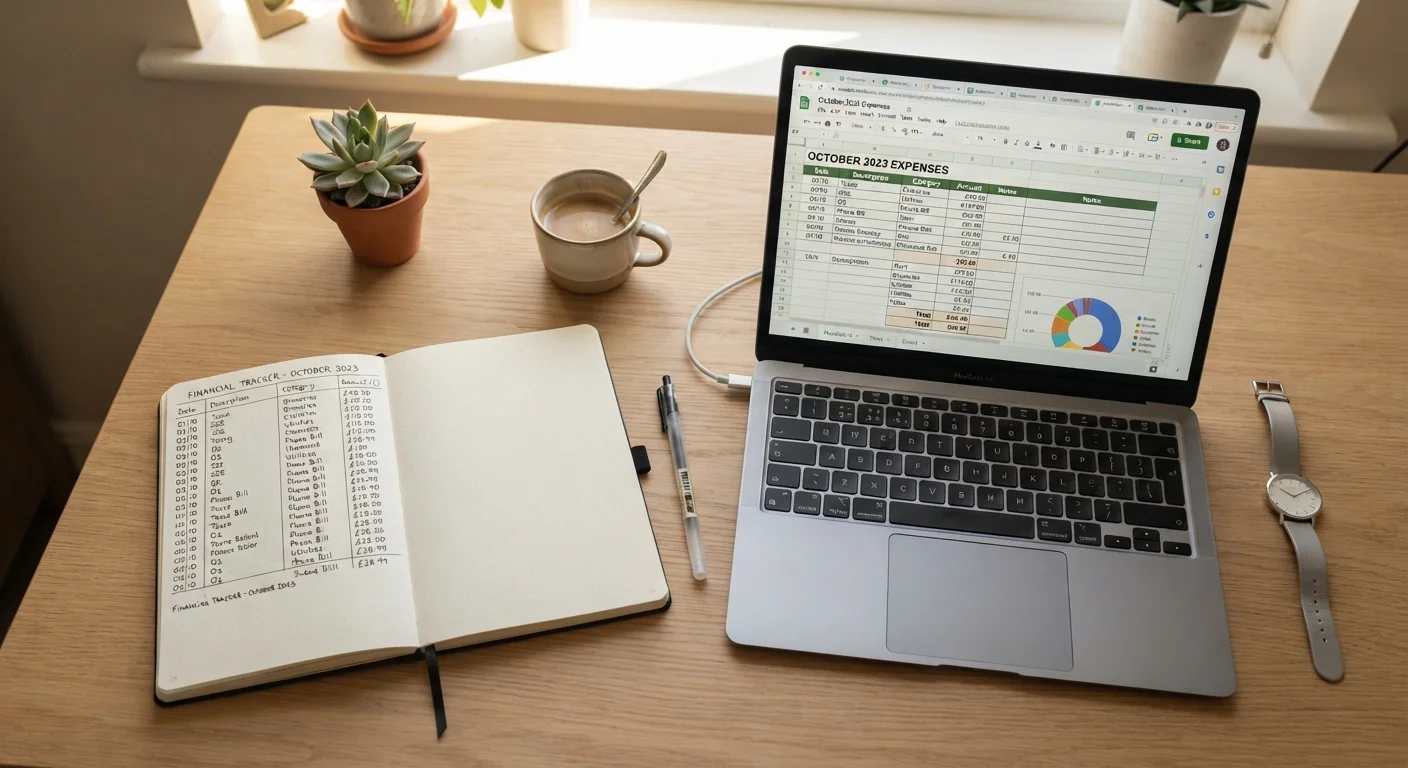
A spreadsheet (whether in a free tool like Google Sheets or a desktop programme) handles arithmetic automatically. Enter an amount and it updates your running totals, category subtotals, and remaining budget instantly. That removes a common source of error and saves meaningful time across a month.
Spreadsheets also make patterns visible. Sorting by category or date lets you see at a glance where spending clusters - something a handwritten list makes harder to spot. If you track multiple people in one household, a shared spreadsheet means everyone works from the same data without recopying anything. For tips on keeping your digital files and tools well-organised, see organising your digital life.
Start With a Template
If spreadsheets feel daunting, look for a free, pre-built monthly budget template rather than building one from scratch. Most offer ready-made categories and formulas, so you can start entering figures immediately. This removes the setup barrier that causes many people to give up before they begin.
The main friction point is access: you need a device and a few seconds of loading time at the moment of each purchase - which can mean entries are delayed or forgotten.
The Case for a Notebook
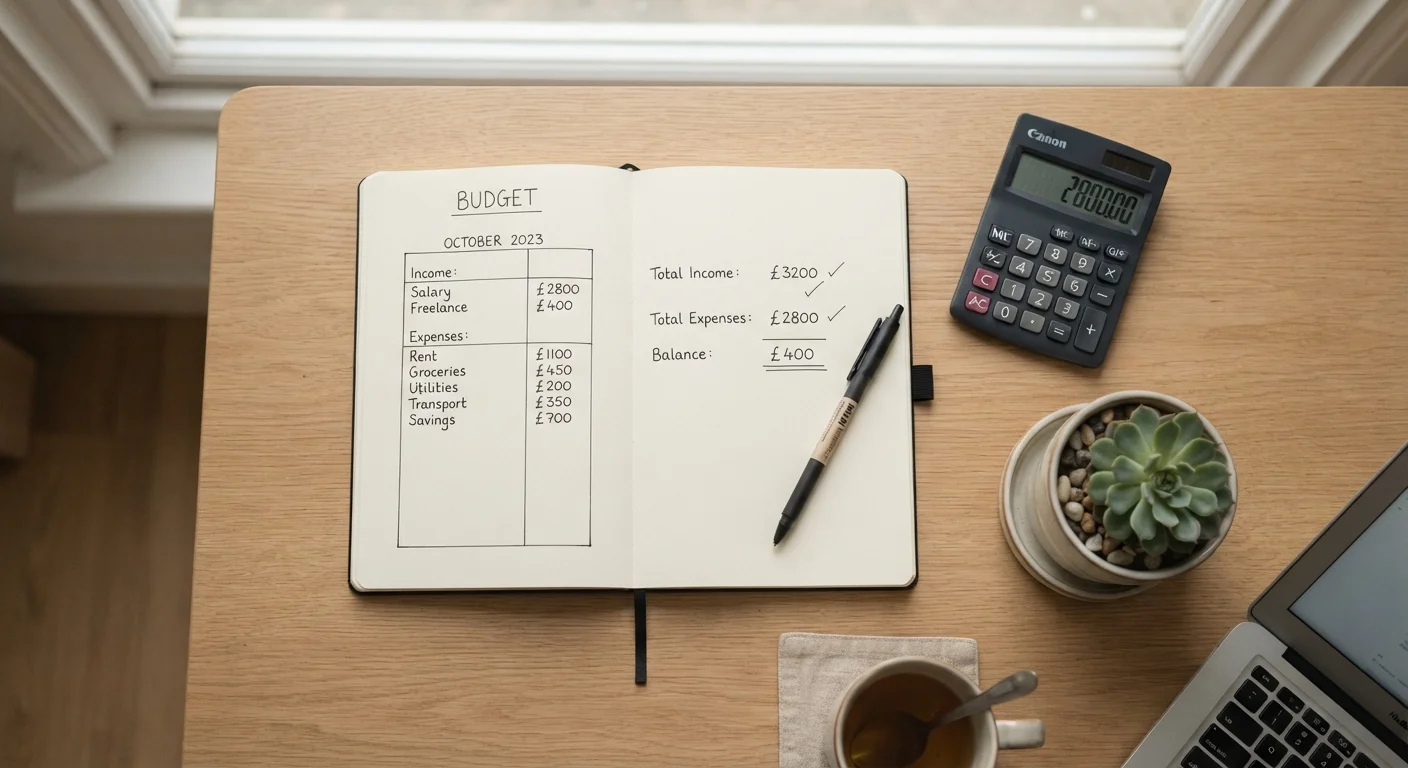
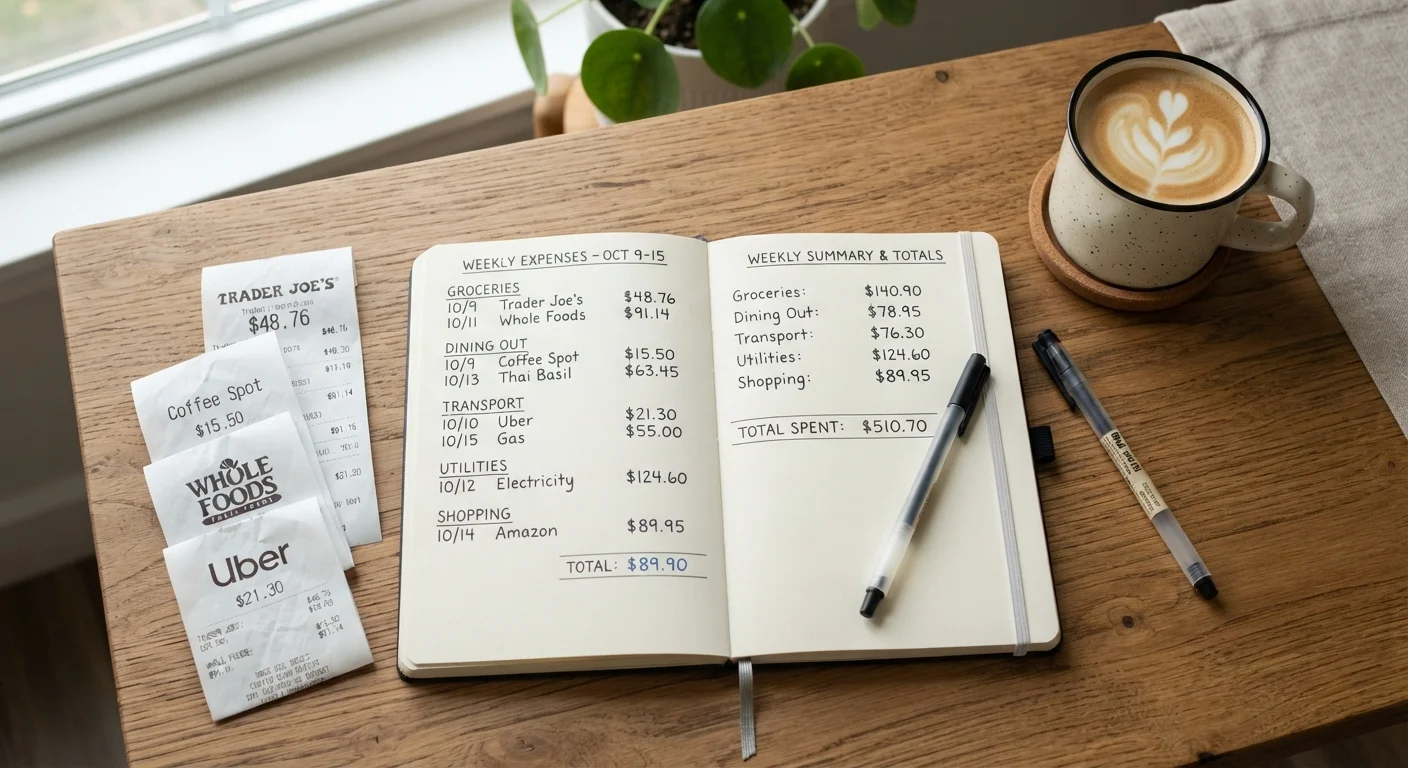
A small paper notebook kept in a bag or pocket creates almost zero barrier to entry. There is no app to open, no login, and no concern about battery life. For many people, the physical act of writing a number down makes the transaction feel more real, which can encourage more mindful spending decisions.
Notebooks are also private by default, require no data account, and work anywhere. They are particularly well-suited to beginners who find a blank spreadsheet intimidating - starting with ruled paper and a pen keeps the focus on the habit rather than the tool.
Notebooks Can Become Difficult to Review
Handwritten logs are easy to start but harder to analyse over time. If pages fill up without clear category headings or date separators, identifying trends across months becomes tedious. Use a consistent layout from day one - ruling off each day and labelling categories clearly will save considerable effort during your monthly review.
Want to see what a month of consistent recording can actually reveal? The spending diaries approach shows what patterns typically emerge - and how they change behaviour over time.
Practical Tips for Either Method
Regardless of format, a few principles improve the quality of any spending log:
- Record at the point of spending, or within the same day. Reconstructing a week from memory produces gaps.
- Use consistent categories - groceries, transport, eating out, subscriptions - so comparisons across months are meaningful.
- Review weekly, not just monthly. A brief check prevents surprises from building up silently.
- Keep it simple at first. Three or four categories are easier to maintain than fifteen. You can always add detail once the habit is established.
Tracking is one building block in a larger effort. Exploring saving money strategies alongside your log can help connect daily records to longer-term goals.
This article is for general informational purposes only and does not constitute personalised financial advice. For guidance tailored to your own circumstances, consider speaking with a qualified financial professional.