
Why One Month Is the Right Starting Point
Many people have a general sense of where their money goes - rent, food, maybe a streaming service or two. But general senses are notoriously inaccurate. A month-long spending diary replaces that vague impression with verifiable data, and what that data reveals is often surprising.
Thirty days captures enough variation to be meaningful: a full billing cycle, at least one grocery shop, weekend spending alongside weekday patterns, and any irregular but recurring costs like a quarterly gym fee or an annual subscription charged monthly. It is the shortest window that gives a genuinely representative picture.
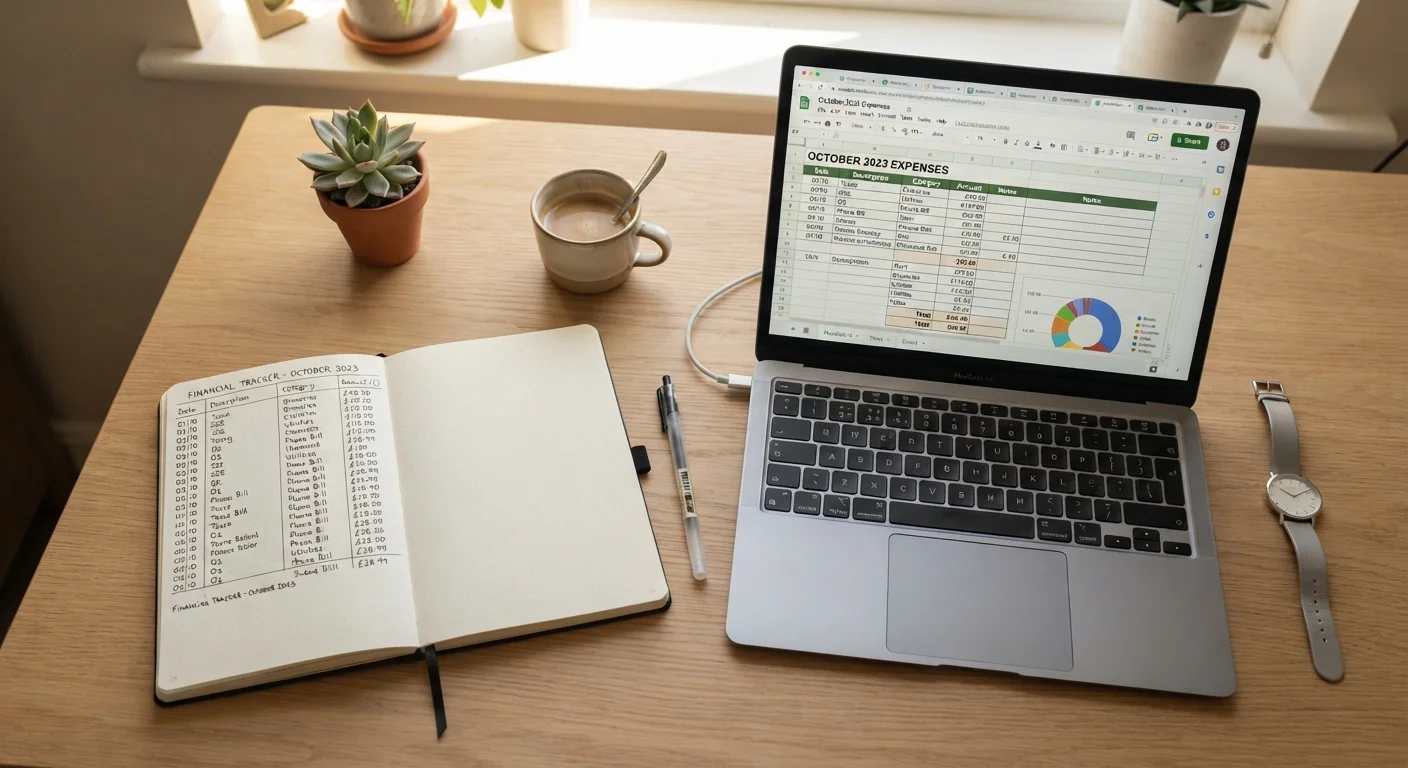
The process is simple: record every transaction, in whatever format you will actually maintain. It does not need to be complex. See the complete guide to personal budgeting for broader context on where tracking fits into your overall financial picture.
~20%
Typical underestimate of monthly discretionary spend
Financial planning research broadly suggests people underestimate their discretionary spending by around 20% or more when asked to recall it without records.
3-5
Average forgotten subscriptions per household
Consumer surveys in multiple markets consistently find households carrying several subscriptions they no longer actively use or remember signing up for.
What People Typically Discover
The most common revelation is how much small, frequent purchases accumulate. A daily coffee, a lunchtime snack, a convenience-store stop - individually these feel trivial. Totalled across 30 days, they often represent a surprisingly large share of discretionary spending.
The second discovery is subscriptions. Many households carry several subscriptions that are rarely or never used. These charges are automatic, easy to forget, and collectively significant. Our article on overlooked household expenses covers this pattern in detail.
Third, most people find a mismatch between their assumed spending and their actual spending - particularly in food, entertainment, and personal care categories. Studies on financial self-assessment consistently show that people underestimate how much they spend in these areas.
The Behavioural Effect of Writing It Down
One of the more counterintuitive findings is that tracking spending changes spending. The act of recording a purchase - even after the fact - creates a moment of reflection that gradually shifts habits. Behavioural economists refer to this as the observer effect: awareness itself alters behaviour.
This is why a spending diary is useful even before you have a formal budget. It builds the habit of noticing. By the end of week two, most people begin making small adjustments naturally, before they have even analysed their data.
“The first step in managing money is knowing where it goes. Without that data, any plan is built on assumptions - and assumptions are usually optimistic.”
— Finance Editorial Team, Personal finance editors, multi-vertical publisher
Once you have a month of data, you have what you need to build something structured. The first monthly budget walkthrough shows exactly how to translate raw spending records into workable spending limits.
Turning Data Into Action
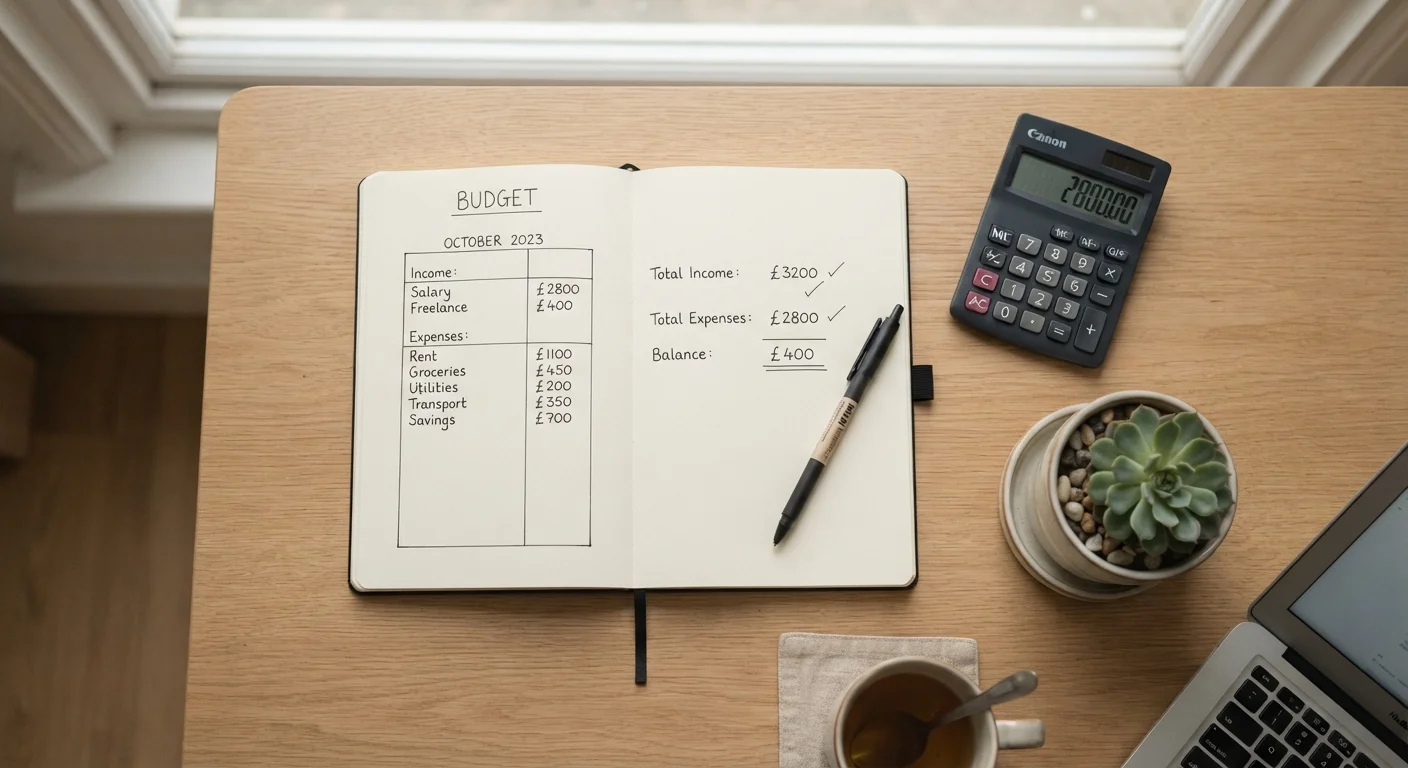
A spending diary is not the destination - it is the starting map. Once your 30 days are complete, total your spending by category and compare it to your income. Then ask three questions: Which categories cost more than I expected? Which purchases do I not remember or value? Where could I redirect money toward a goal?
The answers rarely require dramatic cuts. More often they reveal specific adjustments - a subscription to cancel, a habit to moderate, a category where awareness alone will reduce spending. Even modest changes, applied consistently, accumulate meaningfully over time.
Make Recording Frictionless
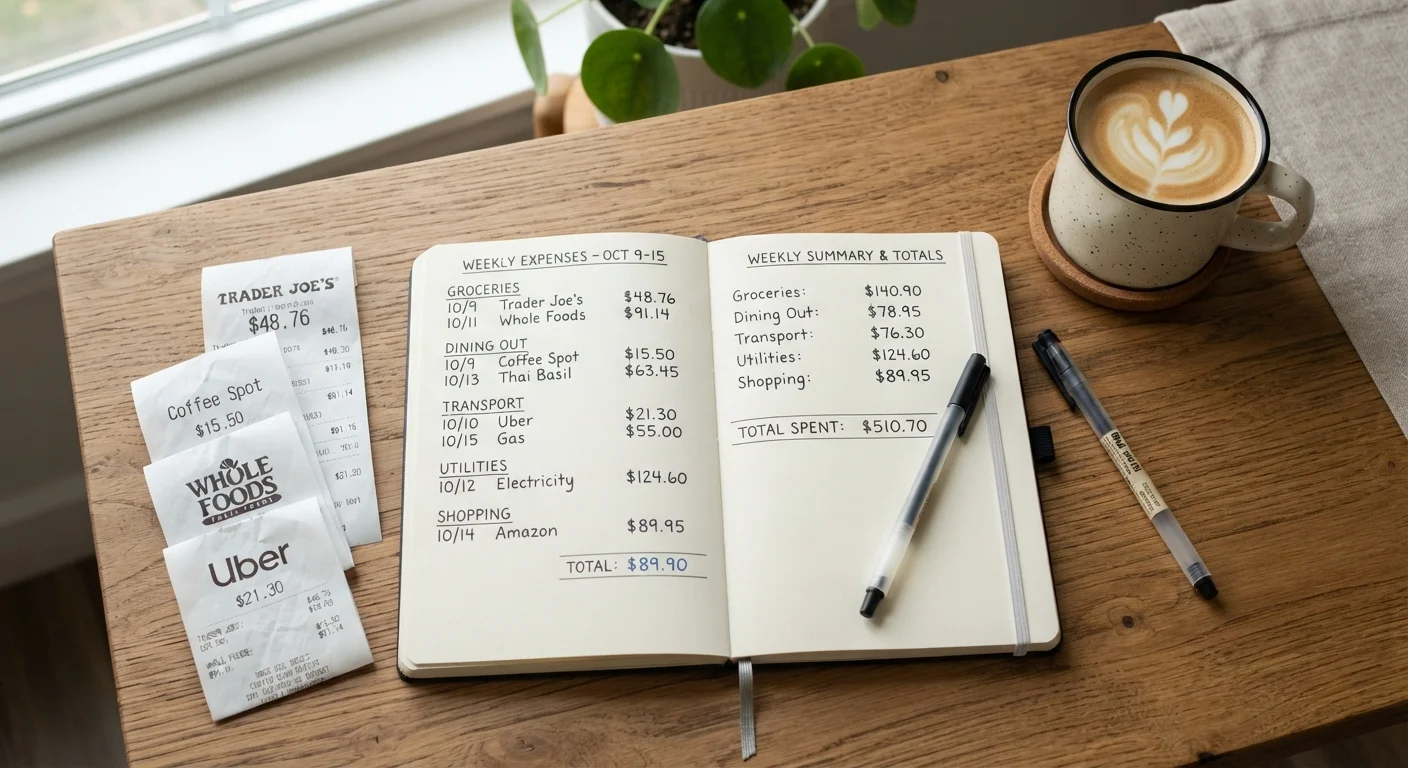
Keep your tracking tool - whether a notebook or an app - where you will actually use it. Logging a purchase immediately takes seconds; trying to reconstruct a week's spending from memory takes much longer and is far less accurate. Set a daily two-minute reminder for the first two weeks until the habit is established.
For a clearer view of how your spending breaks down before you start tracking, mapping your monthly cash flow is a useful first step. Once you have run your diary, a monthly budget review routine keeps the momentum going.
This article is for general informational purposes only and does not constitute personalised financial advice. For guidance tailored to your circumstances, consider consulting a qualified financial adviser.