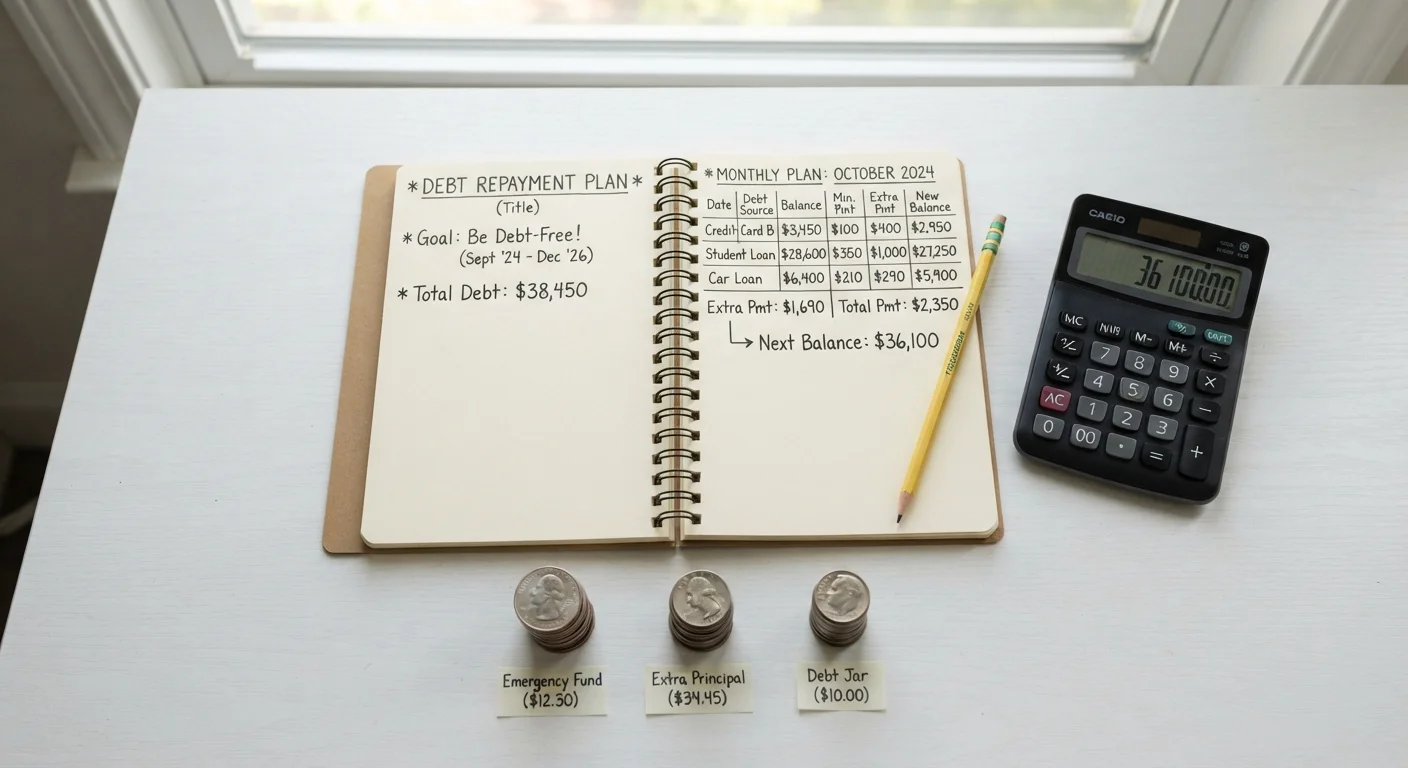


What Debt Consolidation Actually Means
Debt consolidation is the process of combining multiple debts - often credit cards, personal loans, or medical bills - into a single new loan or credit product. Instead of tracking several due dates and interest rates, you make one monthly payment to one lender.
The mechanics can vary. Common approaches include a personal consolidation loan (you borrow a lump sum to pay off existing debts), a balance transfer credit card (you move card balances onto one card, ideally at a lower rate), or a debt management plan through a nonprofit credit counseling agency (which negotiates reduced rates on your behalf without new credit).
To understand why certain debt types are more commonly consolidated than others, see our guide to the major types of consumer debt.
Consolidation vs. Debt Settlement: Not the Same
Debt consolidation is often confused with debt settlement - a different process where a third party negotiates with creditors to accept less than the full balance owed. Settlement can seriously damage your credit score and may have tax implications, as forgiven debt is sometimes treated as taxable income. Consolidation, by contrast, repays debts in full through a restructured arrangement. The two approaches carry very different consequences, so it's worth understanding which one is being offered before agreeing to anything.
The Real Advantages
When used appropriately, consolidation can offer meaningful financial relief:
Simplifies repayment into one monthly payment
Replacing five or six creditors with one reduces the risk of missed payments and makes budgeting more straightforward.
May reduce total interest paid
If the consolidation rate is meaningfully lower than existing rates - particularly credit card rates, which tend to be high - total interest costs over the repayment period can fall.
Can lower the monthly payment amount
A longer repayment term spreads the balance over more months, easing short-term cash flow pressure - though this comes with trade-offs.
Stops collection pressure on paid-off accounts
Paying off individual creditors through consolidation can halt collection activity and reduce the number of parties contacting you about outstanding balances.
One often-overlooked benefit is psychological: managing a single payment reduces the cognitive load of juggling multiple creditors, which can make consistent repayment feel more achievable. That said, the financial math should always come first.
The Limitations You Should Know
Consolidation is widely marketed as a solution, but the fine print often tells a more complicated story:
May increase total interest over the loan's life
A lower monthly payment usually comes from a longer term. Stretching repayment from 2 years to 5 years means more interest paid overall, even at a lower rate.
Requires creditworthiness to access good rates
The most competitive consolidation rates are typically reserved for borrowers with solid credit histories; those who most need relief may qualify only for rates that offer little advantage.
Does not address underlying spending patterns
Consolidation restructures debt; it does not reduce it. Without changes to the habits or circumstances that created the debt, balances can rebuild on top of the new loan.
Secured consolidation puts assets at risk
Some consolidation products are secured against property - meaning default can put a home or other asset at risk, converting unsecured debt into a much higher-stakes obligation.
Fees can erode or eliminate savings
Origination fees, balance transfer fees (commonly 3-5% of the transferred amount), and prepayment penalties on existing loans can reduce or eliminate the financial benefit of consolidating.
Perhaps the most important limitation: consolidation does nothing to change the behavior or circumstances that led to the debt. If overspending or income gaps remain unaddressed, new debt can accumulate on top of the consolidated balance - leaving someone in a worse position than before. For a fuller picture of repayment strategies that tackle debt at its source, explore avalanche, snowball, and other approaches.
20%+
Typical APR on U.S. credit cards
Federal Reserve data has consistently shown average credit card interest rates above 20%, making high-rate debt one of the primary reasons people explore consolidation.
3-5%
Typical balance transfer fee
Most balance transfer credit cards charge a percentage of the amount moved, which can meaningfully reduce the net savings from switching to a lower promotional rate.
How to Evaluate Whether It Makes Sense for You
Before pursuing consolidation, it helps to run a straightforward comparison:
- Calculate your current total interest cost across all debts - add up balances, rates, and remaining terms.
- Model the consolidated option - what interest rate would you qualify for, over what term, and what is the total repayment amount (not just the monthly payment)?
- Check for fees - origination fees on loans, balance transfer fees, or early repayment penalties on existing debts can erode savings.
- Assess your credit profile - consolidation loans typically require a minimum credit score; those with lower scores may not access the rates that make consolidation worthwhile.
If the total cost of the new arrangement exceeds what you'd pay by staying the course - or by applying a structured payoff method - consolidation may not be the right tool. For context on how minimum payments alone can drag out debt, read why minimum payments can keep you in debt for years.
This article is for general informational and educational purposes only. It does not constitute personalised financial, tax, or legal advice. For guidance specific to your circumstances, consult a qualified financial adviser or credit counselor.