
Why a Weekly Check Beats Daily Obsessing
Most nutrition advice focuses on individual meals or single nutrients - but eating well is really a pattern that plays out across days and weeks. A rigid daily audit can fuel stress and an unhelpful fixation on perfection. A weekly review, by contrast, gives you enough data to spot real trends without the pressure of moment-to-moment scrutiny.
This checklist is designed for adults who want a practical, low-effort way to evaluate whether their eating broadly covers the bases - variety, hydration, fibre, protein, and healthy fats - without counting a single calorie. If you're new to thinking about food this way, our foundation guide for everyday eaters is a helpful starting point before diving in.
Think of this as a nutritional pulse-check, not a report card. The goal is awareness, not judgment.
A simple notebook or notes app
Jot down what you ate across the week so the review is based on memory plus brief notes rather than guesswork.
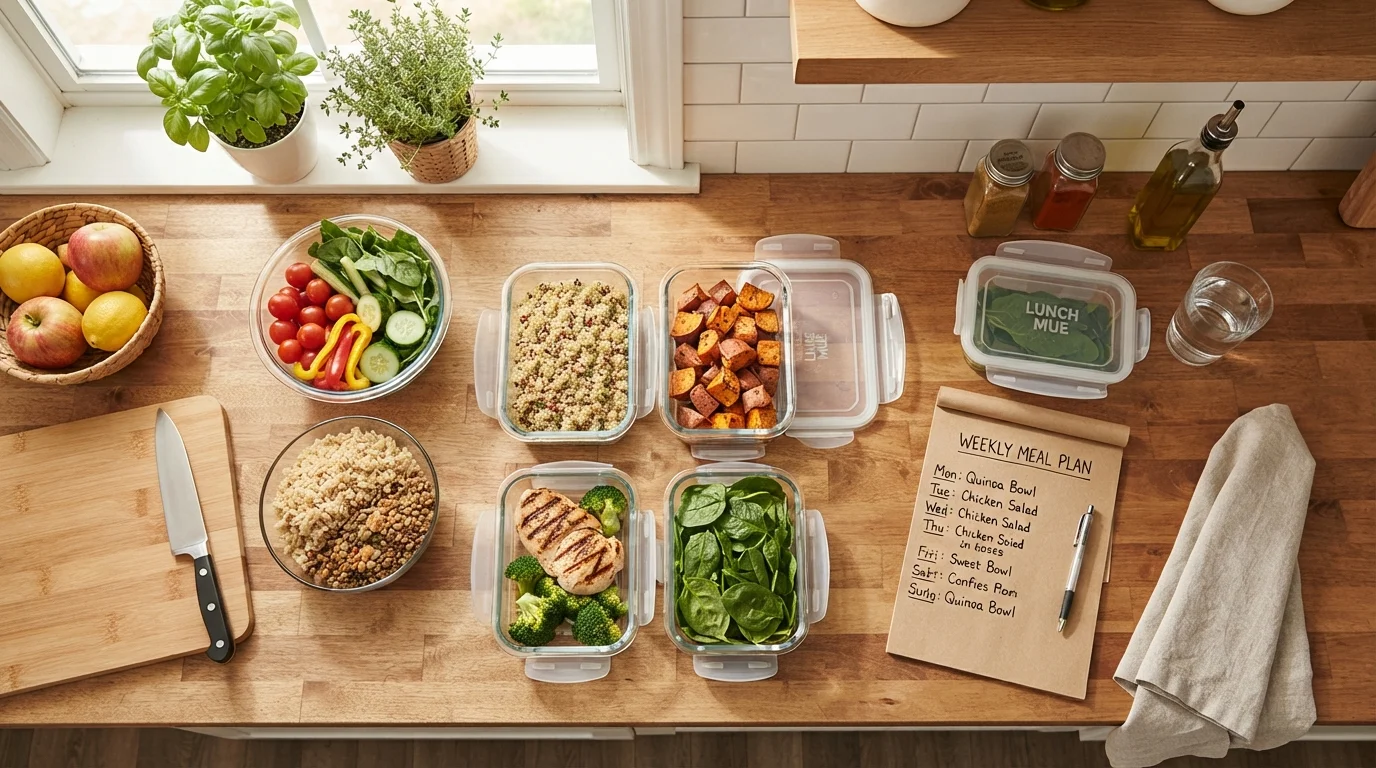
A weekly meal-planning template
A basic grid (days vs. meals) helps you plan variety ahead of time and makes the end-of-week review quicker.
Food group reference guide
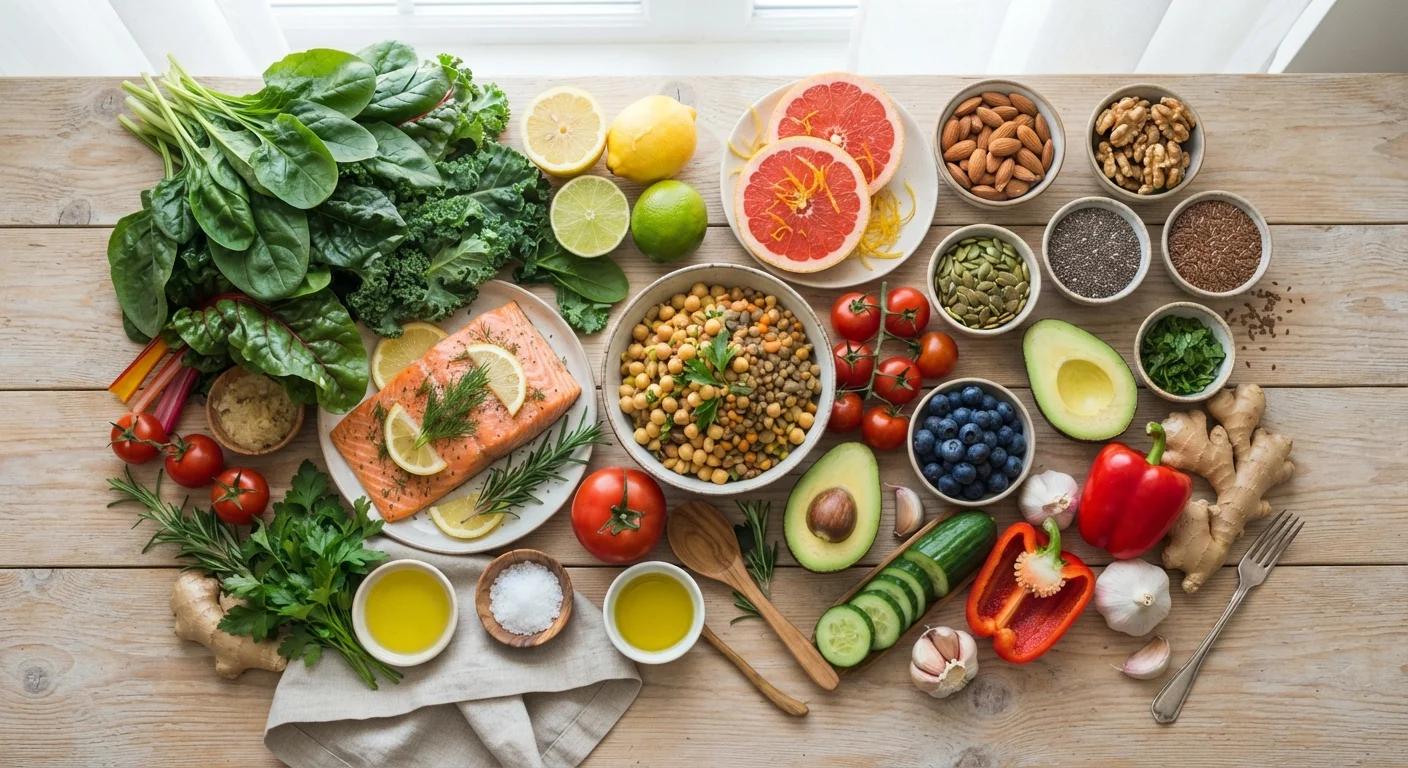
A visual reference - such as a national dietary guidelines poster - helps you confirm which foods count in which category.
How to Use This Checklist
Set aside 10-20 minutes at the end of each week - Sunday evening works well for many people. Cast your mind back across the past seven days and work through each group honestly. You don't need to be precise; rough estimates are fine. Mark items as "yes," "partly," or "not really" rather than trying to calculate exact amounts.
If you find persistent gaps week after week, that's the signal to act - not guilt over a single off day. For practical strategies on fitting better food choices into a packed schedule, see our guide on practical nutrition for busy weekdays.
Don't Use This as a Diagnostic Tool
This checklist is a general awareness exercise, not a clinical assessment. If you have a diagnosed health condition, food allergies, or are in a special life stage such as pregnancy, breastfeeding, or recovery from illness, your nutritional needs differ from general guidance. Please work with a registered dietitian or your healthcare provider rather than relying solely on a self-check.
Once you've identified a pattern - say, low vegetable variety or skipping breakfast most days - pick one thing to address in the coming week. Small, consistent changes tend to stick better than sweeping overhauls.
Vegetables & Fruit
Protein Sources
Whole Grains & Carbohydrates
Healthy Fats
Hydration
Eating Patterns & Balance
Reading Your Results
If you ticked most items under "Vegetables & Fruit" and "Hydration" but struggled with "Protein Sources" or "Healthy Fats," that tells you something specific and actionable. The checklist is designed so each group maps to a distinct nutritional function - rather than a vague sense of eating "well" or "badly."
Micronutrient gaps - vitamins and minerals - are harder to self-assess without blood work, but broad food variety is the best everyday safeguard. Our guide to key vitamins and minerals explains which foods cover the most ground.
Bear in mind: this checklist is general health information. It is not a substitute for personalised advice from a qualified dietitian or your GP, especially if you have a specific health condition, are pregnant, or are managing a medically supervised diet. If you notice significant ongoing fatigue, digestive issues, or unexplained changes in weight or appetite, consult a healthcare professional rather than adjusting your diet based on a self-check alone.
Persistent Gaps Deserve Professional Input
If your weekly checks repeatedly flag the same significant shortfalls - for example, very low food variety, difficulty eating enough, or suspected nutrient deficiencies - a GP referral to a registered dietitian is the appropriate next step. Self-guided nutrition improvement has real value, but it has limits. Some nutritional issues are best identified through blood tests and professional assessment, not self-reflection alone.
This article is for general informational and educational purposes only. It does not constitute medical or dietary advice. Always consult a qualified healthcare professional for guidance tailored to your individual health needs.