
Why Weekday Nutrition So Often Falls Short
Most adults don't eat poorly because they lack knowledge - they eat poorly because Tuesday at 7 p.m. leaves almost no time or mental energy for thoughtful food choices. Understanding the gap between intention and action is the first step toward closing it.
The core challenge is decision fatigue: by the end of a long workday, the mental effort required to plan, shop, and prepare a nutritious meal competes with everything else demanding your attention. The result is often a default to whatever is fastest, not whatever is most nourishing.
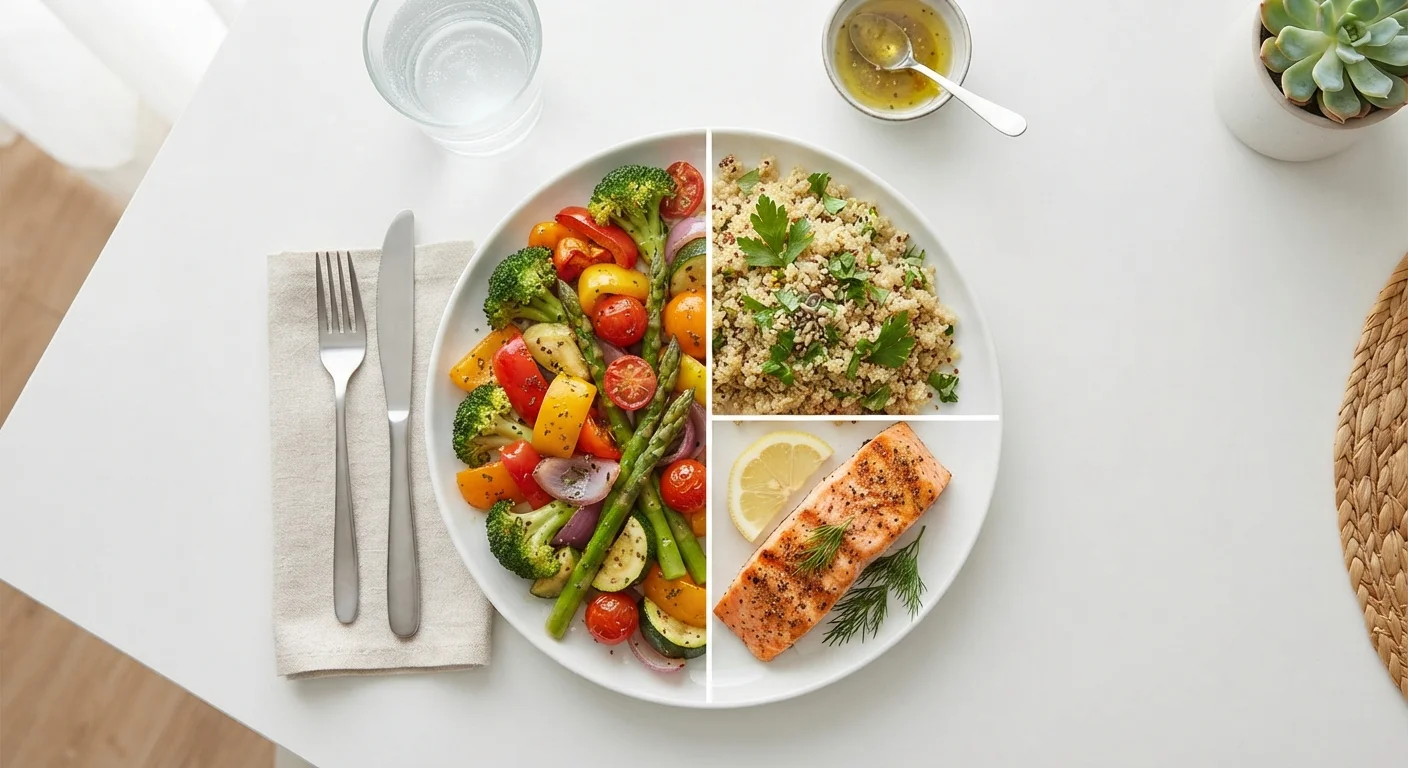
Research in behavioural nutrition consistently shows that environment and preparation, rather than willpower alone, drive daily food choices. That means the most effective strategy is not trying harder in the moment - it's reducing the friction that stands between you and a reasonably balanced meal. For a solid grounding in what a balanced meal actually looks like, see our guide to building a balanced plate.
Environment Shapes Choices More Than Willpower
Before changing what you eat, consider changing what is visible and accessible in your kitchen. Keeping nutritious options at the front of the fridge and counter reduces the effort required to choose them. Small environmental adjustments tend to produce more durable behaviour change than motivation-based approaches alone.
What You'll Need Before You Start
No specialist equipment is required, but a few practical tools and a short block of time make the system significantly more reliable.
What you will need
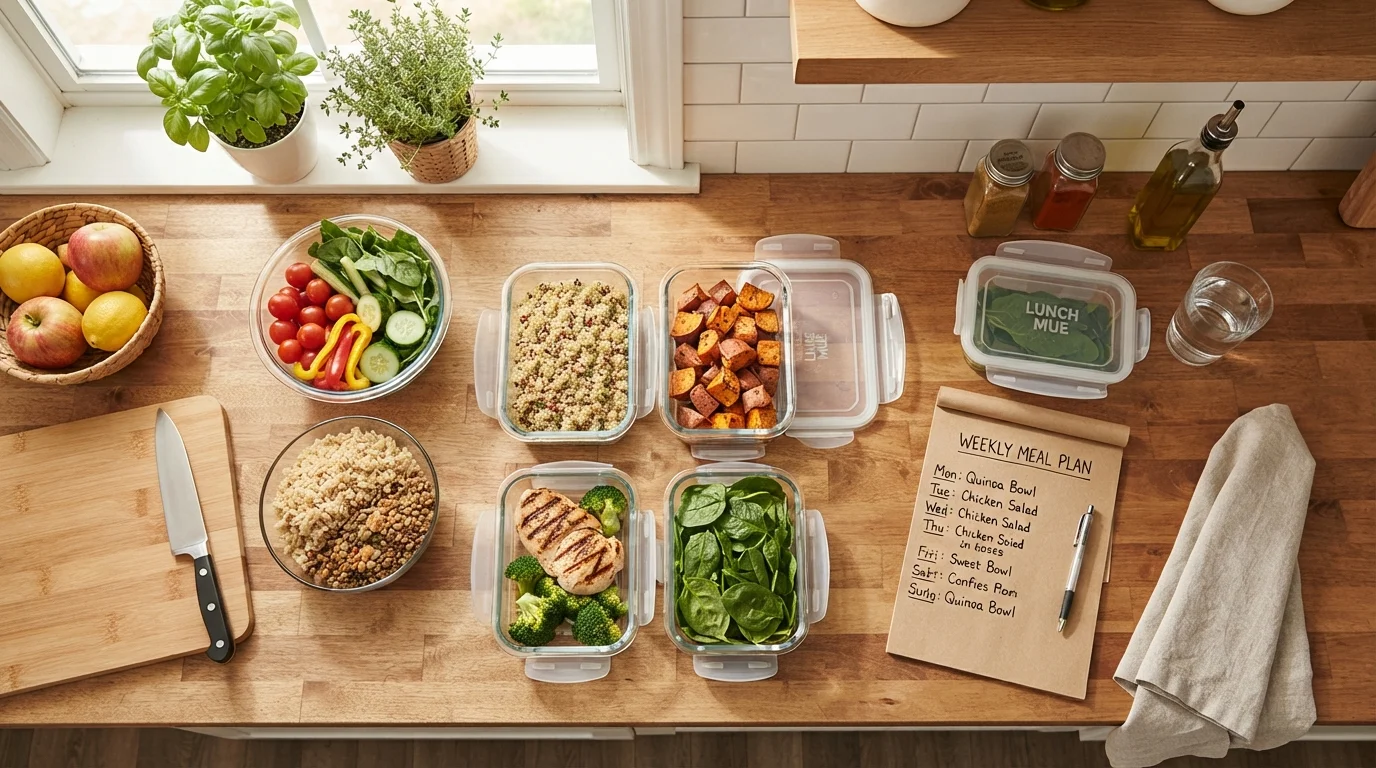
Airtight storage containers
Keep batch-cooked grains, proteins, and chopped vegetables fresh in the fridge for 3-4 days.
Sheet pan or roasting tray
Allows you to roast multiple vegetables or a protein source simultaneously with minimal effort.
Insulated lunch bag
Keeps prepped meals at a safe temperature when eating away from home.
Weekly meal planner (paper or app)
Maps out rough meals for the week so shopping and prep can be done efficiently in one go.
Step-by-Step: Building Your Weekday Nutrition System
The steps below build on each other - you can start with just one and add more as your routine develops. For a broader overview of nutrition concepts that inform these choices, the complete nutrition overview is a useful reference.
Plan two or three anchor meals for the week
Choose two or three simple meals you are comfortable preparing and that you genuinely enjoy. These become your defaults - meals you can assemble quickly without consulting a recipe. Anchor meals reduce the number of daily decisions you need to make from scratch.
Aim for meals that include a protein source, a vegetable component, and a starchy carbohydrate. This structure maps broadly to the food-group framework described in the balanced plate guide.
Batch-cook one grain and one protein source
On your prep day, cook a larger portion of one grain (such as rice, oats, or lentils) and one protein source (such as eggs, legumes, or chicken). Store them separately in airtight containers in the fridge.
These two components can be combined differently across multiple meals throughout the week - with different vegetables, sauces, or seasonings - giving variety without additional cooking effort.
Pre-wash and chop one or two vegetables
Washed, cut vegetables are far more likely to be eaten than whole ones sitting in a bag. Spend ten minutes prepping a batch of whatever vegetables you plan to use through the week - this single habit reliably increases vegetable intake with minimal effort.
Harder vegetables like carrots, broccoli florets, and bell peppers hold up well for several days in sealed containers. Leafy greens are better washed just before use.
Stock two or three portable backup options
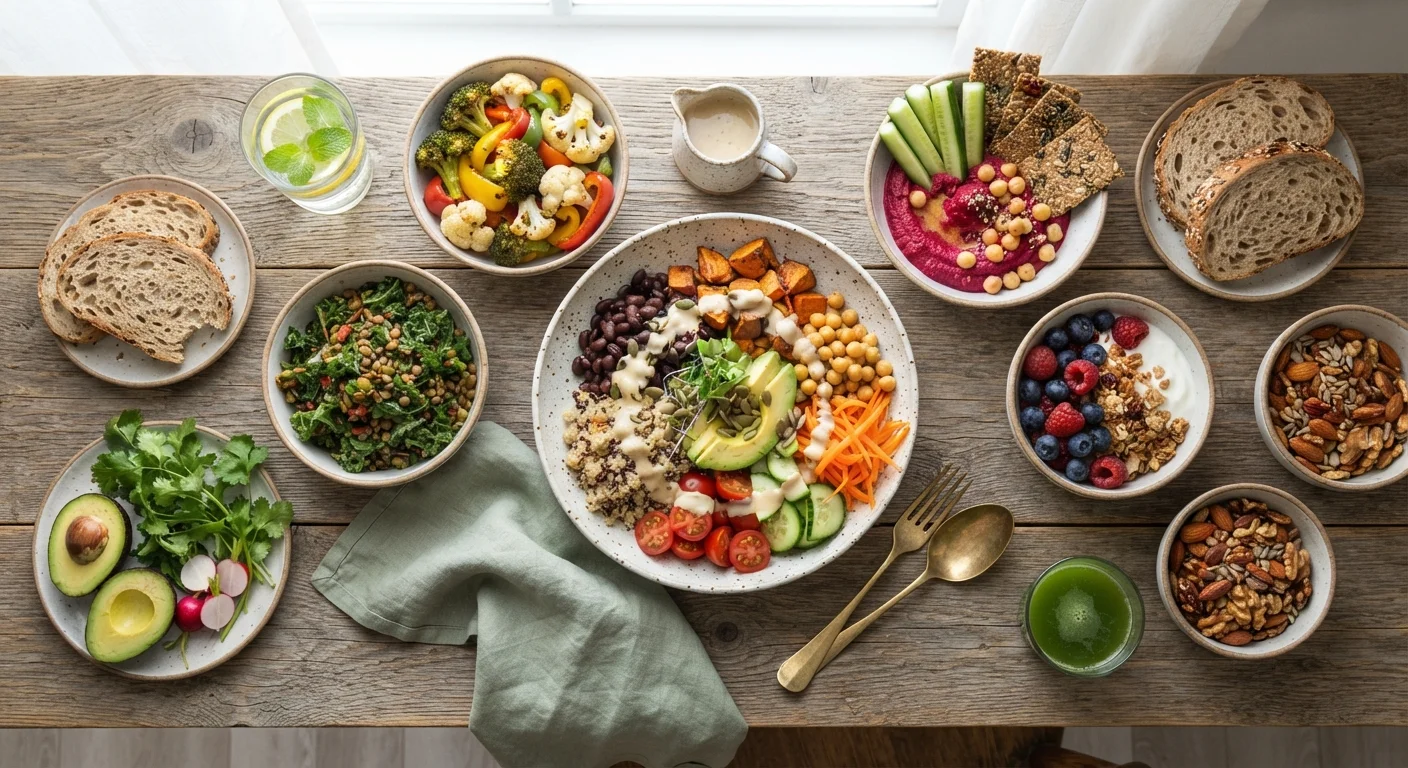
Even with good preparation, some days go off-plan. Having reliable portable options on hand - such as tinned pulses, nut portions, yoghurt, or whole-grain crackers - means you have a nutritionally adequate fallback that requires no preparation at all.
These are not a substitute for regular meals but serve as a buffer that prevents a missed meal from becoming a sustained pattern of poor eating.
Build a simple weekly check-in habit
At the end of each week, take five minutes to assess how your eating went - not to judge yourself, but to notice patterns. Were certain days consistently harder? Did you run out of a particular food type? Small adjustments based on real patterns are more effective than starting over with a new plan.
The weekly nutrition self-check provides a structured prompt for this process without requiring any calorie tracking.
Avoid Over-Restricting in the Name of 'Healthy' Eating
Cutting out entire food groups or dramatically reducing intake to save time or lose weight quickly can lead to nutrient gaps and is not recommended without professional guidance. Busy-week nutrition strategies should add ease and adequacy, not impose unnecessary restriction. If you have specific dietary needs or health conditions, consult a registered dietitian.
Navigating Convenience Foods and Faster Choices
Not every meal will be home-prepared, and that's a realistic expectation to hold. Convenience foods and takeaway options are not inherently incompatible with good nutrition - context and frequency matter far more than any single choice.
When reading a label quickly, focus on three things: the fibre content (higher is generally better for satiety and digestive health), the sodium level (processed foods are the main source of excess salt in most diets), and whether there is a meaningful protein contribution. A meal that scores reasonably on all three is a sensible choice under time pressure.
If your diet leans heavily plant-based, some additional planning is worthwhile - our article on plant-based nutritional trade-offs covers the key gaps to watch for. To check whether your overall week is balanced across food groups, the weekly nutrition self-check offers a structured, no-counting approach.
This Is General Information, Not Personal Advice
The strategies in this article reflect general evidence-informed nutrition principles and are intended for healthy adults without specific medical dietary requirements. If you have a diagnosed health condition, follow a therapeutic diet, or have concerns about your nutritional status, please seek guidance from a qualified healthcare professional or registered dietitian before making significant changes.
This article is for general informational purposes only and does not constitute medical or dietary advice. Consult a qualified healthcare professional or registered dietitian for guidance tailored to your individual health needs.