
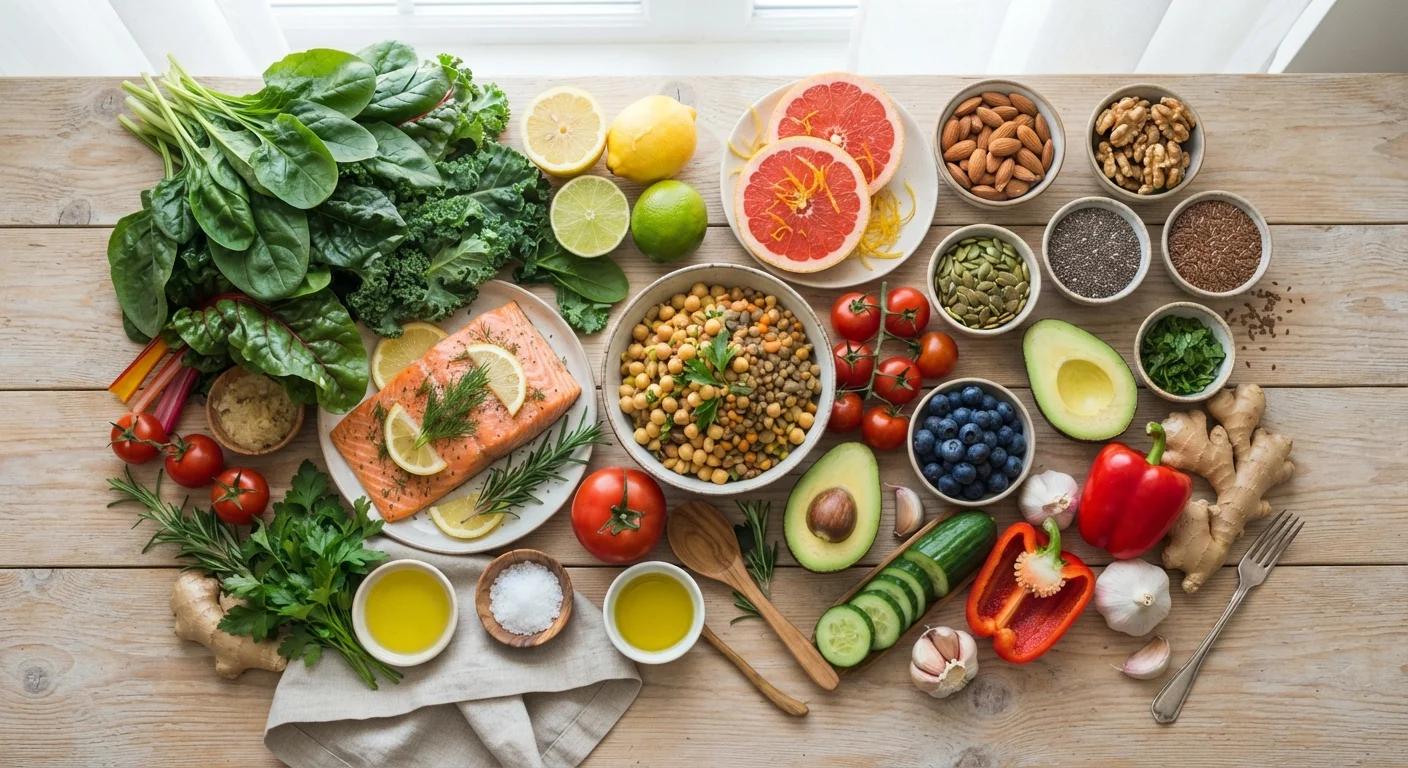
Why Micronutrients Matter
Vitamins and minerals are often called micronutrients because the body needs them in relatively small amounts - yet their effects are anything but minor. They drive hundreds of biological processes: converting food into energy, building bone, supporting immunity, and regulating mood. Unlike macronutrients such as carbohydrates, protein, and fat, micronutrients provide no calories, but without them, those calories can't be used properly.
Most adults get adequate micronutrients from a varied, balanced diet. Shortfalls tend to emerge when food variety narrows - through restrictive eating, limited food access, or certain health conditions. This reference guide gives you a practical, at-a-glance overview of the vitamins and minerals most commonly discussed in everyday nutrition. For a broader foundation, see our introduction to everyday nutrition.
Micronutrients
Vitamins and minerals needed by the body in small quantities to support essential physiological functions. They do not provide energy (calories) but are required for processes that use energy.
Fat-soluble vitamins
Vitamins A, D, E, and K, which dissolve in fat and can be stored in the liver and fatty tissues. Because they accumulate, very high supplemental doses over time carry more risk than water-soluble vitamins.
Water-soluble vitamins
Vitamins C and the eight B vitamins, which dissolve in water and are not stored in meaningful amounts. Excess is generally excreted in urine, making regular dietary intake important.
Haem iron
The form of iron found in animal foods such as red meat, poultry, and fish. It is absorbed more efficiently by the body than non-haem iron from plant sources.
Non-haem iron
The form of iron found in plant-based foods such as legumes, tofu, and fortified cereals. Its absorption is lower than haem iron but can be enhanced by consuming it alongside vitamin C.
Deficiency
A state in which the body has insufficient amounts of a particular nutrient to carry out normal functions. Deficiencies can range from mild (subclinical) to severe, and are best assessed by a healthcare professional.
Key Vitamins: Roles, Sources, and Shortfall Signs
Vitamins are divided into two groups. Fat-soluble vitamins (A, D, E, K) are stored in body fat and liver tissue, meaning they accumulate over time. Water-soluble vitamins (C and the B-complex group) are not stored in significant quantities and need more regular replenishment through food.
| Fat-soluble vitamins | A, D, E, K |
| Water-soluble vitamins | C and all B vitamins (B1, B2, B3, B5, B6, B7, B9, B12) |
| Most prevalent mineral deficiency globally | Iron deficiency (World Health Organization) |
| Vitamin D: primary non-food source | UVB sunlight exposure on skin |
| B12: reliable plant-based sources | Fortified foods or supplements only |
| Calcium absorption aided by | Adequate vitamin D intake |
Vitamin D
Supports calcium absorption, bone density, immune regulation, and muscle function. The body produces it through skin exposure to UVB sunlight - a process limited by indoor lifestyles, northern latitudes, and darker skin tones. Dietary sources include oily fish (salmon, mackerel, herring), egg yolk, and fortified foods. Shortfall signs can include fatigue, bone tenderness, and frequent infections, though these overlap with many other conditions. A blood test is the only reliable way to assess status.
Vitamin B12
Essential for nerve function, red blood cell production, and DNA synthesis. Found almost exclusively in animal products - meat, fish, dairy, and eggs. Those following plant-based diets should plan for a reliable supplemented or fortified source. Early shortfall can be subtle, manifesting as fatigue, brain fog, or tingling in the hands and feet.
Folate (Vitamin B9)
Critical for cell division and DNA formation; particularly important before and during pregnancy. Rich sources include dark leafy greens (spinach, kale), legumes, and fortified grain products. Inadequate intake during early pregnancy is linked to neural tube development issues, which is why supplementation is specifically recommended for people who are pregnant or planning to become pregnant - always under guidance from a healthcare professional.
Vitamin C
Supports collagen synthesis, iron absorption, and immune defence. Widely available in citrus fruits, bell peppers, broccoli, kiwi, and strawberries. Severe deficiency (scurvy) is rare in high-income countries but mild shortfalls can impair wound healing. Vitamin C is heat-sensitive, so eating some sources raw or lightly cooked preserves more content.
Key Minerals and Where to Find Them
Minerals are inorganic elements sourced entirely from food and water - the body cannot synthesise them. Some are needed in larger amounts (macrominerals like calcium, magnesium, and potassium); others are required in trace quantities (iron, zinc, iodine, selenium) but are equally essential.
2 billion+
People affected by micronutrient deficiencies worldwide
According to the World Health Organization, micronutrient deficiency - sometimes called 'hidden hunger' - affects a significant proportion of the global population regardless of caloric intake.
~40%
Adults with insufficient vitamin D status in many European populations
European Food Safety Authority reviews indicate suboptimal vitamin D status is common across Europe, particularly at northern latitudes during winter months.
Calcium
The most abundant mineral in the body, primarily stored in bones and teeth. Also involved in muscle contraction, nerve signalling, and blood clotting. Dairy products are a concentrated source; plant-based sources include fortified plant milks, tofu set with calcium salts, broccoli, and almonds. Absorption is aided by adequate vitamin D.
Iron
Required to make haemoglobin, the protein in red blood cells that carries oxygen. Haem iron (from red meat, poultry, and fish) is more readily absorbed than non-haem iron (from legumes, tofu, spinach, and fortified cereals). Pairing non-haem sources with vitamin C-rich foods improves uptake. Iron deficiency is one of the most prevalent nutritional shortfalls globally, particularly among menstruating individuals and those with high physical demands.
Magnesium
Involved in over 300 enzymatic reactions, including energy metabolism, protein synthesis, and muscle and nerve function. Found in nuts, seeds, whole grains, and dark leafy vegetables. Refined diets low in whole foods often fall short. Subtle deficiency may present as muscle cramps, sleep disturbance, or low energy.
Iodine
Essential for thyroid hormone production, which governs metabolism, growth, and development. Iodine content in plant foods varies widely depending on soil. Reliable sources include seafood, dairy, and iodised salt. Those on entirely plant-based diets with low salt intake may need to pay particular attention to this mineral.
For a deeper look at how micronutrients fit into your overall diet, the complete nutrition overview covers the full picture. You can also use the weekly nutrition self-check to spot gaps in your own food variety.
This article provides general nutrition information for educational purposes only and is not a substitute for personalised medical or dietary advice. If you have concerns about nutrient deficiency or your nutritional status, consult a qualified healthcare professional or registered dietitian.