
What Counts as Drinking Too Much
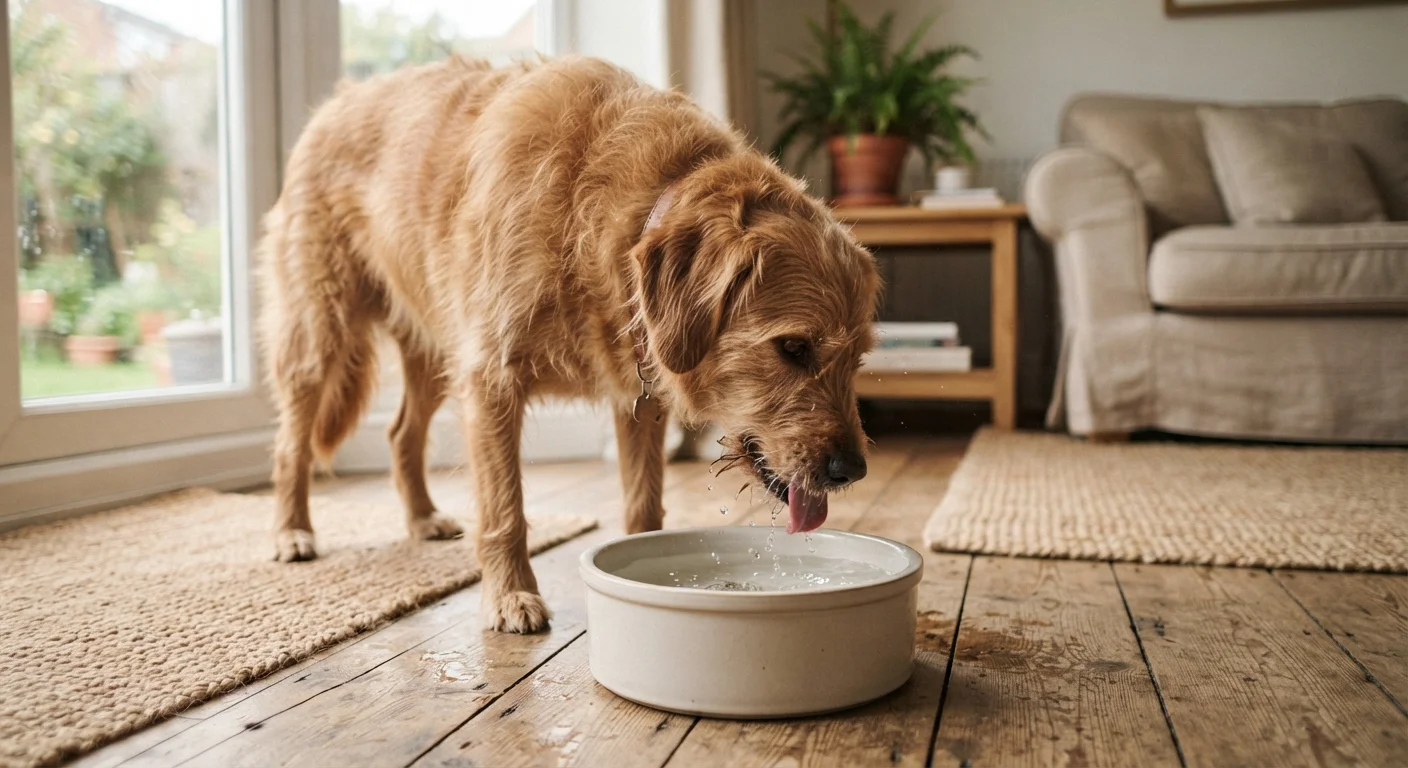
Dogs regulate thirst in response to body temperature, activity, diet moisture content, and internal physiology. As a general clinical benchmark, dogs consume roughly 20-70 milliliters of water per kilogram of body weight per day under typical conditions. A dog drinking consistently above this range - or noticeably more than their personal baseline - warrants closer attention.
The medical term for excessive thirst is polydipsia, and it frequently appears alongside polyuria (excessive urination). Together, these two signs - often abbreviated PU/PD in veterinary notes - point a clinician toward a defined list of differential diagnoses including diabetes mellitus, hyperadrenocorticism (Cushing's disease), chronic kidney disease, hypercalcemia, and pyometra in intact females. Transient increases from heat, exercise, or a high-sodium meal are normal; persistence beyond 48 hours is not something to dismiss.
1 oz/lb
Daily water intake guideline for dogs
Veterinary clinical references typically cite approximately one ounce of water per pound of body weight per day as a normal baseline for healthy adult dogs.
~80%
Moisture content in wet dog food
Compared to roughly 10% in dry kibble, wet food contributes substantially to a dog's total daily fluid intake, according to comparative pet nutrition data.
Common Mistakes Owners Make - and How to Avoid Them
Recognizing abnormal thirst early is genuinely difficult because dogs can't report symptoms. Most errors owners make are understandable but avoidable once you know what to watch for.
Assuming increased drinking is just a response to hot weather and doing nothing.
Why it happens: Heat-related thirst is real and normal, so owners pattern-match to the most benign explanation, especially in summer months.
Restricting water access to reduce indoor accidents or excessive urination.
Why it happens: Owners logically infer that less water in means less water out, overlooking that the thirst itself may be driven by an underlying condition.
Failing to track baseline water consumption before and after the change.
Why it happens: Most owners don't measure how much their dog drinks in a normal week, making it hard to quantify the change for a veterinarian.
Overlooking diet changes - such as switching from wet to dry food - as a contributing factor.
Why it happens: Wet food can contain up to 80% moisture, while dry kibble contains roughly 10%. Owners switching formulas may not realize this substantially shifts a dog's total water intake from food.
Attributing polydipsia solely to aging without investigating the underlying cause.
Why it happens: There is a widespread assumption that older dogs simply drink more as a natural part of getting old.
Don't Wait if These Signs Appear Together
If increased thirst is accompanied by lethargy, vomiting, weight loss, a swollen abdomen, or changes in the color of urine, contact a veterinarian promptly rather than monitoring at home. These combinations can indicate conditions - such as pyometra or Addison's disease - that deteriorate quickly without treatment.
This article is for general educational purposes only and does not constitute veterinary medical advice. If your dog shows signs of illness, consult a licensed veterinarian for assessment and guidance specific to your pet's situation.