
The Idea Behind the Third Place
Most people divide their daily lives between two poles: home and work. But sociologist Ray Oldenburg argued that healthy communities depend on a third type of location - one that is neither private nor professional, neither obligatory nor transactional. He called these spaces third places.
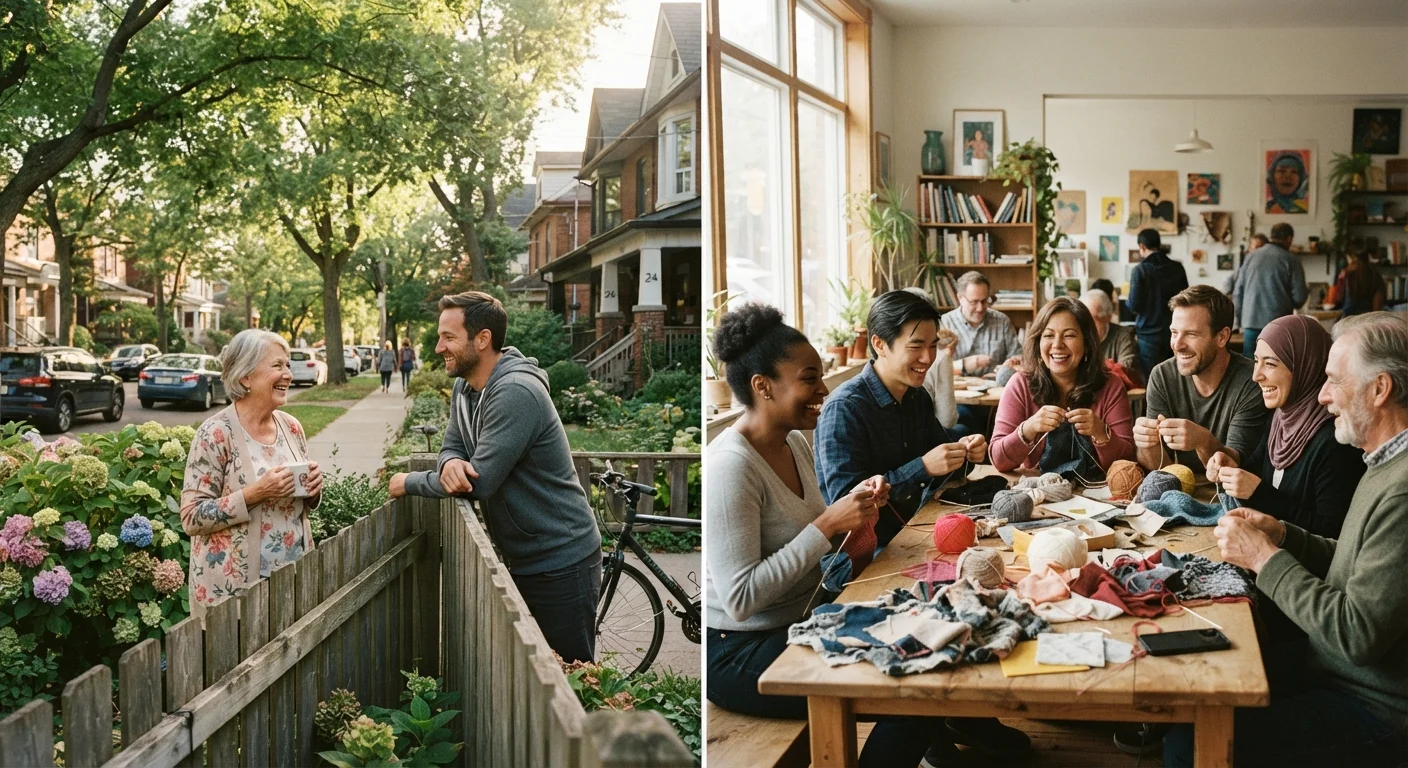
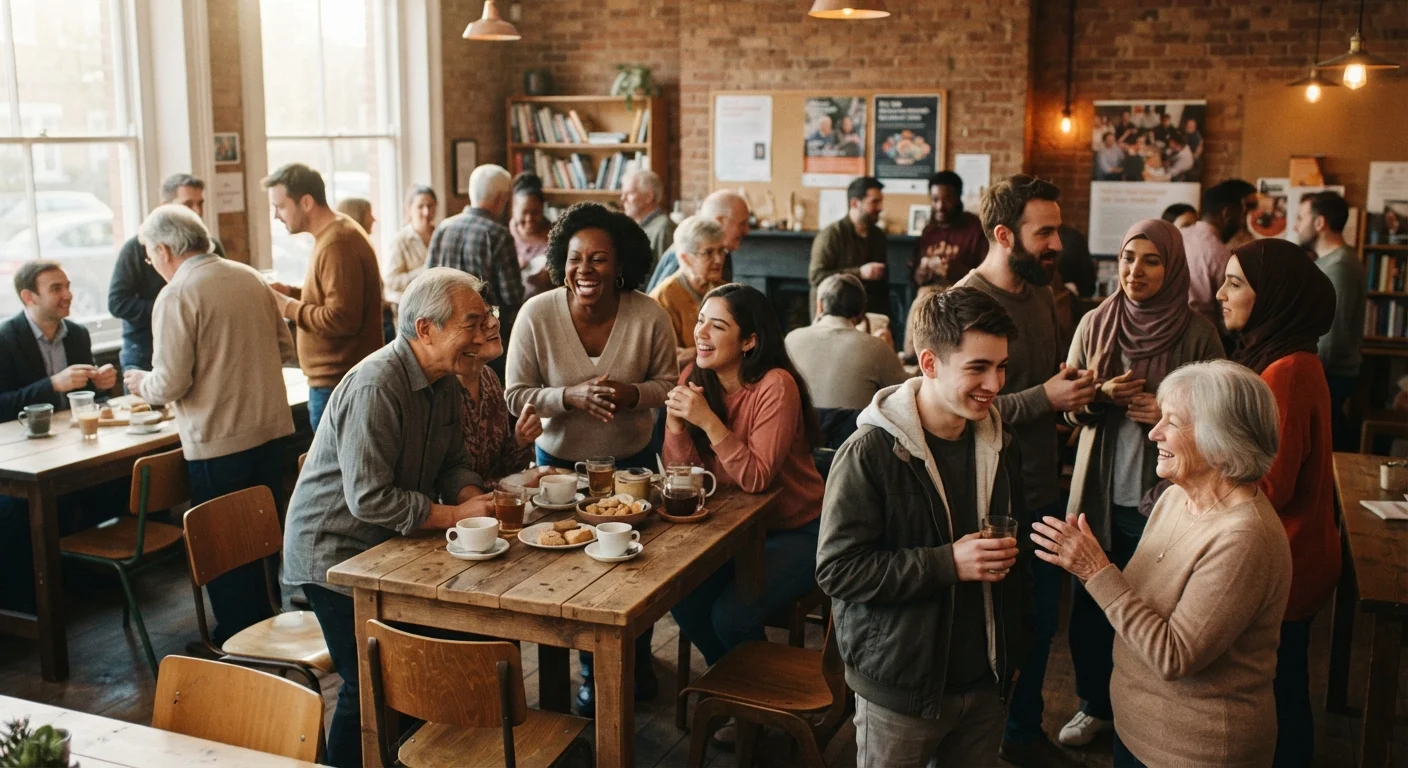
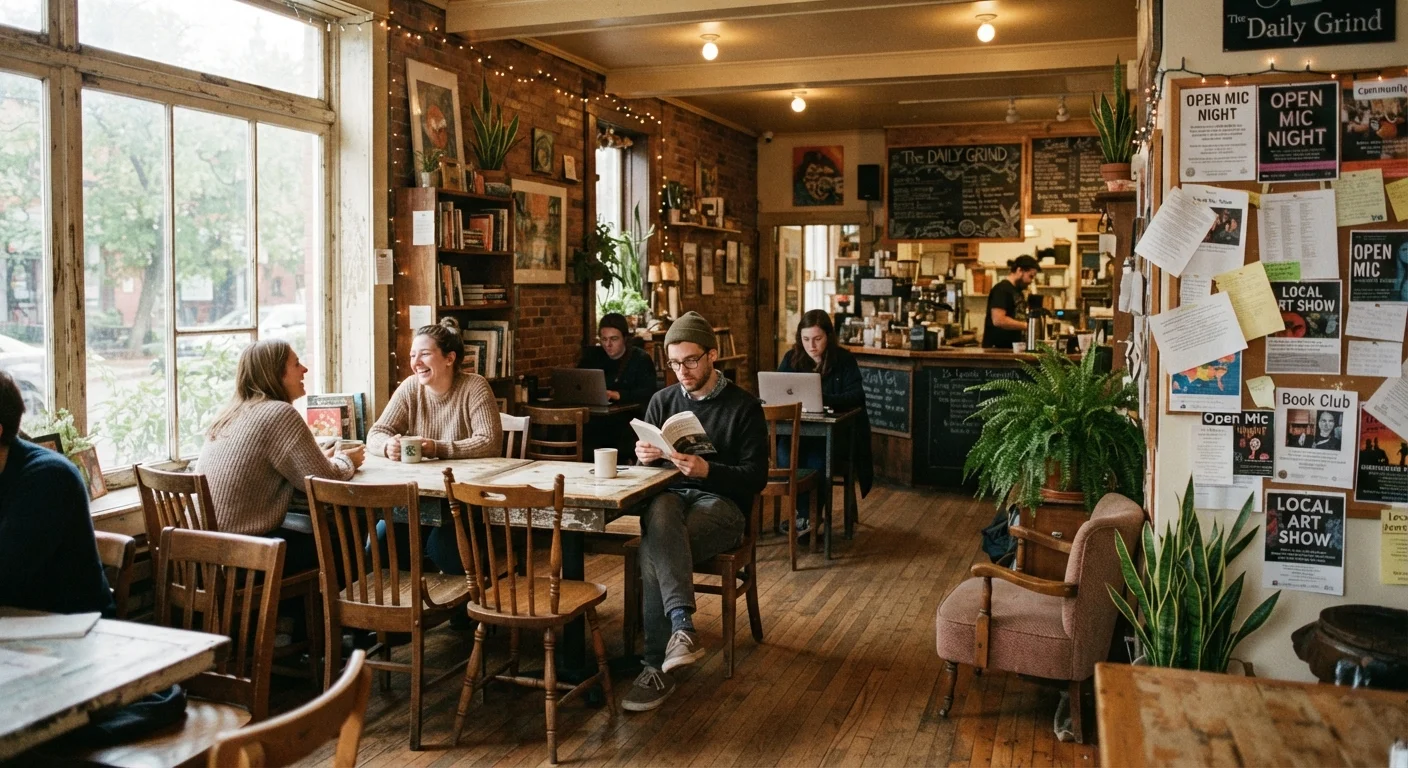
In Oldenburg's framework, the first place is the home, the domain of family and rest. The second place is work or school, structured by obligation and hierarchy. Third places are everything in between: the corner café where the barista knows your order, the park bench where neighbors pause to talk, the library reading room, the barbershop, the community garden. What unites them is their informality, accessibility, and the way they draw people back, not because they have to, but because they want to.
Oldenburg was writing partly as a critique of mid-20th century American suburban planning, which had systematically designed out the kinds of walkable, mixed-use neighborhoods that naturally produced third places. His concern was not just aesthetic - he believed these spaces were doing essential civic and psychological work that no amount of private comfort could replace.
“The character of a third place is determined most of all by its regular clientele and is marked by a playful, witty banter that is its hallmark. Without such places, the urban area fails to nourish the kinds of relationships and the diversity of human contact that are the essence of the city.”
— Ray Oldenburg, Urban sociologist and author of 'The Great Good Place' (1989)
What Makes a Space a Third Place
Not every coffee shop or public park qualifies. Oldenburg described several characteristics that distinguish a genuine third place from a merely shared space.
- Neutral ground: No one hosts or owns the social interaction. Participants are free to come and go without obligation.
- A leveling effect: Status markers from work or home life lose their force. A plumber and a professor are simply two regulars at the same table.
- Conversation as the main activity: The exchange of ideas, stories, and wit is the point - not a byproduct.
- Regulars: A core group of familiar faces anchors the space and makes newcomers feel welcomed rather than observed.
- Accessible and accommodating: Third places are easy to reach, inexpensive or free, and open at hours that fit ordinary life.
- A playful mood: The atmosphere is light, even if the conversations sometimes run deep.
These qualities are harder to engineer than they appear. A corporate chain designed to look like a neighborhood café can mimic the aesthetics but struggle to produce the warmth - partly because genuine third places emerge organically from a community, rather than being installed for it. This connects to a broader distinction between geographic and interest-based communities, both of which can either anchor or bypass third places depending on how they are organized.
Why Third Places Are Declining - and Why That Matters
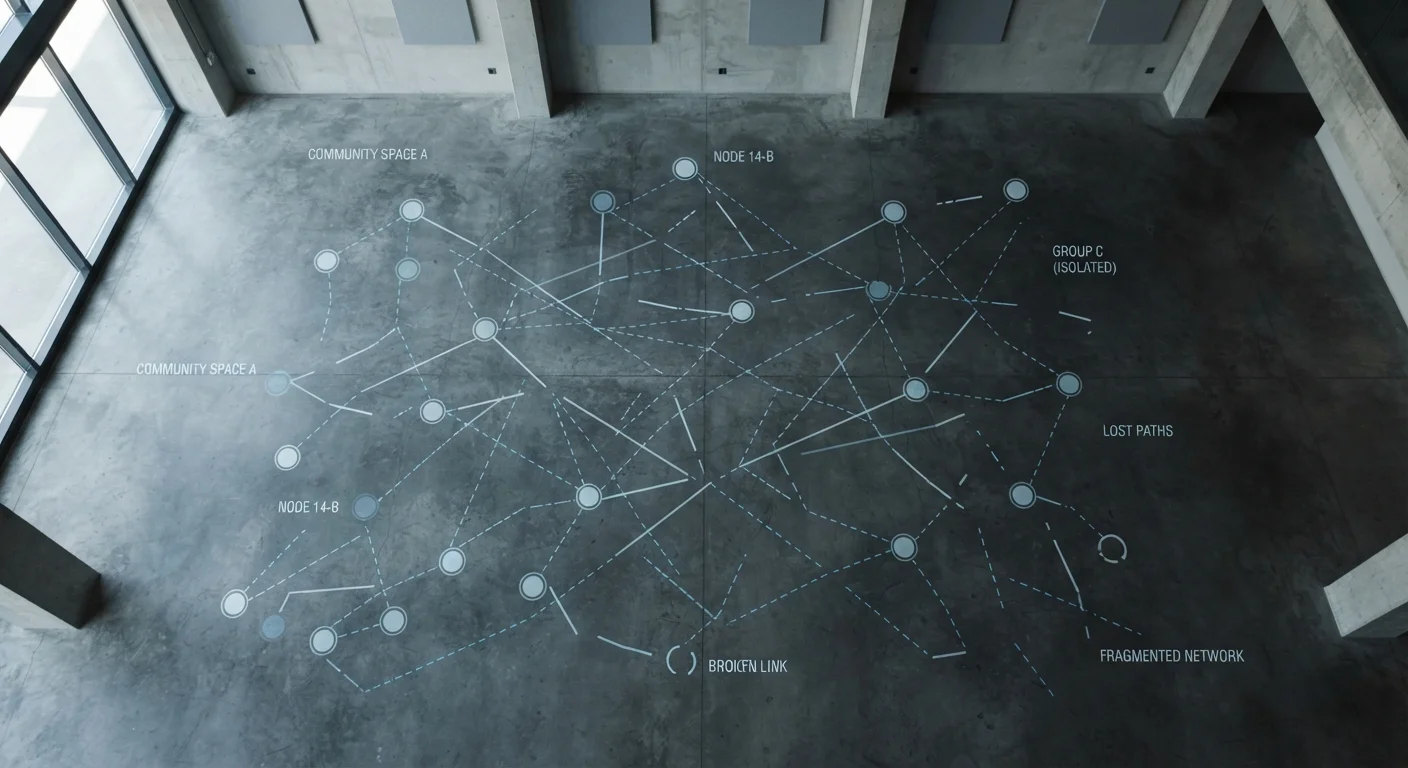
Urban researchers and sociologists have documented a steady erosion of third places across many parts of the developed world. The causes are structural rather than simply cultural. Zoning laws that separate residential areas from commercial ones make walkable, spontaneous social spaces rare. Rising commercial rents push out independent venues - the bookshops, laundromats, and diners that traditionally functioned as community anchors - in favor of chains or vacant storefronts. Public parks and libraries face underfunding. Digital entertainment fills leisure hours that might once have been spent in shared physical spaces.
The consequences are not trivial. Oldenburg linked the decline of third places to increasing political polarization - people who never mix with neighbors outside their own social group have fewer opportunities to encounter differing perspectives in low-stakes settings. Community health researchers have also connected weakened social infrastructure to rising loneliness, particularly among older adults and people new to a city. For anyone trying to build belonging in unfamiliar surroundings, the absence of easy, accessible social spaces can make the task feel near impossible.
36%
Americans reporting serious loneliness
A 2020 survey by Harvard's Making Caring Common project found that 36% of Americans - including 61% of young adults - reported feeling lonely frequently, suggesting widespread social disconnection.
~25%
Decline in U.S. civic participation since 1970s
Political scientist Robert Putnam documented a significant fall in participation in communal civic organizations in the U.S. across the late 20th century in his widely cited work 'Bowling Alone' (2000).
It is worth noting that digital platforms have emerged partly to fill this gap. Online forums, group chats, and social media communities do generate some of the regularity and low-stakes conversation that third places provide. But as explored in why digital community-building so often falls short, the absence of physical proximity and spontaneous encounter means something meaningful is still missing.
Finding Your Own Third Place
If you're trying to build social connection, look for spaces that are walkable, free or low-cost, and already attract a regular crowd. Visiting at the same time each week matters more than the type of venue - regularity is what transforms a space into a third place for you personally. Libraries, community gardens, and local markets are good starting points in most urban and suburban areas.
Recognizing and Reclaiming Third Places
Third places are not always obvious until they disappear. The local pub that closes, the reading group that loses its venue, the community garden converted to parking - each loss is small enough to go unnoticed individually, yet the cumulative effect reshapes the texture of daily life.
Urban planners and community organizers have begun to take the concept seriously as a design principle. Some cities are investing in public seating, mixed-use zoning, and library programming explicitly to restore informal social infrastructure. Smaller initiatives - a neighborhood swap table, a regular street market, a church hall open to secular community events - can serve similar functions at a more local scale.
For individuals, the insight is simpler: recognizing a third place when you find one, and showing up regularly, is itself an act of community-building. The sociological literature is consistent that third places only function because people return to them. Regularity creates familiarity; familiarity creates trust; trust creates the conditions for genuine connection. The café, the park, the library reading room - they are not amenities. They are, in a meaningful sense, the infrastructure of community life.