
The Three-Part Loop Your Brain Runs Automatically
Every time you reach for your phone the moment you sit down, pour a coffee before opening your email, or lace up your shoes without really thinking about it, your basal ganglia is doing the heavy lifting. The brain structures responsible for procedural memory package repeated behaviours into efficient loops - freeing up cognitive resources for novel decisions.
Researcher Charles Duhigg popularised the term habit loop to describe what neuroscientists had been studying for decades: a cue triggers a routine, and a reward follows. The reward releases dopamine, reinforcing the association between cue and action. Do this enough times and the sequence becomes automatic - a chunk of behaviour the brain runs without deliberate input.
This efficiency is genuinely useful. Automating brushing your teeth or checking mirrors while driving frees mental bandwidth for more demanding tasks. The same mechanism, however, is entirely indifferent to whether a behaviour is beneficial or harmful.
66 days
Median time to form a new habit
According to a UCL study by Phillippa Lally et al. published in the European Journal of Social Psychology (2010), the average was 66 days, ranging from 18 to 254.
40%
Behaviours performed out of habit daily
Research by Wendy Wood and colleagues estimates that roughly 40% of daily actions are habitual rather than consciously decided.
2-3x
Greater habit change success with environmental redesign
Studies reviewed by Wood (2019) in 'Good Habits, Bad Habits' indicate that structural environmental changes outperform motivation-based interventions by a meaningful margin.
Why Habits Are So Resistant to Change
The persistence of habits reflects a structural reality: the neural pathway doesn't erase when you decide to stop. Brain imaging studies have shown that even after a behaviour has been extinguished, the original circuit remains encoded - lying dormant until conditions that resemble the original cue reactivate it. This is why someone who hasn't smoked in years can feel a strong urge in a bar where they once smoked regularly.
Stress compounds the problem. Under pressure, the brain preferentially reverts to well-worn patterns. This isn't weakness - it's the nervous system conserving resources during perceived difficulty. Understanding this can reframe lapses from moral failures to predictable neurological events.
Relapse Is Neurologically Normal
Slipping back into an old habit after a period of change does not mean you've failed or that change is impossible. The original neural pathway persists even after behaviour shifts, and stress or familiar environments can temporarily reactivate it. Research on habit change treats relapse as a predictable feature, not a character flaw - and returning to the new routine quickly is what matters most.
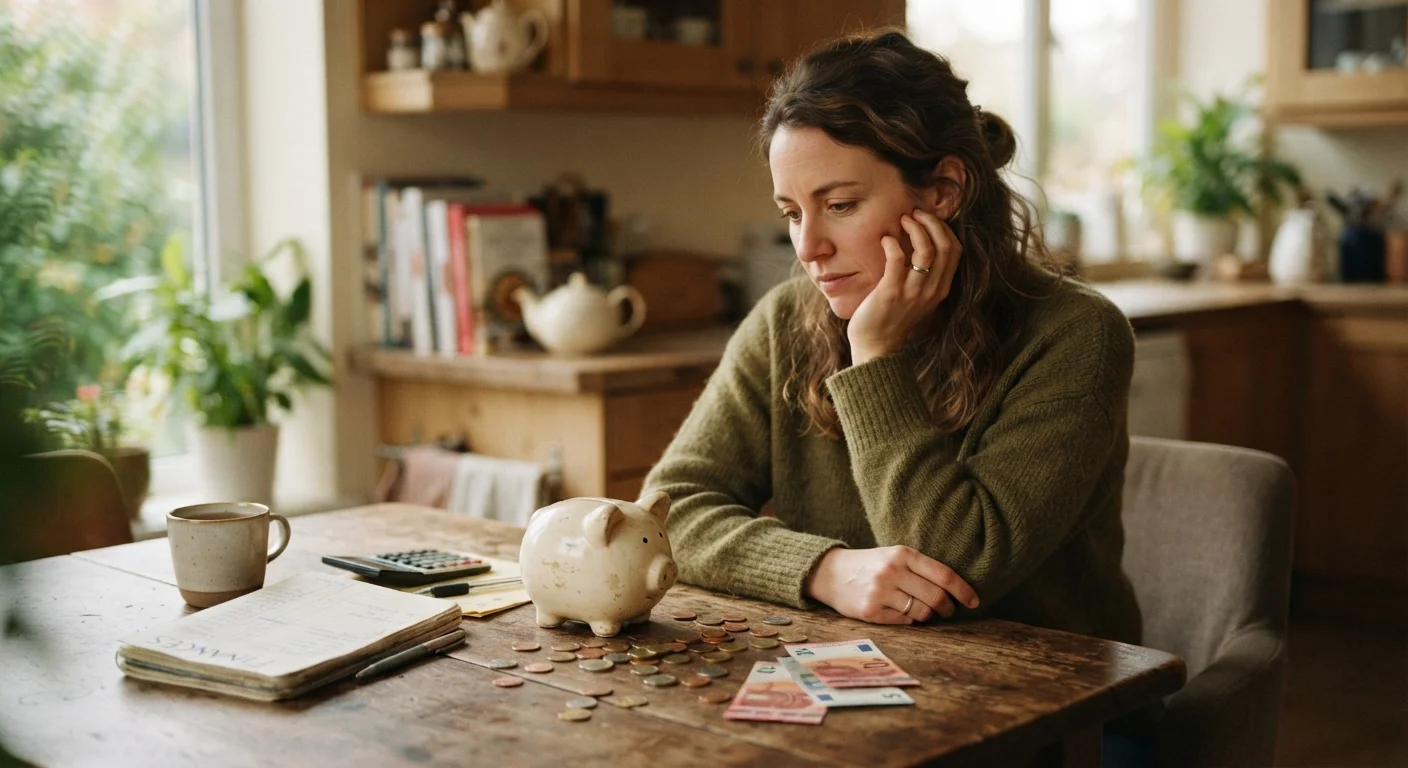
The implications extend well beyond individual behaviour. For instance, financial habits - spending patterns, avoidance of budgeting - follow the same loop structure, which helps explain why good intentions at the bank rarely survive first contact with an old routine.
What the Research Actually Says About Changing Habits
The intervention that consistently shows evidence is habit substitution: identify the cue and the reward, then replace only the routine. A person who snacks out of stress-boredom at 3 pm (cue: afternoon restlessness; reward: brief escape) might replace the biscuits with a short walk - keeping the reward structure intact while changing the action.
Environmental design is equally well-supported. A 2012 study by Wendy Wood and colleagues demonstrated that when people moved cities, they were significantly more likely to change long-standing habits than those who stayed in familiar surroundings - because the old cues simply weren't present. You don't need to relocate to exploit this insight; rearranging your immediate environment removes cues and reduces friction for behaviours you want to build.
Implementation intentions - specific plans in the form "when X occurs, I will do Y" - have been shown in meta-analyses to meaningfully increase follow-through on intended behaviours. Vague goals like "I'll exercise more" are far less effective than "When I arrive home on Monday, I will change and walk for 20 minutes." For a deeper look at applying this to fitness, see building a weekly movement routine grounded in evidence.
“Most of the time, people are not making decisions. They're enacting habits - responding to cues in the environment without awareness that they've triggered a routine.”
— Wendy Wood, Research Professor of Psychology and Business, University of Southern California
Habits in Context: The Role of Environment and Community
Individual habits rarely exist in isolation. Social context shapes what cues exist, what rewards feel meaningful, and what routines are normalised. Research on social contagion shows that habits - including exercise, eating patterns, and sleep timing - spread through social networks in measurable ways.
This means the people and environments you spend time in function as part of your habit architecture, not just as background. Shared rituals and routines within communities serve a reinforcing function - they synchronise behaviour and create collective cues that make individual habits easier to sustain.
Sleep is another domain where habit loops exert quiet but significant influence. Behaviours like late-night screen use or irregular wake times encode themselves through the same cue-reward mechanism, making them resistant to change through intention alone. Understanding how common patterns work against restful sleep can help reframe the problem structurally rather than as a discipline issue.
Start With the Cue, Not the Behaviour
When trying to change a habit, identify its cue before attempting to alter the routine. Is it a time of day, an emotion, a physical location, or the presence of certain people? Once the cue is clear, you can design an environment that either removes it or pairs it with a different, more useful routine - making change structural rather than a test of willpower.