
Why Good Intentions Backfire at Bedtime
Many of the things people do to improve their sleep are the very behaviours that sustain poor sleep night after night. This is not a character flaw - it reflects how the sleeping brain works differently from the waking, problem-solving one. Understanding the mechanisms behind each counterproductive habit is the first step to breaking them.
Sleep is a passive process. It cannot be willed into existence. When the conditions are right - low arousal, reduced core body temperature, sufficient adenosine build-up - it arrives on its own. Most common mistakes involve accidentally keeping one or more of those conditions from being met. The cortisol-sleep connection explains in detail why an activated nervous system makes drifting off physiologically difficult.
This Is General Information, Not Medical Advice
The guidance in this article is educational and applies to general sleep health. If you are experiencing persistent insomnia, significant daytime impairment, or suspect an underlying sleep disorder, please consult a qualified healthcare professional. Self-managing a serious sleep condition without support can delay appropriate treatment.
The Patterns Most Likely to Work Against You
The following mistakes are among the most commonly reported and well-documented in sleep research. Each one interferes with sleep in a specific, identifiable way - which also means each has a concrete corrective strategy.
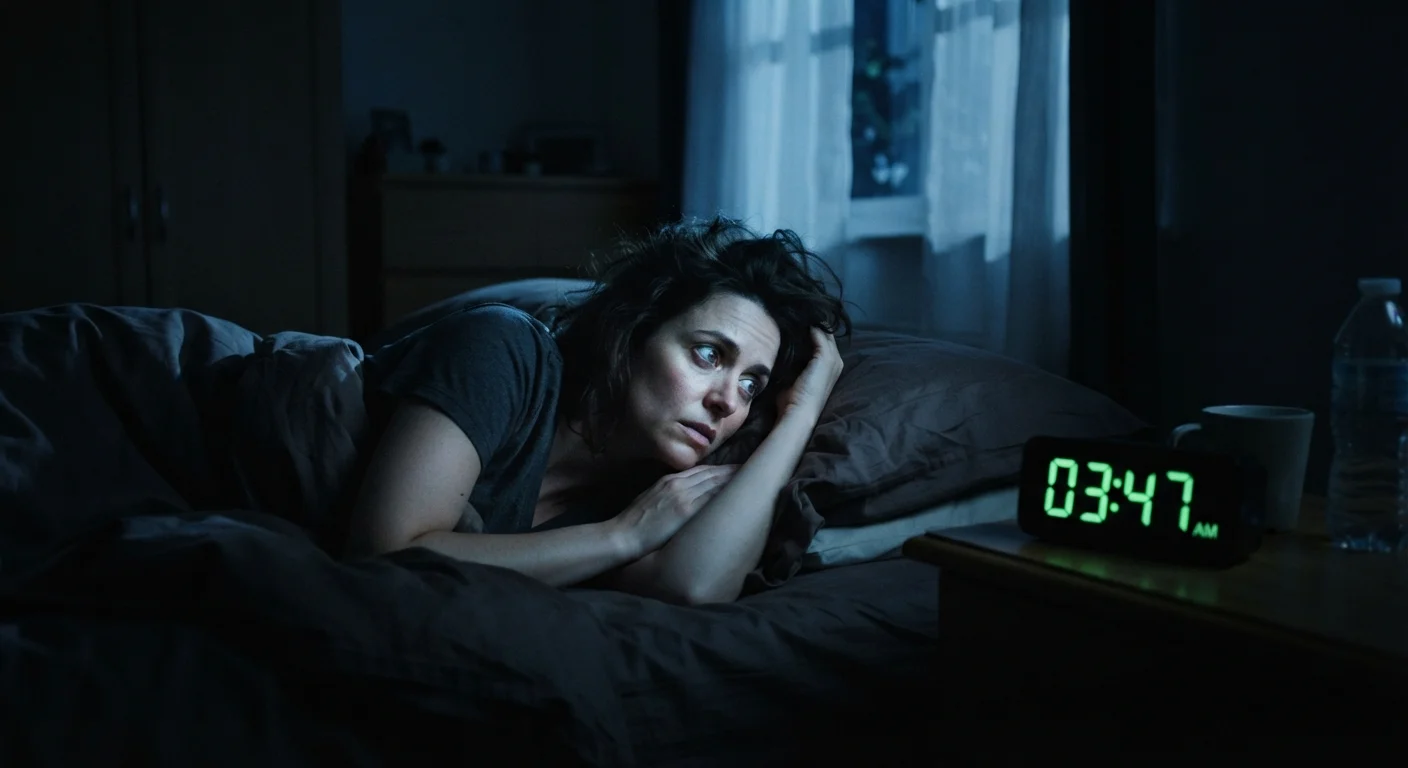
Watching the clock throughout the night.
Why it happens: When sleep feels elusive, checking the time feels like a rational way to assess the situation - but it becomes compulsive quickly.
Trying hard to fall asleep.
Why it happens: Sleep feels like a task, so the brain applies the same effortful problem-solving it uses during the day - which is precisely the wrong mode for sleep onset.
Taking compensatory lie-ins after a poor night.
Why it happens: Sleeping late feels like logical debt repayment, but it reduces adenosine build-up - the chemical pressure that makes you feel sleepy at a consistent time the following night.
Using screens as a wind-down tool immediately before bed.
Why it happens: Scrolling feels passive and relaxing, but short-wavelength (blue) light from screens suppresses melatonin production, and most content is emotionally or cognitively engaging.
Napping late in the afternoon to compensate for tiredness.
Why it happens: Daytime fatigue is uncomfortable, and a nap feels like the obvious fix - but poorly timed naps reduce sleep pressure right when you need it to build.
Eating a large meal or drinking alcohol close to bedtime.
Why it happens: Evening is often when people finally unwind socially, and alcohol in particular is widely - but incorrectly - perceived as a sleep aid.
If several of these patterns feel familiar and sleep difficulties persist despite adjustments, it is worth exploring structured support. CBT-I versus sleep medication outlines the differences between the main evidence-based approaches for persistent insomnia.
~30%
Adults reporting regular insomnia symptoms
Population studies across multiple countries consistently estimate that around 30% of adults experience insomnia symptoms at some point, with 10% meeting criteria for chronic insomnia disorder.
~90 min
Typical full sleep cycle duration
Each sleep cycle - moving through light, deep, and REM sleep - lasts roughly 90 minutes; most adults complete four to six cycles per night when sleep is uninterrupted.
Building a Clearer Picture of Your Sleep Environment
Behavioural patterns rarely operate in isolation. The physical environment you sleep in - light levels, noise, temperature, bedding - also plays a significant role in sleep quality. If you have addressed the behavioural mistakes above and still struggle, a systematic look at your bedroom may reveal additional factors. The bedroom environment audit offers a practical checklist for doing exactly that.
Understanding how sleep cycles actually work can also help reframe what 'good sleep' looks like - reducing the kind of unrealistic expectations that themselves fuel anxiety around sleep.
This article is for informational purposes only and does not constitute medical advice. If you have ongoing sleep difficulties or suspect an underlying health condition, please speak with a qualified healthcare professional.