
Why Scams Keep Working
Scams succeed not because people are careless, but because they are designed to exploit normal human responses - trust, urgency, and the desire for a good outcome. Whether the message arrives by email, text, or social media notification, the psychological levers are almost always the same.
Understanding those patterns is more useful than memorising a list of specific scams, because new variations appear constantly while the underlying tactics remain predictable. The warning signs below apply across channels and are consistent enough that recognising even one or two can stop a scam in its tracks. For a deeper look at how each channel differs, see our guide on phishing, smishing, and vishing.
Artificial urgency or a countdown pressure
Messages that demand immediate action - "Your account will be closed in 24 hours," "Respond now or lose your parcel" - are engineered to prevent you from thinking carefully. Legitimate organisations, including banks, government agencies, and delivery services, do not resolve serious matters through a single panicked click.
When you feel rushed, treat that feeling as a signal to slow down rather than speed up. Verify the claim by contacting the organisation directly using a phone number or website you already know - not one provided in the suspicious message.
Urgency is a design feature of scams, not a genuine emergency signal.
Impersonation of a trusted name or authority
Scammers routinely pose as well-known companies, government bodies, banks, or even friends whose accounts have been compromised. The sender's display name may look convincing, but the actual email address or phone number behind it often reveals the mismatch - an unfamiliar domain, a string of random characters, or a foreign country code.
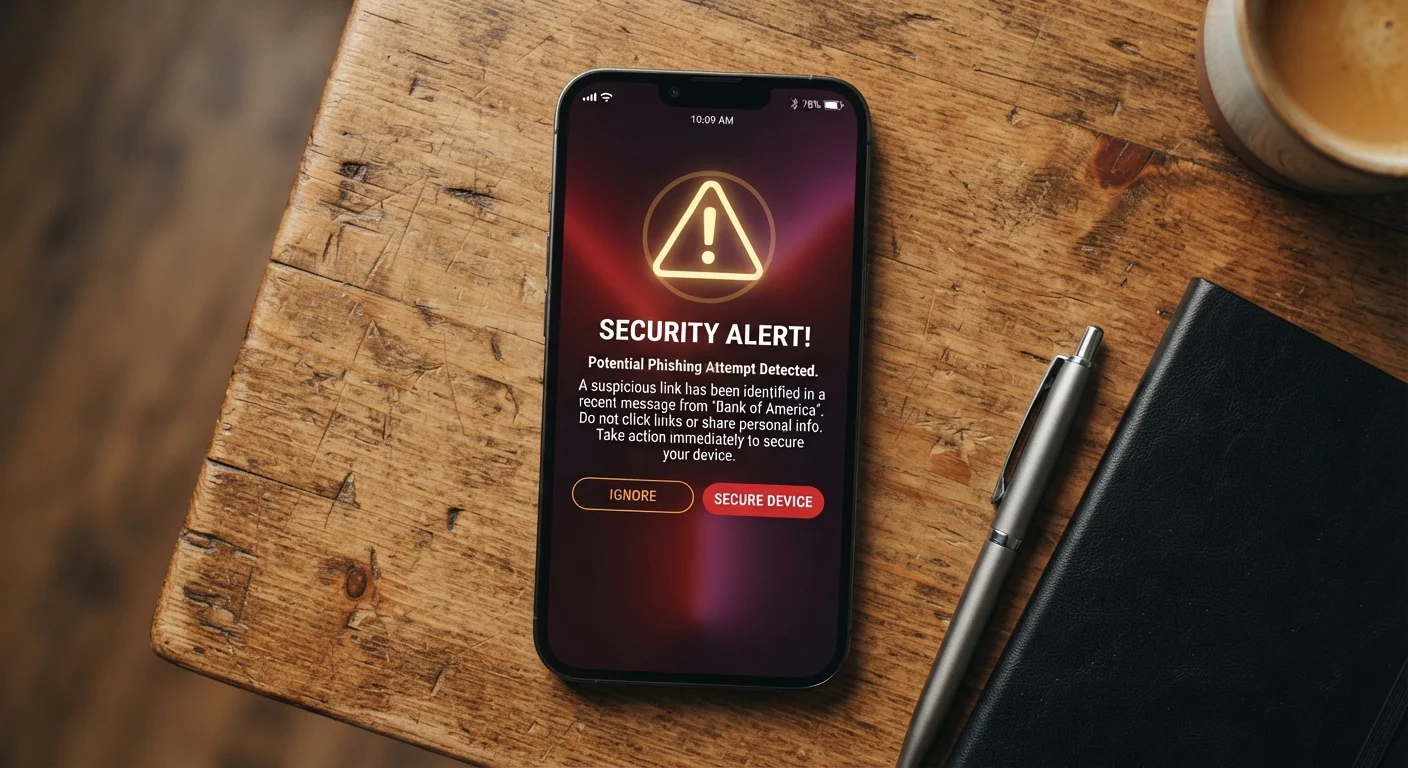
Always check the full sender address, not just the name shown in your inbox. On mobile, press and hold a link to preview the destination URL before tapping. If the domain does not precisely match the official site of the claimed sender, do not proceed.
A convincing display name costs a scammer nothing - always check the actual address behind it.
Offers that seem implausibly generous
Unexpected prize notifications, unusually high returns on investments, or refunds from organisations you have never heard of are classic lures. The common thread is that the reward is disproportionate to anything you have done or signed up for.
If an offer requires you to provide personal details, pay a processing fee, or click a link to claim a reward, the reward almost certainly does not exist. Genuine windfalls from legitimate competitions or institutions arrive through verifiable, official channels - not unsolicited messages.
If the reward requires your personal data or a fee upfront, it is the lure, not the prize.
Requests for unusual payment methods
Legitimate businesses and government agencies accept standard payment methods - bank transfer to a verified account, card payment through an official portal, or invoice. Requests to pay via gift cards, cryptocurrency, wire transfers to unfamiliar accounts, or cash sent by post are major red flags with no legitimate equivalent in routine transactions.
Once money is sent by these methods, it is extremely difficult to recover. No genuine organisation will insist that a gift card is the only valid payment option for a fine, a debt, or a service.
Gift cards, crypto, and wire transfers to unknown accounts are the payment methods of fraud.
Poor grammar, inconsistent branding, or mismatched details
While AI tools have improved the surface quality of scam messages, many still contain spelling errors, awkward phrasing, generic greetings ("Dear Customer" rather than your name), or logos and formatting that do not quite match the real organisation's style.
Compare suspicious messages against a genuine communication you have received from the same organisation, or visit the official website directly to see how they actually communicate. Inconsistencies in tone, visual design, or the level of detail in contact information are all worth noting.
Mismatched branding and generic greetings are often the easiest scam signals to spot.
Unsolicited links or attachments requiring immediate action
Whether the message arrives by email, SMS, or social media, an unsolicited link or file that requires you to log in, verify identity, or download software should be treated with caution. Clicking can be enough to install malware or hand over credentials - you do not need to fill in a form.
Hover over links on desktop to preview the full URL. On mobile, long-press to see where a link actually leads. If in doubt, navigate directly to the organisation's official website rather than following any link in the message. For a related risk, it is worth understanding how browser extensions can carry hidden risks in a similar way.
Navigating directly to an official site is always safer than following an unsolicited link.
What to Do When Something Feels Off
Recognising a scam is only half the equation - acting correctly in the moment matters just as much. The single most effective habit is to introduce a pause: close the message, set down your phone, and verify the claim through an independent channel before doing anything else.
Pause before you act - every time
If a message creates a strong emotional reaction - fear, excitement, or urgency - that reaction is worth pausing on. Scammers deliberately trigger emotional responses to bypass your judgement. A simple rule: never click, call back, or send money in the same sitting as receiving an unexpected message. Give yourself time to verify independently.
If you believe you have been targeted, report it to the relevant authority in Germany - the Bundesnetzagentur handles telecommunications fraud, while the Verbraucherzentrale (consumer advice centre) maintains a scam radar for online fraud. Reporting does not require you to have lost money; attempted scams are worth flagging too.
Financial losses from fraud can quietly accumulate and become harder to recover from over time, similar to the way overlooked household expenses can erode savings without obvious warning signs. Taking a moment to audit your digital habits - including which accounts hold payment details - is a practical follow-up step. Our personal data security audit checklist can walk you through exactly what to review.