
Why Parking Location Matters More Than You Might Expect
Most drivers focus on fuel, servicing, and tyres when thinking about running costs - but where a car spends the majority of its time parked has a surprisingly significant effect on its long-term condition. Paint degradation, rust formation, rubber seal deterioration, and battery health are all influenced by daily environmental exposure. Parking location also feeds directly into insurance calculations and theft risk profiles.
Understanding the practical trade-offs between a garage, driveway, and street helps owners make smarter decisions - including when evaluating a used car's history, where storage conditions can reveal a great deal about likely wear.
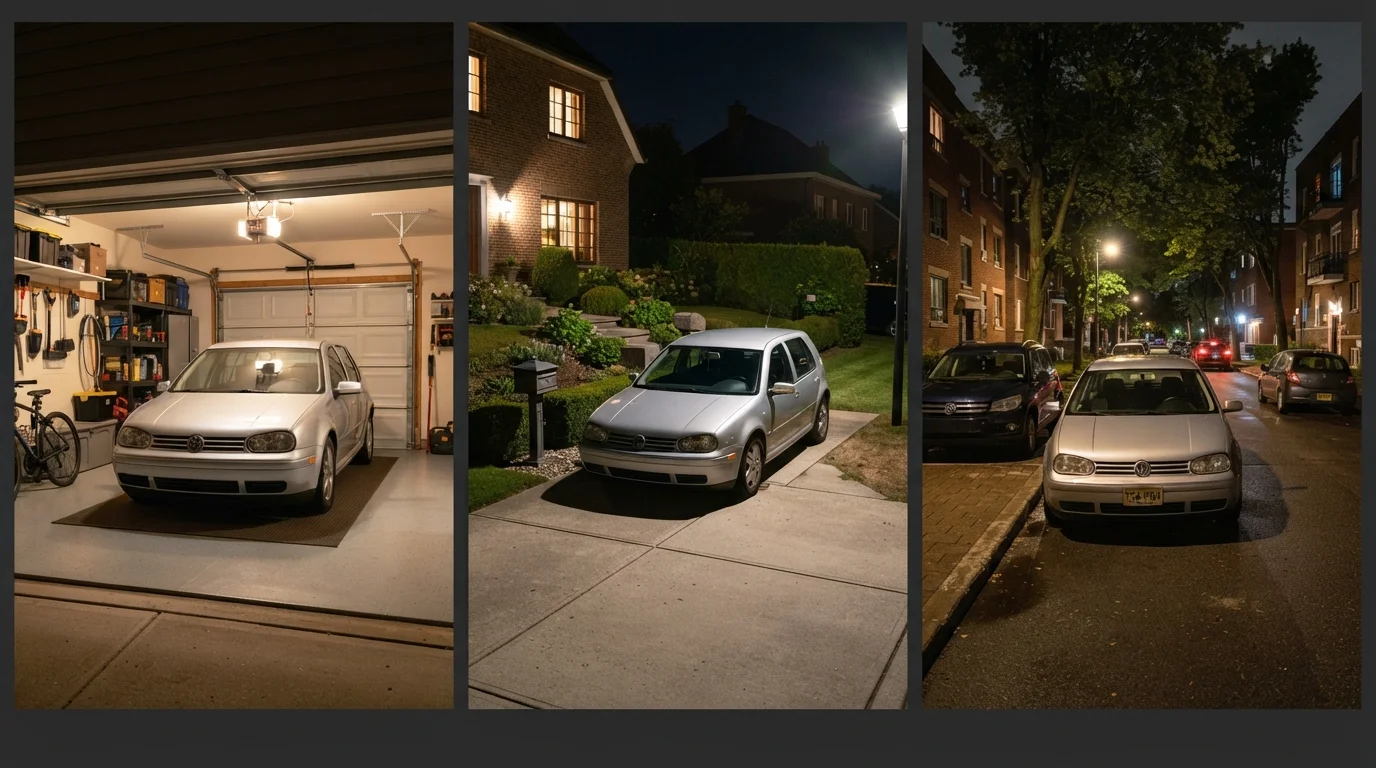
| Garage | Driveway | Street | |
|---|---|---|---|
| Weather protection | Excellent (fully enclosed) | Partial (exposed to elements) | None (fully exposed) |
| UV / paint degradation risk | Very low | Moderate | High |
| Theft and vandalism risk | Low | Low to moderate | Higher |
| Collision damage risk | Minimal | Low (private property) | Moderate to high |
| Moisture / corrosion risk | Low to moderate (if ventilated) | Moderate | Moderate to high |
| Insurance premium impact | Often lowest | Mid-range | Often highest |
| Accessibility / convenience | Variable (space constraints) | High | High but unpredictable |
Garage Parking: The Gold Standard With Caveats
A fully enclosed garage shields a vehicle from rain, frost, UV radiation, bird droppings, and airborne pollutants - all of which degrade paint, rubber seals, and exposed plastics over time. Cold-weather starting is easier because the engine isn't pre-chilled to ambient temperatures, which reduces strain on the battery and starter motor. Security is substantially improved: according to UK Home Office data, vehicles parked in garages are targeted far less frequently than those left on public roads.
There are practical downsides. Garages can accumulate moisture if poorly ventilated, which accelerates corrosion on metal panels and underbody components - particularly relevant in regions that use road salt in winter. A car cover placed on a cold, damp vehicle and then sealed inside can trap moisture against the bodywork. Proper ventilation, occasional use of a moisture absorber, and ensuring the car is dry before storage are simple countermeasures.
Keep Your Garage Ventilated Year-Round
A sealed, unventilated garage can trap humidity against bodywork, especially if the car enters damp. Leave a small vent gap or use a passive ventilator, and consider a rechargeable dehumidifier during winter months. Parking on a clean, sealed concrete floor rather than bare earth also reduces rising moisture significantly.
From a total cost of ownership perspective, garage-stored vehicles typically show lower paint correction and detailing costs over a five-to-ten-year period.
Driveway Parking: A Practical Middle Ground
A private driveway keeps the car off public roads - reducing the risk of door dings, side-swipe damage, and opportunistic theft - while still leaving it exposed to the elements. UV exposure is the primary long-term concern: prolonged direct sunlight fades paint, cracks dashboard plastics, and degrades tyre sidewalls. A breathable car cover addresses much of this without trapping moisture the way an impermeable cover can.
Frost and ice accumulation on driveway-parked cars adds time to morning routines and, if removed incorrectly (dry-wiping, using hot water), can scratch paintwork or crack glass. The seasonal maintenance habits that experienced owners build - including appropriate de-icing products and regular wax application - significantly reduce weather-related wear.
Avoid Dry-Wiping Frost or Ice From Glass
Removing ice with a dry cloth or using boiling water risks fine scratches on paintwork and can crack a cold windscreen. Always use a dedicated plastic ice scraper or a proper de-icer spray. Never leave the engine running unattended on a private driveway - beyond the security risk, it may breach local regulations in some jurisdictions.
Street Parking: Managing the Highest-Risk Option
Street parking is unavoidable for a large proportion of urban and suburban drivers. The risks are cumulative and real: higher exposure to passing traffic (increasing the chance of minor collision damage), greater vulnerability to theft and break-ins, and full exposure to all weather conditions. Vehicles parked on public roads are also more likely to accumulate damage from road debris, overhanging trees, and bird activity.
Insurance providers factor parking location into premium calculations. Declaring a vehicle as street-parked versus garage-stored can produce a measurable difference in annual cost - making accurate disclosure both a legal obligation and a financial consideration. Consistent inspection habits become especially important for street-parked cars: catching a new paint chip or moisture ingress early prevents minor issues from becoming costly ones.
2x
Theft risk: street vs. off-street
UK Home Office vehicle crime statistics consistently show that cars parked on public roads face roughly double the theft exposure of those stored off-street.
~15%
Potential insurance premium difference
Industry guidance from the Association of British Insurers suggests parking location can shift annual premiums by roughly 10-20% depending on postcode and vehicle type.
Drivers without off-street parking can still mitigate risk through well-lit parking spots, visible steering locks, dash cameras, and regular washing to remove corrosive contaminants. Combining these measures with a solid ownership cost strategy helps offset the additional wear and insurance overhead that street parking typically brings.