
Why the Sticker Price Tells Only Half the Story
A vehicle's advertised price - whether at a dealership or in a private listing - reflects what you pay to acquire it, not what you pay to keep it. For many buyers, the ongoing costs that accumulate over months and years are far larger than the gap between two models at the point of sale. A car priced €5,000 less than an alternative could easily cost more over five years once fuel economy, insurance group, and reliability track records are factored in.
This is why automotive researchers, fleet managers, and financial planners use Total Cost of Ownership as a standard evaluation tool. It converts a complex mix of fixed and variable expenses into a single comparable figure - typically an annual cost or a cost per kilometer driven. Before exploring the individual components, it helps to recognise that TCO is an estimate, not a guarantee; actual costs depend on how the vehicle is driven, where it is kept, and how consistently it is maintained.
For a broader view of annual running expenses, see our comprehensive breakdown of yearly car running costs.
The Major Cost Categories Every Owner Should Know
Depreciation is almost always the dominant TCO component, particularly in the first three years of ownership. A new vehicle can shed a significant portion of its market value quickly, meaning that even if you spend very little on fuel and repairs, the loss in resale value represents a real financial cost. How depreciation works and what influences its rate is a subject that deserves attention before any purchase decision.
Insurance premiums depend on the vehicle's insurance group classification, the driver's age and claims history, the level of cover chosen, and regional factors. Comprehensive cover is more expensive than third-party, but the right balance depends on the car's current market value - insuring an older, lower-value car for more than it's worth is a common oversight.
Fuel costs are directly tied to engine efficiency and how many kilometers you drive annually. Petrol, diesel, hybrid, and electric powertrains each carry different per-kilometer energy costs that shift as fuel and electricity prices change. Over a five-year period, fuel can rival or exceed insurance as a recurring expense for high-mileage drivers.
Maintenance and repairs include scheduled servicing (oil, filters, brakes, tyres), wear-and-tear replacements, and unexpected mechanical failures. Vehicles with simpler drivetrains or widely available parts tend to have lower average maintenance costs.
40-50%
Share of TCO typically from depreciation
Industry analyses consistently show depreciation accounts for the largest single slice of five-year ownership costs, especially on new vehicles.
15-25%
Value a new car can lose in year one
First-year depreciation is steepest; the rate generally slows after the third year of ownership.
30-40%
Lower maintenance costs for EVs vs petrol
Studies from motoring organisations in Europe suggest electric vehicles require fewer service interventions due to simpler drivetrains and regenerative braking.
Registration, road tax, and administrative fees vary by jurisdiction and, in many European countries, are linked to engine size, CO₂ emissions, or vehicle age. These are predictable costs that are easy to research before purchase.
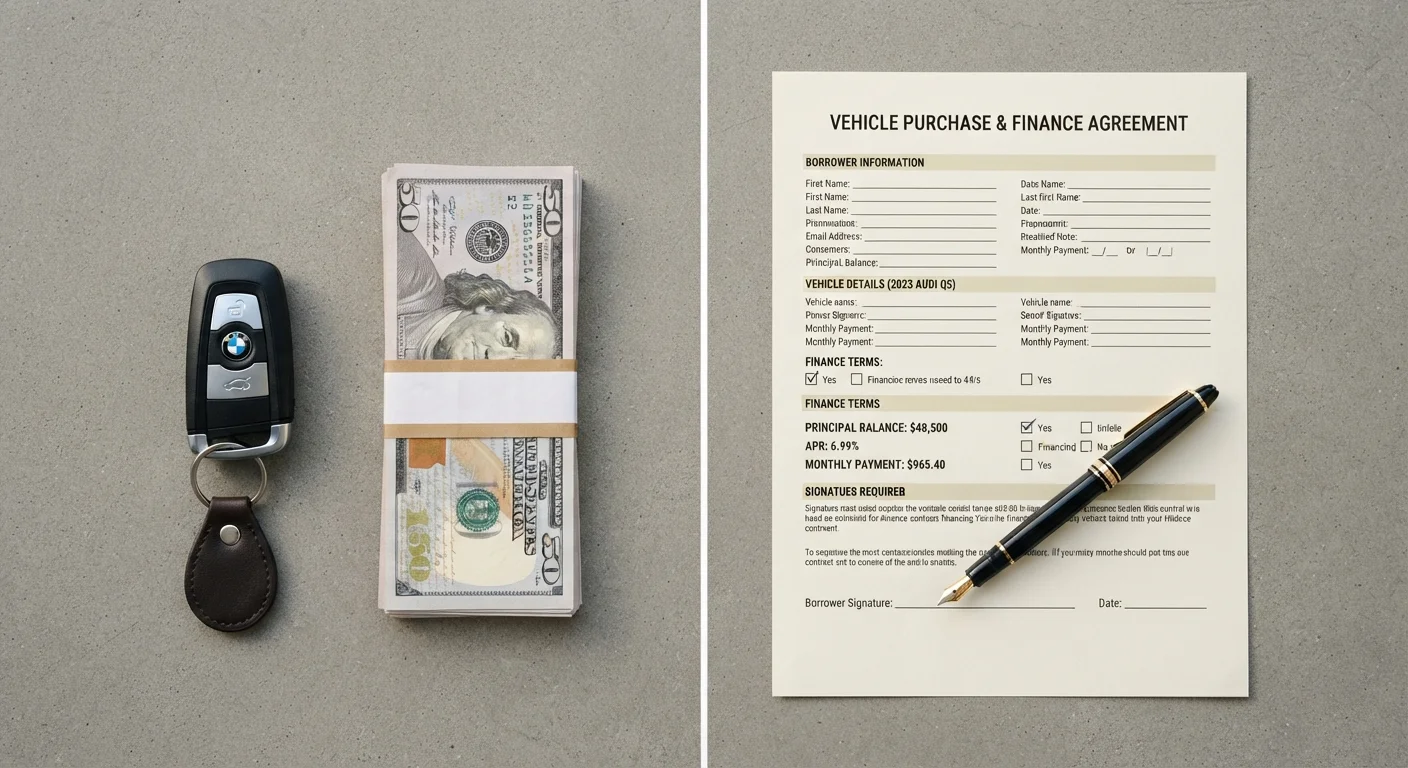
Financing interest, if you borrow to buy, adds to the true cost. Comparing outright purchase to financing is a useful exercise for anyone who has the option of both.
Applying TCO Thinking to Real Purchase Decisions
The practical value of TCO analysis is that it levels comparisons that would otherwise be misleading. A compact electric vehicle with a high purchase price may have a lower five-year TCO than a similarly sized petrol model, depending on mileage and local electricity costs. Conversely, a used vehicle with a low purchase price but an expensive parts supply chain or poor fuel economy may cost significantly more over the same period.
Build a Simple TCO Estimate Before You Decide
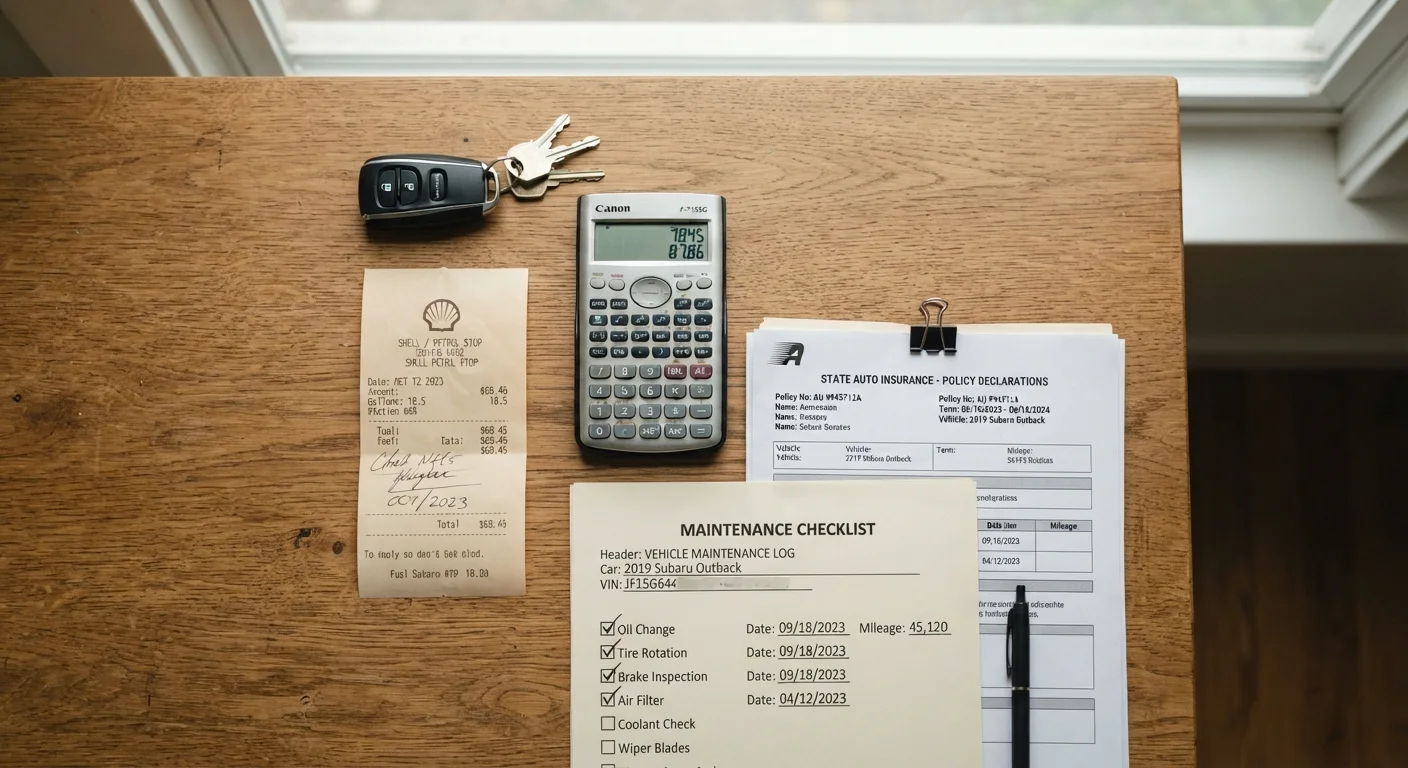
Gather the annual insurance quote, estimated fuel cost at your typical mileage, the manufacturer's service schedule costs, and the vehicle's projected depreciation using residual value guides. Adding these to the purchase price gives a five-year ownership cost that makes model comparisons far more meaningful than sticker prices alone.
When evaluating a used vehicle, understanding how new and used cars differ on depreciation and reliability helps frame the TCO calculation more accurately. A used car that has already absorbed the steepest early depreciation can represent strong value - provided the maintenance history is sound and no major repairs are imminent.
For drivers considering a lease, the monthly payment structure can obscure the true cost of use. How a car lease actually works, including mileage caps and end-of-term fees, should be viewed through the same TCO lens to make a fair comparison with buying.
If you encounter unfamiliar pricing terms during the purchase process, decoding dealer pricing terminology is a useful starting point before negotiating.
Ultimately, TCO is a planning framework, not a precise prediction. Costs will vary with driving habits, market conditions, and vehicle condition. But approaching any vehicle purchase with a full-cost mindset - rather than focusing solely on the transaction price - consistently leads to more informed, financially resilient decisions.