

Why the Monthly Payment Comparison Misleads
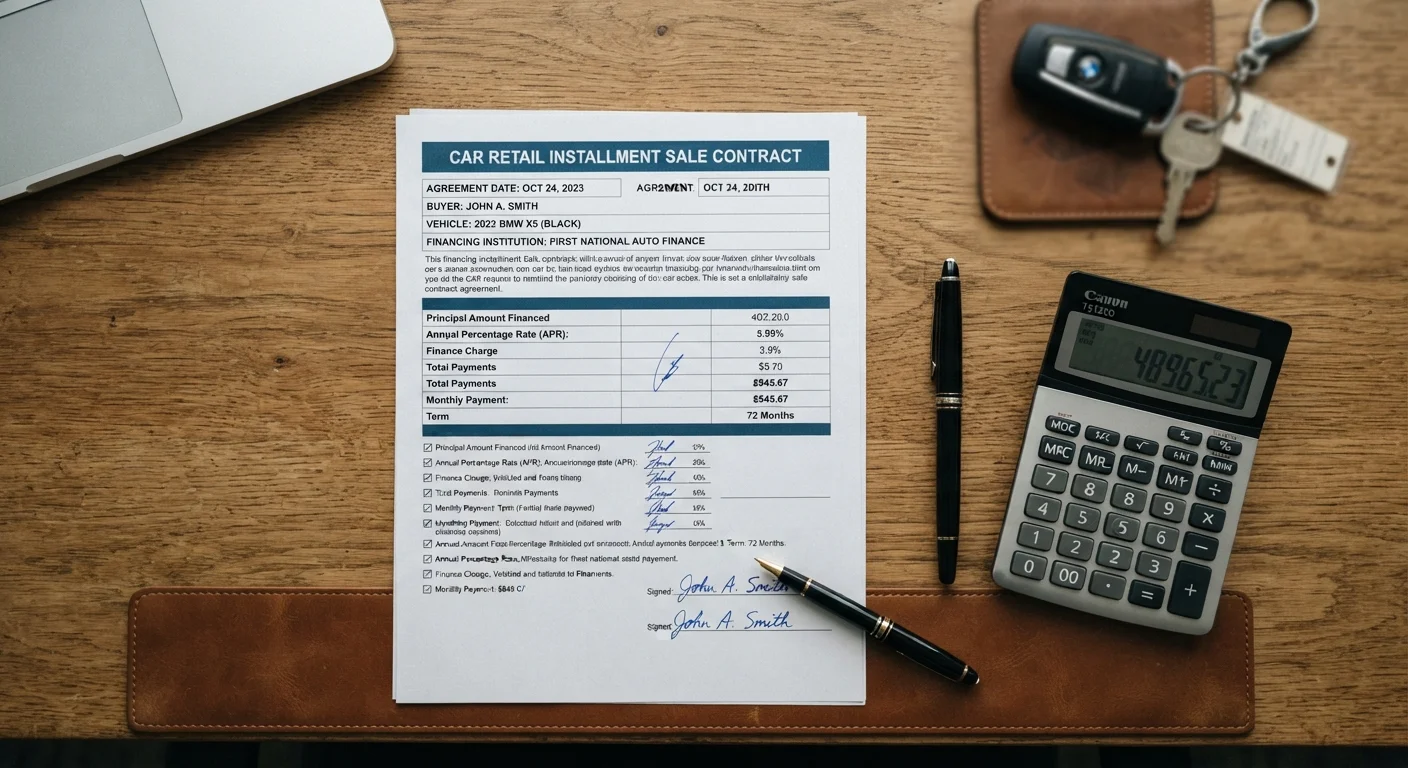
When shoppers line up a lease against a financed purchase, the first number they reach for is the monthly payment. A lease almost always wins that comparison - sometimes by a wide margin. But focusing solely on that figure can obscure thousands of dollars in costs that only become visible over the full term. Monthly payment comparisons can mask the real cost of a vehicle - understanding total outlay over three, five, or seven years gives a clearer picture.
For a meaningful comparison, both paths need to be measured against the same timeline, accounting for what you actually have at the end: an asset with resale value, or nothing beyond the option to start another lease cycle.
Calculate Total Outlay, Not Just Monthly Cost
Add up every payment, fee, and expected end-of-term charge across the full contract period for both options. Then compare what you hold at the end: an asset with resale value, or nothing. This full-term calculation is the only honest way to compare the two paths. For buying, also factor in total ownership costs including insurance, registration, and maintenance.
How the Costs Stack Up: A Structured Comparison
The table below illustrates the key financial and practical dimensions across which buying and leasing differ. Figures vary significantly by vehicle, credit profile, and market conditions - treat this as a framework rather than a specific quote.
| Buying (Financed) | Leasing | |
|---|---|---|
| Monthly payment | Higher (full vehicle cost spread over loan) | Lower (covers depreciation only) |
| Upfront costs | Down payment + fees | First payment, security deposit, fees |
| Mileage limits | None | Typically 10,000-15,000 miles/year |
| Ownership at term end | Vehicle owned outright | Return car, no asset |
| Long-term total cost (5-7 yrs) | Generally lower if vehicle is kept | Generally higher due to recurring cycles |
| Customisation allowed | Full flexibility | Restricted - must return as found |
| Maintenance responsibility | Owner's choice after warranty | Must maintain to contract standard |
| Early exit flexibility | Sell or trade at any point | Early termination fees typically significant |
For a deeper look at what ownership costs accrue beyond any payment plan, a comprehensive breakdown of annual running costs covers every major expense category.
The Equity Question: What You Own at the End
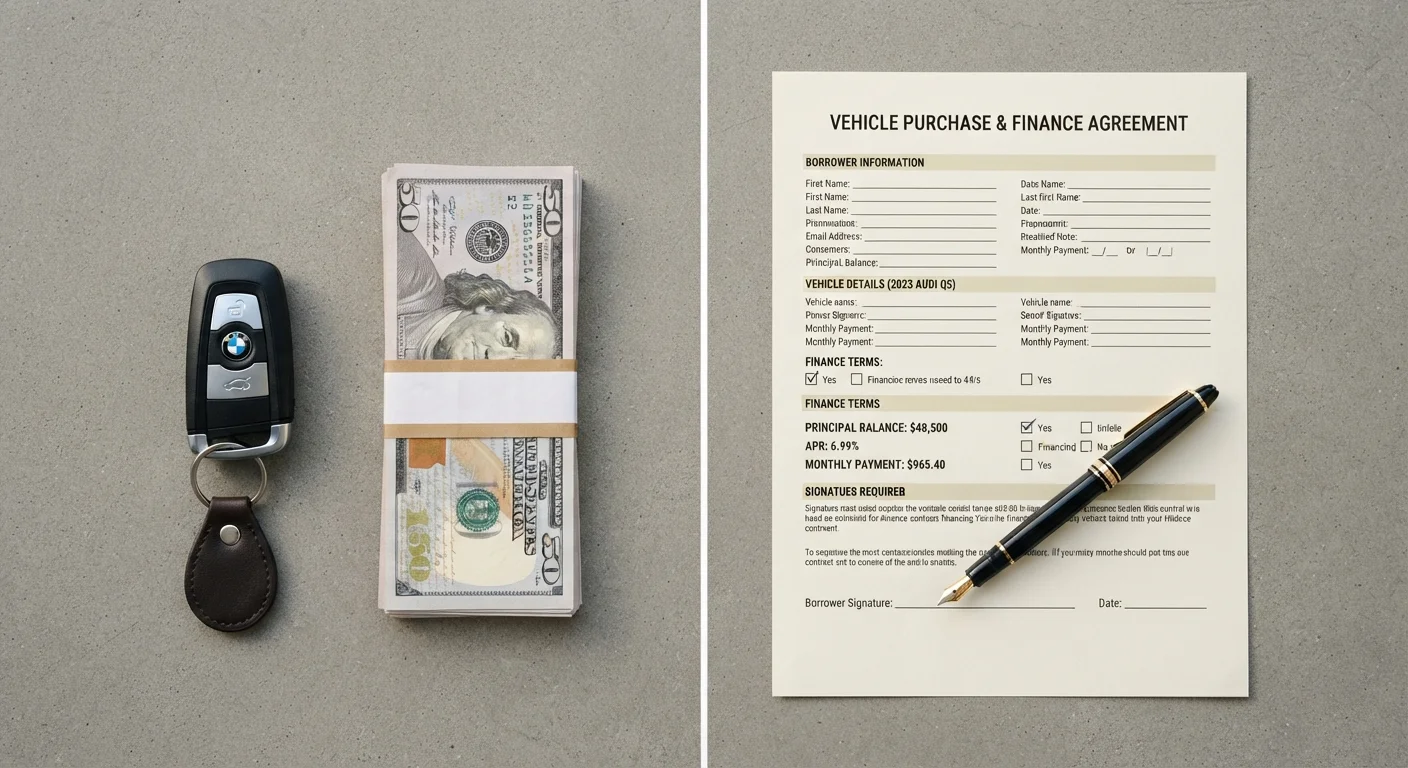
The sharpest financial distinction between buying and leasing is what remains after the final payment. A financed buyer, once the loan is settled, holds an asset - a vehicle with residual market value. Even accounting for depreciation, that value can offset the cost of the next vehicle. A lessee, by contrast, returns the car and begins the cycle again, with no accumulated asset to show for years of payments.
Weighing ownership against financing illustrates how even a depreciated vehicle carries meaningful financial weight compared to repeatedly leasing. Depreciation is sharpest in the first two to three years - which is precisely the window most leases occupy. Lessees effectively absorb those steepest depreciation years through their payments, then hand back the vehicle at the point where depreciation flattens.
For a broader view of all the expenses that factor into true ownership cost, see total cost of ownership beyond the sticker price.
Lease-Specific Costs That Buyers Avoid
Leasing introduces a distinct category of costs that buyers never encounter. Understanding them is essential before treating a lease payment as straightforwardly equivalent to a loan installment.
- Mileage penalties: Most leases cap annual mileage - commonly between 10,000 and 15,000 miles. Exceeding this triggers per-mile charges at contract end, which can accumulate rapidly for higher-mileage drivers.
- Wear-and-tear charges: Lessees are responsible for returning the vehicle in acceptable condition. Scratches, interior damage, or worn tires beyond defined thresholds generate charges assessed at inspection.
- Disposition fee: Many lease agreements include a fee payable when you return the vehicle and do not lease or purchase another from the same source.
- Gap in insurance requirements: Lease agreements typically mandate higher insurance coverage levels than a buyer might otherwise choose. This is worth comparing across both scenarios.
A plain-language explanation of how car leasing works covers residual values, mileage caps, and end-of-term obligations in detail. For insurance considerations, understanding the difference between comprehensive and third-party cover is worth reviewing alongside any lease agreement.
Read Every Lease Clause Before Signing
Mileage overages, wear-and-tear definitions, and disposition fees are set in the lease contract - they are not negotiated at return time. Drivers who underestimate annual mileage or overlook wear standards can face charges that significantly alter the true cost of the lease. Request a written breakdown of all potential end-of-term charges before committing.
Who Each Path Tends to Suit
Neither buying nor leasing is categorically cheaper - the better outcome depends on personal driving patterns and financial priorities. Some factors that genuinely shift the balance:
- Annual mileage
- Drivers covering well above average mileage typically find leasing expensive once overage penalties apply. Buyers face no such ceiling.
- How long you keep a vehicle
- Buyers who keep a vehicle for six or more years beyond loan payoff spread the purchase cost across many more miles, reducing the effective cost per mile substantially.
- Preference for newer technology
- Those who want a current-generation vehicle every two to three years avoid the friction of private resale by leasing - though they pay a premium for that convenience over time.
- Financial flexibility
- Leasing typically requires a lower upfront outlay and lower monthly payments in the short term. For those managing cash flow carefully, this distinction matters - though it does not reduce total long-term spending.
Before committing to either path, the right questions to ask before committing to any vehicle can help surface costs and trade-offs that a test drive alone will not reveal. If financing a purchase, comparing dealer financing with your own bank or credit union is a worthwhile step before signing.
This article provides general financial information for educational purposes and does not constitute personalised financial or legal advice. Consult a qualified financial adviser for guidance tailored to your individual circumstances.