
How Poor Conditions Change the Physics of Your Journey
Most drivers adapt instinctively when the weather turns - they slow down, grip the wheel a little tighter. But intuition alone is not enough when road surfaces become genuinely hazardous. Understanding what actually changes beneath your tyres helps you make deliberate, well-calibrated decisions rather than reactive ones.
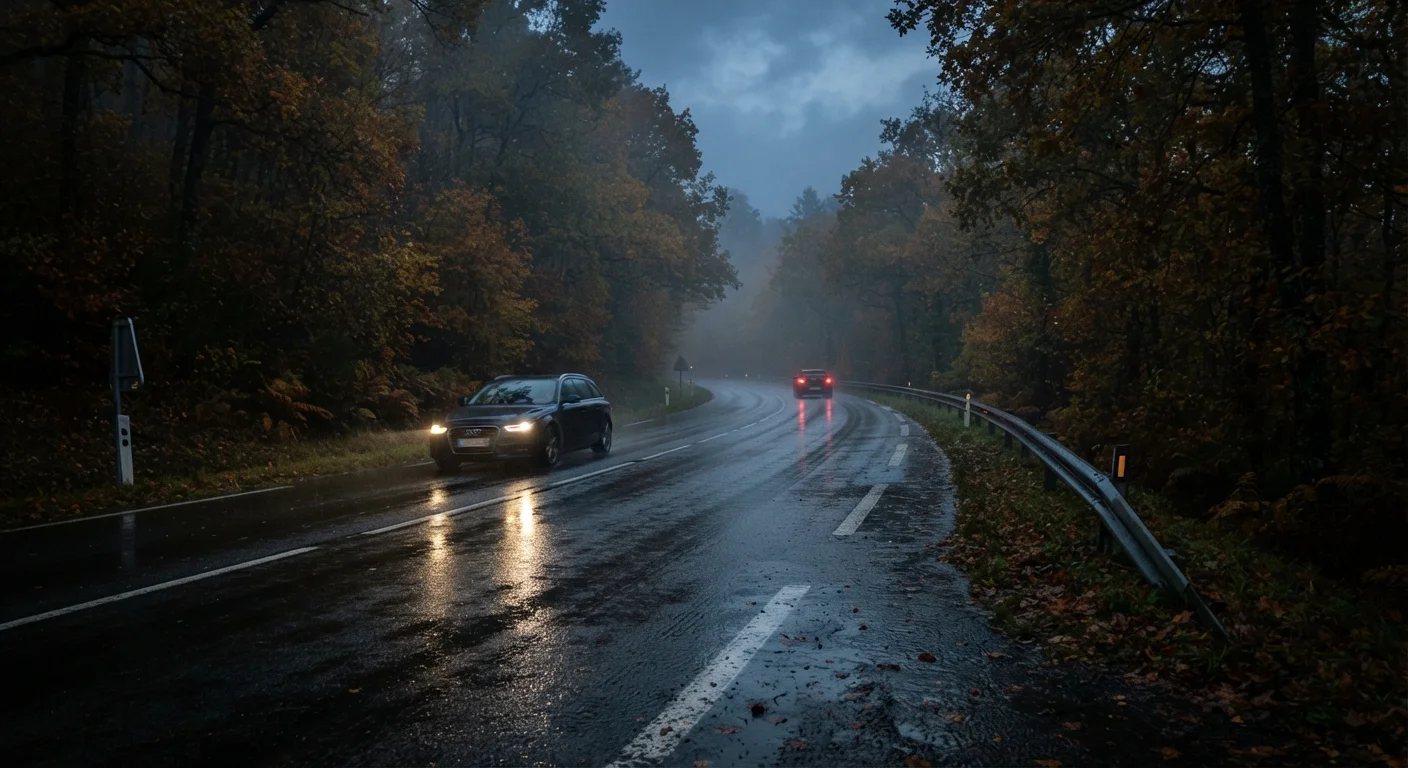
On a dry road, an average car travelling at 100 km/h requires roughly 100 metres to stop from the moment the driver perceives a hazard (including reaction time). On wet asphalt, that distance can increase by 50-100%, depending on tyre condition, road surface texture, and drainage quality. Black ice - a thin, near-transparent layer of frozen water - can reduce tyre grip to a fraction of its normal value, making emergency braking almost entirely ineffective without ABS assistance.
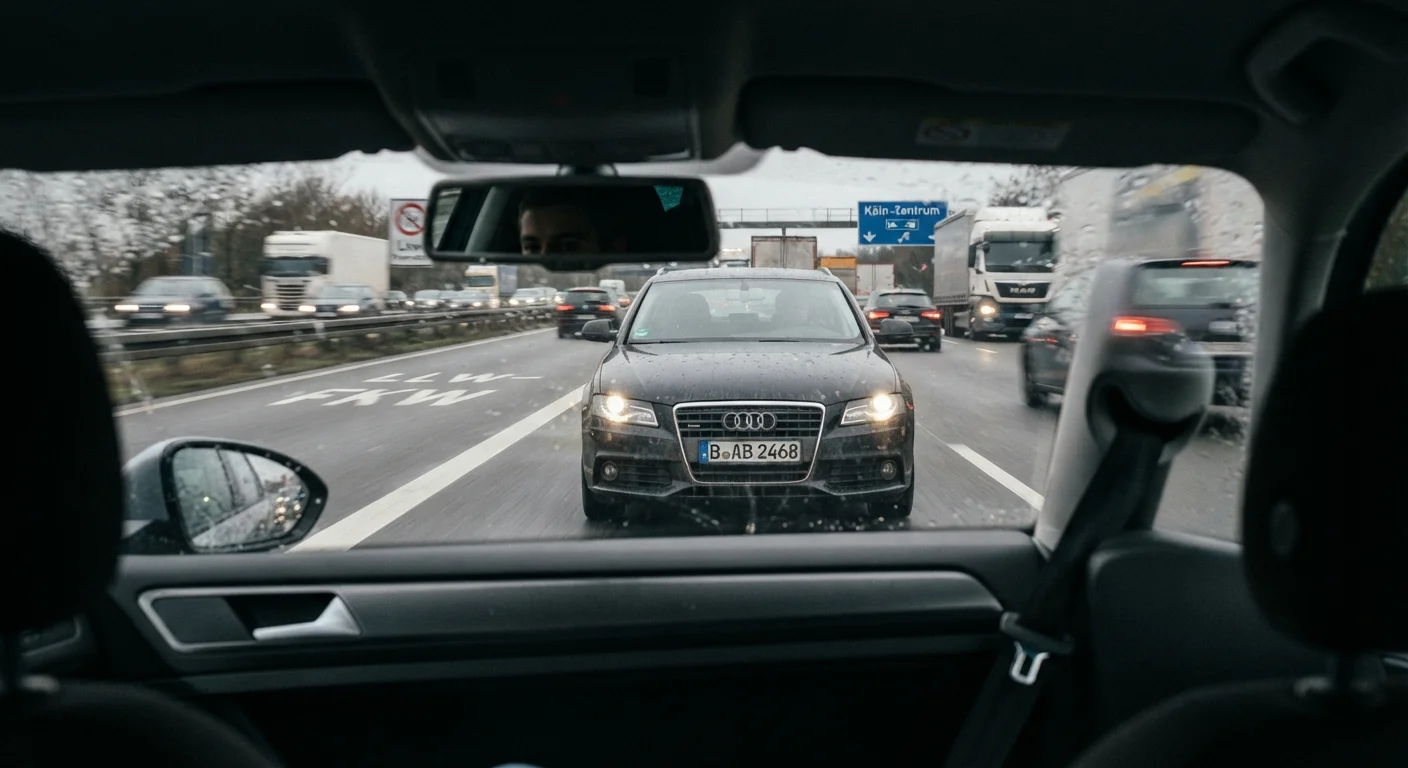
Fog compounds both issues by shortening the distance at which hazards become visible, meaning the "thinking distance" advantage drivers normally have is drastically compressed. Adjusting for these changes requires a deliberate shift in how you approach speed, spacing, and visibility - not just a vague sense of caution. For a deeper look at how stopping distances work and why they matter in everyday traffic, see our guide to stopping distances and following distance.
Reduce speed progressively as surface conditions worsen - not just at the moment you feel a skid
Most loss-of-control incidents on wet or icy roads occur because drivers enter a bend or braking zone at a speed appropriate for dry conditions. The physics of traction change well before a skid becomes noticeable, so pre-emptive speed reduction is essential. Under German StVO, drivers are legally required to drive only at speeds at which they can stop within their visible range.
Double your following distance in wet conditions; triple it on ice or compacted snow
Stopping distances are the primary reason close following becomes especially dangerous in poor weather. A gap that feels generous on a dry motorway may be wholly inadequate when ABS has to compensate for reduced grip. The German rule of thumb - maintain at least half your speed in metres as a gap - assumes dry conditions.
In fog, match your speed to your actual sight distance - never drive faster than allows stopping within what you can see
Fog creates what safety researchers call "the fog-speed illusion" - drivers underestimate their speed because visual reference points are reduced. German law requires dipped headlights and permits rear fog lights only when visibility is below 50 metres; using rear fog lights in lighter fog can dazzle following drivers.
Identify black ice risk zones before you encounter them and adjust speed proactively
Black ice forms preferentially on bridge decks (cooled from above and below), in the shadow of buildings and tree lines, and on roads that dip below surrounding terrain. Overnight temperatures between −2°C and +2°C are the highest-risk range because ice can form on surfaces that appear merely wet.
Apply brakes gently and progressively; avoid sudden steering inputs on low-grip surfaces
Threshold braking and sharp steering inputs transfer weight abruptly, causing weight shifts that can exceed available traction. Modern ABS systems help prevent wheel lock, but they cannot create grip that is not there - smooth inputs keep the car within the tyre's available grip envelope.
Use lights correctly and consistently - not just for your own visibility but to be seen by others
In rain, spray from other vehicles can reduce rearward visibility dramatically. Dipped headlights (not just daytime running lights, which do not activate rear lights on many vehicles) ensure you are visible from the front and rear. Hazard lights while moving are generally not legally permitted in Germany except in very specific circumstances and can confuse other drivers.
Proven Practices for Wet Roads, Ice, and Fog
The following practices are grounded in road safety research and the requirements of German traffic law (StVZO and StVO). Apply them as a structured toolkit, not a checklist to rush through.
Preparing Your Vehicle Before Conditions Deteriorate
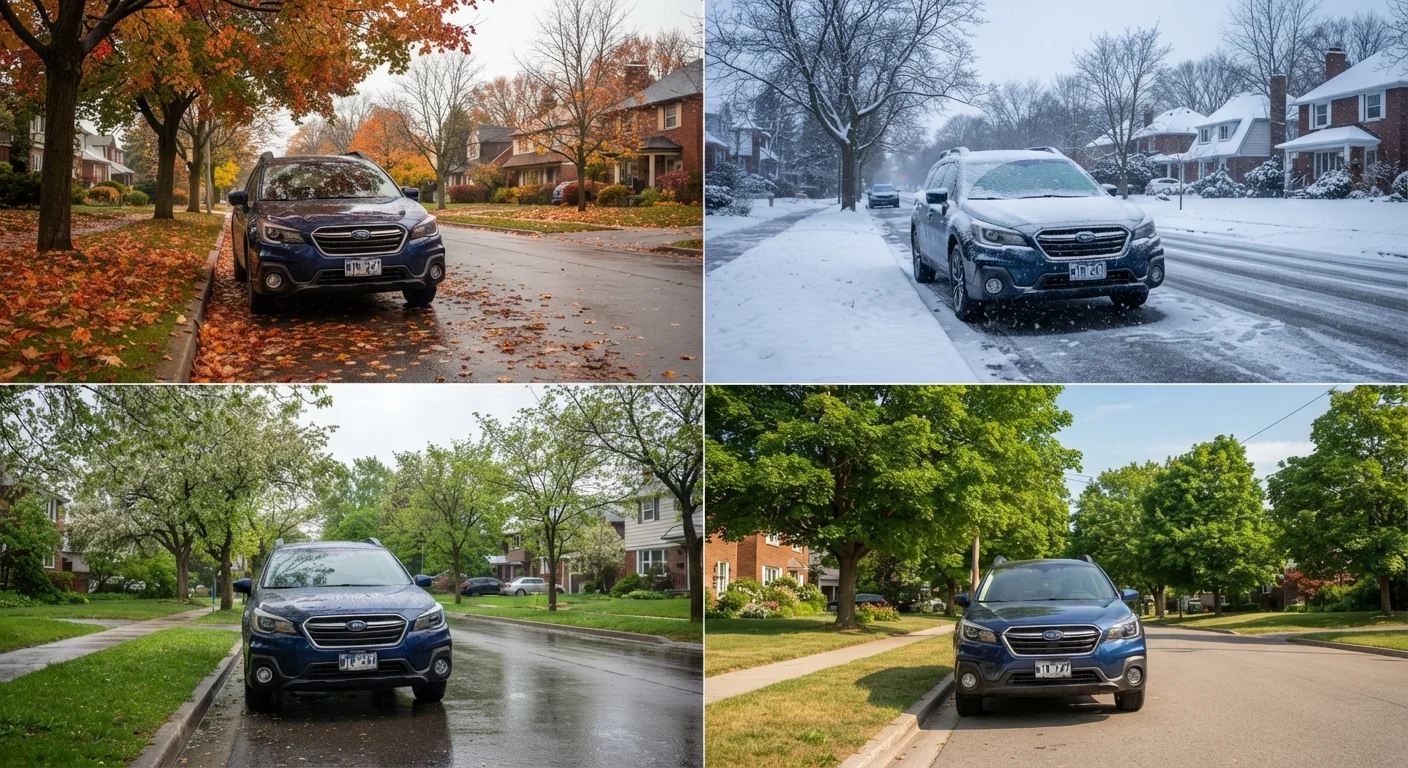
Technique matters, but it operates within the limits of what your vehicle can physically do. A worn set of tyres on an icy road will underperform regardless of how smoothly you brake. Before autumn and winter driving seasons, consider the following vehicle-readiness factors:
- Tyre tread depth: German law mandates a minimum of 1.6 mm, but road-safety organisations generally recommend replacing tyres at 3-4 mm for wet and winter conditions. Winter tyres (marked M+S and the alpine snowflake symbol) are strongly advisable - and in practice required under German law in winter road conditions (situative Winterreifenpflicht).
- Windscreen washer fluid: Use a mixture rated for sub-zero temperatures and ensure wipers are in good condition. Smeared screens in rain or low sun dramatically worsen visibility.
- Lights and bulbs: Check all exterior lights are functioning. Fog lights should be tested before they are needed urgently.
- Brake system: Spongy pedal feel or pulling to one side under braking warrants a professional inspection before winter driving begins.
Our seasonal car care guide covers these checks in detail, including how road salt and cold temperatures affect brake lines, battery performance, and rubber components.
Winter Tyres: Legal Obligation vs. Best Practice
Germany operates a situational winter tyre requirement (situative Winterreifenpflicht): drivers must fit suitable winter tyres whenever road conditions are wintry - black ice, slush, compacted snow, or frost - regardless of calendar date. Driving on summer tyres in these conditions can result in a fine and, critically, shared liability in a collision. Tyres must carry the alpine snowflake symbol (three-peak mountain with snowflake) to meet the legal standard; the older M+S designation alone is no longer sufficient after a transitional period that ended in 2024.
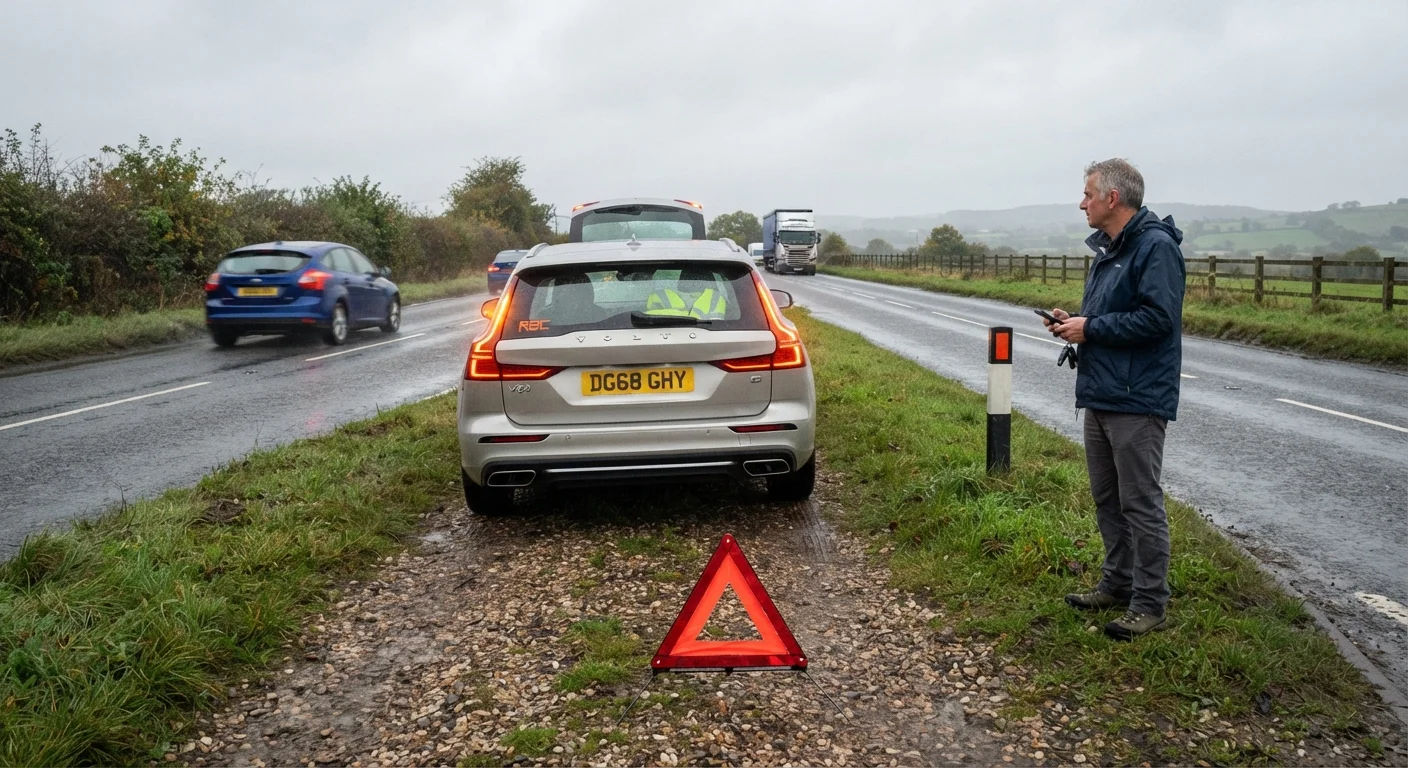
If you do experience a breakdown in adverse weather, the steps you take in the first few minutes are critical - see our roadside breakdown guide for a structured approach to staying safe.
Pre-Trip Check for Autumn and Winter Journeys
Before any longer drive in poor-weather conditions, take two minutes to clear all glass - not just a driver's peephole - and confirm that all lights are functioning. A fully cleared windscreen and mirrors are a legal requirement in Germany and a genuine safety measure. Our pre-departure safety checklist provides a structured walkthrough for drivers preparing for extended journeys.