
Why the First 10 Minutes Define Your Safety
A roadside breakdown is stressful, but the decisions made in the first ten minutes determine whether it remains an inconvenience or escalates into a dangerous situation. The majority of secondary accidents involving broken-down vehicles occur because drivers fail to make themselves visible, stop in hazardous positions, or exit the vehicle into live traffic.
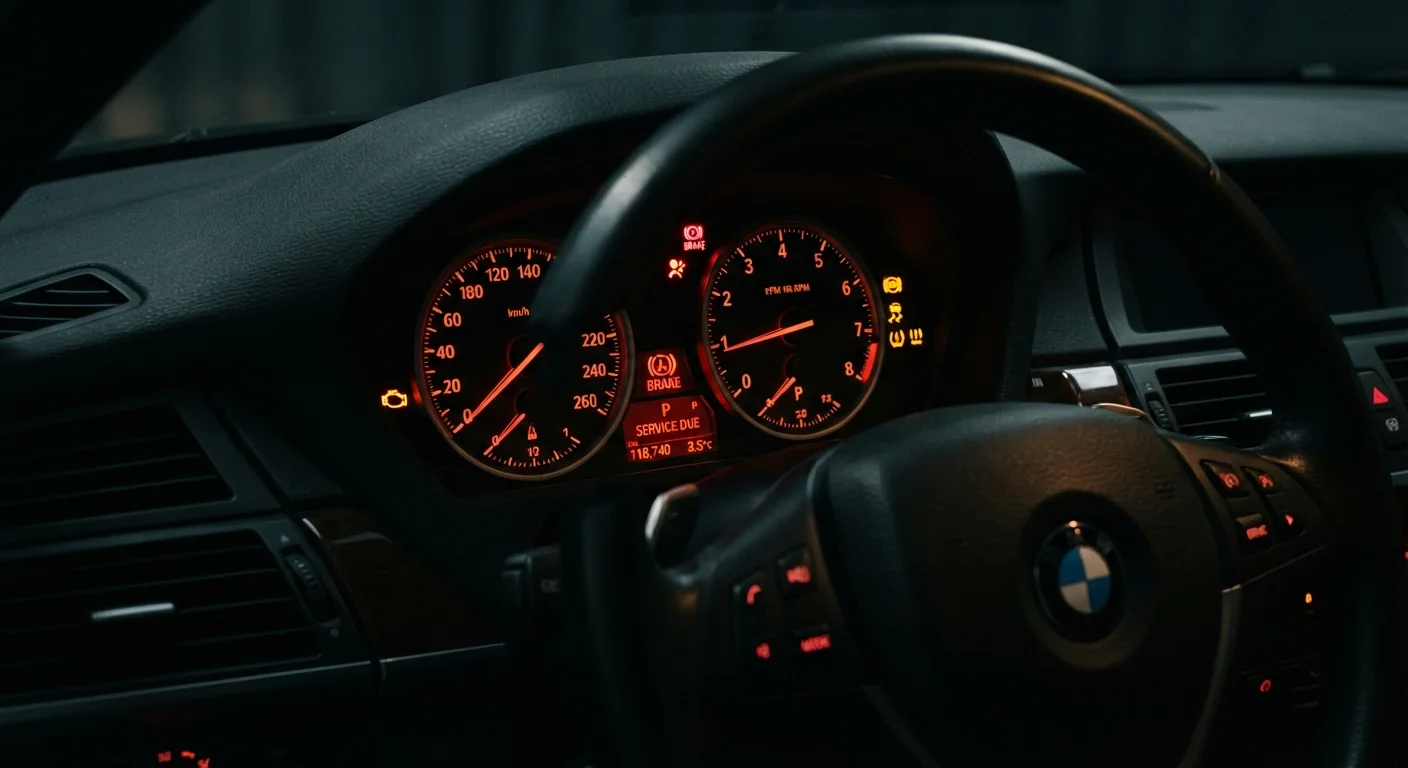
Understanding your dashboard warning lights can also give you earlier notice that something is wrong, allowing you to reach a safe stopping point rather than being caught off-guard. Equally, drivers who are new to car ownership often underestimate how quickly a manageable fault can become an unsafe situation - something covered in practical terms in our guide for first-time car owners.
The steps below apply to breakdowns on standard roads. If you are travelling the Driving & Roads network including motorways, different obligations apply.
What you will need
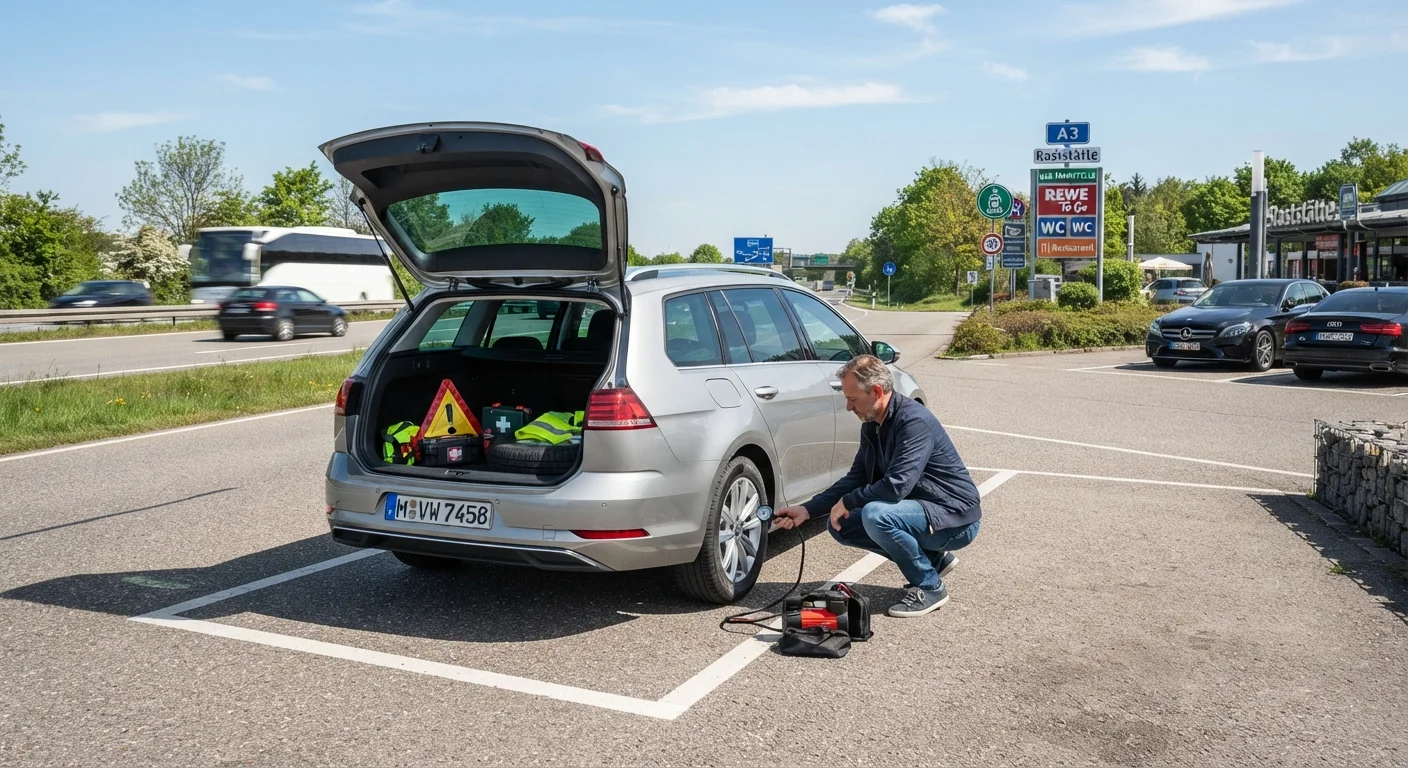
Reflective warning vest (EN ISO 20471)
Required by law in Germany before exiting the vehicle on a public road - makes you visible to approaching traffic.
Warning triangle
Placed behind the vehicle to alert other drivers; mandatory under German StVZO §53a.
Torch or LED flashlight
Allows safe inspection of the vehicle and surroundings in low-light conditions.
First-aid kit (DIN 13164)
Legally required in German-registered vehicles; covers minor injuries at the scene.
Fully charged mobile phone
Used to contact your breakdown recovery provider and, if needed, emergency services.
Breakdown recovery membership card
Provides your membership number and the correct contact number for roadside assistance.
Step-by-Step: Managing the Breakdown
Follow the sequence below in order. Each step builds on the last - skipping ahead, particularly to inspecting the engine before securing your position and occupants, is a common error that increases risk.
Activate hazard lights immediately
The moment you sense something is wrong - unusual noise, sudden power loss, warning light - switch on your hazard lights without delay. This signals to drivers behind you that your vehicle is in distress, giving them more time to react and adjust speed. Do not wait until you have stopped.
Steer to a safe stopping position
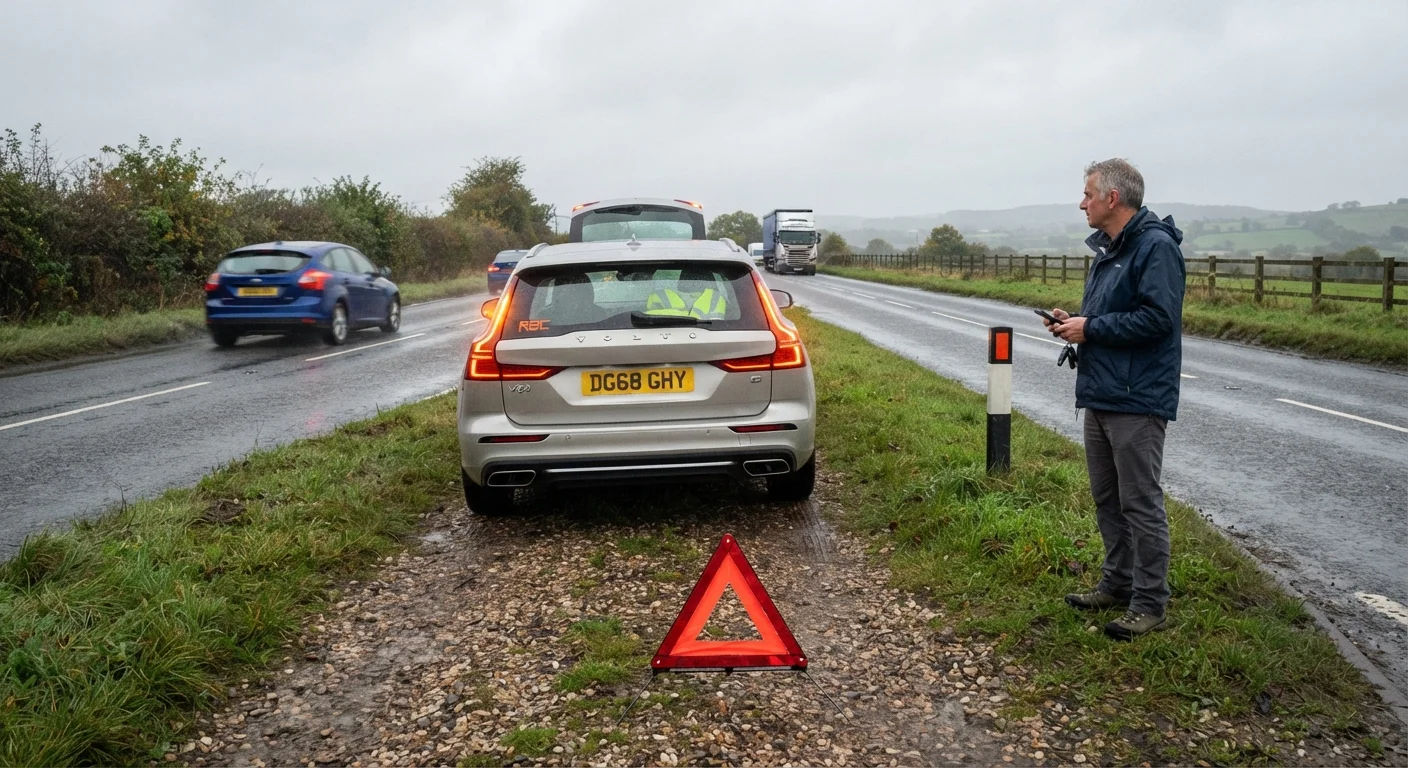
Indicate and move gradually toward the left-hand verge, a lay-by, or a side street. Avoid stopping on bends, hill crests, or junctions where visibility is poor. If the vehicle loses power steering or braking assistance, apply steady, firm pressure - these systems require more physical effort but still function. Stop as far from the carriageway as terrain allows.
Put on your reflective vest before exiting
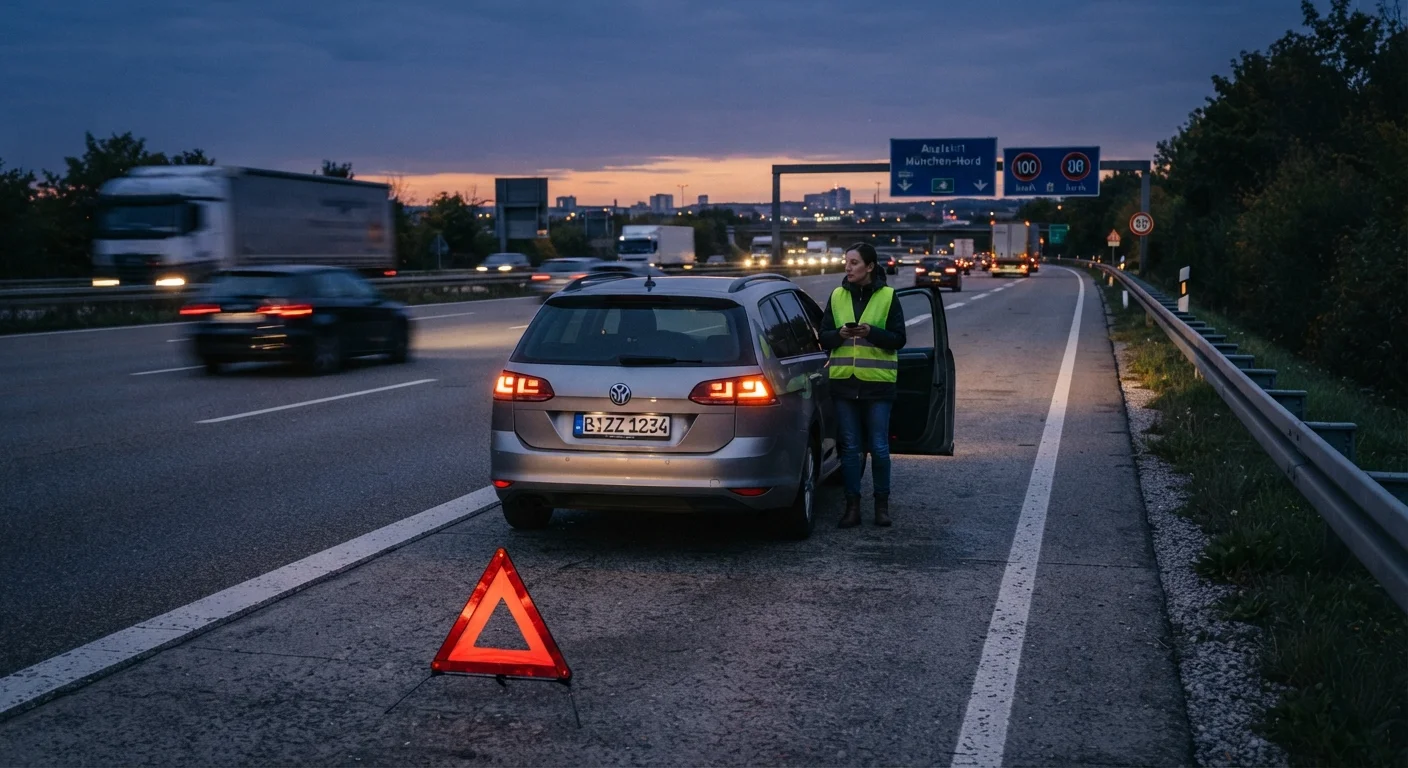
Under German road law, you must put on a reflective vest (meeting EN ISO 20471 standard) before stepping out of the vehicle on a public road. Keep it in the passenger compartment - not the boot - so it is accessible without leaving the car first.
Place the warning triangle
Exit via the door furthest from traffic. Carry the warning triangle along the verge and position it at least 50 metres behind the vehicle on standard roads (more on fast rural roads). The triangle should face oncoming traffic and be visible from a distance sufficient for drivers to safely slow down.
Move all occupants to safety
Guide all passengers away from the vehicle, onto the verge or behind a barrier. Keep everyone well back from the traffic lane. Children and animals should be kept close and under control. Do not allow anyone to remain seated in the vehicle if it is stopped near active traffic - a rear-end collision can push the car forward with serious consequences.
Call your breakdown recovery provider
Once occupants are safe, contact your breakdown recovery service. Provide your exact location - use road signs, kilometre markers, or a navigation app to relay your position accurately. Give a clear description of the fault symptoms so the dispatcher can send the most appropriate assistance. Avoid attempting roadside repairs unless you are fully confident in your ability to do so safely.
Wait safely and stay visible
Remain on the verge, away from traffic and away from the rear of the vehicle. Keep your hazard lights running. If weather is severe, it may be safer to wait inside the vehicle with your seatbelt fastened - this depends heavily on the specific location and visibility conditions. Do not attempt to push the car without professional guidance on traffic management.
Never Stand Behind or Beside the Vehicle
Waiting alongside your car on a busy road significantly increases your risk of being struck. Move all occupants to the verge or barrier side, away from traffic, and stay there until professional assistance arrives. Children and pets should exit through the passenger door away from the carriageway.
Motorway Breakdowns Have Separate Rules
The procedure described here applies primarily to standard roads and urban environments. German motorways (Autobahnen) are governed by specific StVZO and STVO requirements, including mandatory reflective vest use and emergency phone use at marker posts. See our dedicated motorway breakdown guide before driving on the Autobahn.
Prevention Is the Best Preparation
Many breakdowns stem from overlooked maintenance - worn tyres, low coolant, or an aging battery. Running a structured check before long journeys dramatically reduces roadside risk. Our pre-departure safety checklist covers everything from tyre pressure to emergency kit contents.