
Why Standard Debt Advice Doesn't Always Fit
Most debt repayment guidance is designed around a predictable monthly salary. It assumes you'll receive roughly the same amount each pay period and can therefore commit to fixed extra payments month after month. For freelancers, seasonal workers, contractors, and anyone else whose earnings shift, this model can set up unrealistic expectations.
If you earn €1,800 one month and €3,400 the next, locking yourself into aggressive fixed repayment targets creates real risk. A payment shortfall in a lean month isn't a moral failing - it's a structural mismatch between your cash flow and the repayment plan you chose. The solution isn't to push harder; it's to match your strategy to your actual income pattern.
Understanding the difference between revolving credit and instalment debt is a useful starting point, since each responds differently to irregular payments.
Core Practices for Irregular Earners Carrying Debt
The following approaches are adapted to the reality of variable income - building in flexibility without abandoning discipline.
Build a small income buffer before aggressively paying down debt
Without a buffer, a lean earning month can cause you to miss a debt payment entirely - triggering fees and potential credit damage that outweigh the interest you would have saved. Even one or two months of minimum payments set aside gives you breathing room. This is especially important because the cost of a missed payment often exceeds the benefit of an accelerated payoff.
Always cover minimum payments first, then direct surplus income to debt
Minimum payments protect your credit standing and prevent default. Treating them as a non-negotiable floor, not a goal, ensures you stay in good standing on lean months while giving you a clear framework: anything earned above your essential expenses is eligible for debt paydown. Paying only minimums long-term is costly, but using them as a floor during irregular months is a sound tactic.
Use percentage-based budgeting rather than fixed euro amounts
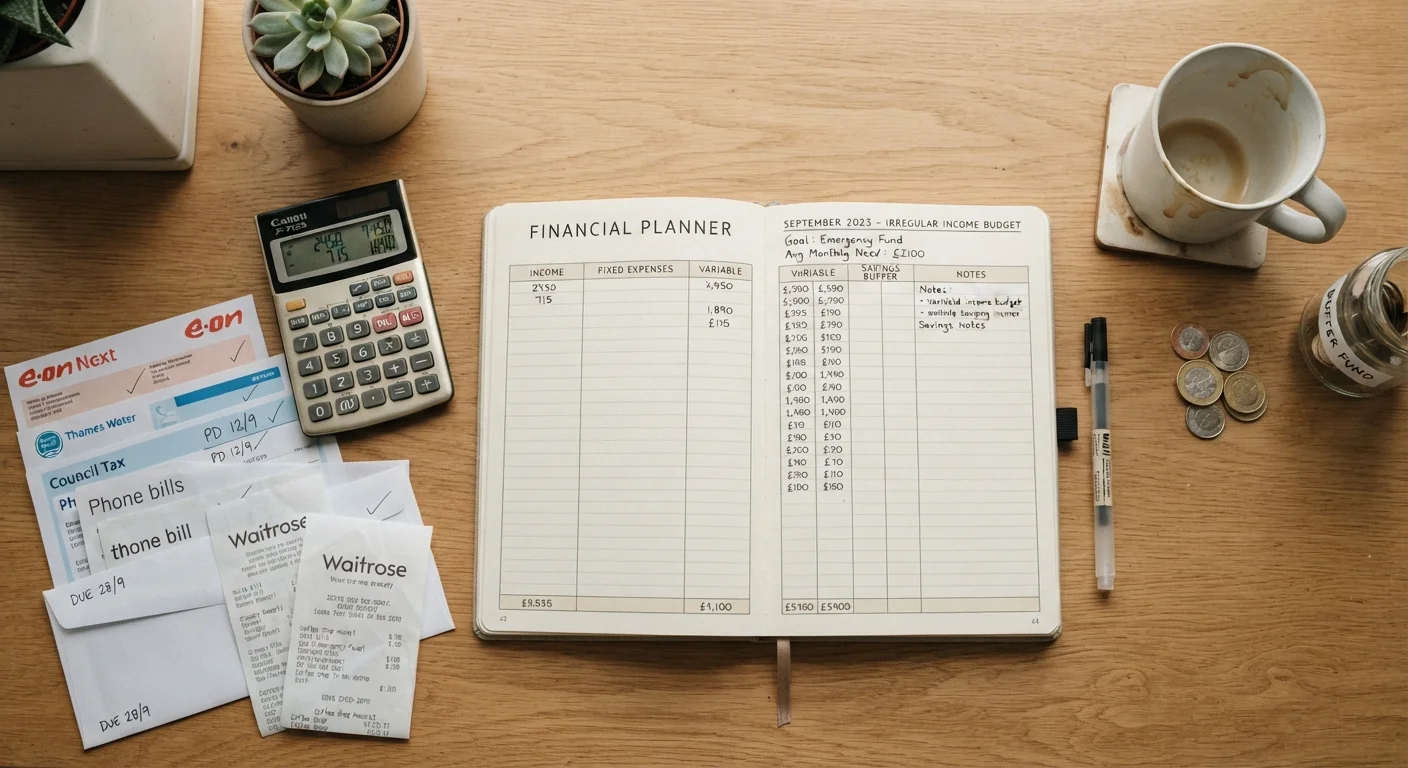
Allocating a percentage of each payment received to debt repayment (for example, 15-20% of every deposit) scales automatically with income. You pay more when you earn more and less when income is low, without triggering missed payments or plan failures. This approach dovetails well with distinguishing fixed from variable expenses in your overall budget.
Contact lenders proactively if a difficult period is approaching
Many lenders have formal or informal hardship programmes that can temporarily reduce or defer minimum payments without the same credit impact as a missed payment. Waiting until you've already defaulted limits your options. Reaching out before a problem occurs demonstrates good faith and often yields better outcomes.
Apply windfalls and strong-income months strategically
Large single deposits - a big client payment, a tax refund, or an unusually strong month - represent the most powerful debt-reduction opportunities for variable earners. Having a pre-decided rule for how to allocate these (for example, half to debt, half to buffer) prevents the money from drifting into general spending. Pairing this with a repayment method like those outlined in avalanche or snowball strategies maximizes the impact.
Quick Actions You Can Take Now
Even before a full strategy is in place, a few targeted steps can reduce your exposure during low-income periods.
This article is for general informational purposes only and does not constitute personalised financial advice. For guidance specific to your circumstances, consider consulting a qualified financial adviser.