

Why Loan Agreements Feel Overwhelming - and How to Simplify Them
Loan agreements are written by legal teams to protect lenders. That does not mean they are impossible to understand - it means you need a structured approach. Most agreements follow a predictable format: parties and principal, interest and APR, repayment schedule, fees, default conditions, and security arrangements. Once you know what each section does, the document stops feeling like an obstacle and starts functioning as a checklist.
Before you sit down with the document, make sure you have the right tools. Our plain-language debt glossary covers most of the terminology you will encounter - including terms like amortisation, principal, and charge-off - so you are not stopping to search definitions mid-read.
What you will need
Loan amortisation calculator
Verify that the monthly payment amounts in the agreement match what an independent calculation produces for the stated rate and term.
Financial glossary reference
Look up unfamiliar terms such as default, amortisation, or charge-off as they appear in the document.
Highlighter or annotation tool
Mark key figures, dates, and any clauses you want to revisit or question before signing.
How to Work Through a Loan Agreement Step by Step
The seven steps below walk you through a loan agreement in the order the sections typically appear. Work through them sequentially rather than skimming - each section connects to the next, and missing a detail in an early clause can cause you to misread a later one.
A Loan Agreement Is a Legal Contract
Once signed, a loan agreement is legally binding and difficult to exit. Claiming you did not understand a clause is rarely a valid defence. Take the time to read the full document - and if anything is unclear, ask the lender for a plain-language explanation or consult a qualified financial adviser before signing.
Confirm the parties and loan details
The opening section identifies the borrower, the lender, and the loan amount being extended. Verify that your full legal name and address match your identity documents exactly. Check the principal - the base amount being borrowed - and confirm it matches what you requested or were offered. Errors here affect every calculation downstream.
Locate and compare the interest rate and APR
The interest rate is the basic cost of borrowing expressed as a percentage of the principal. The APR (Annual Percentage Rate) is broader - it includes the interest rate plus most fees, giving a more accurate picture of what you will actually pay each year. Always compare lenders using APR, not the headline rate. A loan with a lower interest rate but high origination fees can cost more overall than one with a higher rate and no fees.
Review the repayment schedule
The repayment schedule - sometimes called an amortisation table - breaks down every payment into its principal and interest components over the life of the loan. Early payments are typically weighted heavily toward interest; this shifts gradually. Verify the number of payments, the due date for the first instalment, and the total amount you will repay by the final payment. Cross-reference these figures using an independent loan calculator to catch any discrepancies.
Identify all fees and penalties
Agreements frequently list fees in a dedicated section separate from the interest rate. Common ones to look for include:
- Origination fee: a one-time charge for processing the loan, often deducted from the disbursement
- Late payment fee: charged if a payment is not received by the due date
- Prepayment penalty: a fee for paying off the loan early - this limits your ability to save on interest
- Returned payment fee: charged if a direct debit fails due to insufficient funds
Know the exact amounts and the conditions that trigger each one.
Read the default and acceleration clauses
A default clause specifies what actions - or inactions - legally place you in default. Missing a single payment, letting insurance lapse on a secured loan, or filing for insolvency can all qualify. An acceleration clause means that once you default, the lender can demand the entire remaining balance immediately rather than just the missed payment. Understanding these clauses tells you how little margin for error you actually have.
Check collateral and security arrangements
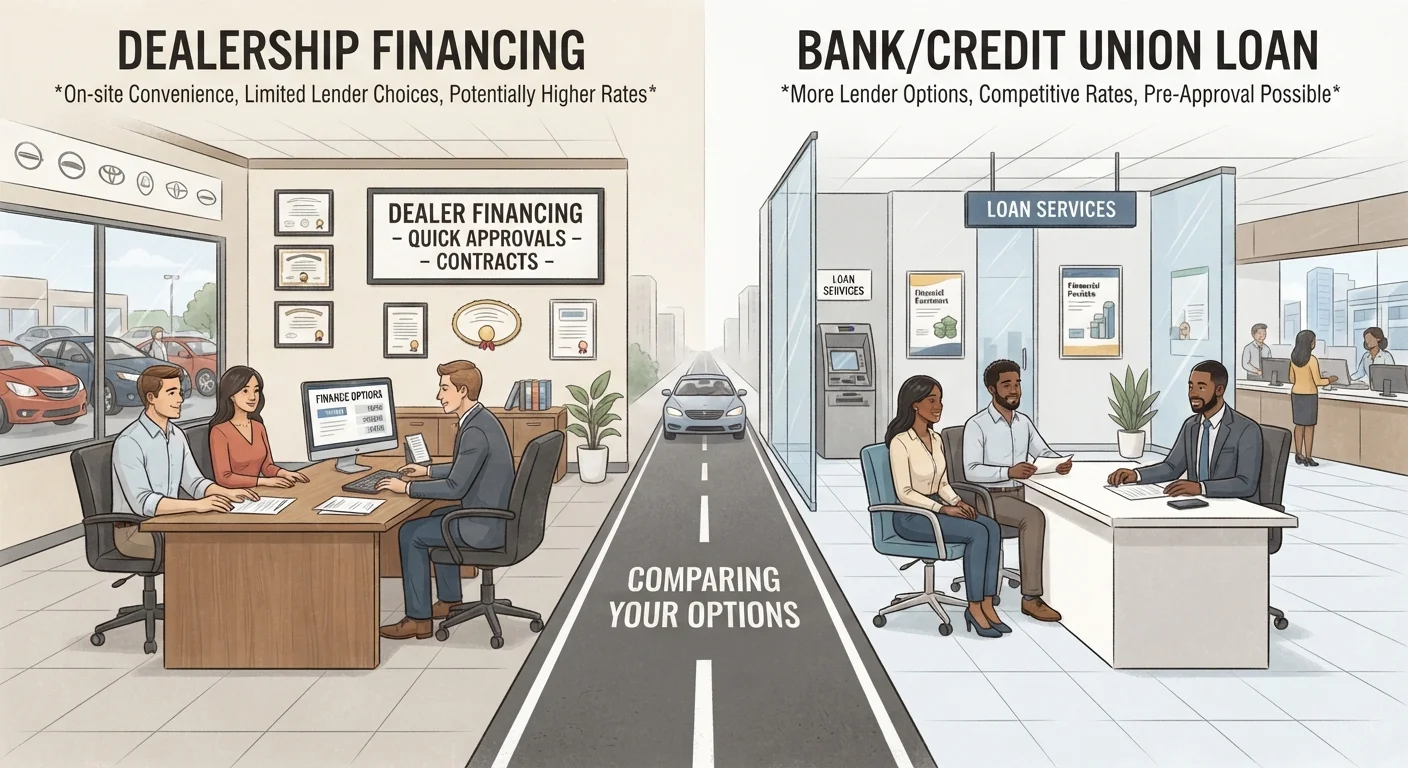
If the loan is secured - for example, an auto loan or a mortgage - the agreement will specify what asset serves as collateral. Read the conditions under which the lender can repossess or foreclose on that asset. For auto loans specifically, understand how this differs depending on whether you arranged financing independently or through a dealer. See how dealer financing compares to independent lending for context on how these arrangements differ.
Ask questions and get answers in writing
Before signing, write down every clause you did not fully understand. Contact the lender directly and request plain-language clarifications. If a lender gives you a verbal explanation that differs from the written agreement, the written document governs - so ask them to amend the text or provide the explanation in a signed written statement. If the loan is large or complex, consider consulting a licensed financial adviser or legal professional before committing.
Request a Draft Copy in Advance
Most lenders will provide a draft loan agreement before the signing appointment if you ask. Reviewing it at home - away from time pressure - gives you the space to read carefully, look up unfamiliar terms, and write down questions. Never sign the first time you see a document.
Watch for Balloon Payments
Some loan agreements include a large lump-sum payment - called a balloon payment - due at the end of the term. This is easy to miss in the amortisation schedule. If you cannot refinance or pay it off when it comes due, you could face default. Confirm whether your agreement includes one before signing.
After You Have Read Everything
Once you have worked through the full agreement, review your notes and flagged sections. If any figures do not match your independent calculations, raise them with the lender before proceeding. Compare the final terms against any written offer or pre-approval you received - figures should not have changed without your knowledge.
Signing a loan agreement is a significant financial commitment. The time spent reading carefully now can prevent misunderstandings that are far more difficult - and expensive - to resolve later. This article provides general financial information and education only; it is not personalised financial or legal advice. For decisions involving your specific circumstances, consult a qualified financial adviser or legal professional.
This article is for informational and educational purposes only and does not constitute personalised financial, legal, or investment advice. Always consult a qualified professional before making financial decisions.