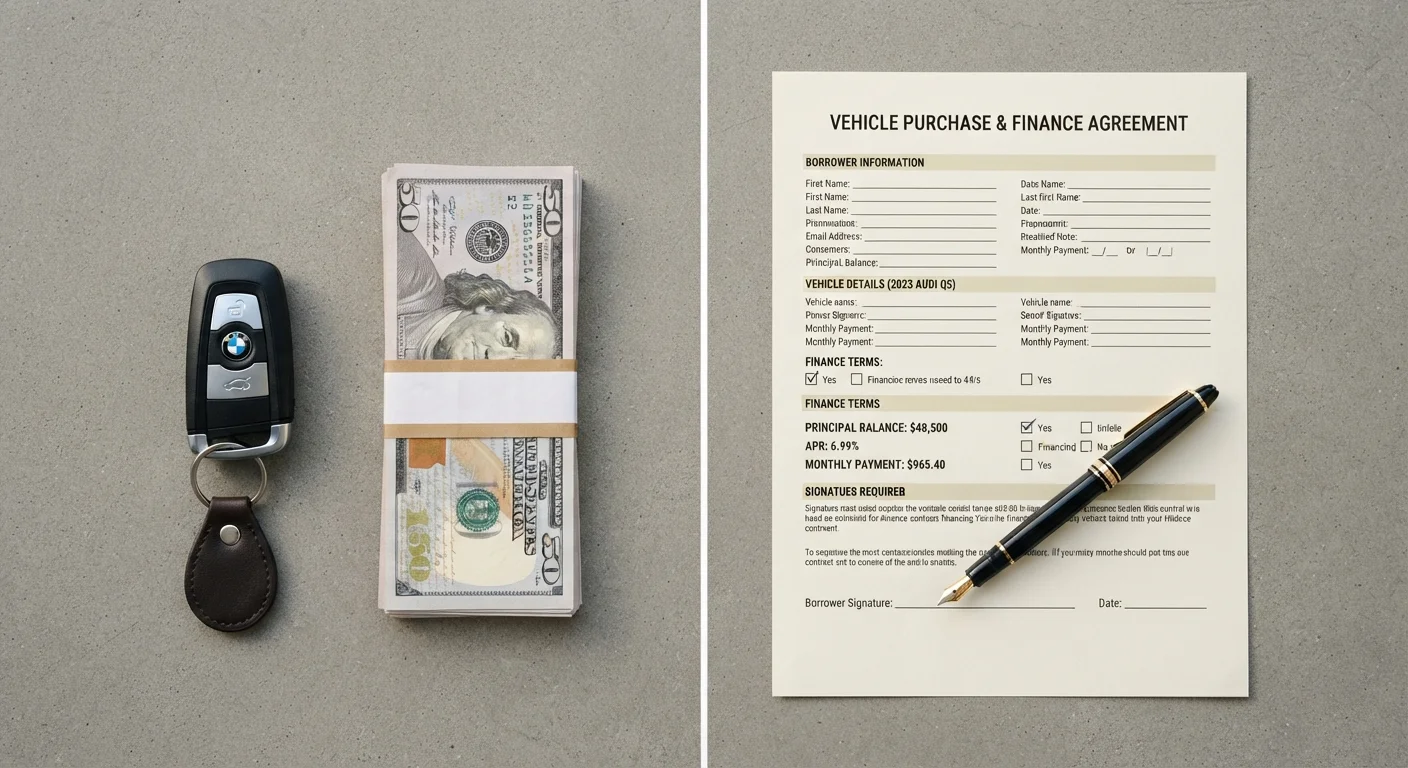

How Each Financing Route Actually Works
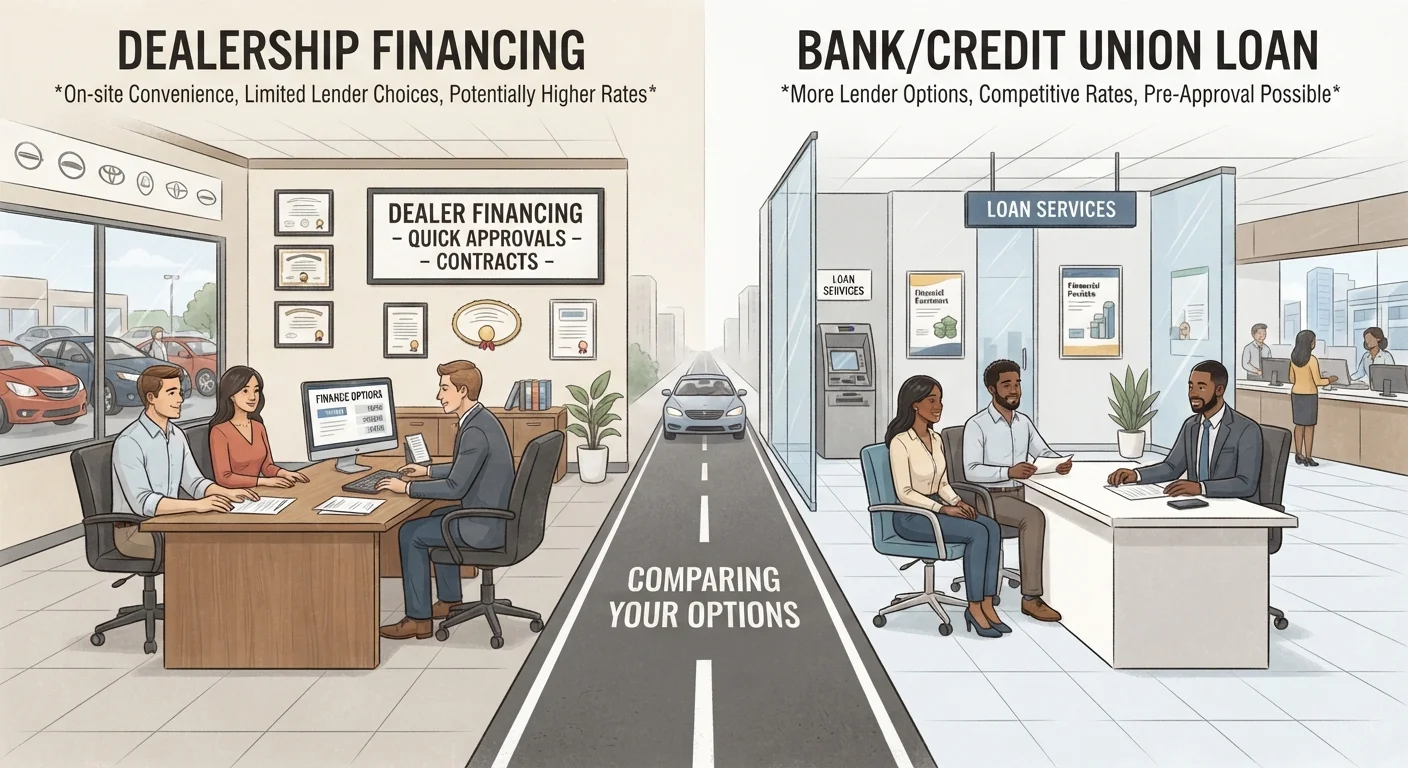
When you finance through a dealership, the dealer acts as an intermediary. They submit your application to one or more lenders - banks, captive finance companies affiliated with manufacturers, or specialist auto lenders - and present you with an offer. The rate you see may include a dealer reserve: a margin added above the lender's base rate, which the dealer retains as compensation. This is a standard industry practice, but it means the stated APR is not always the lender's lowest available rate for your credit profile.
Financing independently through a bank or credit union works differently. You apply before visiting a dealership, receive a conditional approval - often called a pre-approval - specifying a maximum loan amount and interest rate. You then shop for a vehicle knowing your budget is already set. At the dealership, you pay using the pre-arranged loan rather than accepting whatever financing the dealer proposes.
Understanding the terminology involved matters here. If terms like APR or invoice price feel unfamiliar, the glossary of common dealership terms is a useful starting point before you sit down to negotiate.
| Criterion | Dealer Financing | Bank or Credit Union Financing |
|---|---|---|
| Application process | Handled at the dealership on the day | Applied for in advance, independently |
| Rate transparency | May include dealer markup above buy rate | Rate offered is rate paid |
| Promotional rates | Manufacturer subsidised offers available | No access to manufacturer promotions |
| Negotiating position | Price and finance often discussed together | Pre-approval separates price from financing |
| Speed of approval | Same-day in most cases | Takes days to a week in advance |
| Lender options | Multiple lenders via dealer network | Single institution you have selected |
| Membership required | No | Yes, for credit unions |
Rate Factors and Where Markups Can Appear
Your credit score, loan term, vehicle age, and loan-to-value ratio all influence the rate any lender offers - whether that is a dealer's finance department or your own bank. However, the path to that rate differs meaningfully.
With dealer financing, the rate you are quoted may already reflect a markup. Regulations vary by jurisdiction, but in many markets dealers are legally permitted to add a margin to the lender's buy rate. Without knowing the underlying buy rate, it is difficult to assess whether the quoted rate is competitive. Promotional rates - for example, 0% or low-APR offers from a manufacturer's captive lender - are a genuine exception: these are subsidised by the manufacturer and typically not subject to dealer markup, though they are usually restricted to buyers with strong credit and specific models.
With a bank or credit union loan, the rate you are offered is the rate you pay. Credit unions in particular often price auto loans competitively because they operate as member-owned, not-for-profit institutions. The trade-off is that you must apply in advance and manage the pre-approval process yourself.
Dealer Financing Is Not Always the Weaker Option
Manufacturer-subsidised promotional rates - offered through a dealer's captive finance arm - can be substantially lower than anything an independent lender provides at a given time. These offers are typically model-specific and tied to strong credit scores, so not every buyer qualifies. If you do qualify, declining a 0% promotional rate in favour of a bank loan would cost you money. Always compare both options rather than assuming one is inherently superior.
For a broader look at what financing a vehicle costs over time relative to paying outright, see owning outright versus financing. And if you are also weighing whether to lease, buying versus leasing long-term costs covers the full financial comparison.
What to Check Before You Commit
Regardless of which route you take, several details deserve close attention before signing. Loan term length affects both your monthly payment and the total interest paid - a longer term lowers monthly outgoings but increases cumulative cost. Early repayment conditions, mandatory add-ons such as payment protection insurance, and balloon payment structures are all terms that can significantly alter the true cost of borrowing.
The guide to reading a loan agreement explains which sections of a finance document carry the most weight. This is relevant whether the paperwork originates at a dealership or a branch. Broader context on how debt functions is available through the Understanding Debt hub, and if cost management is a priority, strategies for saving money can complement your financing decisions.
Finally, the right questions to ask before committing to any vehicle extend beyond financing - total ownership costs, parts availability, and insurance implications all factor into whether a vehicle is genuinely affordable over time, not just at the point of purchase.
This article provides general financial information for educational purposes only and does not constitute personalised financial or lending advice. Consult a qualified financial adviser for guidance specific to your circumstances.