One Plant, Many Identities
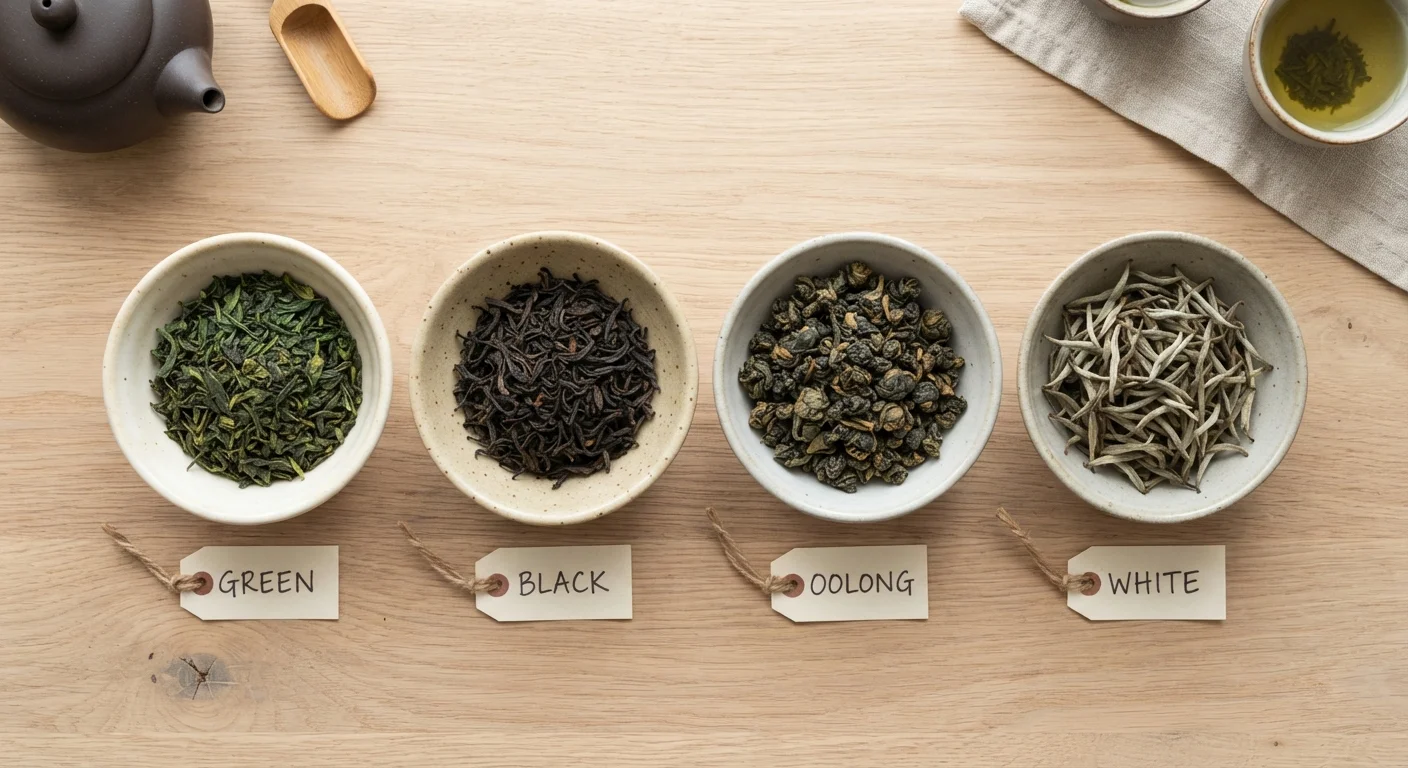
Walk through any well-stocked tea aisle and you'll find shelves of green, black, oolong, and white teas, each marketed as if it came from an entirely different plant. In fact, they all come from the same species: Camellia sinensis, an evergreen shrub native to East and Southeast Asia. What separates them is not origin - it's transformation. After the leaves are harvested, producers make deliberate choices about drying, heating, rolling, and oxidation. Those choices determine everything: the color of the brewed liquid, the aroma, the flavor, and even how much caffeine ends up in your cup.
Understanding this shared origin makes it far easier to navigate tea menus, packaging, and brewing guides. If you've ever wondered why green tea tastes grassy while black tea tastes malty, the answer lies not in the garden but in the processing facility. Reading a tea label becomes much simpler once you understand how each category is made.
The Role of Oxidation
Oxidation is the central concept that divides the four major tea types. When a tea leaf is damaged - bruised, rolled, or cut - enzymes within the leaf react with oxygen in the air. This is the same basic process that turns a sliced apple brown. In tea, controlled oxidation develops darker colors, richer aromas, and more complex flavors. Preventing oxidation keeps the leaf closer to its fresh, green state.
Producers control oxidation primarily through heat. Applying heat early in processing (through steaming or pan-firing) deactivates the enzymes and locks in a greener, fresher character. Allowing the leaf to sit and oxidize before applying heat pushes the tea toward deeper, darker profiles. Adjusting how long and how thoroughly this process runs places a tea anywhere on the spectrum from minimally processed white tea to fully oxidized black tea.
| Green Tea | White Tea | Oolong Tea | Black Tea | |
|---|---|---|---|---|
| Oxidation level | Minimal (0-5%) | Minimal, natural wither | Partial (15-85%) | Full (100%) |
| Primary processing step | Pan-firing or steaming | Withering and air-drying | Rolling and partial oxidation | Rolling and full oxidation |
| Flavor profile | Grassy, vegetal, umami | Delicate, floral, lightly sweet | Floral to roasted, complex | Malty, bold, sometimes astringent |
| Liquor color | Pale green to yellow | Pale yellow to ivory | Gold to amber | Deep amber to reddish-brown |
| Relative caffeine | Moderate | Low to moderate | Moderate | Moderate to high |
| Key producing regions | China, Japan | Fujian (China) | China, Taiwan | India, Sri Lanka, China |
The water you use to brew any of these teas also matters more than most people realize. Water quality affects extraction in ways that can enhance or mute the subtleties each processing method creates.
Green and White: The Least Transformed
Green tea is produced by halting oxidation almost immediately after harvest. In China, leaves are typically pan-fired in large woks; in Japan, steaming is more common. These two methods produce noticeably different results - pan-fired Chinese green teas (such as Longjing) tend to have a toasty, nutty quality, while Japanese steamed varieties (such as Sencha or Matcha) lean grassy and vegetal with a distinctive umami character. Caffeine content in green tea is moderate.
White tea is the least processed of the four. Young leaves and buds - often still covered in fine silvery hairs - are simply harvested and allowed to wither and dry slowly, with minimal human intervention. The result is a pale, delicately flavored tea with subtle sweetness and floral notes. Because no rolling or bruising occurs, oxidation is minimal even though heat is not applied early. White tea is often associated with the Fujian province of China, where varieties like Silver Needle and White Peony originated.
Brew Temperature Matters Across Types
Each tea type is sensitive to water temperature in different ways. Green and white teas are particularly vulnerable to high heat - water above about 80°C can make them taste bitter or grassy in an unpleasant way. Oolong teas generally tolerate temperatures between 85°C and 95°C, while black teas are typically brewed at a full rolling boil (around 95-100°C). Starting with the right temperature preserves the flavors the processing was designed to create.
Oolong and Black: Deeper into Oxidation
Oolong tea occupies the broad middle ground between green and black tea, with oxidation levels ranging from roughly 15% to 85% depending on the style. Lightly oxidized oolongs - like certain Taiwanese high-mountain teas - share the floral freshness of green tea. Heavily oxidized oolongs, such as Wuyi rock teas from Fujian, develop roasted, woody, and even chocolatey notes. Most oolongs also undergo repeated rolling and shaping, which influences how flavors develop during brewing. This range makes oolong one of the most diverse tea categories.
Black tea is fully oxidized. After withering, the leaves are rolled to break down their cell structure, then allowed to oxidize completely before being dried. The result is a tea with robust, malty, sometimes astringent flavors, a deep amber or reddish-brown liquor, and generally the highest caffeine levels among the four types (though this varies by cultivar and growing conditions). Styles range from the brisk, citrusy character of Darjeeling first-flush teas to the smooth, bold profile of Assam.
~3,000
Recognized tea varieties worldwide
The Food and Agriculture Organization of the United Nations has noted that thousands of named tea varieties exist globally, all derived from Camellia sinensis.
~6 million tonnes
Annual global tea production
According to FAO data, global tea production has consistently exceeded six million metric tonnes in recent years, with China and India as the largest producers.