
What Fibre Actually Does in the Body
Most people associate fibre with digestive regularity - and that connection is real. But fibre's role in the body extends considerably further than keeping things moving.
When you eat plant foods, the fibre they contain travels largely undigested through the small intestine and arrives intact in the large intestine (colon). There, it becomes fuel for the trillions of bacteria that make up your gut microbiome. These bacteria ferment soluble fibre, producing short-chain fatty acids (SCFAs) - compounds that help maintain the intestinal lining, regulate immune responses, and may even influence mood via the gut-brain connection.
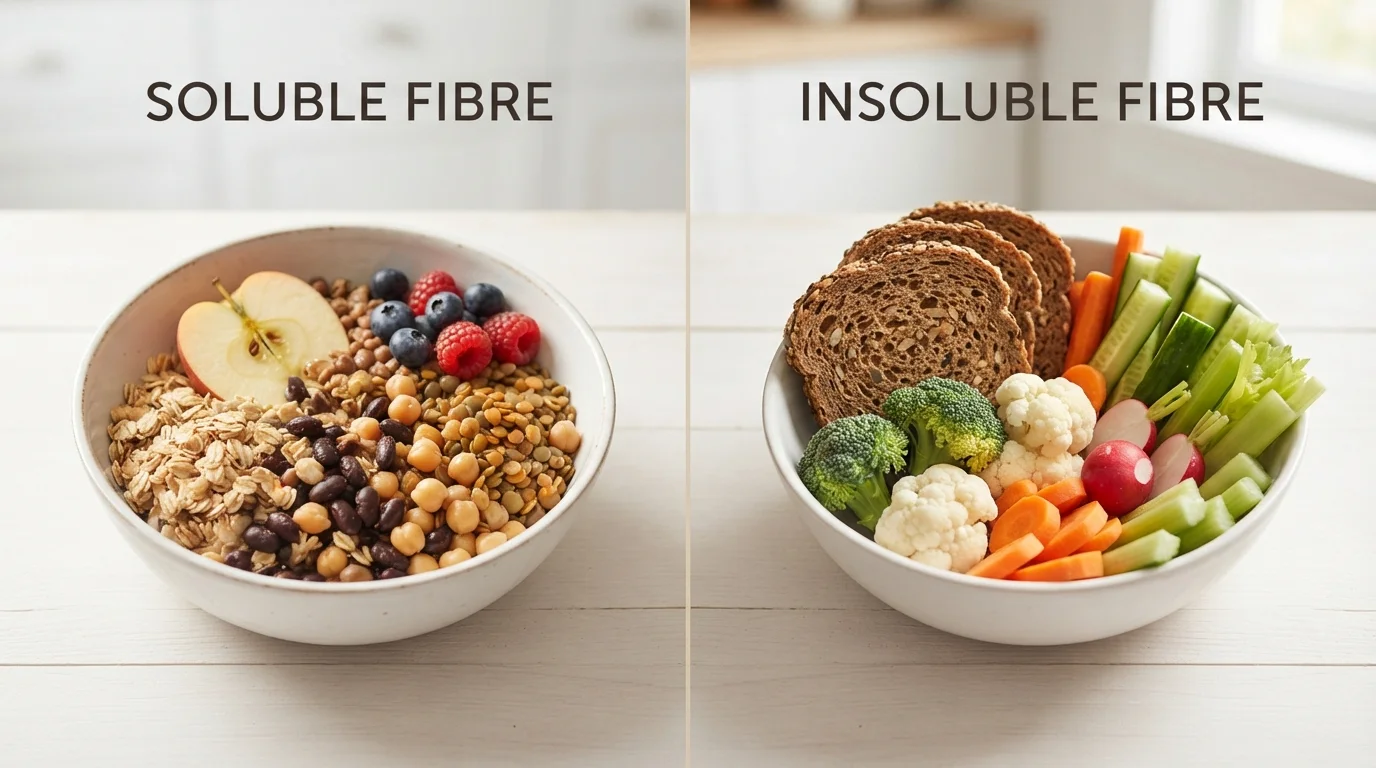
Insoluble fibre, on the other hand, adds bulk and moisture to stool, which speeds transit through the colon and supports regularity. The two types work together, which is why eating a variety of plant foods matters more than chasing any single ingredient. Learn how soluble and insoluble fibre differ and which everyday foods deliver each kind.
~17g
Average daily fibre intake among adults
Research from multiple European countries suggests average adult fibre consumption sits well below the 25-30g daily recommendation.
8g
Fibre per 100g of cooked lentils
Legumes like lentils and chickpeas are among the most concentrated everyday sources of dietary fibre available.
25-30g
Recommended daily fibre intake for adults
This is the broadly accepted guidance across major dietary health organisations; individual needs may vary.
The Fibre Gap: Why Most People Fall Short
Across most high-income countries, average fibre intake is roughly half the recommended amount. The reasons are structural as much as behavioural. Highly processed foods - which now make up a large proportion of many people's diets - have had most of their fibre removed during manufacturing. White flour, for instance, contains a fraction of the fibre found in whole wheat.
Ultra-processed foods are also engineered to be calorie-dense and easy to eat in volume, leaving less room on the plate for fibre-rich alternatives like beans, lentils, and vegetables. This is sometimes called the displacement effect: convenience foods don't just add empty calories - they crowd out the foods that would otherwise deliver fibre and micronutrients.
Fibre Is Found Only in Plant Foods
Meat, fish, dairy, and eggs contain no dietary fibre. All fibre in the human diet comes from plants - grains, legumes, vegetables, fruit, nuts, and seeds. This is why diets that heavily restrict plant foods, for any reason, often lead to inadequate fibre intake. It doesn't mean plant-exclusive eating is required - but plant foods must feature consistently.
Understanding this broader dietary context matters. Eating patterns - not individual foods - determine overall nutritional quality, which is why incremental shifts toward more whole plant foods tend to be more effective than focusing on any one nutrient in isolation.
Fibre, Blood Sugar, and Long-Term Health
One of fibre's most practically significant roles is its effect on blood glucose. Soluble fibre dissolves in water to form a viscous gel in the gut, which slows the digestion of carbohydrates and the absorption of glucose into the bloodstream. This moderating effect on blood sugar is why high-fibre meals tend to produce a more gradual rise and fall in energy rather than a sharp spike.
This mechanism connects fibre to a broader picture of long-term metabolic health. Diets consistently higher in fibre are associated - in large epidemiological studies - with lower risks of type 2 diabetes, cardiovascular disease, and colorectal cancer. These are population-level observations, not guarantees for any individual, and the relationship between diet and disease is always shaped by many overlapping factors.
“The evidence for dietary fibre and health is among the most consistent in nutritional epidemiology. Populations eating more fibre, from a variety of plant sources, show lower rates of several major chronic diseases.”
— Public Health Nutrition Research Community, Consensus view reflected in major dietary guidelines globally
For readers interested in how fibre interacts with blood sugar more specifically, the glycaemic index offers one useful lens - though it only tells part of the story.
This article provides general nutritional information and is not medical advice. If you have a health condition or are considering significant dietary changes, consult a qualified healthcare professional.
Practical Ways to Eat More Fibre
Closing the fibre gap doesn't require a dramatic overhaul. Most practical gains come from a handful of consistent habits.
- Switch to whole grains: Replacing white bread, white rice, and refined pasta with their wholegrain equivalents is one of the simplest ways to substantially increase daily fibre.
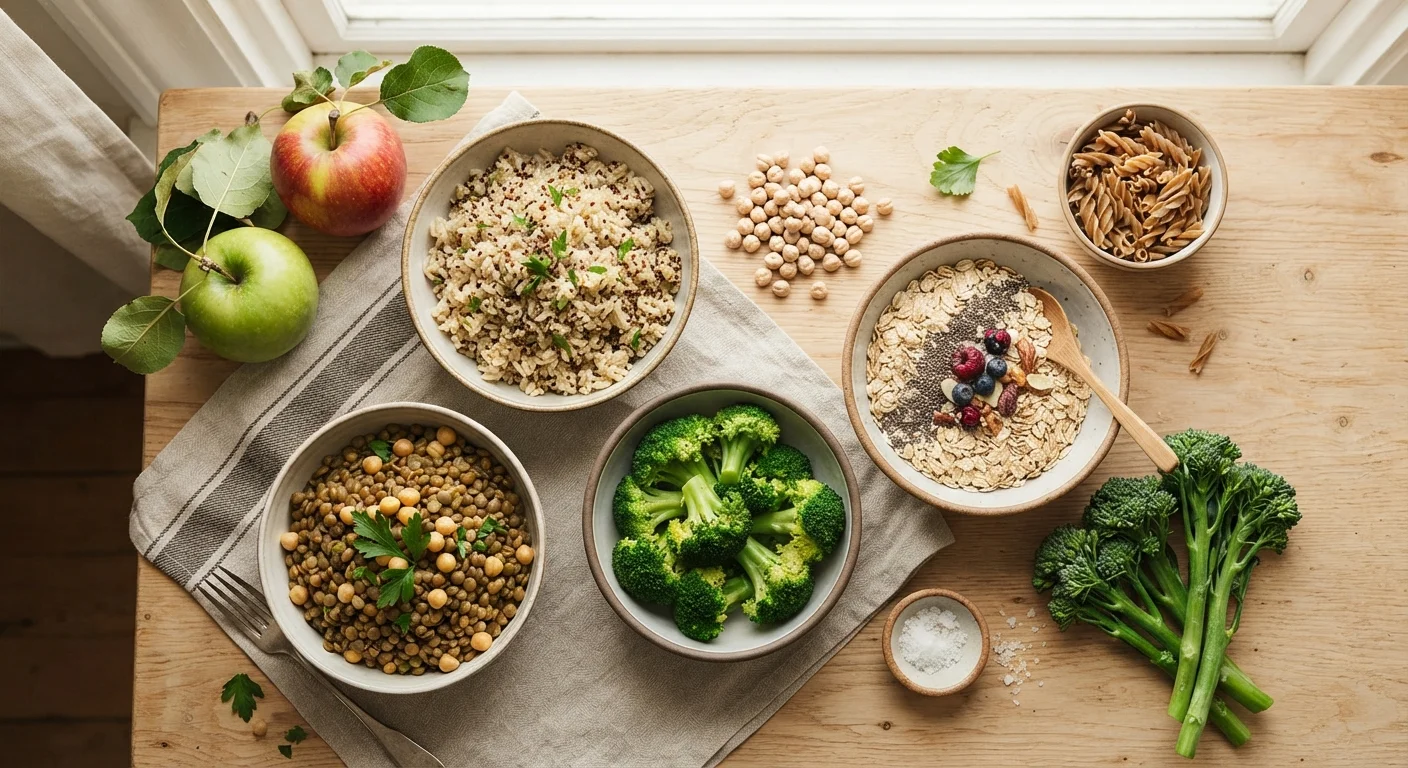
- Add legumes regularly: Lentils, chickpeas, kidney beans, and edamame are among the most fibre-dense foods available. Adding them to soups, salads, or grain dishes three to four times a week makes a measurable difference.
- Keep skins on: The skin of potatoes, apples, pears, and many other fruits and vegetables contains a significant proportion of their total fibre. Washing and eating them unpeeled is an easy win.
- Build up gradually: A sudden large increase in fibre can cause gas and bloating as gut bacteria adjust. Increasing intake over several weeks - and drinking adequate water - allows the digestive system to adapt. Hydration plays a key supporting role when fibre intake rises.
Build Up Fibre Slowly for Comfort
If your current diet is low in fibre, don't try to reach the recommended amount overnight. Add one or two new fibre-rich foods per week and drink an extra glass of water daily. This gradual approach gives your gut microbiome time to adjust and significantly reduces the bloating and gas that often put people off high-fibre eating.
One common misconception is that fibre supplements can fully replace food sources. Whole plant foods deliver fibre alongside vitamins, minerals, and phytonutrients that work together. Supplements may help some people meet targets but are not an equivalent substitute for dietary variety. Several nutrition myths around supplements and single-nutrient thinking don't hold up when examined against the broader evidence.