
What Happens Inside the Mill
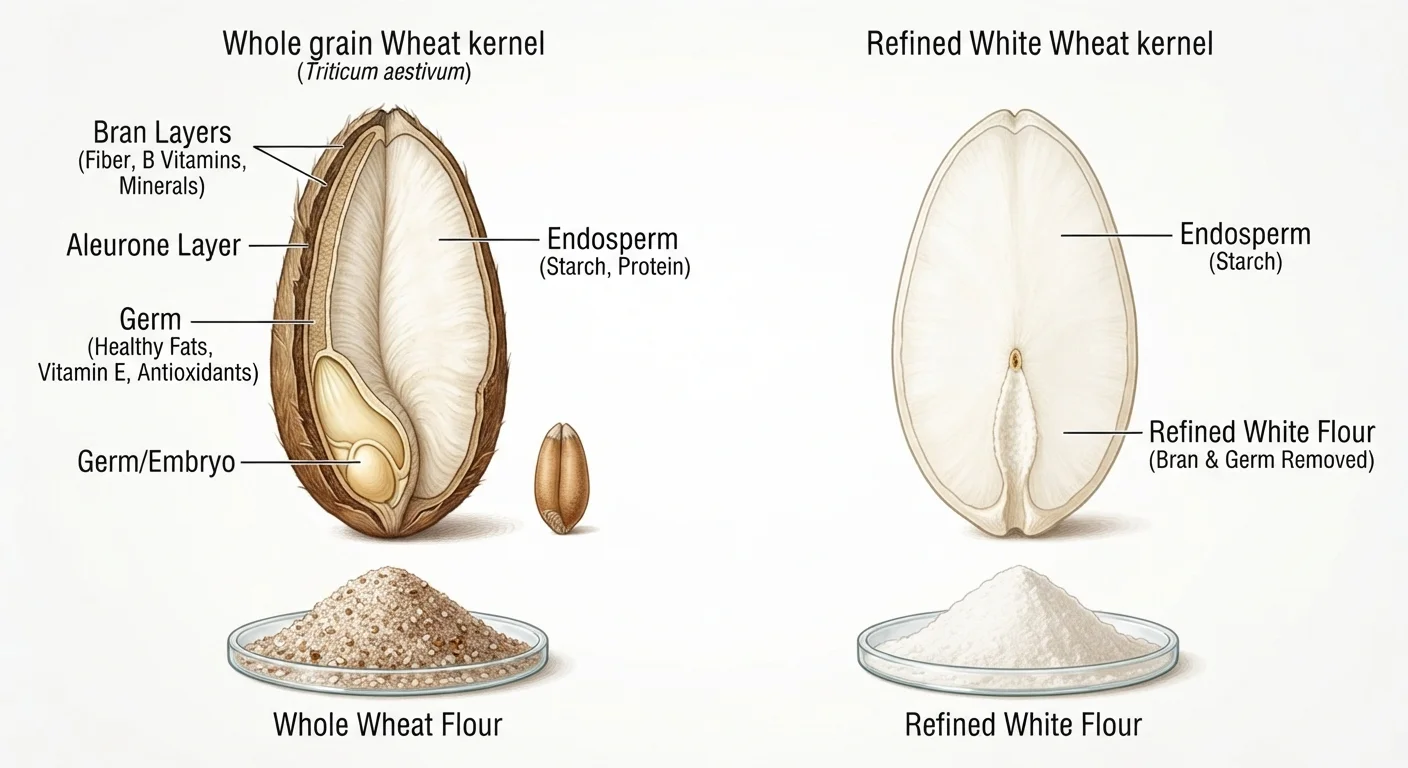
A grain kernel has three distinct parts: the outer bran, the nutrient-rich inner germ, and the starchy central endosperm. Whole grains, by definition, keep all three layers intact - whether they arrive as whole wheat bread, oats, brown rice, or quinoa.
Refining changes that structure dramatically. During milling, the bran and germ are mechanically separated and removed, leaving behind almost pure endosperm. This produces the lighter colour and softer texture associated with white flour, white rice, and many common bread products. The trade-off is nutritional: the bran holds the majority of dietary fibre, and the germ is the primary source of vitamin E, B vitamins such as thiamine and folate, and essential minerals including iron, zinc, and magnesium.
This is not a minor adjustment. Research published in peer-reviewed nutrition journals indicates that milling can remove roughly 75% or more of a grain's fibre content, along with substantial proportions of several micronutrients. That loss has measurable downstream effects on how the body processes the food. See the comparison table below for a structured overview.
| Criterion | Whole Grains | Refined Grains |
|---|---|---|
| Kernel layers retained | Bran, germ, endosperm | Endosperm only |
| Dietary fibre | High | Low (mostly removed) |
| B vitamins | Naturally present | Largely removed; some restored via enrichment |
| Vitamin E | Present (from germ) | Mostly absent |
| Minerals (iron, zinc, magnesium) | Good natural source | Significantly reduced |
| Phytochemicals & antioxidants | Present | Largely removed; not restored |
| Glycaemic response | Generally lower and slower | Generally higher and faster |
| Shelf life | Shorter (germ oils can go rancid) | Longer |
| Texture | Denser, chewier | Lighter, finer |
Enrichment: A Partial Fix
Many refined grain products sold in Germany and across the EU are enriched - meaning a handful of nutrients stripped during milling are added back artificially. Thiamine, riboflavin, niacin, folic acid, and iron are the most commonly restored. Enrichment meaningfully reduces nutritional deficiencies at a population level, which is why public health authorities have long supported mandatory fortification policies.
However, enrichment does not make refined grains equivalent to whole grains. Fibre is not restored. Neither are the majority of phytochemicals, antioxidants, and lignans present in the bran and germ. These compounds are the subject of ongoing research into their role in reducing chronic disease risk.
What Enrichment Does and Doesn't Restore
Enrichment programmes add back specific B vitamins and iron to refined grain products, helping prevent deficiency-related conditions such as folate-related neural tube defects. However, fibre, vitamin E, and the full spectrum of phytochemicals found in the bran and germ are not part of standard enrichment. Enriched refined grains are nutritionally improved relative to non-enriched versions, but they are not nutritionally equivalent to whole grains.
For practical everyday guidance, the overall pattern of your diet matters more than any single grain choice. Occasional refined grain consumption within an otherwise varied, fibre-rich diet is unlikely to drive meaningful health risk.
How Each Grain Type Affects the Body
Because refined grains are largely starch with relatively little fibre, they digest faster. This produces a more rapid rise in blood glucose compared with equivalent portions of whole grains. For most healthy adults this is not inherently harmful in moderate amounts, but higher consistent intake of refined, rapidly digested carbohydrates is associated in large cohort studies with elevated risk of type 2 diabetes and cardiovascular disease.
Whole grains slow digestion through their fibre content, contributing to longer satiety and a more gradual glucose response. Their fibre also acts as a prebiotic - feeding beneficial gut bacteria. Gut microbiome research is still evolving, but the relationship between fibre intake and gut health has robust foundational evidence.
~25%
Fibre remaining after typical milling
Research in nutrition science indicates standard milling removes roughly 75% or more of the grain's original fibre content.
3+ servings/day
Whole grain intake linked to lower CVD risk
A 2016 meta-analysis in the BMJ found that three or more daily whole grain servings was associated with meaningfully lower cardiovascular disease risk.
~30%
Lower type 2 diabetes risk association
Cohort studies cited by Harvard T.H. Chan School of Public Health suggest higher whole grain consumption is associated with around 20-30% lower risk of type 2 diabetes.
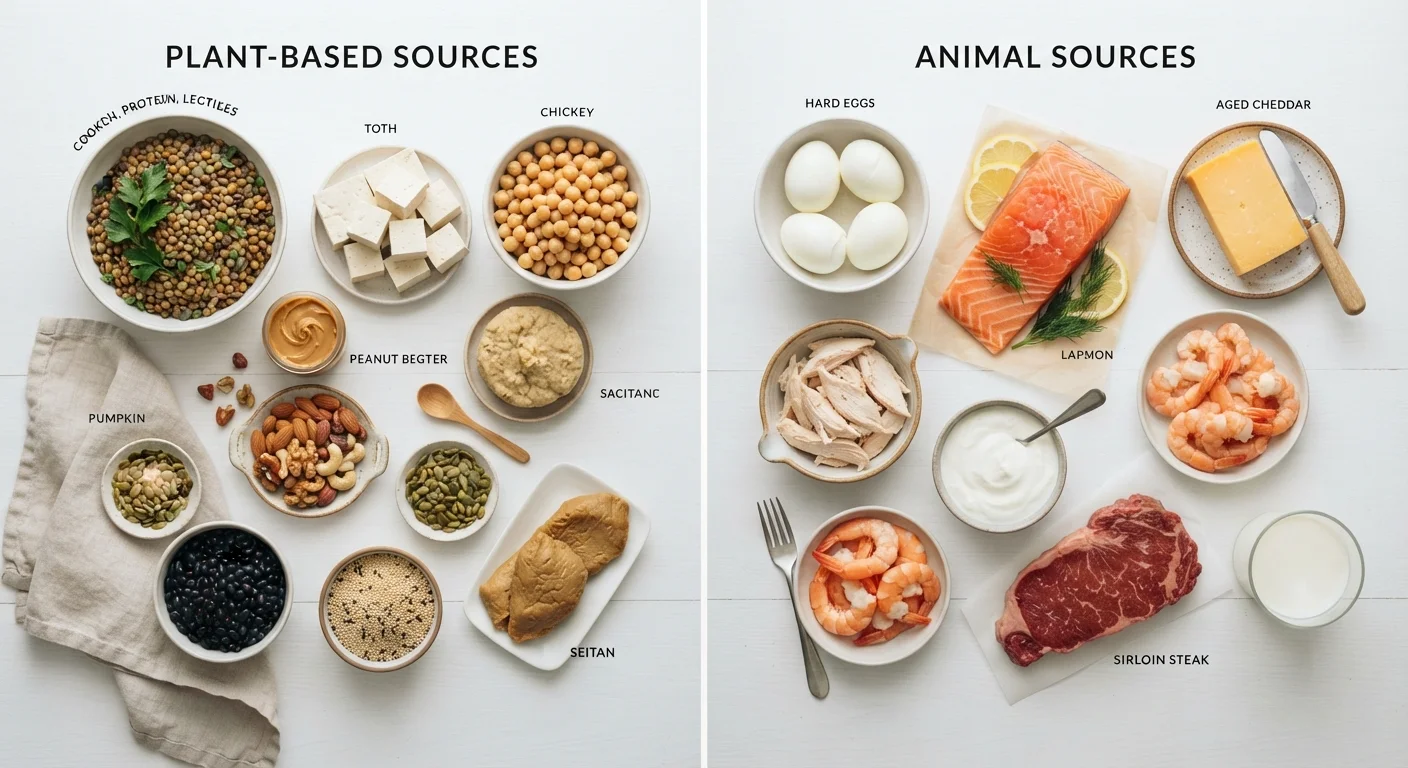
Protein source also plays a role in how a grain-based meal lands nutritionally. For context on how protein choices interact with grain-heavy diets, see the comparison of plant and animal proteins. Similarly, understanding how added sugar differs from naturally occurring sugar helps clarify why many refined grain products - which often contain both - merit closer label-reading.
Making Practical Grain Choices
Switching all grain foods to whole grain varieties at once is not required - and for some people, an abrupt increase in fibre can cause temporary digestive discomfort. A gradual shift, replacing one or two staple products at a time (white rice with brown, white bread with a whole grain loaf), is a practical and well-tolerated approach for most adults.
Reading ingredient labels matters here. Products labelled "multigrain" or "wheat bread" are not automatically whole grain. Look for whole wheat, whole oat, or another whole grain listed as the first ingredient. For a broader lens on food quality beyond individual ingredients, the comparison of whole foods and ultra-processed foods provides useful additional context.
As always, individuals with specific health conditions - including gastrointestinal disorders, coeliac disease, or diabetes - should discuss grain choices with a qualified healthcare professional rather than applying general guidance to their personal situation.
This article provides general nutrition information for educational purposes and does not constitute medical or dietary advice. Consult a qualified healthcare professional for guidance tailored to your individual health needs.