
Defining the Two Categories
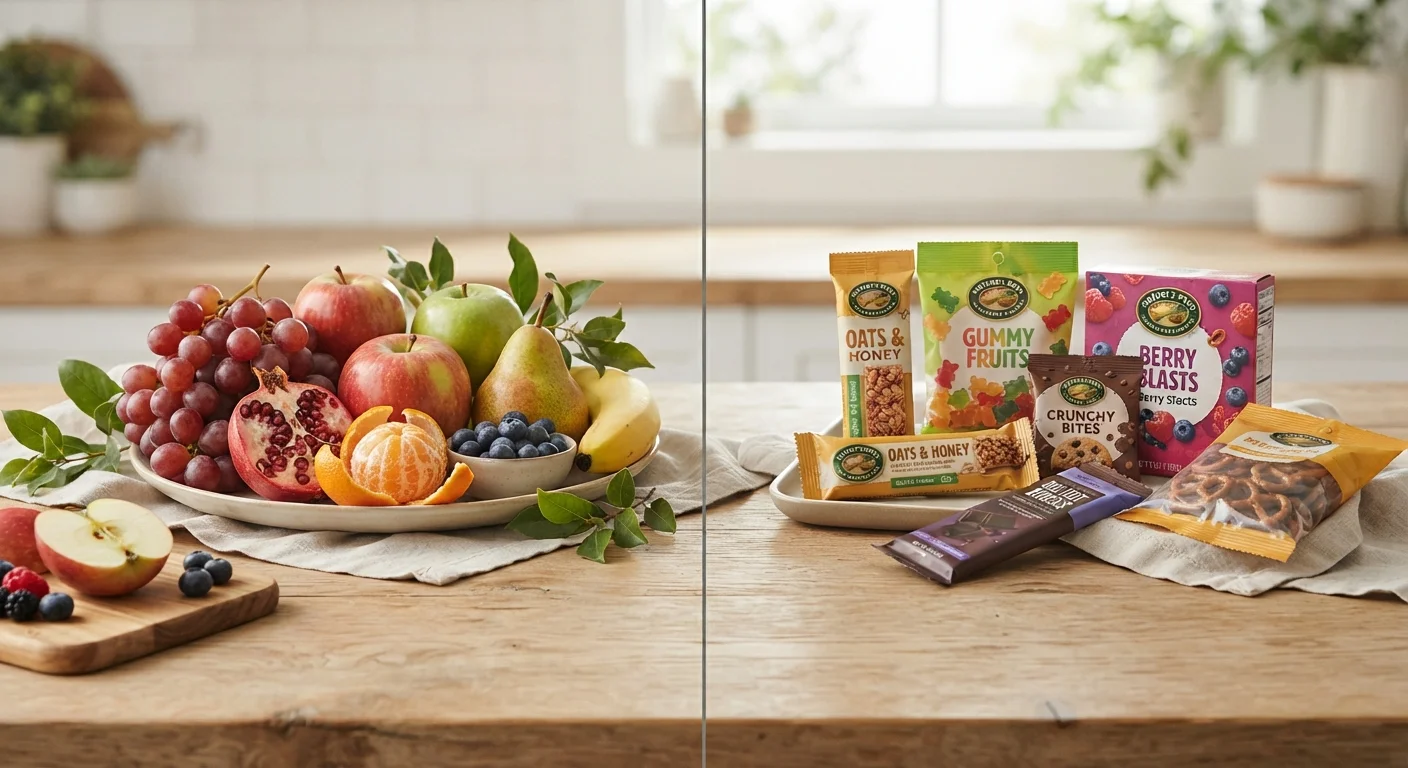
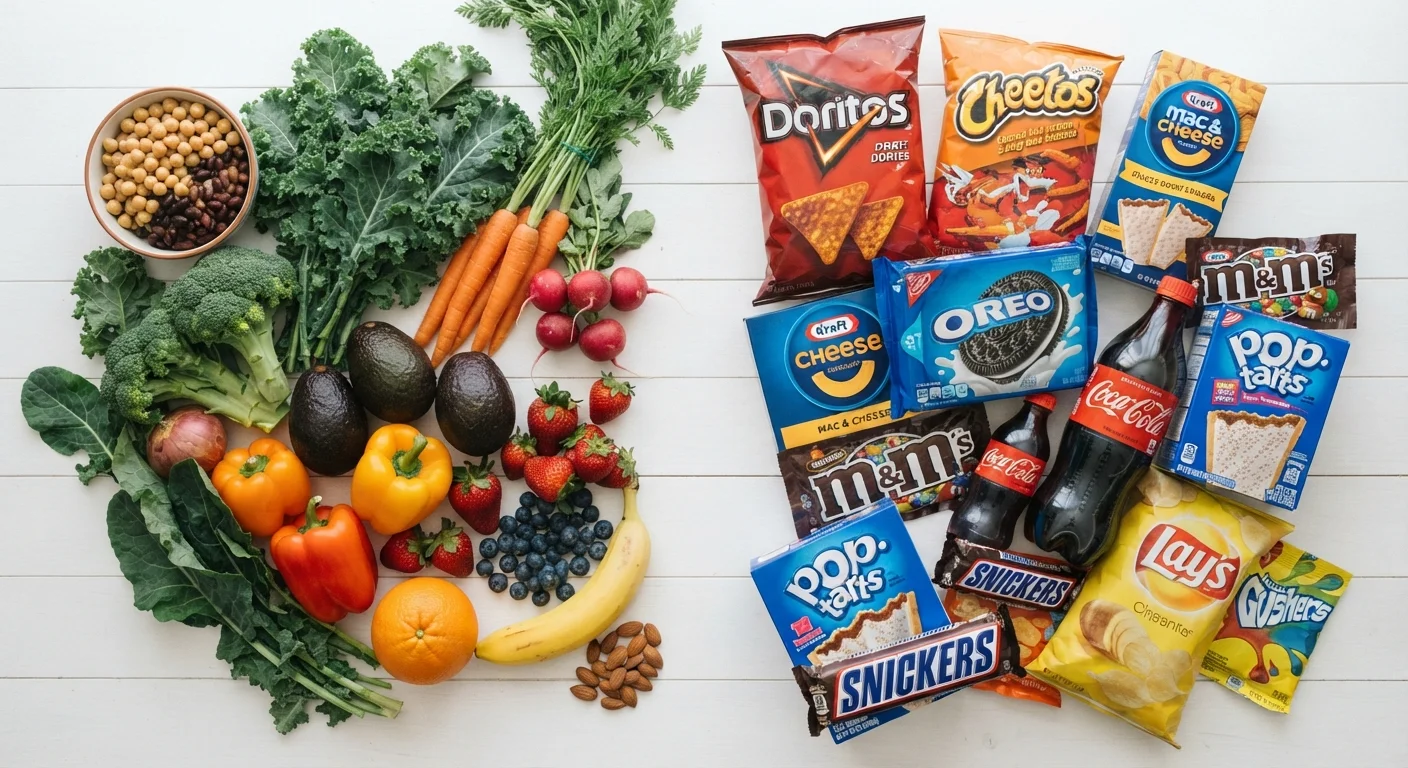
The term whole foods refers to foods that are consumed close to their natural state - think fresh vegetables, fruit, legumes, eggs, and unprocessed meat. They haven't been significantly altered from how they exist in nature, and their original nutrient structure remains largely intact.
Ultra-processed foods are defined differently. The NOVA classification system, developed by Brazilian researchers and widely used in nutrition science, places foods into four groups based on the extent and purpose of processing. Ultra-processed foods (Group 4) are industrial formulations made mostly or entirely from substances derived from foods - such as oils, fats, starches, and sugars - combined with additives like emulsifiers, flavor enhancers, and colorings. Examples include packaged snacks, instant noodles, carbonated soft drinks, and mass-produced bread.
The key distinction isn't simply how many ingredients a food has, but whether it has been fundamentally reformulated using industrial processes not replicable in a home kitchen.
Nutrient Density: What Each Delivers
Whole foods tend to deliver what nutritionists call a nutrient matrix - nutrients that work in combination rather than isolation. An apple, for instance, provides not just vitamin C and sugar but also fiber, polyphenols, and water, all of which influence how the body processes the whole package.
Ultra-processed foods are often calorie-dense but nutrient-poor. Many are engineered to be highly palatable - formulated to hit precise combinations of salt, fat, and sugar that stimulate appetite. Vitamins and minerals may be added back after processing (called fortification), but this doesn't fully replicate what was originally present.
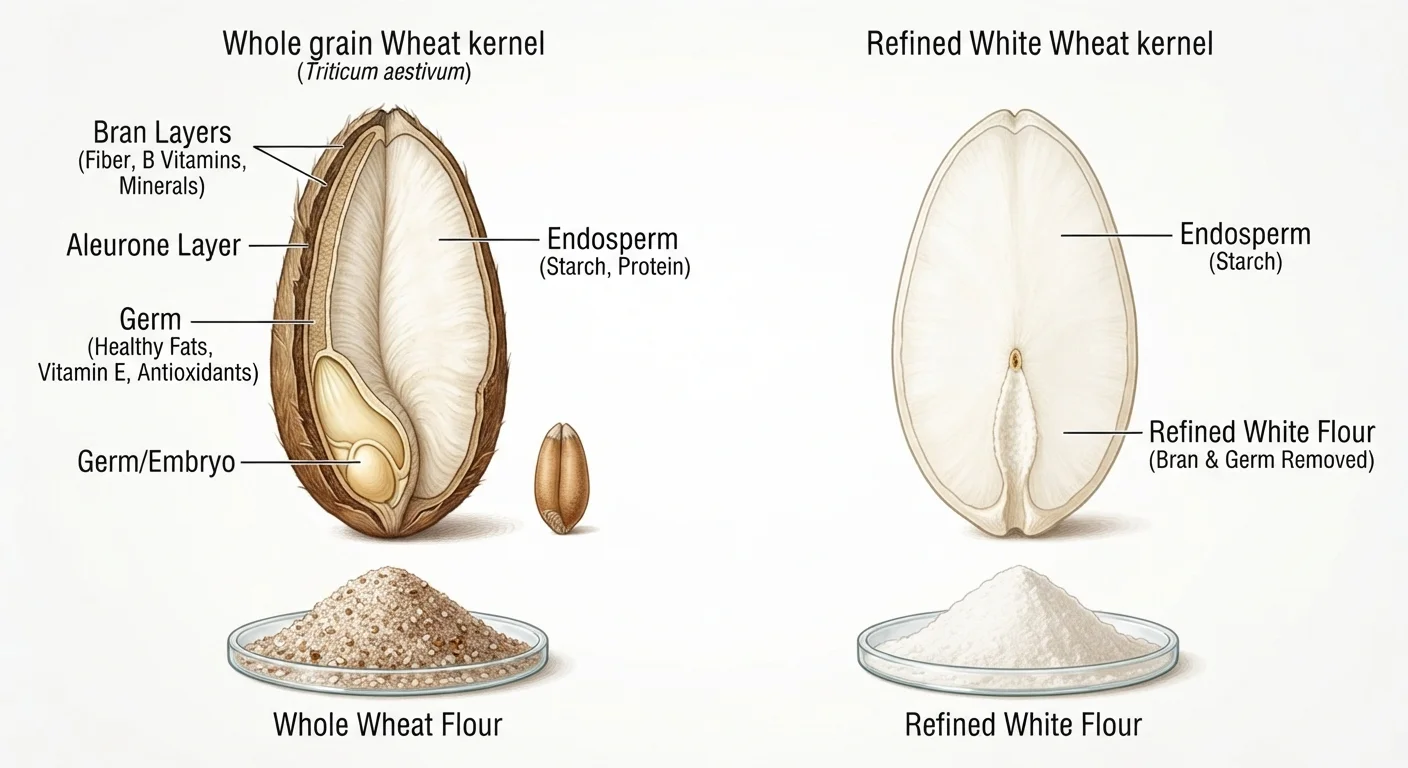
Research published in journals including The BMJ and Cell Metabolism has found that people eating diets high in ultra-processed foods tend to consume more calories overall, partly because these foods are less satiating per calorie. For a deeper look at how grain processing specifically affects nutrition, see our guide to whole versus refined grains.
| Whole Foods | Ultra-Processed Foods | |
|---|---|---|
| Nutrient density | High - vitamins, minerals, fiber intact | Often low - many nutrients removed or absent |
| Fiber content | Naturally present | Frequently removed during processing |
| Additives | None or minimal | Often numerous - emulsifiers, flavors, preservatives |
| Satiety per calorie | Generally higher | Generally lower - engineered for palatability |
| Preparation effort | Moderate - requires cooking | Low - ready to eat or quickly prepared |
| Research-linked health outcomes | Associated with better long-term markers | Associated with higher disease risk at high intake |
What the Research Actually Shows
Large observational studies - including cohorts tracking hundreds of thousands of adults over years - have found consistent associations between high ultra-processed food consumption and elevated risks of cardiovascular disease, type 2 diabetes, and certain cancers. A 2019 study in The BMJ following over 100,000 French adults found a 10% increase in ultra-processed food consumption was associated with a 12% higher risk of overall cancer, though researchers noted this was an association, not a proven cause.
A randomized controlled trial published in Cell Metabolism (2019) offered stronger causal insight: when participants were given unrestricted access to either an ultra-processed or unprocessed diet for two weeks, those on the ultra-processed diet consumed significantly more calories and gained weight, even though meals were matched for total energy, sugar, fat, and fiber on paper.
57%
Share of calories from ultra-processed foods in average US diet
Research published in BMJ Open estimated that ultra-processed foods account for over half of total daily calorie intake among US adults.
~500 kcal
Extra daily calories on ultra-processed diet
A 2019 randomized controlled trial in Cell Metabolism found participants consumed roughly 500 more calories per day when eating an ultra-processed diet versus an unprocessed one.
It's important to frame these findings carefully. Observational studies cannot fully account for lifestyle factors associated with ultra-processed food consumption, such as lower income or less access to fresh food. Still, the convergence of evidence across study types is notable.
Understanding why overall eating patterns matter more than single foods is essential context here - no single food category defines dietary health on its own.
Additives: Cause for Concern or Manageable Risk?
Ultra-processed foods contain additives that whole foods do not - emulsifiers, artificial sweeteners, preservatives, and colorings among them. Regulators in the US and EU evaluate these substances individually for safety before approval, and most are considered safe at typical exposure levels.
What is less well understood is the cumulative, long-term effect of consuming many additives simultaneously - sometimes called the cocktail effect. Some animal studies have raised questions about certain emulsifiers and gut microbiome health, but human evidence remains limited and preliminary.
Additive Research Is Still Evolving
Some emerging studies on food additives - particularly certain emulsifiers - have raised questions about gut health effects in animal models. However, this research has not yet established clear causal harm in humans at typical dietary exposures. Avoid interpreting early-stage findings as definitive proof of danger, and stay alert to how preliminary findings are sometimes overstated in media coverage.
The distinction between added and naturally occurring sugars is particularly relevant here, since added sugars are a common ingredient in ultra-processed foods and are treated differently by current nutritional guidance than sugars naturally present in fruit or dairy.
For readers thinking about protein quality across food types, our comparison of plant and animal proteins offers useful context on how processing affects protein nutrition specifically.
Making Practical Sense of the Evidence
Most nutrition researchers and public health bodies - including the World Health Organization - recommend diets built primarily around whole and minimally processed foods. This doesn't mean ultra-processed foods must be entirely eliminated; rather, they are best understood as occasional rather than foundational components of a diet.
Practical strategies include building meals around vegetables, legumes, whole grains, and unprocessed proteins, and reading ingredient lists to identify formulation-heavy products. If time is a barrier, practical nutrition strategies for busy weekdays can help bridge the gap between ideal choices and real-life constraints.
Balance and sustainability matter. A diet that relies heavily on whole foods most of the time - while allowing flexibility - is both achievable and supported by the bulk of current evidence.
This article is for general informational and educational purposes only and does not constitute medical or nutritional advice. Consult a qualified healthcare professional for guidance specific to your health situation.