

How Each Technique Works
Despite sharing the goal of stress relief, mindfulness meditation and progressive muscle relaxation (PMR) operate through very different mechanisms.
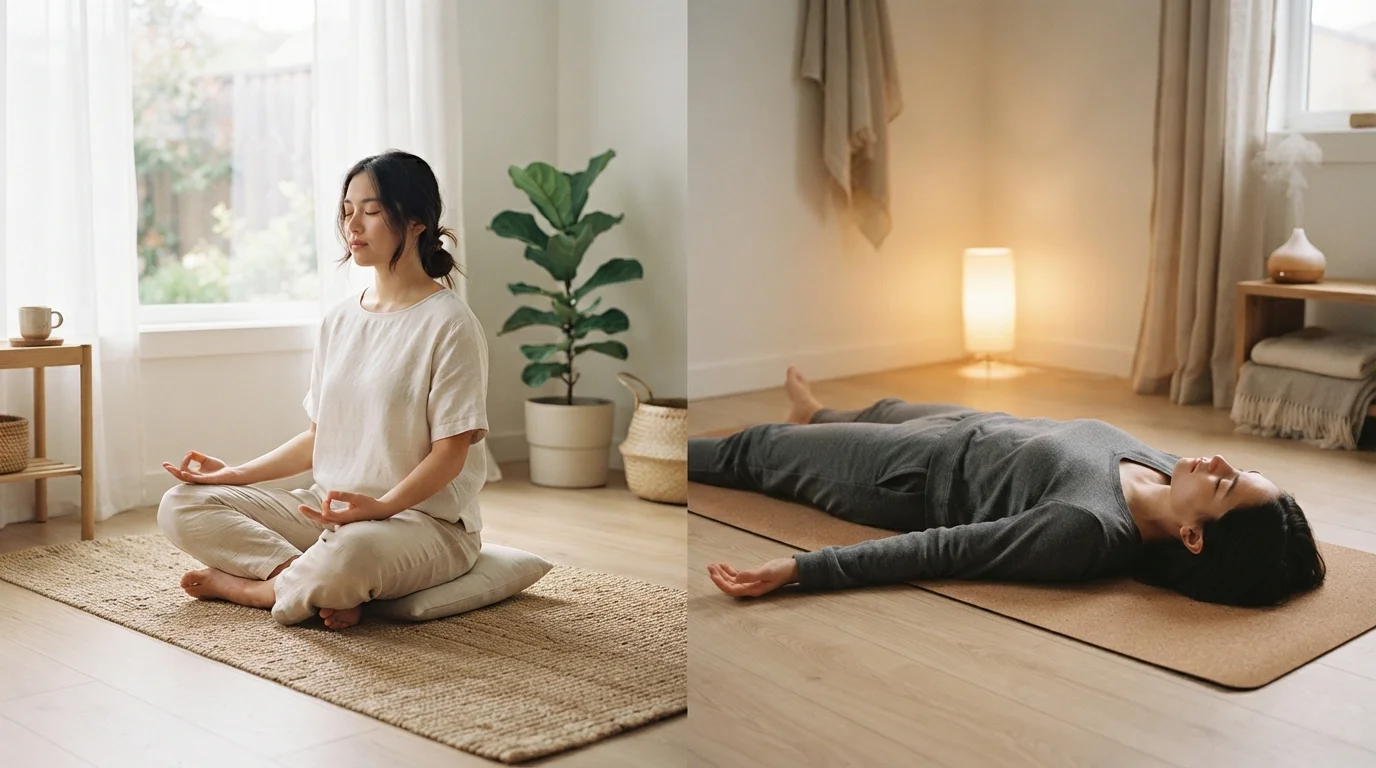
Mindfulness meditation involves directing attention deliberately-usually to the breath, bodily sensations, or sounds-and noticing when the mind wanders, then gently returning focus. The practice cultivates a non-judgmental awareness of the present moment. Over time, this trains the prefrontal cortex's ability to regulate the amygdala, the brain's alarm centre, which is heavily involved in the stress response. Research published in journals such as JAMA Internal Medicine has found mindfulness-based programmes associated with reductions in anxiety, depression, and pain.
Progressive muscle relaxation, developed by physician Edmund Jacobson in the 1920s, works from the body outward. Practitioners systematically tense individual muscle groups for a few seconds, then release them, moving through the body from feet to face (or vice versa). The contrast between tension and release teaches the nervous system to recognise-and let go of-physical stress more readily. PMR activates the parasympathetic nervous system, lowering heart rate and cortisol levels.
For a broader grounding in how stress and mental wellness interact, see our introduction to core mental wellness concepts.
| Criterion | Mindfulness Meditation | Progressive Muscle Relaxation |
|---|---|---|
| Primary focus | Attention and mental awareness | Physical tension and release |
| Mechanism | Trains cognitive regulation of stress | Activates parasympathetic nervous system |
| Typical session length | 5-20 minutes | 15-20 minutes |
| Beginner ease | Moderate - takes patience | High - step-by-step structure |
| Speed of noticeable effect | Weeks of consistent practice | Often within a few sessions |
| Best evidence for | Anxiety, rumination, long-term resilience | Acute tension, sleep quality, blood pressure |
| Equipment needed | None (audio guides optional) | None (audio guides helpful) |
| Can combine with other techniques? | Yes - pairs well with PMR | Yes - pairs well with mindfulness |
What the Evidence Suggests
Both techniques have solid research foundations, though the depth and type of evidence differs somewhat.
Mindfulness-based stress reduction (MBSR)-an eight-week structured programme-has been studied extensively since the 1980s. Meta-analyses consistently find moderate effect sizes for reducing anxiety and psychological distress in healthy adults and various clinical populations. The benefits tend to strengthen with consistent practice over weeks.
PMR has a comparably long research history. Randomised controlled trials have shown it effective for reducing state anxiety, lowering blood pressure, and improving sleep quality, often with results appearing after just a few sessions. This quicker onset makes it particularly useful for people new to relaxation practices.
~38%
Reduction in anxiety scores with MBSR
A meta-analysis in JAMA Internal Medicine found mindfulness programmes associated with approximately 38% reduction in anxiety measures across multiple trials.
~45%
Participants reporting improved sleep with PMR
Multiple RCTs on PMR in stressed adult populations have found roughly 40-50% of participants reporting meaningful improvements in sleep quality after regular practice.
8 weeks
Standard MBSR programme duration
The widely researched Mindfulness-Based Stress Reduction programme, developed at the University of Massachusetts, runs over eight weeks with weekly group sessions.
Crucially, both work best as ongoing practices rather than one-off interventions. For more on how stress physiology disrupts sleep and what breaks that cycle, our article on why stress keeps you awake offers detailed context.
Practical Considerations: Starting Out
Choosing between the two often comes down to personal temperament and what you find tolerable as a beginner.
Mindfulness meditation can initially feel frustrating-sitting with a restless mind and repeatedly returning attention takes practice. Many people benefit from guided audio sessions or apps during the early weeks. Sessions can be as short as five minutes, though ten to twenty minutes daily yields stronger outcomes in most studies.
PMR gives immediate, concrete feedback: you tense a muscle, you release it, and you feel the difference. This predictability suits people who find open-ended meditation difficult. A full PMR session typically takes fifteen to twenty minutes. Audio guides are widely available and straightforward to follow.
Both practices integrate well into evening routines. Our guide to evening habits that support a calmer night outlines how relaxation techniques fit within a broader wind-down sequence.
Using Both Techniques Together
Mindfulness and PMR are not mutually exclusive. Some practitioners begin a session with PMR to discharge physical tension, then transition into mindful awareness for the remaining minutes. This combined approach has been used in clinical settings and may offer complementary benefits. Experiment with sequencing to find what feels most effective for you.
It is worth noting that neither technique requires special equipment or financial outlay-both are accessible to most adults. If you experience chronic anxiety, panic disorder, or trauma-related symptoms, speak with a qualified mental health professional before beginning either practice, as adaptations may be needed.
For those interested in building habits that extend beyond a single technique, everyday practices that strengthen mental resilience offers a curated look at complementary approaches.
This article is for general informational purposes only and does not constitute medical or psychological advice. Please consult a qualified healthcare professional for guidance tailored to your personal health circumstances.