Why Your Evening Shapes Your Night
Sleep doesn't start the moment your head hits the pillow - it begins hours earlier, shaped by the signals your environment and behaviour send to your nervous system. The transition from wakefulness to restorative sleep is a biological process, not simply a switch you can flip. Understanding this makes evening habits far more than feel-good rituals; they become practical tools rooted in sleep science.
For a broader foundation on what supports consistently good sleep, see the complete guide to sleep hygiene, which covers environment, schedule, and mindset together.
“Sleep is not a luxury. It is a non-negotiable biological necessity and nature's best effort yet at immortality - the foundation on which everything else in your health is built.”
— Matthew Walker, Professor of Neuroscience and Psychology, University of California, Berkeley; author of 'Why We Sleep'
Light, Temperature, and the Biology of Wind-Down
Two of the most powerful levers in your evening routine are light and room temperature - and both are grounded in well-established physiology.
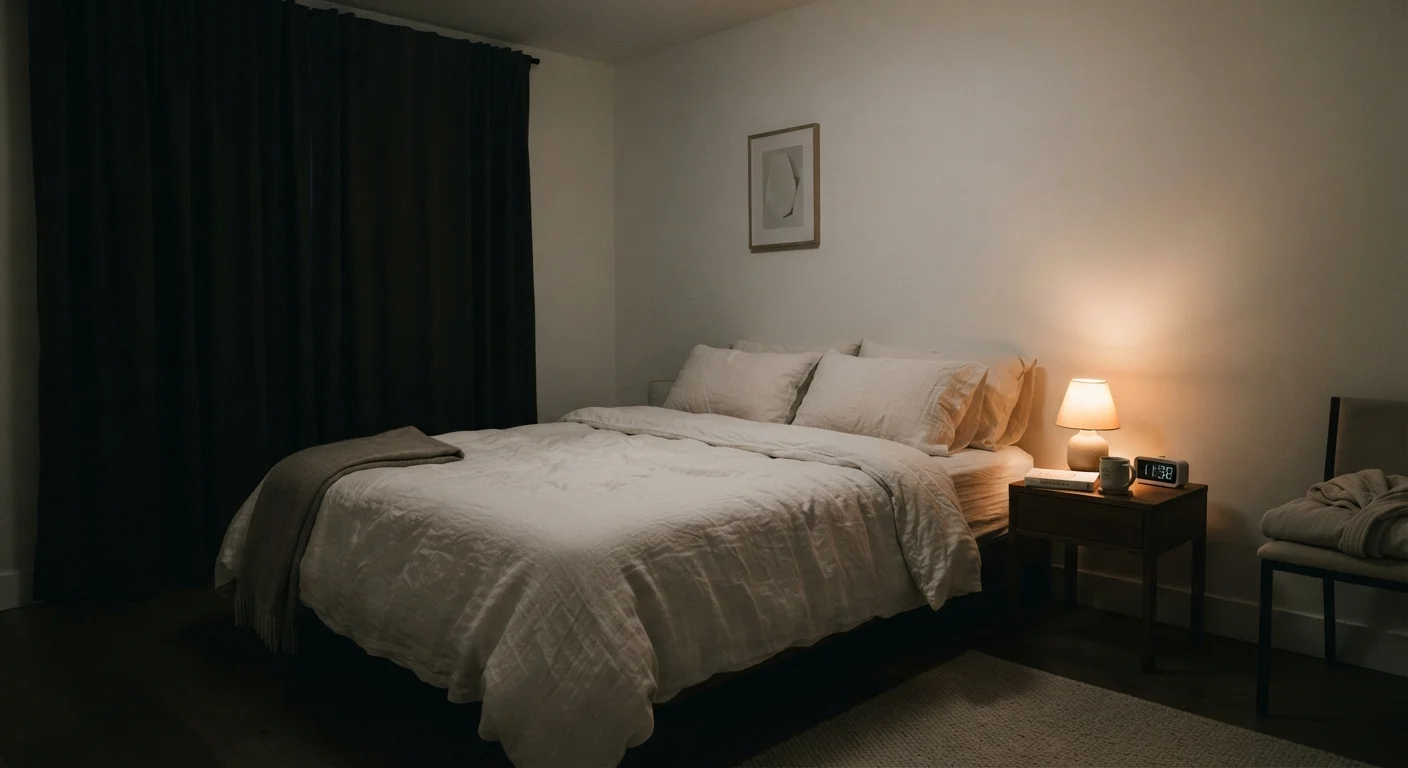
Light exposure: Your circadian rhythm - the internal clock regulating sleep-wake cycles - is highly sensitive to light. Bright, blue-spectrum light suppresses melatonin production, the hormone that promotes drowsiness. Dimming overhead lights and shifting to warmer-toned lamps in the 60-90 minutes before bed gives your brain the low-light cue it needs. Screen brightness and stimulating content both contribute to delayed sleep onset, so reducing screen exposure in this window is worthwhile - it's not only about blue light, but also about mental arousal from scrolling or stressful news.
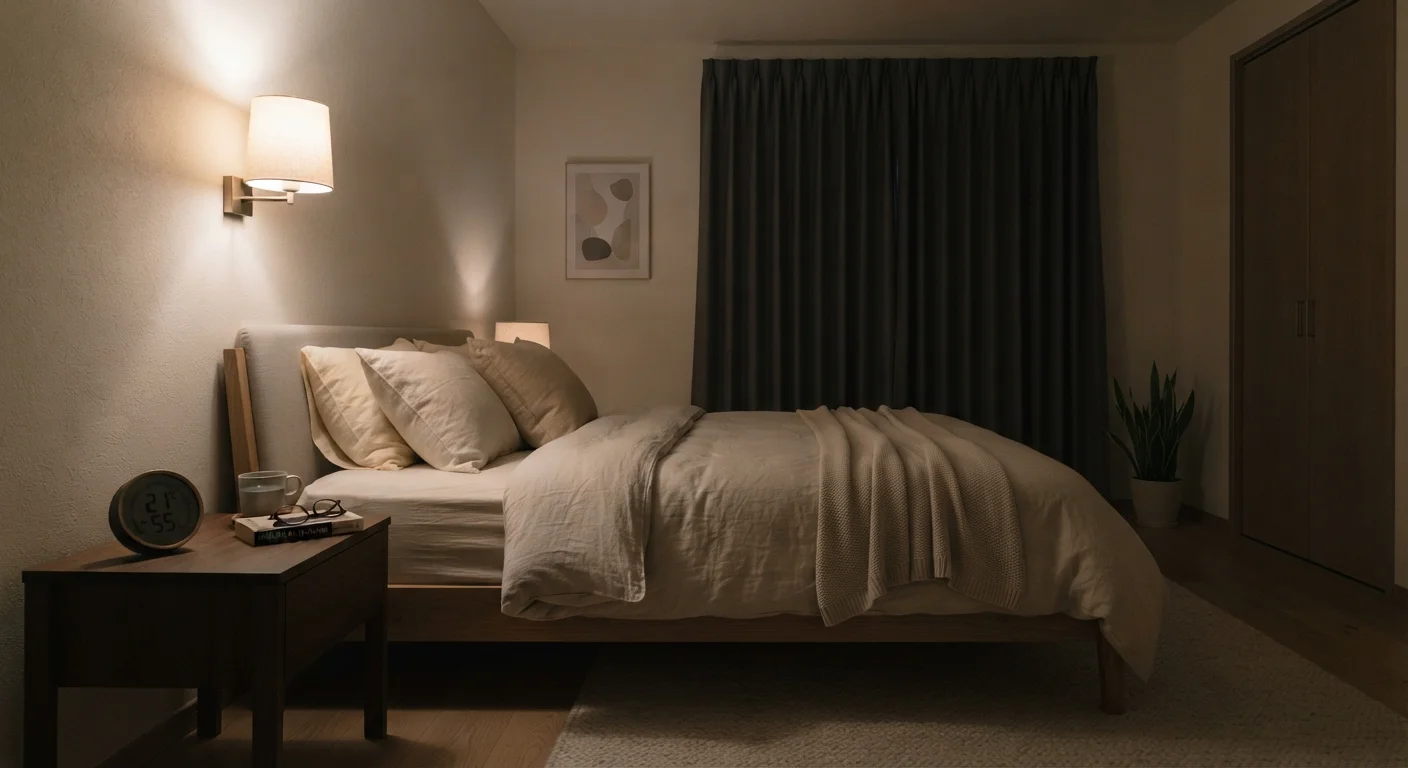
Room temperature: Core body temperature naturally drops as you approach sleep. A bedroom that is slightly cool - generally described by researchers as somewhere in the range of 16-19 °C - supports this process. A warm bath or shower 1-2 hours before bed can paradoxically help: the subsequent heat loss from the skin accelerates the drop in core temperature, making it easier to fall asleep. For a practical checklist of bedroom conditions, the bedroom environment audit is a useful companion read.
~1 hr
Average sleep onset delay from bright evening light
Research published in the Journal of Clinical Endocrinology & Metabolism found that exposure to bright room light before bedtime suppressed melatonin and delayed sleep onset by approximately one hour compared to dim light conditions.
16-19 °C
Bedroom temperature range linked to better sleep onset
Sleep researchers commonly cite this temperature range as supportive of the core body temperature drop that facilitates sleep onset, though individual comfort varies.
Practices That Create a Reliable Wind-Down Routine
Consistency matters more than any single technique. The nervous system learns through repetition: over time, habitual cues - a specific tea, a few pages of a book, a brief breathing exercise - begin to signal safety and readiness for sleep on their own.
Set a consistent wind-down start time, not just a bedtime.
Trying to transition abruptly from high activity to sleep is physiologically difficult. Giving yourself a dedicated buffer - even 30-45 minutes - allows cortisol levels to ease and your arousal state to settle. Predictable timing also reinforces your circadian cues over days and weeks.
Use a 'brain dump' to offload tomorrow's to-do list onto paper.
Unfinished tasks keep the prefrontal cortex active, generating the kind of intrusive thinking that delays sleep onset. Writing down pending tasks and intentions - not ruminating on them - gives the mind a sense of closure and reduces cognitive load at bedtime.
Limit stimulating content and emotionally activating media in the final hour.
Stress hormones triggered by suspenseful, alarming, or upsetting content raise physiological arousal regardless of the screen size. The problem isn't the device itself but the mental and emotional activation it produces. Choosing calm, low-stakes content - or none at all - significantly reduces this effect.
Incorporate a brief body-based relaxation practice.
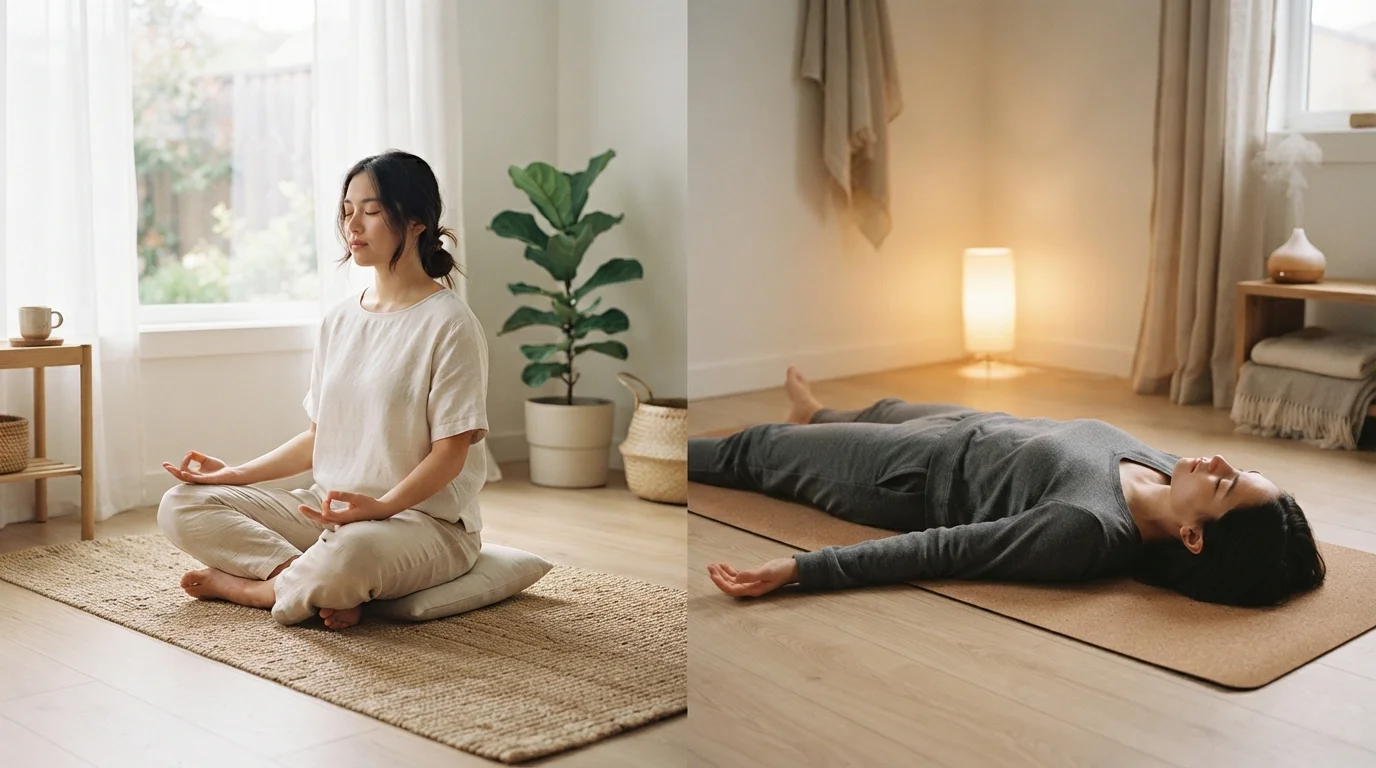
Relaxation techniques such as slow diaphragmatic breathing or progressive muscle relaxation activate the parasympathetic nervous system, counteracting the stress response. Even a few minutes practised consistently can lower resting heart rate and perceived tension before sleep.
Avoid large meals and alcohol close to bedtime.
A heavy meal within two hours of sleep requires active digestion, which raises core body temperature and can disrupt sleep architecture. Alcohol, though sedating initially, fragments sleep in the second half of the night by suppressing REM sleep and causing more frequent arousals.
If you find that worry or racing thoughts are the main obstacle at bedtime, the comparison of mindfulness and progressive muscle relaxation explores two well-studied approaches side by side. Separately, recognising patterns that actively work against you is equally important - common behaviours that make falling asleep harder outlines what to avoid.
Quick Wins You Can Start Tonight
Even without overhauling your entire schedule, a few targeted changes can meaningfully shift how you transition into sleep. The following actions are low-effort, evidence-informed, and effective for most adults:
If disrupted sleep is a persistent problem rather than an occasional one, general self-help routines have limits. Consider speaking with a healthcare professional. The differences between CBT-I and sleep medication offers useful context for those conversations.
This article is for general informational purposes only and does not constitute medical advice. If you experience persistent sleep difficulties or suspect an underlying health condition, please consult a qualified healthcare professional.