
More Than a Property Claim
The popular image of territory marking - an animal urinating on a fence post to say "this is mine" - captures only a fraction of what is actually happening. From a scientific standpoint, territorial signals function as a sophisticated communication system that conveys identity, competitive ability, and reproductive availability to any individual capable of reading them.
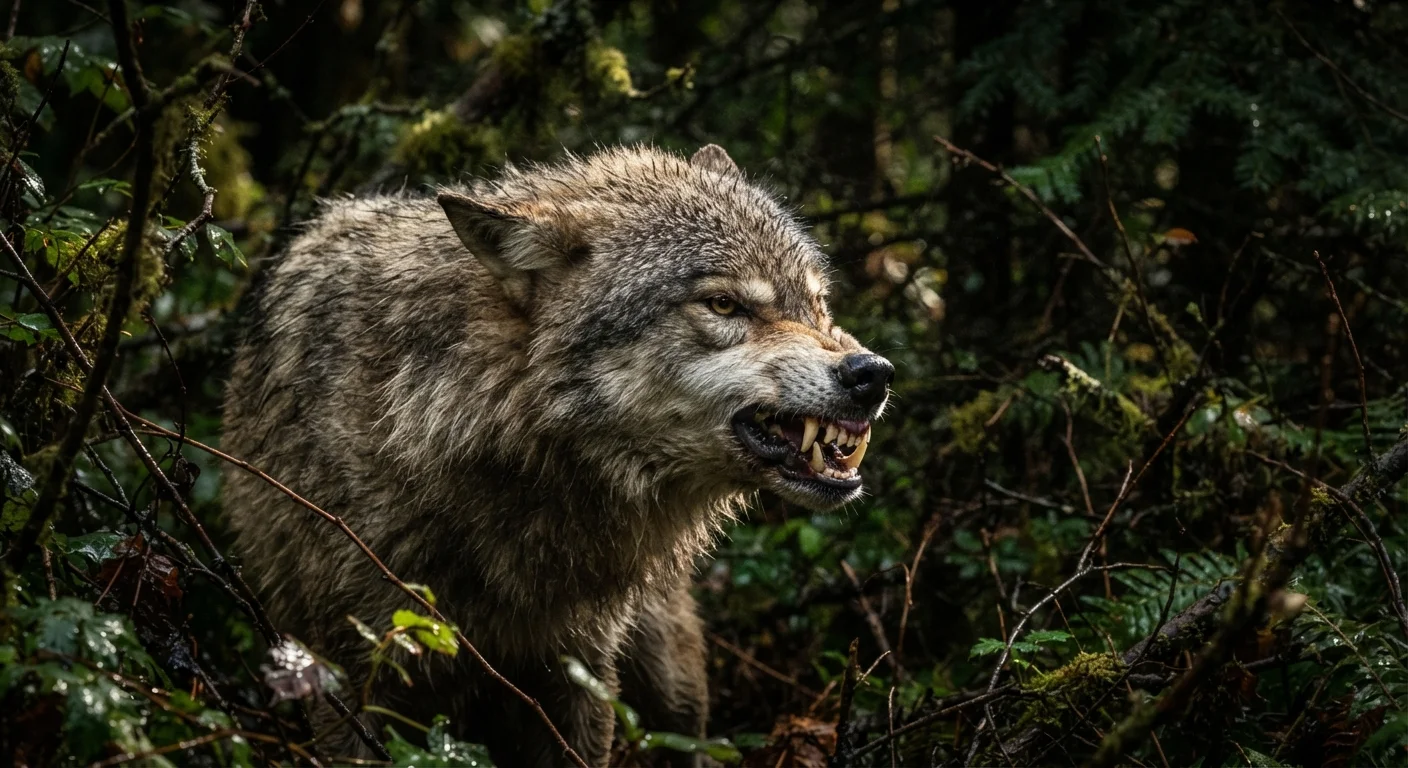
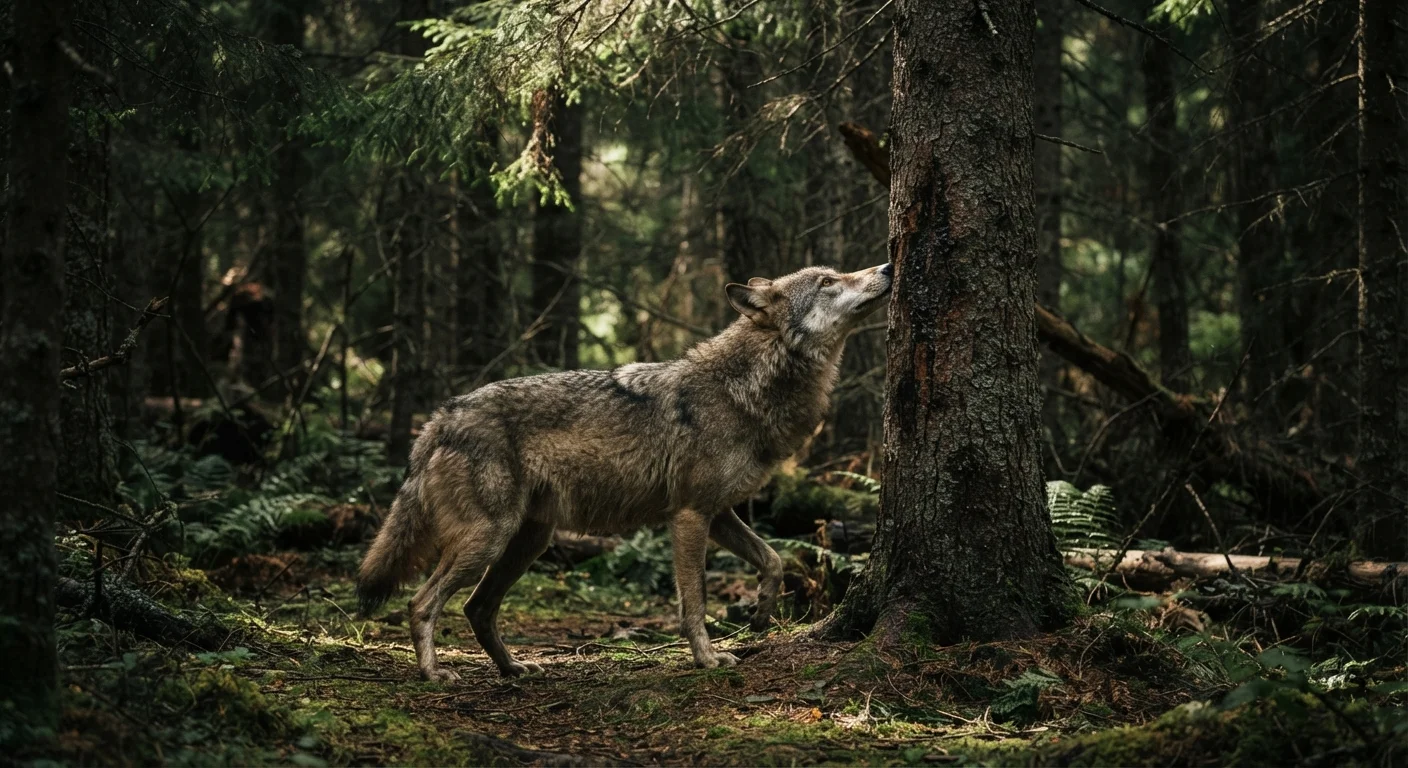
Ethologists distinguish between the sender's intent and the receiver's interpretation. A wolf's scent post at a trail junction does not simply announce ownership; it broadcasts the depositor's sex, hormonal state, and how recently they passed. A rival wolf processing that information makes a behavioral calculation - approach, avoid, or investigate further - based on what the signal reveals about potential contest costs.
Chemical, visual, and tactile signals operate across species in broadly similar ways, though the specific channels vary dramatically depending on sensory anatomy and ecological context.
~30
Volatile compounds in a wolf scent mark
Research published in behavioral ecology journals has identified roughly 30 distinct volatile organic compounds in wolf urine, each potentially encoding different individual-level information.
Up to 3 km
Distance a wolf howl can travel
Studies of gray wolf acoustic communication document territorial howls detectable by conspecifics at distances of up to 3 kilometers under favorable conditions.
10-20%
Estimated daily time tigers spend scent marking
Field observations of wild tigers indicate individuals may invest a significant portion of their daily activity budget in patrolling and refreshing scent marks across large home ranges.
The Chemistry of Scent Marking
Mammalian scent marks are arguably the richest territorial signals in the animal kingdom. Secretions from specialized glands - anal sacs, facial glands, interdigital glands, and others - contain volatile organic compounds, proteins, and bacteria whose collective profile is unique to the individual. Studies of felids, mustelids, and canids have demonstrated that receivers can extract information about age, sex, reproductive condition, and even genetic relatedness from these chemical cocktails.
An important finding from behavioral ecology is that scent marks function as honest signals. The metabolic costs of producing and depositing them, combined with the physiological information they encode, make deception difficult. A sick or hormonally suppressed animal simply cannot produce the same chemical signature as a healthy, reproductively active one.
Interpreting Marking Doesn't Require Confrontation
Animals reading territorial signals rarely need to see the sender to extract useful information. The chemical and visual properties of the mark itself carry the message. This means territorial systems can regulate spacing across large landscapes with minimal direct animal-to-animal interaction - an energetically efficient solution to resource competition.
Overmarking - depositing a signal directly on top of a rival's mark - is a documented behavior in wolves, lions, and domestic cats. It appears to function as a form of social commentary: asserting presence and dominance over a prior occupant's claim without requiring direct confrontation.
Visual and Acoustic Signals
Not all territorial communication is chemical. Many species rely primarily on visual or acoustic channels, particularly when signals need to travel fast or over long distances.
Claw-raking by large felids like tigers and leopards serves a dual purpose: the physical gouge is visible from a distance, and the associated scent deposition from paw glands adds a chemical layer. The height of the mark is itself informative - a scratch made at shoulder height signals body size to any rival investigating the site.
For birds, song functions as the dominant territorial advertisement. Research on songbird species has shown that song complexity, repertoire size, and delivery rate all correlate with territory quality and individual condition. Neighbors often establish what ornithologists call the dear enemy effect - reducing aggressive responses to familiar territorial calls from established neighbors while escalating responses to strangers, because known neighbors represent a known, stable threat level.
Many territorial displays are misread as pure aggression when they are primarily conflict-avoidance mechanisms operating through information exchange rather than physical force.
“Territorial behavior is best understood not as animals fighting over space, but as animals exchanging information about competitive ability - information that often makes fighting unnecessary.”
— John Krebs, Behavioral ecologist and pioneering researcher in animal communication
Social Structure Shapes Marking Behavior
Whether an animal marks alone or as part of a group reflects its broader social ecology. Solitary species like tigers and most mustelids mark extensively because they rely on signals - not group presence - to regulate spacing. Social species, by contrast, often use collective marking to assert group identity and coordinate boundary maintenance.
Gray wolf packs, for example, concentrate scent marking activity near territory boundaries and at den sites. Pack members contribute to a shared scent profile that signals group size and cohesion. Intruding wolves face not just the chemical evidence of a single rival but an indication of a resident group's collective competitive power.
The ecological pressures that drive solitary versus social lifestyles are directly reflected in how - and how often - species invest in territorial signaling.
Domestic pets retain these ancestral systems largely intact. A house cat rubbing its face against furniture or a dog pausing to investigate and refresh a lamppost signal are expressions of evolutionary machinery shaped over millions of years - behavior that still carries communicative meaning even when the original ecological context no longer applies. For a closer look at how these signals manifest day to day, see our guide to reading your pet's body language.