
The Core Question: Why Group at All?
Group living is not the default state of nature - it is a costly strategy that must pay for itself. Every member of a social group competes with groupmates for food, mates, and resting sites, and proximity accelerates pathogen transmission. For cooperation to persist evolutionarily, its benefits must consistently outweigh these costs.
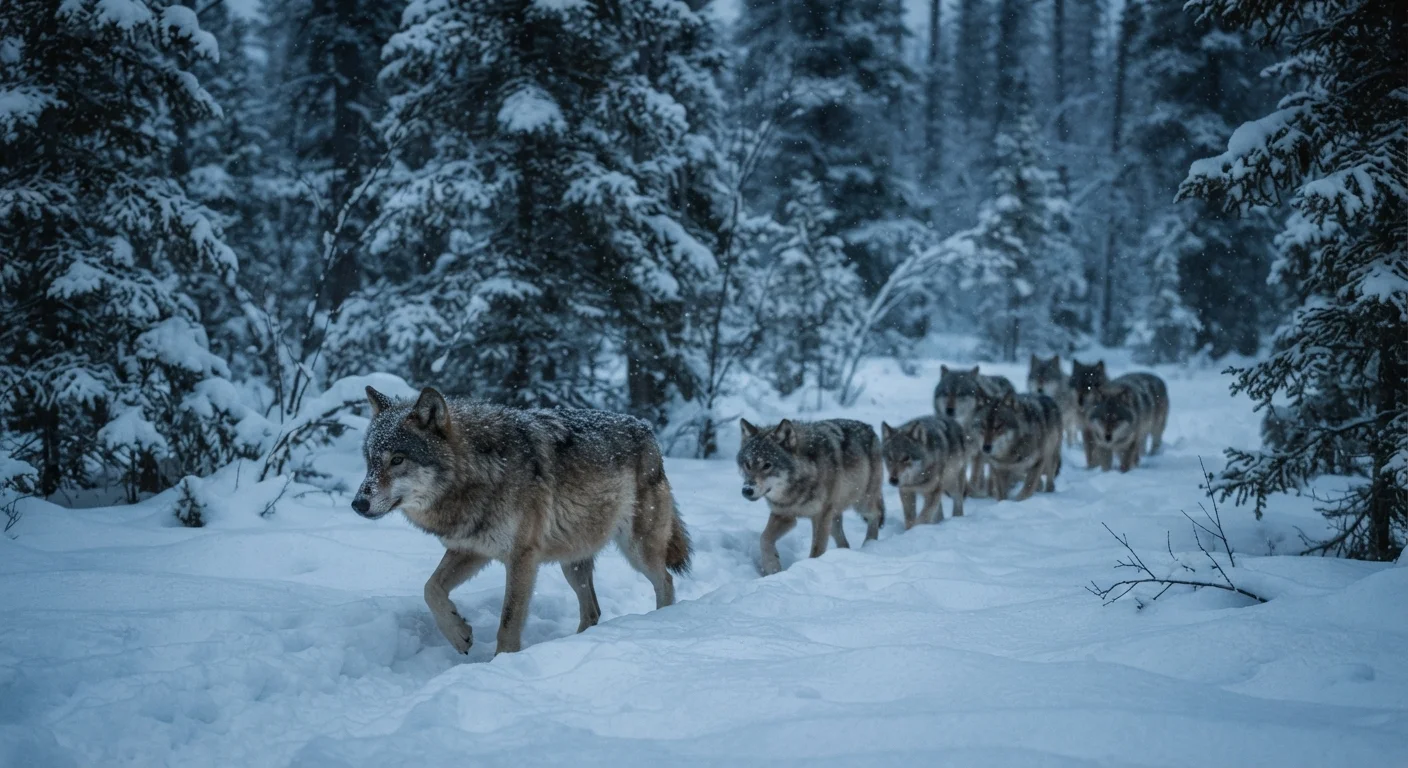
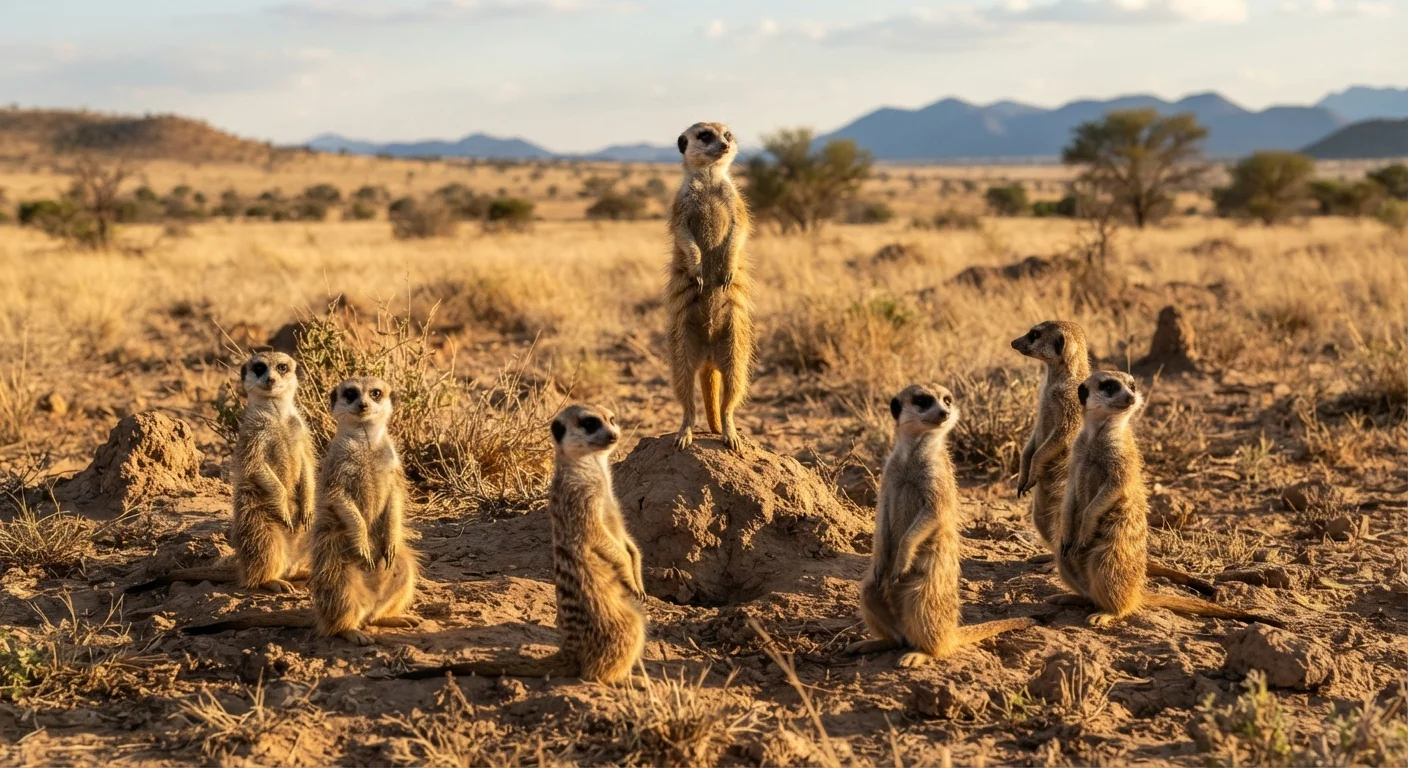
Three ecological pressures most reliably tip the balance toward sociality. First, cooperative predation: when prey is large relative to an individual predator's capacity, hunting in teams increases per-capita returns. Wolves targeting elk or lions ambushing buffalo gain access to caloric windfalls a lone animal could never exploit. Second, collective defense: meerkats, zebras, and starling murmurations all demonstrate that many eyes and bodies dilute individual predation risk. Third, communal care of offspring - documented across social mammals and birds - allows alloparents (non-breeding group members who assist in raising young) to increase total reproductive output for the group.
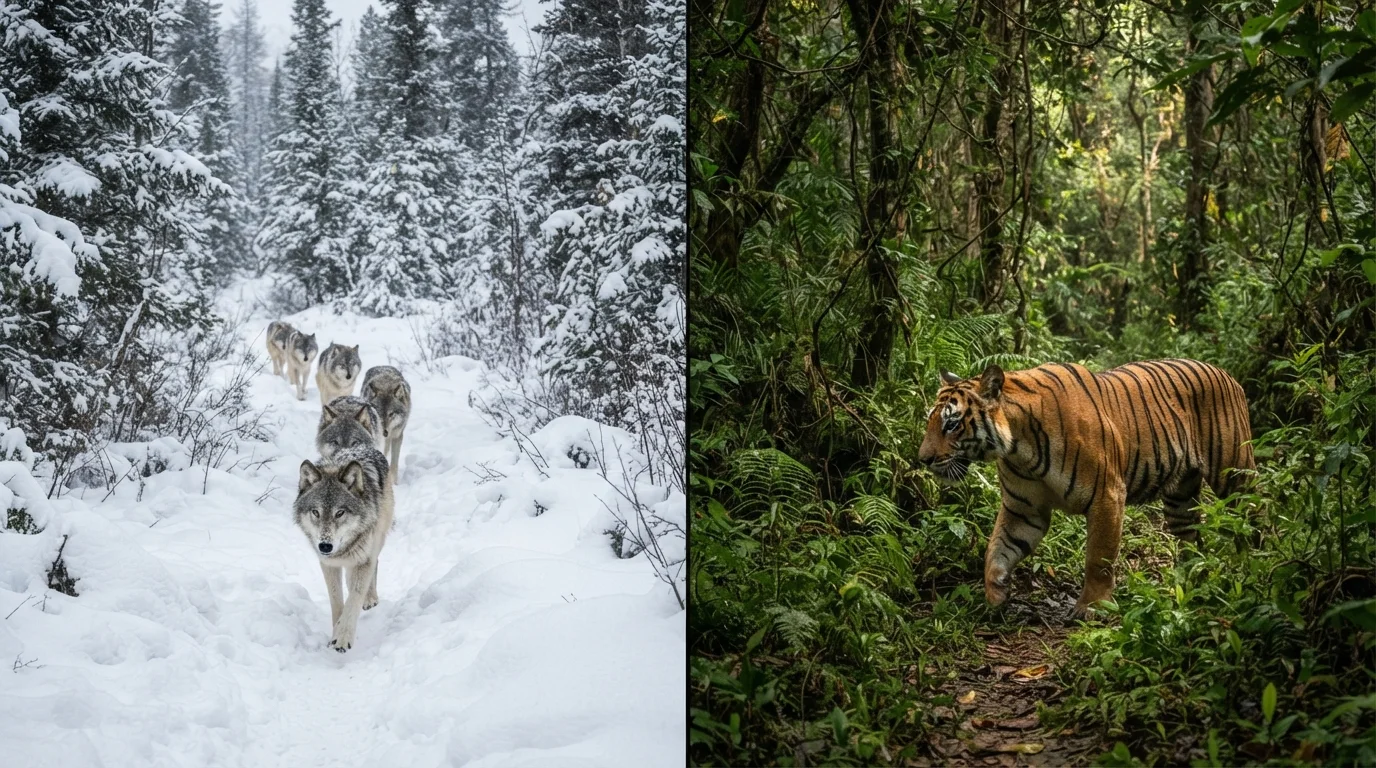
Solitary animals, by contrast, typically occupy niches where these advantages do not materialize. A tiger's prey - deer, wild pigs, and similarly sized ungulates - can be subdued alone, and its vast territory supports only sparse prey densities insufficient to feed a pack. See how wolf pack structure functions for a detailed look at how cooperation organizes itself once sociality becomes adaptive.
Ecological Drivers: Resource Distribution and Predator Pressure
Resource dispersion theory, developed by ecologists David Macdonald and Paul Carr in the 1980s, proposes that the spatial and temporal clumping of food resources is a primary determinant of group size. When food patches are large enough to feed several individuals simultaneously, groups form naturally because there is no efficiency cost to sharing a patch. Red foxes living near urban waste sites - where food is dense and clumped - show higher sociality than rural foxes subsisting on dispersed small mammals.
Predator pressure exerts independent force. For prey species, group vigilance is well documented: each additional individual scanning for threats reduces the time any one animal must devote to watching rather than feeding. This vigilance dividend diminishes in large groups (the marginal value of a hundredth pair of eyes is small), which helps explain why optimal group sizes tend to cluster at functional thresholds rather than growing indefinitely.
| Trait / Pressure | Solitary Animals | Social Animals | |
|---|---|---|---|
| Prey strategy | Ambush; prey manageable alone | Cooperative pursuit of large prey | |
| Resource distribution | Sparse, widely spaced resources | Clumped, shareable food sources | |
| Predator defense | Stealth and avoidance | Group vigilance and mobbing | |
| Communication complexity | Scent marking, minimal vocalizations | Rich vocal, visual, and tactile signals | |
| Disease transmission risk | Low - limited contact | Higher - dense group contact | |
| Parental care | Typically single parent | Alloparental care common | |
| Examples | Tiger, snow leopard, polar bear | Wolf, bottlenose dolphin, meerkat |
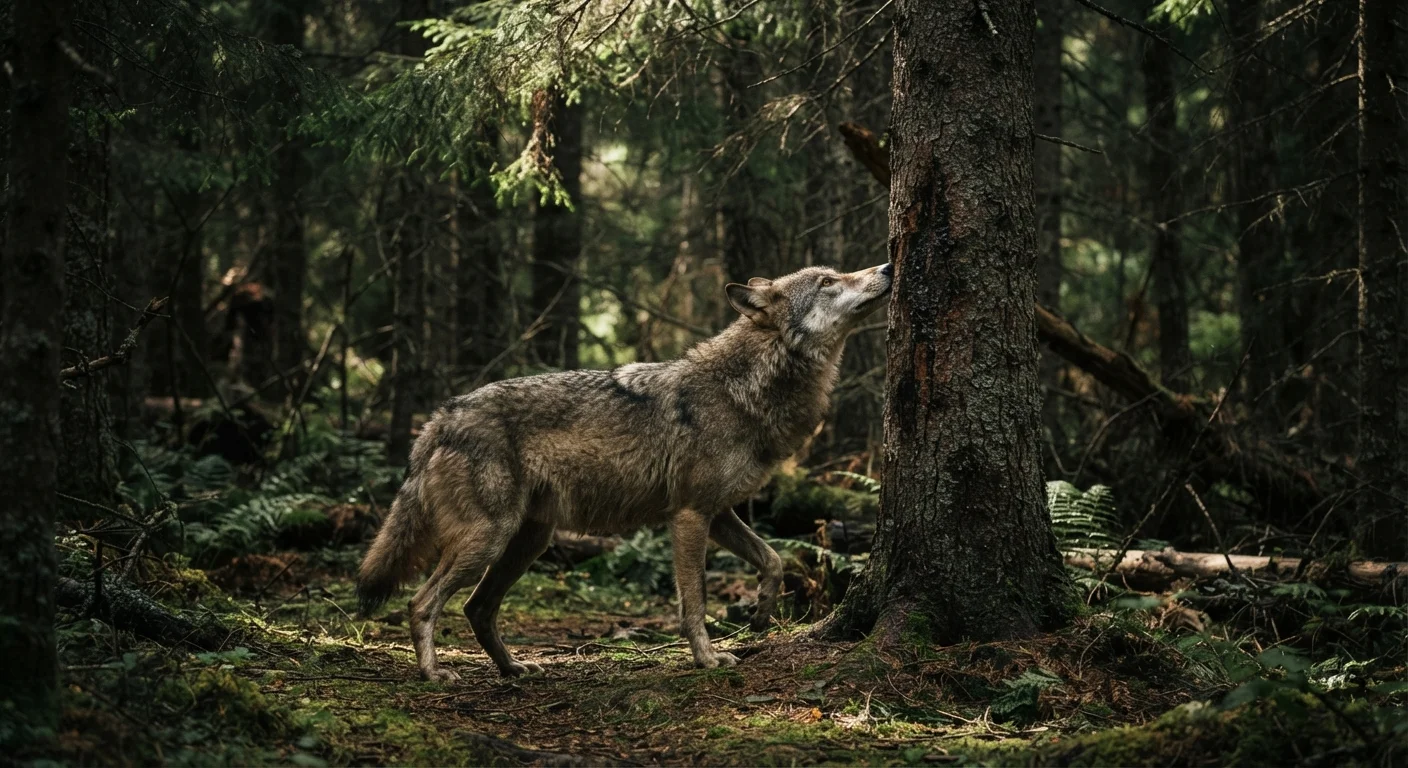
Obligate solitary predators like leopards and snow leopards occupy territories calibrated to resource availability. Their territorial marking behaviors serve to exclude competitors rather than signal group membership - a fundamentally different communicative function than the cohesion signals used within social groups.
Genetics, Kin Selection, and the Logic of Cooperation
W.D. Hamilton's theory of inclusive fitness, formalized in 1964, provided the mathematical backbone for understanding why cooperation evolves. Hamilton's rule states that an altruistic act spreads when its cost to the actor is less than the benefit to recipients weighted by their genetic relatedness to the actor. In practical terms, helping close relatives propagate shared genes can be as evolutionarily productive as reproducing directly.
This explains why most persistently social animal groups are composed predominantly of kin. Wolf packs are typically a breeding pair and their offspring across multiple cohorts. Meerkat groups consist of a dominant pair and subordinate helpers who are usually offspring or siblings. Even fish shoals tend to aggregate with genetic relatives when given a choice, as demonstrated in controlled experimental settings.
Behavior Exists on a Spectrum
Avoid treating 'solitary' and 'social' as binary labels. Many species shift along this spectrum seasonally - bears aggregate at salmon runs, and usually solitary orangutans form loose networks during fruit masts. Context shapes behavior as much as genetics does.
The costs of sociality are equally real. Infanticide, mate competition, and nutritional subordination of low-ranking individuals are documented in lions, wolves, and primates. Understanding these tradeoffs is essential to interpreting why hierarchies emerge within animal groups - rank structures that manage conflict and allocate resources are a predictable consequence of group living under resource constraints.
Behavioral Flexibility: When the Line Blurs
The solitary-social divide is most usefully understood as a continuum rather than a binary. Many species exhibit facultative sociality - adjusting their degree of grouping to current ecological conditions. Brown bears are largely solitary but congregate seasonally at salmon streams, tolerating proximity because the resource surplus makes competition less acute than cooperation. Orangutans, long described as solitary great apes, have been shown to maintain loose social networks, particularly among females sharing overlapping home ranges.
Avoid Anthropomorphizing Social Structures
It can be tempting to project human social values onto animal groupings - assuming social species are 'happier' or solitary ones 'lonely.' These terms describe ecological strategies, not emotional states. Attributing human feelings to animal social organization can distort how we interpret behavior and design conservation responses.
Developmental stage also matters. Many mammals that are social as juveniles become more solitary as adults, once they have dispersed and established independent territories. This is true of many felids, including cheetahs, where male coalitions (often sibling groups) coexist with predominantly solitary females. The interplay between innate predispositions and learned social experience shapes how these transitions unfold at the individual level.
Urbanization is increasingly altering these patterns as well. Research on how animals adapt their behavior to urban environments documents that some traditionally solitary species - coyotes, for example - form more stable pair bonds and family groups in cities, where food density and reduced hunting pressure change the cost-benefit calculus of group living in real time.