
Why Tyres Deserve More Attention Than Most Drivers Give Them
Tyres are the only part of your vehicle in contact with the road, yet tyre checks remain one of the most consistently neglected aspects of routine car ownership. Under-inflated tyres increase braking distances, raise fuel consumption, and wear unevenly. Over-inflated tyres reduce grip and make the ride harsher. Neither condition is immediately obvious from inside the cabin - which is exactly why a structured check matters.
Under German road law (StVZO) and broader EU vehicle regulations, drivers carry legal responsibility for ensuring tyres are roadworthy. A failed roadworthiness inspection (Hauptuntersuchung, or HU) can result from tyre deficiencies alone. Beyond compliance, the practical safety case is straightforward: tyres in poor condition are a leading contributor to loss-of-control incidents, particularly in wet or cold conditions.
The checks below take between 15 and 30 minutes for a full set of four tyres plus a spare. They require minimal equipment and no mechanical expertise. For a broader overview of what experienced drivers keep on top of consistently, see things long-term car owners always keep on top of.
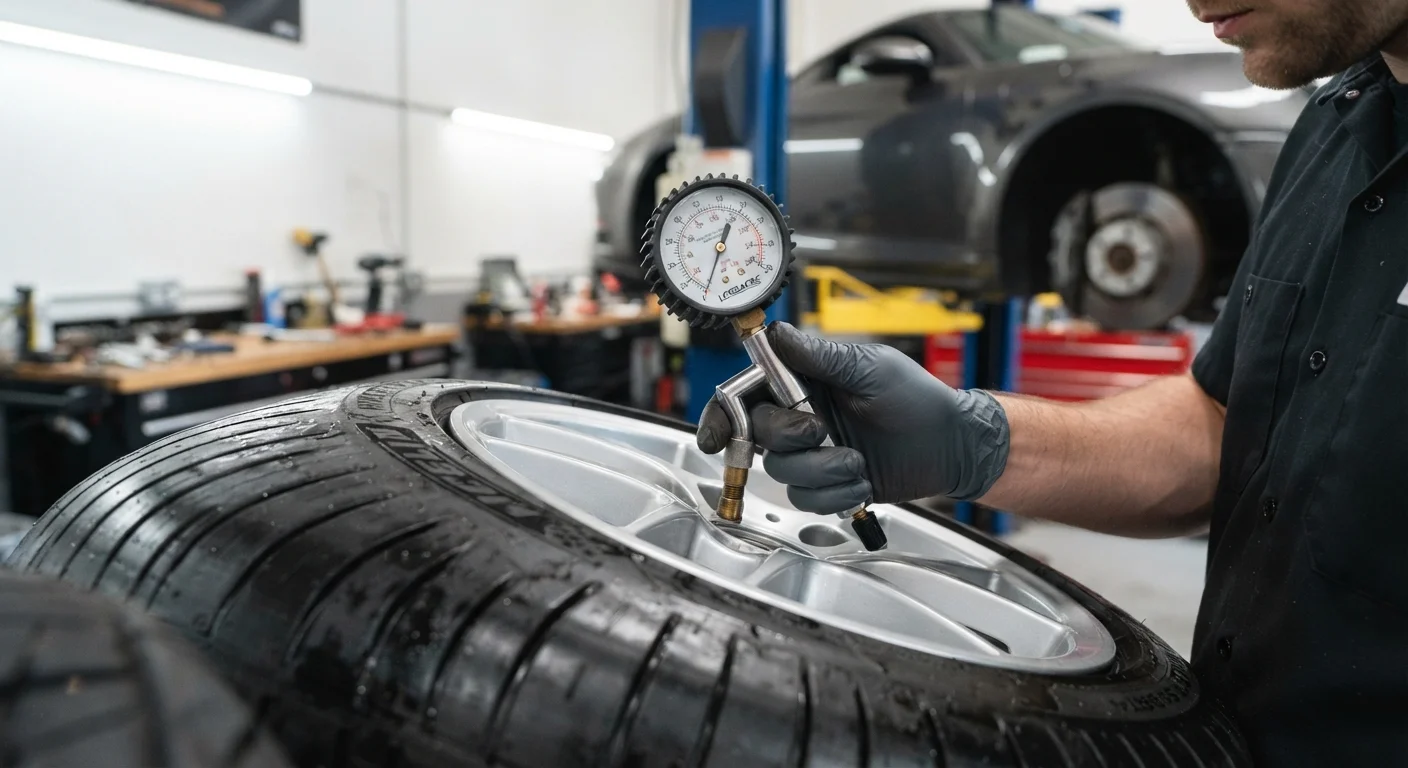
Digital Tyre Pressure Gauge
Provides an accurate pressure reading in bar or PSI; more reliable than many forecourt units.
Tread Depth Gauge
Measures tread depth precisely at multiple points across the tyre face.
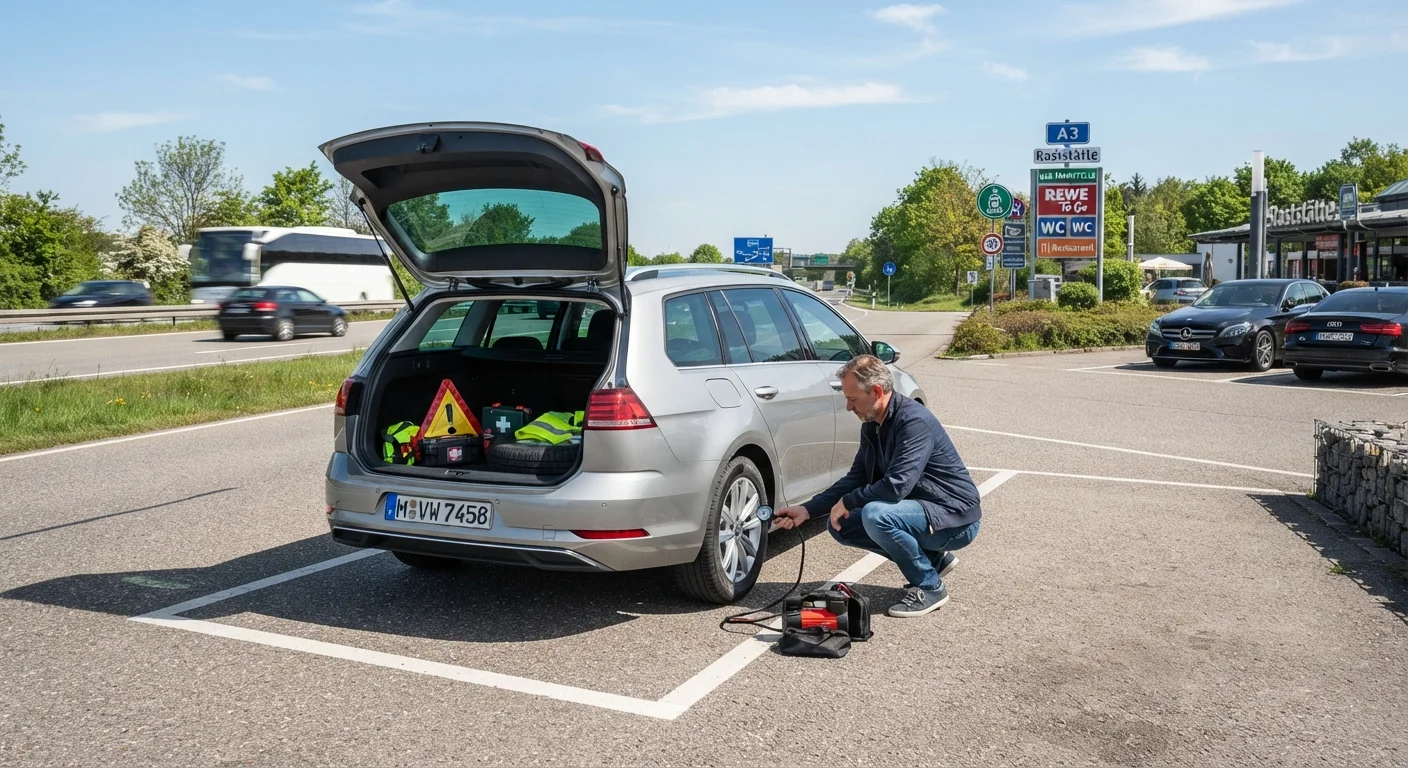
Portable Tyre Inflator
Allows pressure correction at home or roadside without depending on a petrol station compressor.
Torch or Inspection Light
Needed to examine the inner sidewall and spot damage that is not visible in normal light.
Vehicle Owner's Manual
Contains manufacturer-specified tyre pressures for different load conditions and tyre size fitments.
The Complete Tyre Check Checklist
Work through each tyre systematically - front left, front right, rear left, rear right, then the spare. Consistency matters: skipping one tyre in a rush undermines the entire inspection. If any item below reveals a concern, consult a qualified tyre specialist before driving significant distances.
Pressure Check
Tread Depth
Visual Sidewall and Surface Inspection
Wear Pattern Assessment
After the Check
Mixing Tyre Types on the Same Axle Is Illegal and Dangerous
Fitting different tyre constructions - for example, one radial and one cross-ply - on the same axle is prohibited under German StVZO regulations and most EU member state road laws. It also creates asymmetric braking and cornering behaviour that can destabilise the vehicle. Always fit matching tyre types per axle, and ideally across all four wheels.
For drivers preparing for extended travel, these checks slot directly into a broader pre-departure review. Our pre-departure safety check for long road trips covers tyres alongside fluids, lights, and documentation in a single structured format.
Reading What Your Tyres Are Telling You
Wear patterns communicate more than a gauge can. Centre wear - where the middle of the tread is more worn than the edges - typically indicates chronic over-inflation. Edge wear on both shoulders points to persistent under-inflation. Wear on only one edge, or a diagonal pattern across the tyre, usually signals a wheel alignment or suspension issue that no amount of pressure adjustment will fix.
Feathering (where tread blocks feel sharp on one side and rounded on the other when you run a hand across them) is a classic indicator of incorrect toe alignment. Cupping or scalloping - a wavy, uneven depth across the tread - often points to worn shock absorbers. Both conditions accelerate tyre degradation and affect handling.
Do Not Drive on a Visibly Bulging Tyre
A sidewall bulge means the internal carcass has been compromised - typically by a sharp impact with a kerb or pothole. The tyre can fail suddenly at speed, causing immediate loss of vehicle control. Do not attempt to drive to a garage on a bulging tyre; have the vehicle recovered or change to the spare wheel first.
TPMS Is a Warning System, Not a Substitute for Manual Checks
Tyre pressure monitoring systems are mandated on new EU vehicles sold from 2014, but they are not a replacement for manual inspection. Most indirect systems measure wheel rotation speed, not actual pressure, and direct systems typically only trigger at pressures already well below the safe threshold. Rely on monthly manual checks as your primary method.
Tyre condition also varies by season and road environment. Wet winters, road salt, and temperature swings all affect rubber compound integrity and grip performance. Our article on seasonal car care and maintenance explains how to adapt your routine through the year, including when to consider switching between summer and winter tyre specifications.
If you are evaluating a used vehicle and want to assess tyre condition as part of a broader pre-purchase review, the questions worth asking before committing to any vehicle covers tyre age, wear history, and what the seller should be able to tell you.