Tyres, fluids, lights, documentation, and emergency kit — a structured checklist for drivers preparing for extended journeys in Europe.
Key Takeaways
Tyre pressure and tread depth are the single most important checks before any extended journey.
Several European countries legally require specific emergency equipment to be carried in your vehicle.
Fluids - engine oil, coolant, brake fluid - should be inspected at least 48 hours before departure.
Carry paper copies of all essential documents; digital versions may not be accepted at every border.
A pre-departure check done at home is far less stressful than a breakdown on an unfamiliar road.
Why a Structured Check Matters More Than a Quick Glance
Most mechanical failures on long trips are not sudden. They are the cumulative result of deferred checks - a tyre that was slightly underinflated for weeks, a coolant level that crept low over months, or a brake light bulb replaced three years ago and forgotten since. A structured pre-departure inspection turns these slow-developing risks into simple, fixable issues before they strand you on a motorway hard shoulder.
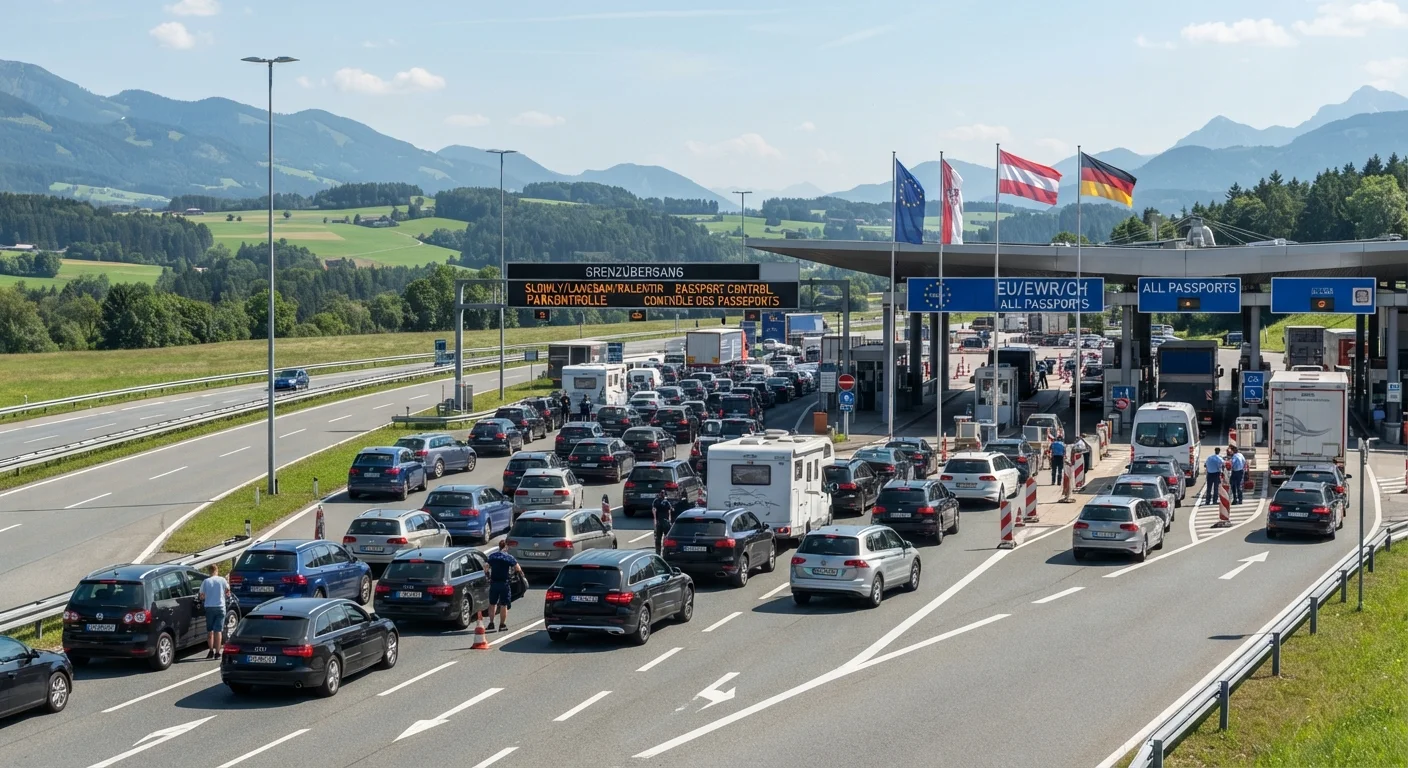
European road travel adds a further layer of complexity. The moment you cross a national border, equipment requirements, speed limits, and roadside protocols can change materially. For a detailed country-by-country breakdown, see our guide on crossing Europe by car - covering vignettes, mandatory kit, and the rules that shift at each border.
The checklist below is designed to be completed at home, ideally 48 hours before departure. Working through it systematically - rather than from memory alone - is the habit that experienced drivers consistently rely on. For the underlying logic behind these routines, our article on what long-term car owners always keep on top of explains the mindset well.
Required
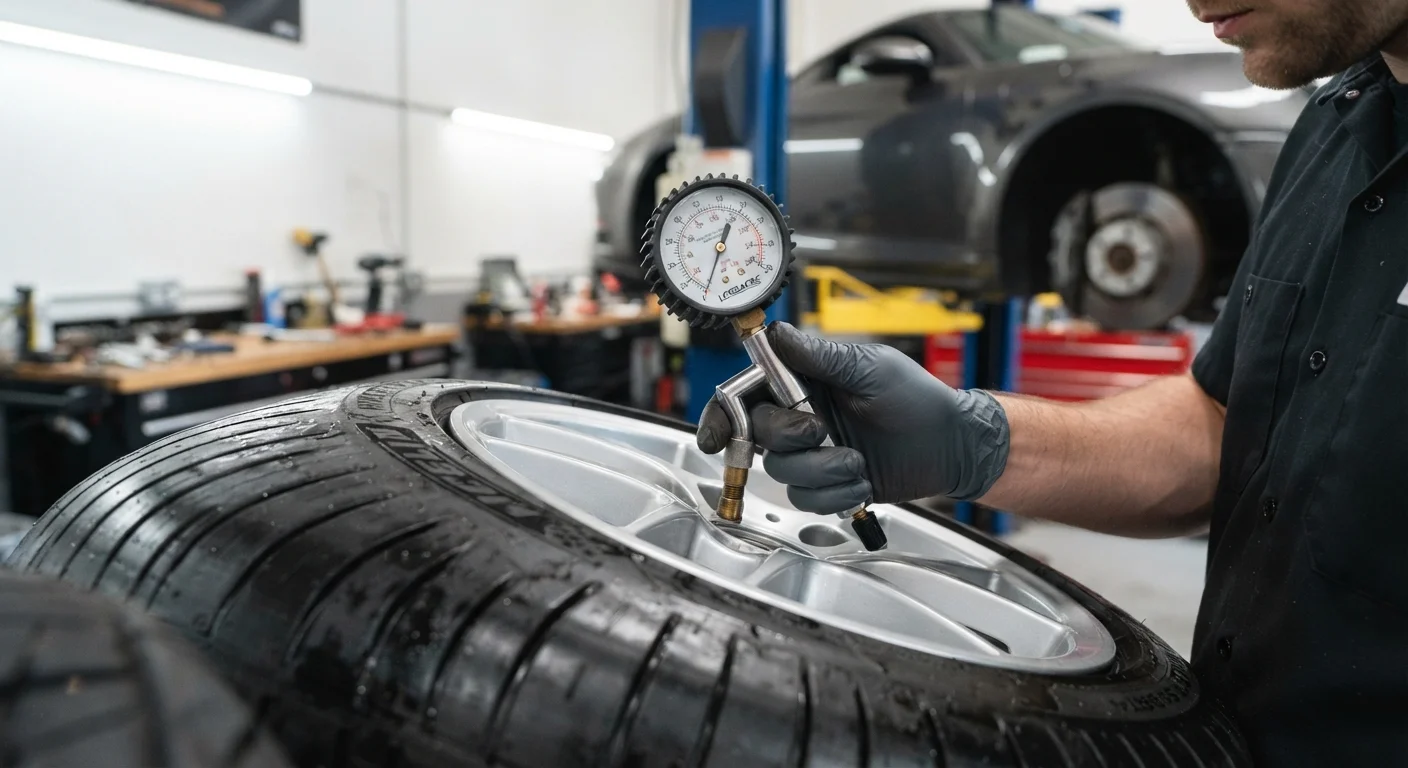
Tyre pressure gauge
Accurately measures tyre inflation so you can adjust to the correct pressure for a laden vehicle before departure.
Required
Tread depth gauge
Provides a precise measurement of remaining tread depth, which a visual estimate alone cannot reliably determine.
Optional
Torch or inspection light
Allows you to check under the bonnet and inspect brake discs and tyre sidewalls in poor light conditions.
Required
Owner's manual
Specifies the correct fluid grades, tyre pressures, and jack points specific to your vehicle model.
The Complete Pre-Departure Checklist
Work through each group in order. Items marked must are non-negotiable for safety or legal compliance. Should items are strongly recommended for trip reliability. Nice-to-have items improve comfort and preparedness without being critical.
Tyres
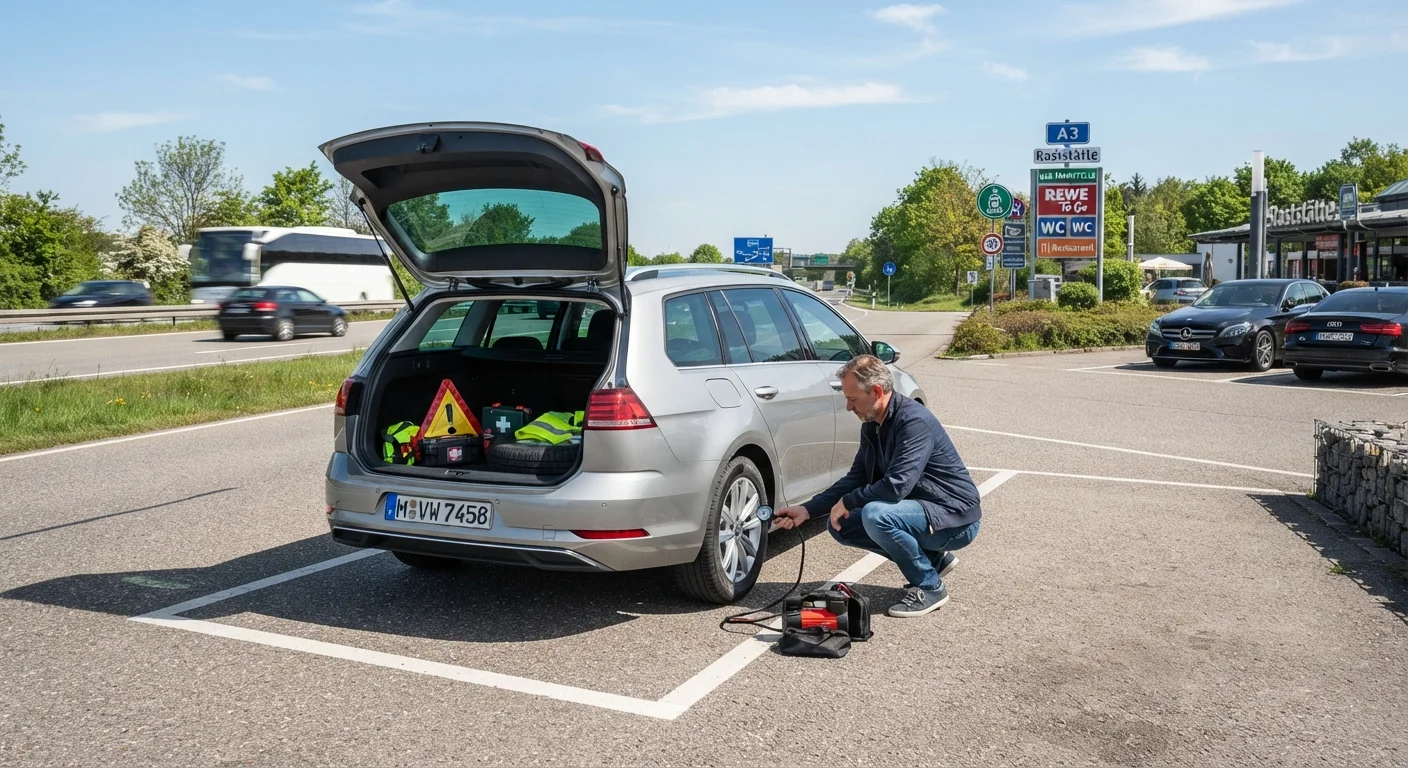
Check tyre pressure against the values shown on the door jamb or fuel cap label, adjusting for a loaded vehicle if you are carrying passengers and luggage.Must
Verify tread depth meets the legal minimum of 1.6 mm across the central three-quarters of the tyre; for motorway journeys, aim for at least 3 mm.Must
Inspect all four tyres visually for sidewall cracks, bulges, or embedded objects such as stones or nails.Must
Check the spare tyre or tyre inflation kit is present, serviceable, and correctly inflated.Should
Fluids
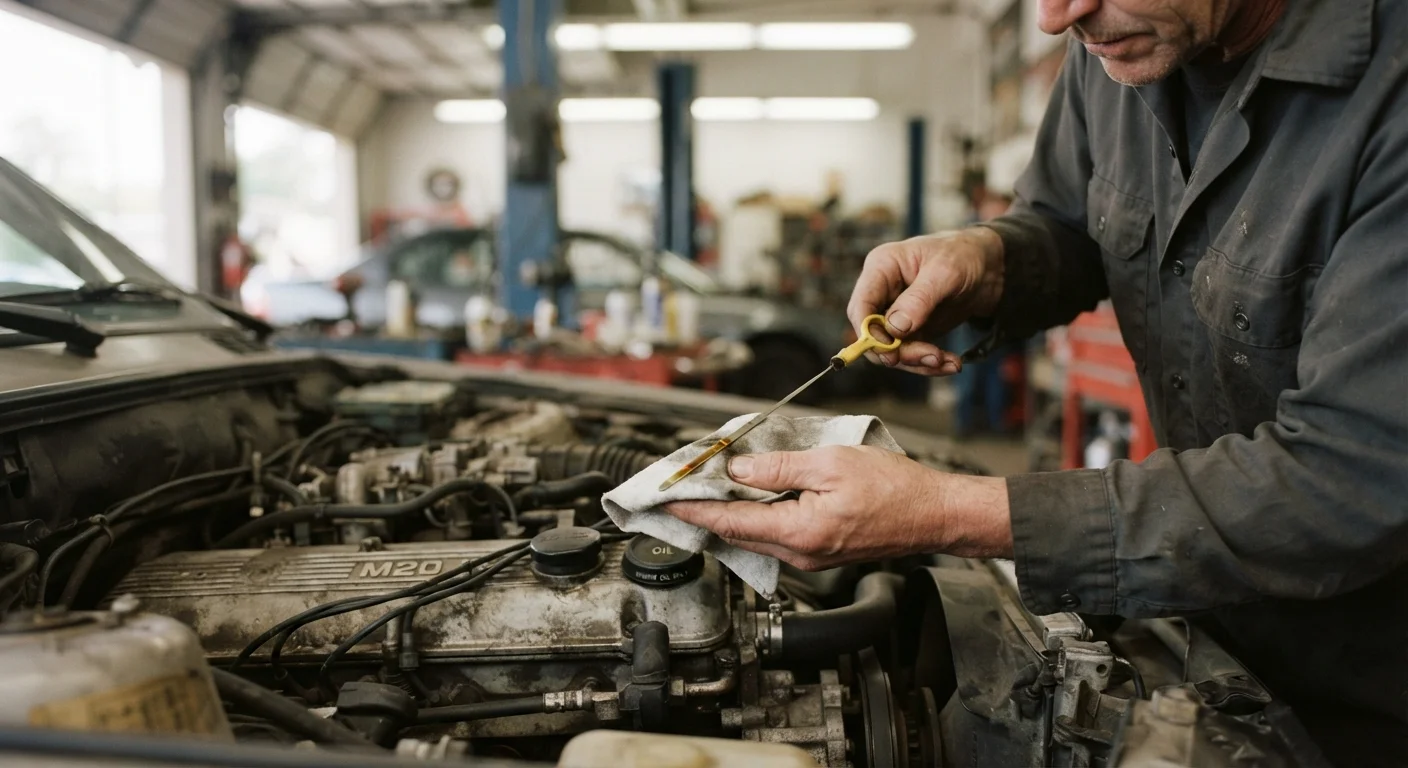
Check engine oil level with the dipstick when the engine is cold; top up with the grade specified in your owner's manual if below the minimum mark.Must
Inspect the coolant reservoir level and verify the mixture is appropriate for the temperatures you expect to encounter.Must
Confirm brake fluid is within the MIN-MAX range on the reservoir; discoloured or cloudy fluid warrants professional inspection before departure.Must
Fill the windscreen washer reservoir with a solution rated for the ambient temperature, especially in winter or early spring.Should
Note your current fuel level and plan your first fill-up stop in advance, particularly on routes passing through areas with sparse service stations.Nice to have
Lights and Visibility
Test all exterior lights - dipped headlights, full beam, brake lights, indicators front and rear, hazard lights, and reversing lights.Must
Clean all lenses and the windscreen inside and out; dirty glass causes significant glare at low sun angles and in oncoming headlights.Should
Check wiper blade condition; replace blades that streak or judder, as these significantly reduce wet-weather visibility.Should
Brakes and Steering
Perform a slow-speed brake test in a safe area near home to confirm the pedal feels firm, the car does not pull to one side, and there is no grinding or squealing.Must
Check that the steering wheel does not vibrate excessively at low speed, which can indicate wheel balance or alignment issues worth addressing before a long run.Should
Emergency Equipment
Confirm a warning triangle is present in the boot - mandatory in Germany under the StVZO and required in most other European countries.Must
Ensure a high-visibility vest (EN 471 or equivalent) is accessible from the driver's seat, not buried in the boot - required in countries including Austria, Spain, and France.Must
Carry a first aid kit conforming to DIN 13164 (updated standard) if travelling in Germany; check the kit's expiry dates and replace used or expired items.Must
Pack a fire extinguisher appropriate for vehicle use - mandatory in some countries and strongly advisable on all long trips.Should
Documentation
Carry your driving licence, vehicle registration document (Fahrzeugschein), and proof of insurance (including a Green Card if travelling outside Germany).Must
Print paper copies of all documents; digital versions displayed on a phone are not universally accepted by roadside authorities across all European countries.Should
Note the contact number for your roadside assistance provider and save it in your phone as well as on paper.Nice to have
Do Not Delay Brake or Tyre Concerns
If your brake pedal feels spongy, the car pulls noticeably under braking, or you find tyre sidewall damage, do not proceed with the trip until a qualified mechanic has inspected the vehicle. These are not issues to monitor en route - they are reasons to postpone departure. Driving on compromised brakes or structurally damaged tyres at motorway speeds is extremely dangerous.
For a detailed walkthrough of tyre-specific checks - including how to measure tread depth correctly and read pressure markings - see our companion piece on tyre pressure and tread depth checks. If the unexpected does happen despite your preparation, our guide on what to do in the first 10 minutes of a breakdown walks through the immediate steps clearly.
Equipment Requirements Vary by Country
There is no single European standard for mandatory vehicle equipment. Warning triangles, vests, first aid kits, and fire extinguishers are each required by different combinations of countries - and penalties for non-compliance are issued at the roadside. Before driving into any new country, check its specific requirements. The European Commission and national motoring clubs publish up-to-date country-by-country summaries.
Automotive Editorial Team is the collective byline for our editorial team and contributor network. Articles published under this byline or an editorial pen name are researched, written, and reviewed according to our editorial standards for clarity, consistency, and independence before publication.
The content on this site is for informational purposes only and is not a substitute for professional advice. Always consult a qualified professional for guidance specific to your situation.