

What the Three Categories Actually Mean
Breaking the rule down makes it far more useful than the headline numbers suggest.
Needs (approximately 50%)
This covers essential, non-negotiable expenses: housing costs, basic groceries, utility bills, minimum loan or credit payments, and necessary transportation. The key test is whether you must pay it to maintain a basic standard of living. Streaming services, gym memberships, and restaurant meals do not qualify - even if they feel essential.
Wants (approximately 30%)
Wants include everything you choose to spend money on beyond bare necessities: dining out, hobbies, entertainment subscriptions, clothing beyond basics, and travel. This category gives your budget breathing room and is intentionally flexible.
Savings and Debt Repayment (approximately 20%)
This slice covers building an emergency fund, contributing to a retirement account, and paying down debt faster than the minimum required. If you carry high-interest debt, channeling this allocation toward repayment first is a common approach before building savings.
Net Income Is the Right Starting Point
Always apply the 50/30/20 percentages to your take-home pay - not your gross salary. For employees, this means income after income tax, social security contributions, and any other mandatory withholdings. Using gross income inflates each category and produces targets that are impossible to meet in practice.
Where the Rule Works Well - and Where It Struggles
The 50/30/20 rule earns its popularity for good reasons: it is memorable, requires no spreadsheet, and gives beginners a quick sanity check on their spending habits. For someone who has never tracked their money before, simply identifying which category each expense falls into can be a revealing exercise.
That said, the rule has real limitations. In cities where housing alone can consume 40-50% of take-home pay, reaching a 20% savings target while still covering wants becomes mathematically strained. Lower-income households may find that nearly all of their income goes toward needs, leaving the other two categories as theoretical rather than achievable.
~30%
Average share of income spent on housing in the U.S.
According to the U.S. Bureau of Labor Statistics Consumer Expenditure Survey, housing represents the single largest spending category for most households.
1 in 4
Americans with no emergency savings
Bankrate's annual Emergency Savings Report has consistently found that a significant share of U.S. adults could not cover an unexpected $1,000 expense from savings.
The rule also doesn't distinguish between types of savings goals - a three-month emergency fund and a retirement contribution are treated identically. For people with complex financial situations, a more structured method may serve better. Our overview of budgeting approaches worth knowing covers several alternatives worth considering.
Adjust the Percentages Without Guilt
There is nothing magical about 50, 30, and 20 specifically. If your genuine needs require 55% of your income right now, acknowledge that honestly and compress the wants category instead. A personalized split you can actually follow outperforms a textbook split you abandon after two weeks. Use the monthly budget setup checklist to build your baseline before locking in any targets.
How to Use It as a Starting Point
Treating the 50/30/20 rule as a flexible benchmark rather than a rigid target is where most people find it most useful.
- Calculate your actual after-tax monthly income. Include all reliable income sources, but exclude irregular or uncertain amounts.
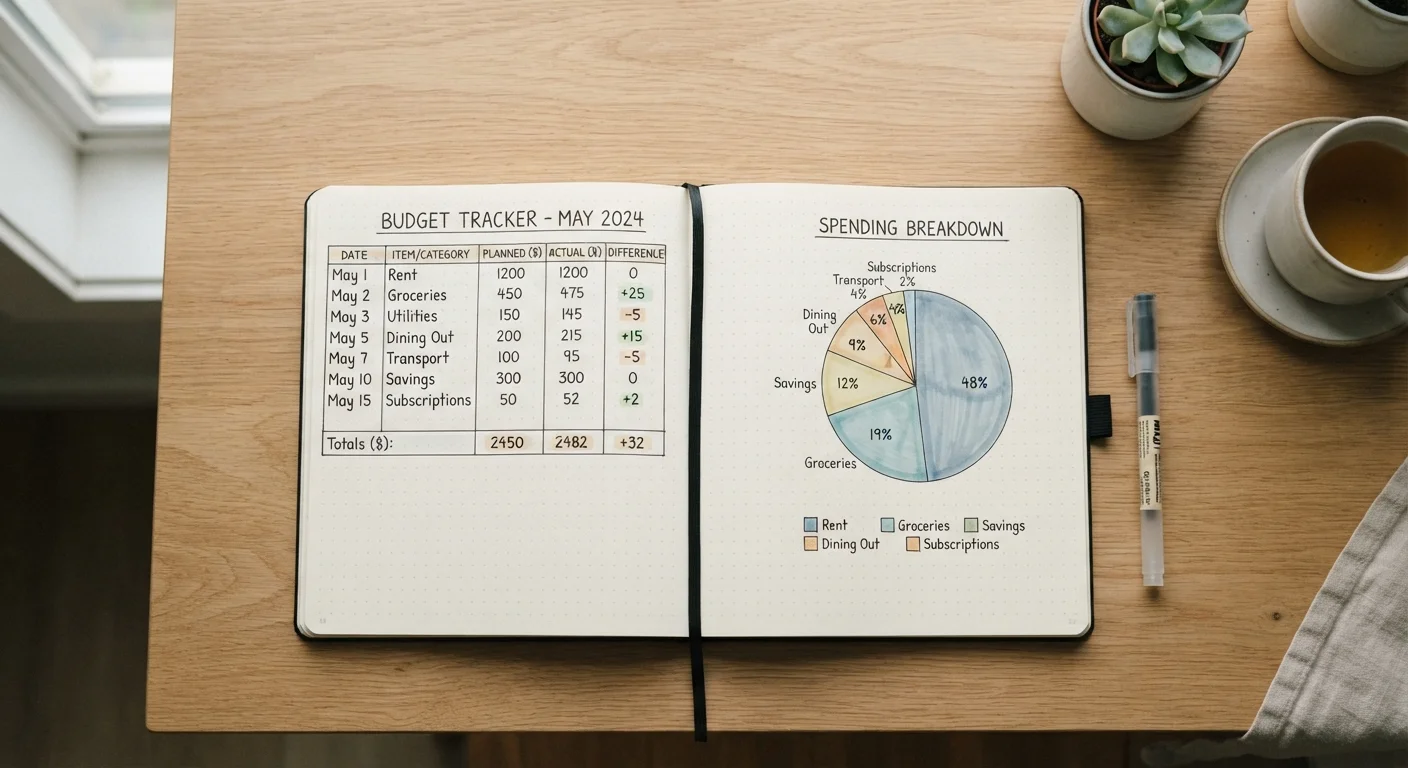
- List your current monthly expenses by category. A single month of bank and card statements is usually enough to get a clear picture.
- Compare your real splits to the 50/30/20 benchmark. Note where you are over or under - without judgment. The gaps show you where to direct attention first.
- Adjust the percentages to fit your reality. If your needs genuinely require 60% of income right now, a 60/20/20 or 60/25/15 split may be more honest and workable.
- Review monthly. A budget that is never revisited stops reflecting your life. Our guide to setting up a monthly budget review routine makes this habit straightforward.
This article provides general financial information for educational purposes only and is not personalised financial advice. For decisions specific to your situation, consider speaking with a qualified financial adviser.