
A Drink With Ancient Roots
Kombucha's story begins not in a health food store but in the tea-drinking cultures of ancient East Asia. Historical accounts point to Manchuria - present-day northeastern China - as the drink's earliest documented home, with references dating back as far as 220 BCE during the Qin Dynasty. It was described in early texts as a tea valued for its invigorating properties and was reportedly introduced to Japan around 400 CE by a physician named Kombu, which some food historians have linked - though not conclusively - to the drink's modern name.
From East Asia, kombucha moved westward. By the early 20th century, it had taken root in Russia and Eastern Europe, where it was known as chayny grib (tea mushroom) or Japanischer Pilz in German-speaking regions - names that reflect how the SCOBY's jellyfish-like appearance puzzled those encountering it for the first time. European interest faded during and after the Second World War due to sugar rationing, but the drink survived in home kitchens and eventually re-emerged in Western markets during the late 1990s and early 2000s as interest in fermented foods grew.
Kombucha is far from the only ancient fermented drink to enjoy a modern revival. Our piece on fermentation traditions around the world explores how cultures across Asia, Africa, and beyond independently developed fermentation for preservation, flavour, and community.
What the SCOBY Actually Is
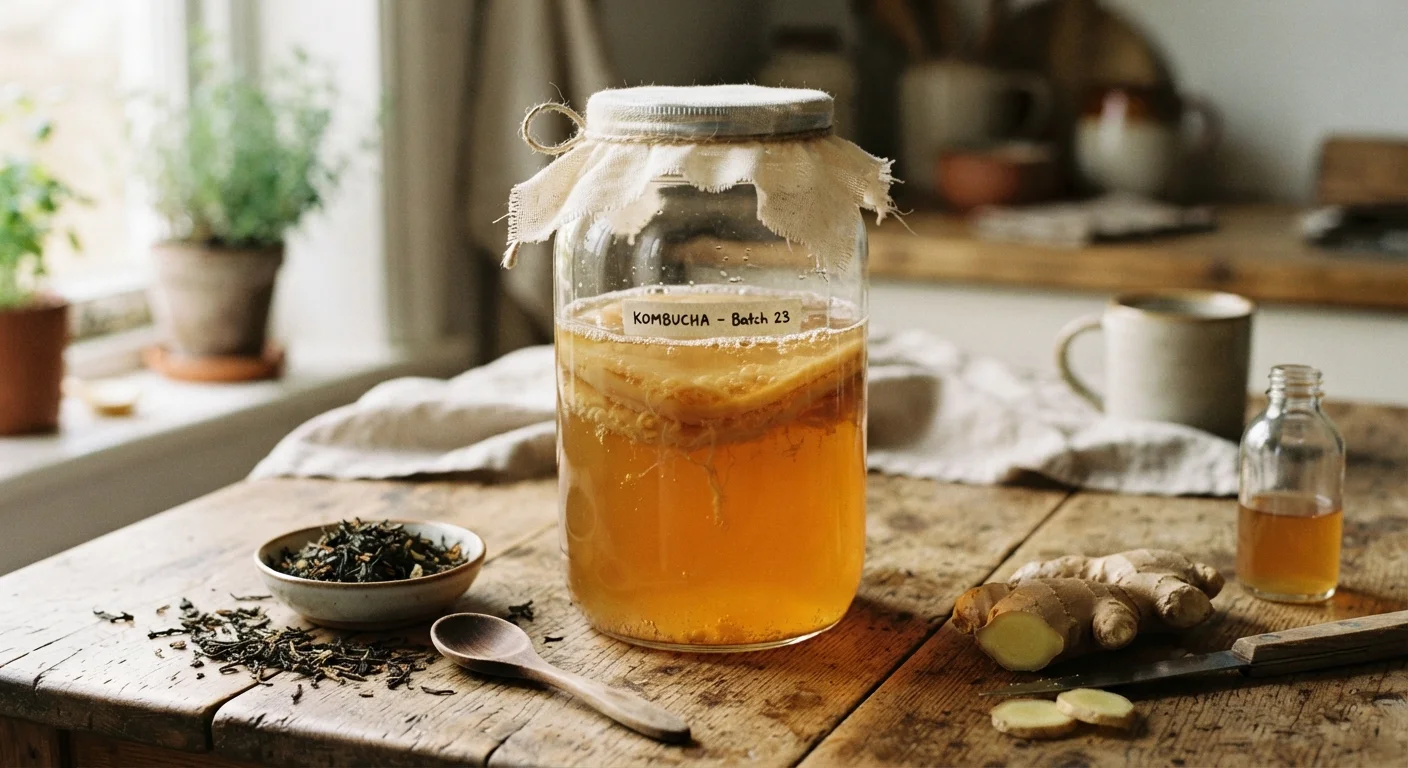
The SCOBY - an acronym for Symbiotic Culture of Bacteria and Yeast - is the biological engine behind every batch of kombucha. It appears as a pale, rubbery disc that floats on the surface of fermenting tea, and it grows slightly with each new batch. Despite being called a "mushroom" in folk terminology, it has no relation to fungi in the botanical sense.
Inside the SCOBY, acetic acid bacteria (such as Acetobacter species) and various yeast strains coexist in a cooperative relationship. The yeast breaks down sucrose into simpler sugars, and then into ethanol and carbon dioxide. The bacteria then convert the ethanol into acetic acid - the same acid found in vinegar - giving kombucha its characteristic tang. This two-stage process also produces a range of other organic acids, B vitamins, and small amounts of ethanol that remain in the finished drink.
0.5%
Maximum ABV in most commercial kombucha
Regulatory thresholds in the US and EU typically classify beverages below 0.5% ABV as non-alcoholic; most commercial kombucha is formulated to stay within this limit.
1-4 weeks
Typical primary fermentation period
The duration of the first fermentation stage determines the final acidity and residual sweetness, with longer periods producing a more vinegary flavour profile.
220 BCE
Earliest documented reference to kombucha
Food historians cite records from Manchuria during the Qin Dynasty as among the earliest evidence of a fermented tea drink resembling modern kombucha.
Each SCOBY is essentially a living heirloom. Brewers separate off a new "baby" SCOBY layer after each fermentation cycle, meaning a single culture can be passed on indefinitely. This practice mirrors the sharing traditions seen with sourdough starters and kefir grains - living cultures with social as well as culinary significance.
The Fermentation Process, Briefly Explained
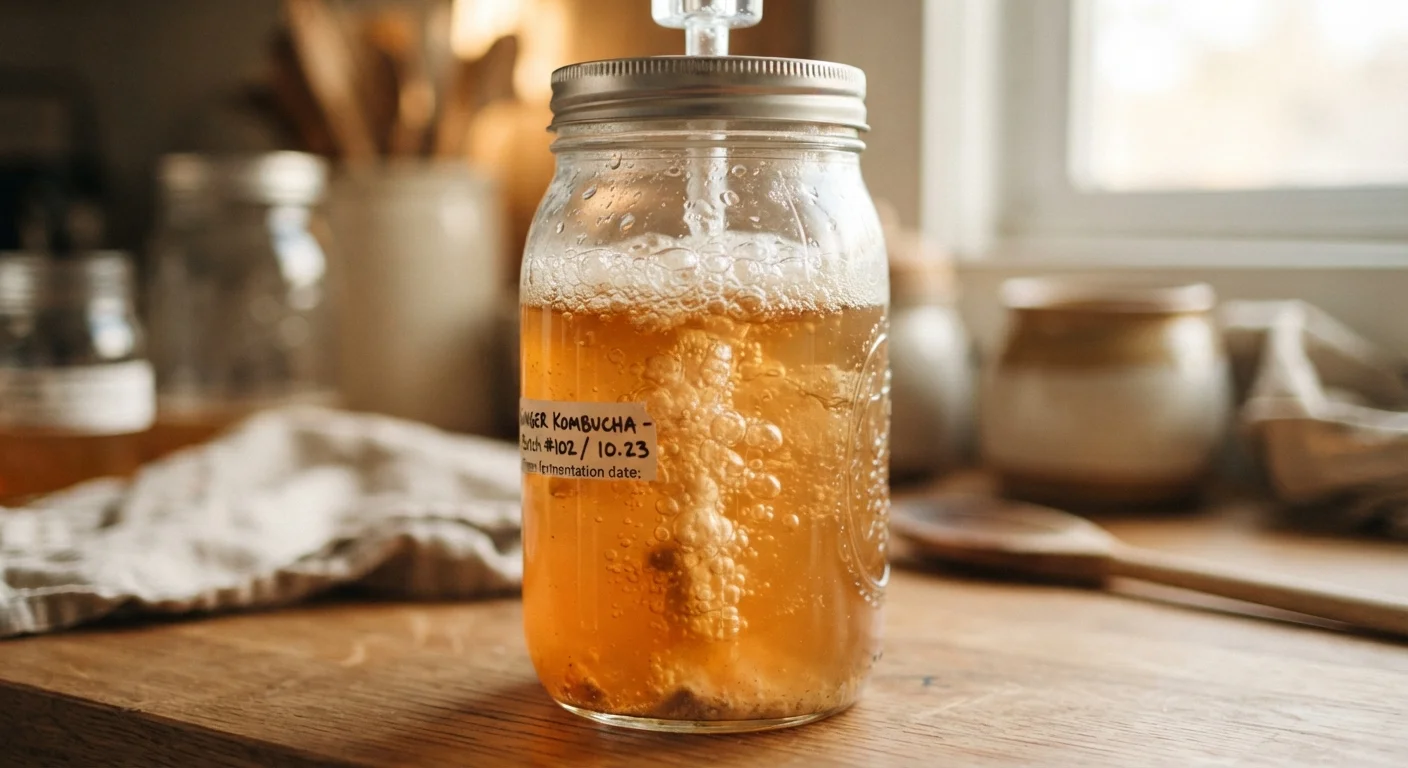
Making kombucha follows a straightforward sequence. Sweetened black or green tea is brewed and cooled, then combined with an existing SCOBY and a portion of already-fermented kombucha (called the "starter liquid"). The mixture ferments at room temperature - typically between 20-28°C - for one to four weeks, depending on the desired acidity and flavour intensity.
As fermentation progresses, the sugar content falls and the acidity rises. Carbon dioxide produced during fermentation creates the drink's natural effervescence. A second, optional fermentation stage - where the kombucha is sealed in bottles with added fruit, juice, or flavourings - produces additional carbonation and introduces new flavour notes.
Controlling Flavour Through Fermentation Time
If you encounter kombucha that tastes too sharp or vinegary, it has likely fermented for longer at a warmer temperature. A shorter fermentation window - around seven to ten days at moderate room temperature - generally produces a milder, more approachable flavour. Tasting the brew every few days during fermentation is the most reliable way to catch it at your preferred point.
To understand the underlying chemistry in more depth, our explainer on what fermentation does to a drink walks through the microbial processes common to kombucha, beer, and kefir.
Cultural Context and Health Considerations
Kombucha occupies an interesting cultural space: it is simultaneously a centuries-old folk drink and a contemporary wellness product. In many Eastern European households, it was brewed quietly at home long before it appeared on supermarket shelves. In East Asian contexts, it was positioned as a tonic tea rather than a health product in the modern marketing sense.
Today, kombucha is often discussed alongside claims about gut health, immune support, and energy. While preliminary research has explored the role of organic acids and live microorganisms in fermented foods, the scientific evidence for specific health benefits from kombucha in humans remains limited and ongoing. It should not be treated as a substitute for medical care or prescribed treatments.
Home Brewing Carries Additional Considerations
Commercially produced kombucha is manufactured under controlled conditions that minimise contamination risk. Home brewing, while a long-standing tradition, requires careful attention to cleanliness, proper starter-liquid ratios, and storage temperature. Immunocompromised individuals, pregnant people, and those with liver conditions are generally advised to consult a healthcare professional before consuming home-brewed kombucha.
If kombucha's story as a regional drink piques your curiosity, it is worth noting that many equally fascinating fermented and traditional beverages remain largely unknown outside their home cultures. Our article on extraordinary drinks from around the world explores several of them. For a study in contrast, the story of sake shows how another Asian drink followed a very different cultural and production path.
This article is for informational and educational purposes only and does not constitute medical or dietary advice. Consult a qualified healthcare professional before making changes to your diet, particularly if you have a medical condition or are pregnant.